The Avia shoe print that tied a serial killer to his final crime scene
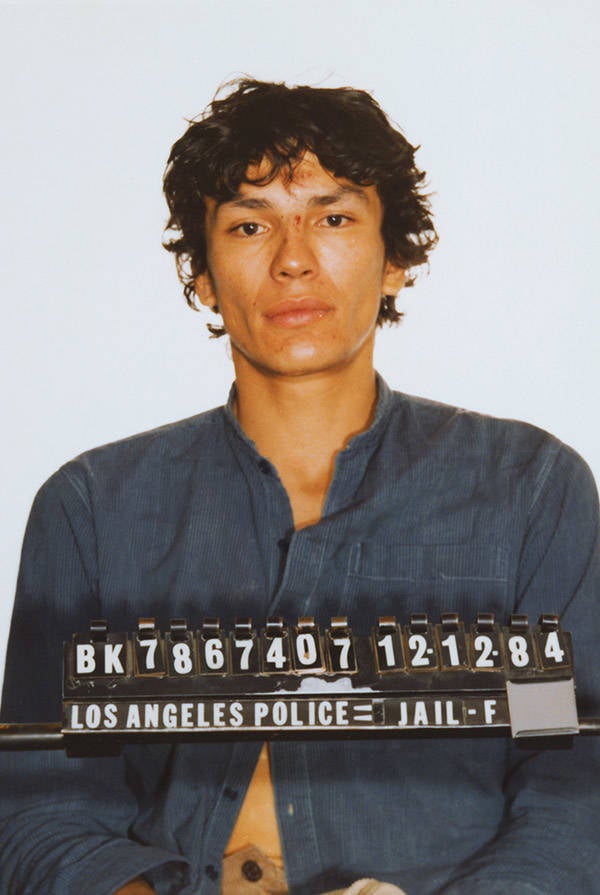
The sole of an Avia athletic shoe left a pattern in the dark.
That pattern turned up at more than one crime scene linked to the Night Stalker.
It was a distinctive tread, the kind of mark investigators could photograph and compare.
The shoe print did not name a suspect.
It connected scenes to each other.
Alongside it, investigators logged ballistics from a .22-caliber firearm and a .380-caliber pistol.
Those were links too.
A .22 here, a .380 there, a shoe print in between.
They spoke to the same intruder moving through different houses, different jurisdictions.
They did not speak his name.
How many scenes held that Avia print?
The record does not establish the specific number.
That would require evidence the files do not supply.
What the record does establish is the print's role: one thread among several, pulled taut across the attacks.
The case broke only later.
A fingerprint lifted from a stolen car used in the escape after a Mission Viejo attack was matched to Richard Ramirez.
That match, processed through the state's automated system, gave the first definitive name.
The shoe print had pointed at a pattern.
The fingerprint pointed at a man.
It is a common shape, a sole pressed into ground.
It is also a piece of a puzzle that long refused to form.
THE NIGHT INTRUDER
The first attack was reported in June 1984.
A home in Los Angeles, entered at night through an unlocked door.
The pattern held through the summer, then the fall, then the next spring.
It is a common shape, a man moving through dark rooms.
By August 1985, the case summary counted a series of home-invasion attacks, rapes, and murders across Los Angeles and the San Francisco Bay Area.
The attacker typically entered homes at night through unlocked doors or windows.
He often shot or bludgeoned male victims.
He sexually assaulted female victims.
The crimes spanned multiple jurisdictions, including Los Angeles, Monterey Park, and San Francisco.
Each jurisdiction worked its own scenes.
Detectives in one city did not know what detectives in another city had found.
The exact number of attacks and victims is not specified in the record.
That number is not established.
The shoe print did not name a suspect.
It connected scenes to each other, but no one was comparing scenes.
A significant mistake early on was the failure to connect the attacks across jurisdictions.
That failure delayed a unified task force.
It is a common shape, a sole pressed into ground.
It is also a piece of a puzzle that long refused to form.
The same man kept moving through unlocked doors.
The same evidence kept turning up in different files.
The same name did not appear anywhere.

THE FINGERPRINT
The turning point came after the August 1985 attack in Mission Viejo.
The attacker fled on foot that night, and he left a stolen car behind.
Investigators lifted a fingerprint from that car.
The print was run through the state's automated fingerprint system.
It matched Richard Ramirez, a drifter with prior arrests in Texas.
That match gave the case its first definitive name.
Not a shoe print. Not a bullet. A single fingerprint.
A composite sketch was drawn from a surviving victim's description.
The record does not name which victim provided that description.
The sketch was widely circulated in newspapers and on television.
People in East Los Angeles recognized the face.
On August 31, 1985, residents spotted Ramirez in their neighborhood.
They held him until police arrived.
The manhunt was over.
The fingerprint had done what ballistics and shoe prints could not.
It connected the crimes to a person, not just to each other.
The Avia print tied the scenes together.
The fingerprint tied the scenes to a name.
That name was Richard Ramirez.
He was captured, charged, and later tried.
Relief came in the form of a match in a database.
The case finally had a face, and the face had a name.
THE TRIAL EVIDENCE
The trial began in 1988 in Los Angeles County Superior Court.
It lasted over a year.
The prosecution, led by the deputy district attorney, presented fingerprints, ballistics, and shoe prints.
Survivors testified.
The Avia shoe print was in the record.
What the record does not establish is the specific argument made about that shoe print during the trial.
It is not detailed.
The defense argued the evidence was circumstantial.
The defense argued that Ramirez was a victim of childhood abuse.
No insanity defense was presented.
Two narratives stood in the room.
One was forensic certainty: the fingerprint, the ballistics, the shoe prints, the survivors who pointed.
The other was a claim that it all remained circumstantial.
Which one carried?
On September 20, 1989, Ramirez was convicted.
Thirteen counts of first-degree murder.
Five attempted murders.
Eleven sexual assaults.
Fourteen burglaries.
All counts.
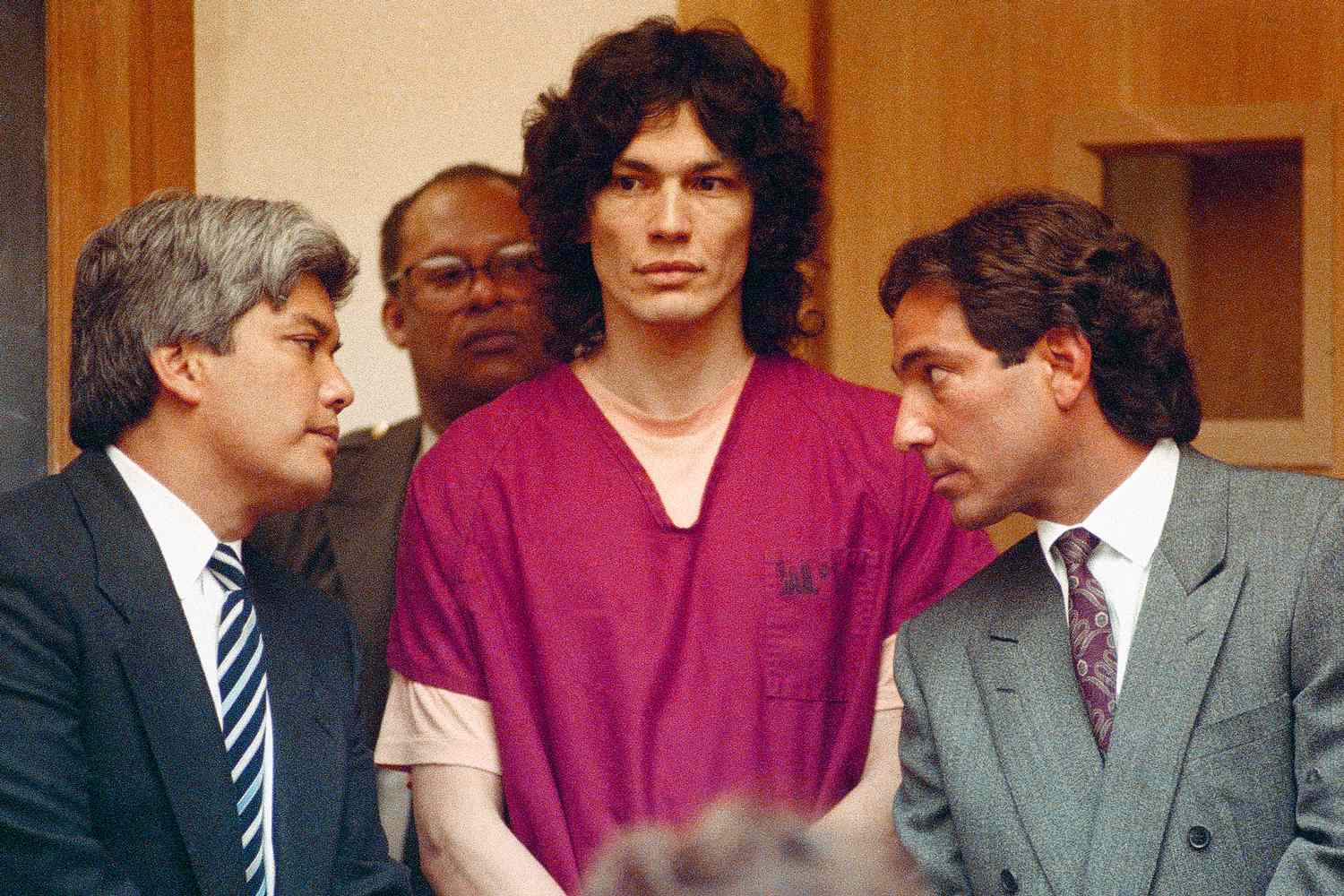
Judge Michael Tynan sentenced him to death on November 7, 1989.
The shoe print had connected scenes to each other.
The ballistics had connected scenes to each other.
The fingerprint had connected a name to the scenes.
That was the chain.
The defense said the chain was not enough.
The jury said it was.
It is a weighing of competing narratives.
Forensic certainty versus circumstantial claims.
The record shows which side the jury chose.
It does not show every argument the defense made about the shoe print.
That detail is not established.
AND THE STORY STILL ISN'T OVER
The conviction was upheld on appeal, and Ramirez remained on death row at San Quentin State Prison.
The legal story continued for over two decades.
He died on June 7, 2013, of complications related to B-cell lymphoma, before execution was carried out.
His death ended further appeals or possibility of execution.
That is what the record shows.
The case remains one of the most documented serial murder investigations in California history.
It is documented in files, in testimony, in the shoe prints and the ballistics and the fingerprint.
The fingerprint identification is often cited as a landmark in automated fingerprint systems.
It was the first definitive name, drawn from a print on a stolen car.
The shoe print connected scenes; the fingerprint connected a man.
What happens after a death row inmate dies?
The sentence is moot.
The appeals are moot.
The execution is moot.
The record does not establish the current status of any ongoing investigations or memorials.
That detail is not in the record.
What remains is the documentation.
The case is studied, cited, revisited.
It is a story with an ending that is not an ending.
Ramirez was convicted, sentenced, and held.
He was never executed.
The families of the victims have largely remained private in the years since.
That privacy is also part of the record.
The legal story ended without the final act the sentence promised.
The evidence, however, did its work.
It named him.
It tied the scenes together.
It held through appeal.
The fingerprint did what the shoe print could not.
The shoe print linked crimes; the fingerprint linked a man to the crimes.
That distinction is the whole case.
It is the documented fact.
It is also the legacy.
Advertisement
You may also like
The love letters scattered beneath a crabapple tree that investigators could not trace
The crabapple tree stood in a secluded lane called Lovers' Lane, near St. John's Episcopal Church in New Brunswick, New Jersey. On the night…
The 2007 deal that let Epstein plead state charges — and the detective who kept digging
Palm Beach, 2005. A mother walked into a police station and reported that her 14-year-old stepdaughter had been recruited by an older girl. The…
The eyeglasses with a rare hinge that broke a perfect alibi
The eyeglasses sat in the culvert beside the body of Robert "Bobby" Franks, fourteen years old, found on May 22, 1924, near the Indiana…
The $5,800 in serial-matched ransom cash that a boy found by the Columbia River
The bundle was rotting when the boy found it. Brian Ingram was a child that day in 1980, playing along the Columbia River near…
The 10pm bed check that sent a mother into a holiday apartment — and changed a case forever
The tapas restaurant sat about 50 metres from the apartment. Kate McCann crossed that distance at approximately 10:00 pm on 3 May 2007. She…

The 31-day gap and the trunk stain that locked the spotlight on Casey Anthony
Caylee Marie Anthony was two years old when relatives last saw her on June 16, 2008. She was not reported missing for 31 days.…