The 1888 letter signed 'Jack the Ripper' that police never proved genuine
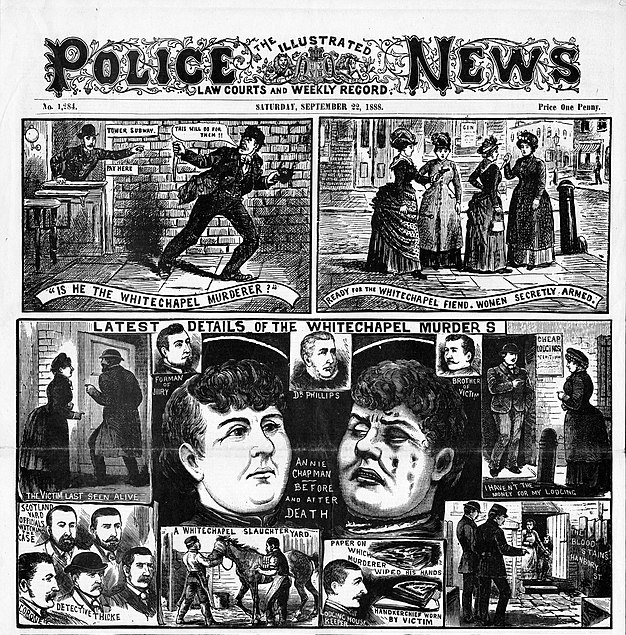
A letter arrived at a news agency in late September 1888.
It was signed with a name no one had seen before: "Jack the Ripper."
The name stuck. It gave the unknown killer of Whitechapel a lasting nickname, one that would outlive every victim and every investigator.
The letter was widely reproduced in the press. Readers saw it, repeated it, and the legend took shape around those two words.
But the letter's authenticity was never confirmed. It may have been a hoax.
Many investigators believed it was a journalist's trick, a way to sell papers during a panic. That belief was never proven either.
The record does not establish who wrote the letter. It does not establish that the killer wrote it. It does not establish that the name came from anywhere but a newsroom.
What the record does establish is simpler: the letter exists as a documented artifact, and the name it carried entered history.
No one was ever charged with the Whitechapel murders. The case remains officially unsolved.
So the question stands: how did a single letter, of unproven origin, shape the entire legend?
That would require evidence. The evidence was never found.
AUGUST TO NOVEMBER 1888
The Whitechapel murders happened in the impoverished East End of London between August and November 1888.
At least five killings took place in or near Whitechapel, and they are generally attributed to a single unidentified offender.
That attribution is general, not proven.
The victims were women living in extreme poverty.
Several of them worked as prostitutes.
The first of the five canonical victims was found on 31 August 1888.
The last was found on 9 November 1888.
The bodies were discovered in public or semi-public places.
In several cases, the mutilations suggested anatomical knowledge.
That suggestion came from doctors who examined the bodies.
It was never established as fact.
The first victim was Mary Ann Nichols, found on Buck's Row in the early hours of 31 August.
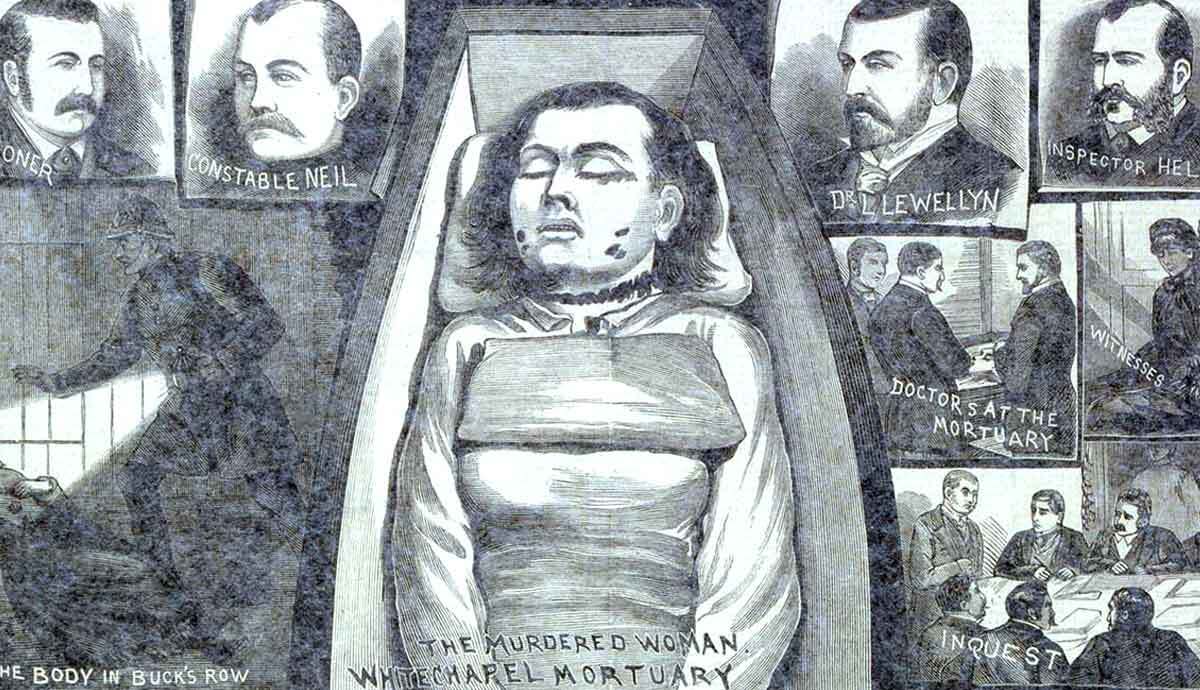
Annie Chapman was found on 8 September, in a yard off Hanbury Street.
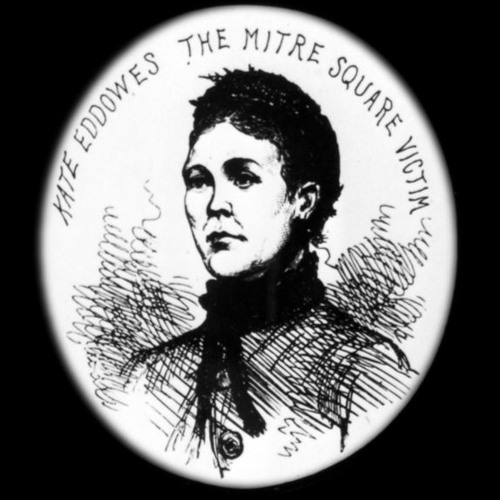
Two more were found on the same day, 30 September: Elizabeth Stride and Catherine Eddowes.
Mary Jane Kelly was found on 9 November, in her room in Miller's Court.
Each woman lived in destitution.
Each died violently, and the killer was never identified.
No suspect was ever charged with the Whitechapel murders.
The identity of the offender remains unknown.
That is the grim reality of the case: five women, dead in eight weeks, and no one held to account.
The dates are clear.
The victims are named.
The killer is not.
THE INVESTIGATION
The dates are clear.
The victims are named.
The killer is not.
The investigation ran on two tracks at once.
The Metropolitan Police handled most of Whitechapel.
The City of London Police held jurisdiction over part of the district, where two of the murders fell.
The division slowed the work.
Officers went door to door.
They interviewed hundreds of witnesses.
They examined the crime scenes.
No reliable eyewitness account of any killing was ever obtained.
That is the record: effort without result.

Some doctors, including the divisional police surgeon, suggested the mutilations showed anatomical skill.
That theory was never established.
It remains a suggestion, not a finding.
Several men were arrested or detained on suspicion.
A man known as "Leather Apron" was held and released.
A Polish-born barber named Aaron Kosminski was committed to an asylum.
He was never charged.
No suspect was ever charged with the Whitechapel murders.
The public criticised the police for failing to find the killer.
The criticism was loud.
The Commissioner of the Metropolitan Police resigned in November 1888, shortly after the final canonical murder.
He resigned.
The case did not close.
It stalled.
Frustration is the honest response to this section of the record.
The officers worked.
The witnesses were questioned.
The scenes were searched.
The suspect list grew and shrank.
The investigation produced no one to charge.
That would require evidence.
The evidence never arrived.
THE LETTERS AND THEORIES
Letters arrived at newspapers and at police stations, each claiming to be from the killer.
Some were crude. Some were detailed. All were unsigned, except for one.
That letter was signed "Jack the Ripper," and it gave the unknown offender a name the press could print.
It was sent to a news agency in late September 1888 and was widely reproduced.
Its authenticity was never confirmed.
The record does not establish that the killer wrote it.
Many investigators believed it was a journalist's hoax, a story made to sell papers.
That belief was never proven either, but it was shared by enough officers to shape how the letters were read.
The letters became part of the case file, but they were never evidence of anything except a name.
That name stuck. It appears in every account of the murders since.
The case has inspired endless speculation, books, and films, each offering a new suspect or a new solution.
No conclusive evidence has ever emerged from any of them.
The killer's identity remains unknown.
That is what the record supports.
Everything else is theory, and theory is not fact.
AND THE STORY STILL ISN'T OVER
There was no trial.
No suspect was ever charged with the Whitechapel murders.
The case remained open but inactive for decades.
It is officially unsolved.
The killer's identity remains unknown.
That is what the record supports.
The victims are buried in various London cemeteries.
The case files remain in the archives of the Metropolitan Police and the City of London Police.
The murders continue to be studied by historians and criminologists.

They ask the same questions.
Who was he?
Why these women?
Why did it stop?
That would require evidence, and the evidence does not answer.
It is a story that persists.
It is a story without an ending.
The record ends where it began: with the unknown.
The letter gave the killer a name, but the name never became a man.
The name never stood in a dock.
The name never faced a verdict.
The case is closed in the sense that it is inactive.
It is open in the sense that it is unsolved.
The files sit in archives, waiting for a conclusion that never came.
The historians keep reading them.
The criminologists keep arguing over them.
The theories keep multiplying.
Theory is not fact.
And the fact is that no one was ever charged.
No one was ever tried.
No one was ever convicted.
The victims rest in London ground, and the killer rests nowhere in the record.
That is where the story stands.
Not solved.
Not closed.
Not over.
Advertisement
You may also like
The love letters scattered beneath a crabapple tree that investigators could not trace
The crabapple tree stood in a secluded lane called Lovers' Lane, near St. John's Episcopal Church in New Brunswick, New Jersey. On the night…
The 2007 deal that let Epstein plead state charges — and the detective who kept digging
Palm Beach, 2005. A mother walked into a police station and reported that her 14-year-old stepdaughter had been recruited by an older girl. The…
The eyeglasses with a rare hinge that broke a perfect alibi
The eyeglasses sat in the culvert beside the body of Robert "Bobby" Franks, fourteen years old, found on May 22, 1924, near the Indiana…
The $5,800 in serial-matched ransom cash that a boy found by the Columbia River
The bundle was rotting when the boy found it. Brian Ingram was a child that day in 1980, playing along the Columbia River near…
The 10pm bed check that sent a mother into a holiday apartment — and changed a case forever
The tapas restaurant sat about 50 metres from the apartment. Kate McCann crossed that distance at approximately 10:00 pm on 3 May 2007. She…
The 31-day gap and the trunk stain that locked the spotlight on Casey Anthony
Caylee Marie Anthony was two years old when relatives last saw her on June 16, 2008. She was not reported missing for 31 days.…