The floppy disk clue that ended a 30-year hunt for BTK
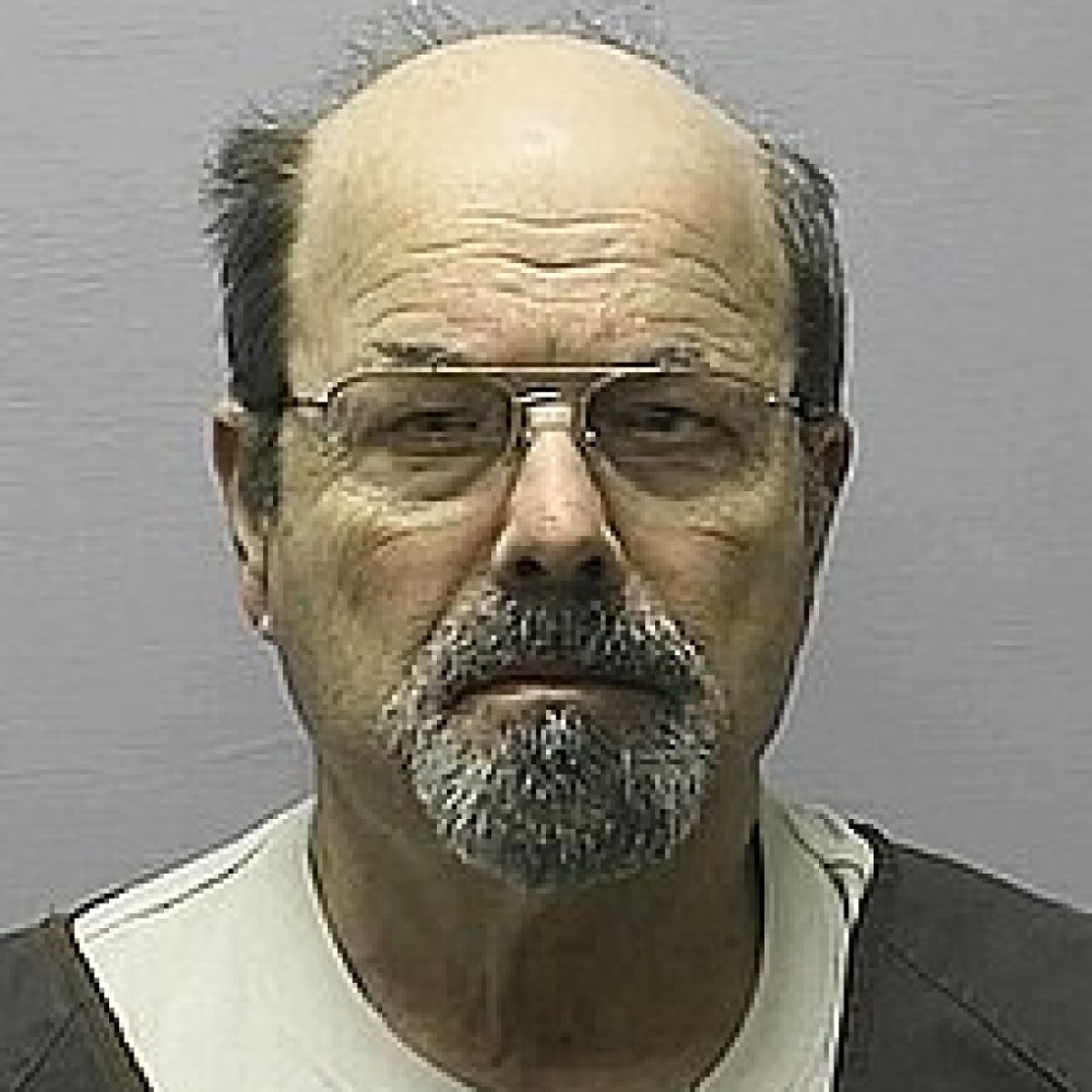
For more than a decade, the killer had been silent.
Then, in 2004, he resumed sending letters and packages to media outlets, according to the investigation summary.
In one communication, he asked police whether a floppy disk could be traced.
Police responded publicly that it could not be traced.
The killer subsequently sent a floppy disk.
Forensic analysis of the disk revealed metadata.
That metadata pointed to a computer at a local church.
It also pointed to a user named "Dennis."
The exact contents of the disk are not in the record.
The precise wording of his question is also not in the record.
What is documented is the exchange itself: a question, a public answer, a disk in the mail.
A thirty-year evasion, over a piece of obsolete technology.
Could it really be that simple?
Could a killer who taunted police for decades fall for a trick that obvious?
Could a man who named himself for his methods — Bind, Torture, Kill — trip over a floppy disk?
That would require evidence.
The disk was one step in a chain.
It was not the whole chain.
It was a step that gave investigators a name and a place.
It was a step that turned a ghost into a man with a church computer.
A man named Dennis.
The trap, if it was a trap, had been set in public.
The question had been asked in public.
The answer had been given in public.
And the disk arrived anyway.
THIRTY YEARS OF SILENCE
The first known killings occurred on January 15, 1974.
Four members of the Otero family were bound and strangled in their home in Wichita, Kansas.
Between 1974 and 1991, a serial killer murdered ten people in and around the city.
The case summary does not name every victim; only the Otero family is specified there.
The killer sent taunting letters to local media and police.
He adopted a self-given nickname: BTK, for "Bind, Torture, Kill."
The letters were a signature.
They were also a taunt, and they gave investigators little to hold onto.
After a final murder in 1991, the killer went silent.
He stayed silent for over a decade.
Early leads were hampered by a lack of physical evidence.
The killer's ability to avoid detection stalled each avenue of inquiry.
Detectives had letters.
They had crime scenes.

They had a nickname and a pattern.
What they did not have was a name.
The investigation stretched across three decades.
It is a long time to keep a case open.
It is a longer time to keep waiting.
THE CHURCH COMPUTER
In 2004, the letters resumed.
Packages arrived at media outlets, and with them, a question: could a floppy disk be traced?
Police answered publicly. They said no.
The disk came anyway.
Forensic analysis revealed metadata on it. The metadata pointed to a computer at a local church. It named a user: "Dennis."
Not a nickname. A name.
Investigators now had a direction. They obtained a DNA sample from a relative of that Dennis. The exact relationship is not specified in the source. How the sample was obtained is not specified either.
The DNA matched crime scenes.
That sealed it.
On February 25, 2005, Dennis Rader was arrested.
At his home, investigators recovered items. Photographs of victims. Personal effects belonging to them.
The trap had closed.
The disk was one step. The metadata was another. The DNA was the lock.
A church computer, a user named Dennis, a relative's sample. Three links in a chain.
It is a satisfaction, reading it. The silence of thirty years, ended by a floppy disk and a name.
It is also a record of what the source does not say. The relative remains unnamed. The method of obtaining the sample remains unstated.
Those details are not established.
What is established: the disk led to a computer. The computer led to a name. The name led to DNA.
And the DNA matched.
THE PLEA AND THE SENTENCE
In June 2005, Dennis Rader stood before the trial judge and pleaded guilty to all ten counts of first-degree murder.
The plea hearing was the first time the full weight of his confessions entered the record.
He provided detailed confessions describing each murder, according to the trial outcome.
The prosecution had sought the death penalty.
The trial judge instead sentenced him to ten consecutive life terms, with a minimum of 175 years before parole eligibility.
That sentence came down in August 2005.
Rader did not appeal.
The exact name of the trial judge is uncertain.
Reports vary between Gregory Waller and Greg Waller.
That detail is not established.
What is established is the finality of the sentence.
Ten counts.
Ten life terms.
A minimum of 175 years.
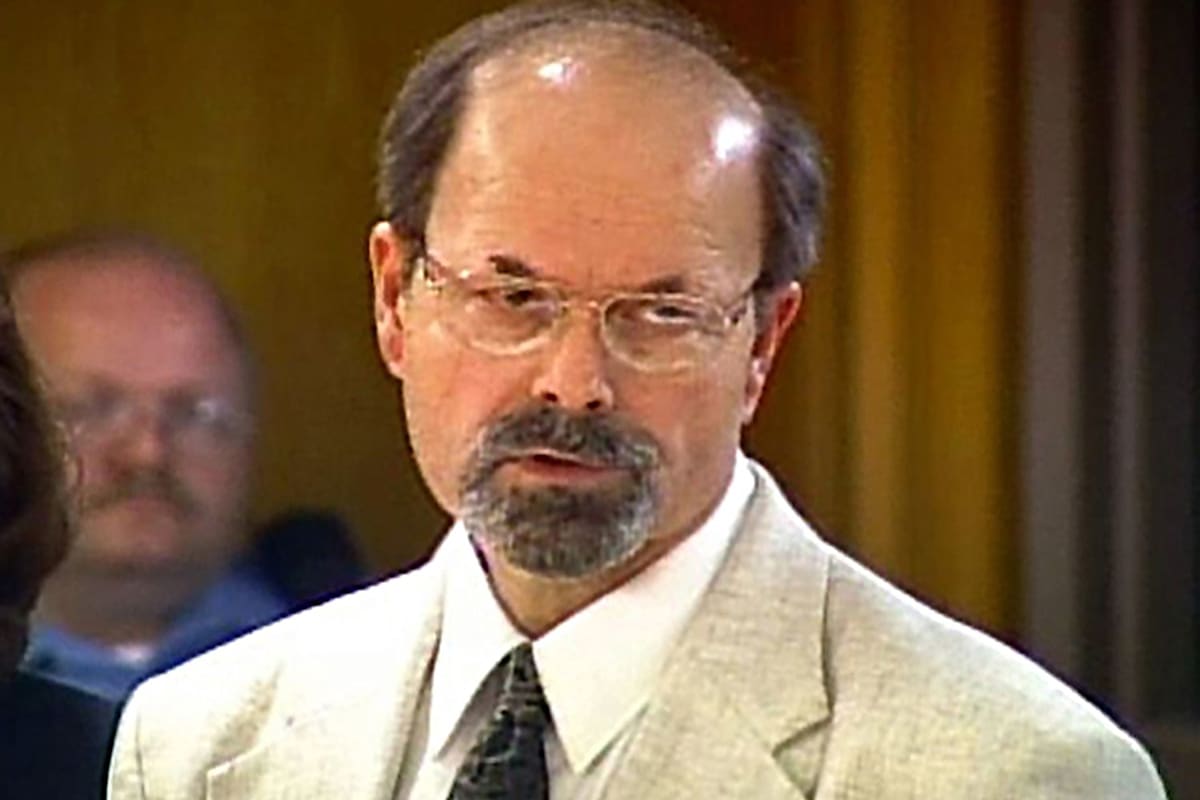
The guilty plea meant no jury heard the evidence.
No jury weighed the DNA match.
No jury heard the confessions read aloud.
The judge heard them, and the record holds them.
Rader returned to the Kansas prison system, where he remains today.
The floppy disk had led to a computer.
The computer had led to a name.
The name had led to DNA.
And the DNA had led to this courtroom, to this plea, to this sentence.
The case was closed without a trial.
It was closed with a guilty man's own words.
The confessions are part of the record now, described in detail during the plea hearing.
The sentence means he will die in prison.
That is the outcome.
It is also the end of the hunt.
AND THE STORY STILL ISN'T OVER
Dennis Rader is incarcerated at El Dorado Correctional Facility in Kansas.
He has remained there since his sentencing.
In 2019, Rader was questioned in connection with unsolved murders in other states.
No additional charges were filed.
The specific murders he was asked about are not named in the record.
That question — what else might connect to him — is one the record leaves open.
It is a theory, not a finding.
That would require evidence.
Several victims' family members have spoken publicly about the case over the years.
They have described what the hunt cost them.
They have described what the conviction did not restore.
The case remains one of the most studied examples of a serial killer who evaded capture for decades before being identified through digital forensics.
It is studied for the floppy disk.
It is studied for the DNA match that followed.
It is studied for the chain of small, patient steps that ended a thirty-year hunt.
Rader pleaded guilty to ten counts of first-degree murder.
He was sentenced to ten consecutive life terms.
The sentence means he will die in prison.
That is the outcome.
It is also the end of the hunt.
But the record does not close every door.
The 2019 questioning is one door.
The unsolved murders are another.
Neither has been resolved in the source.
Neither has been named.
The story, after conviction, still holds questions without answers.
Advertisement
You may also like
The love letters scattered beneath a crabapple tree that investigators could not trace
The crabapple tree stood in a secluded lane called Lovers' Lane, near St. John's Episcopal Church in New Brunswick, New Jersey. On the night…
The 2007 deal that let Epstein plead state charges — and the detective who kept digging
Palm Beach, 2005. A mother walked into a police station and reported that her 14-year-old stepdaughter had been recruited by an older girl. The…
The eyeglasses with a rare hinge that broke a perfect alibi
The eyeglasses sat in the culvert beside the body of Robert "Bobby" Franks, fourteen years old, found on May 22, 1924, near the Indiana…
The $5,800 in serial-matched ransom cash that a boy found by the Columbia River
The bundle was rotting when the boy found it. Brian Ingram was a child that day in 1980, playing along the Columbia River near…
The 10pm bed check that sent a mother into a holiday apartment — and changed a case forever
The tapas restaurant sat about 50 metres from the apartment. Kate McCann crossed that distance at approximately 10:00 pm on 3 May 2007. She…
The 31-day gap and the trunk stain that locked the spotlight on Casey Anthony
Caylee Marie Anthony was two years old when relatives last saw her on June 16, 2008. She was not reported missing for 31 days.…