A coroner's blood-spatter claim that undid Dr. Sam Sheppard's 1954 murder trial
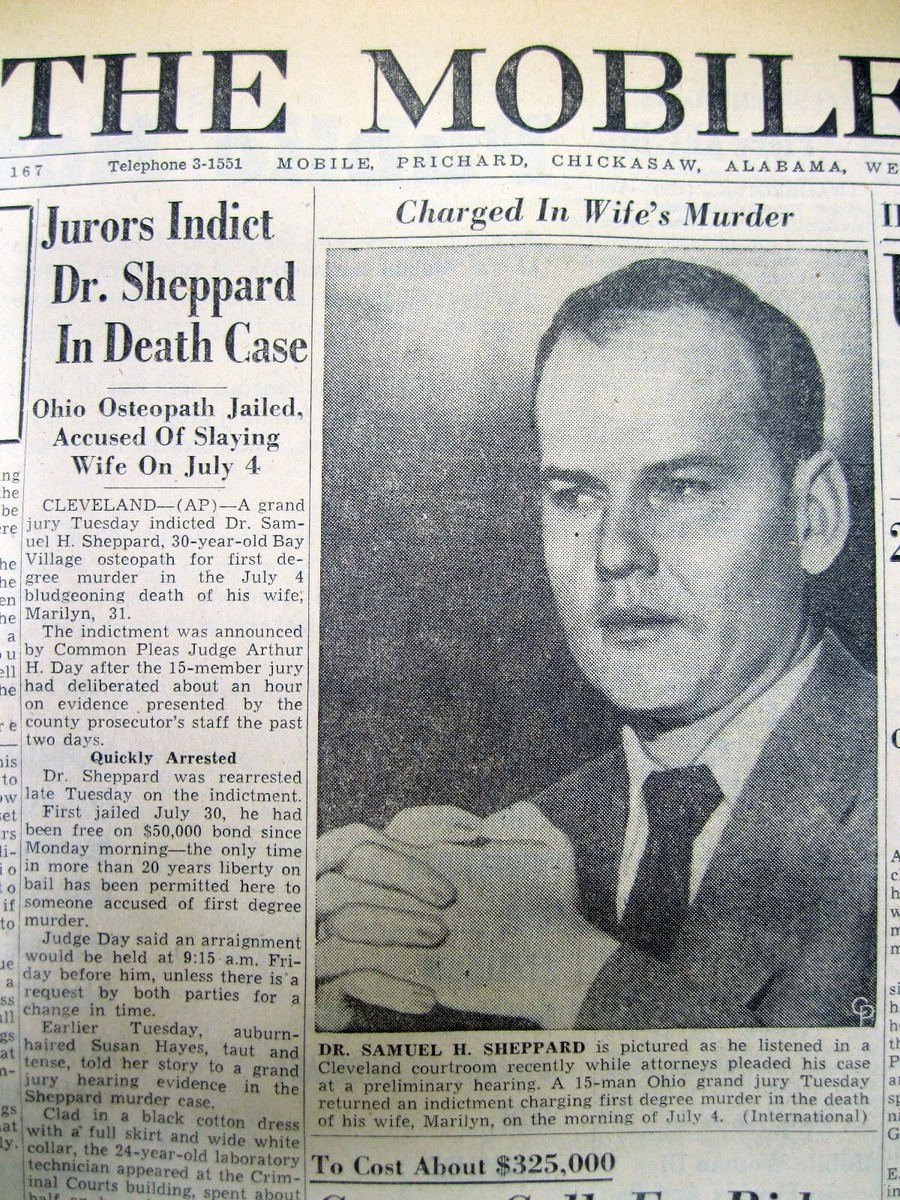
The blood on the bedroom wall was the center of everything.
On July 4, 1954, in Bay Village, Ohio, Marilyn Sheppard was found bludgeoned to death in the upstairs bedroom of the lakeside home she shared with her husband, Dr. Sam Sheppard.
He told police he had fallen asleep on a downstairs couch and was awakened by her cries.
He said he saw a "bushy-haired" intruder fleeing, struggled with him, and was knocked unconscious.
The county coroner arrived within hours and took charge of the scene.
That was unusual.
Later, at trial, the coroner testified that the blood spatter showed a "bludgeoning" that could not have been committed by an intruder without the killer being covered in blood.
Sam Sheppard showed no significant blood on his person.
That was documented.
The murder weapon was never found.
The coroner's claim seemed to settle it: if the killer had to be soaked in blood, and Sheppard was not, then Sheppard was the killer.
It was dramatic testimony.
It was also a claim, not a proof.
Whether the blood-spatter claim was scientifically valid — the record does not establish this.
It is presented as testimony.
Sheppard told police about the intruder.
That was his account, not verified.
The blood on the wall was real.
The interpretation of that blood was a theory.
THE NIGHT OF JULY 4
The clock on the downstairs couch read just after midnight.

Dr. Sam Sheppard told police he had fallen asleep there after an evening with neighbors.
He said he was awakened by his wife's cries from upstairs.
He told them he saw a "bushy-haired" intruder fleeing the house.
He said they struggled, and he was knocked unconscious.
When he came to, he found his wife dead.
Marilyn Sheppard, 31, a former nurse, lay in the upstairs bedroom of the lakeside home she shared with her husband, a prominent osteopathic physician.
She had been bludgeoned to death.
The couple's 7-year-old son was asleep in another room.
He was not harmed.
The front door was left unlocked, the defense later noted.
A canvas bag and other items were missing, suggesting a robbery.
That suggestion came from the defense, not from proof.
Whether an intruder actually existed is not established; it is Sheppard's claim.
The scene was chaos, and so was the account.
A man who said he was knocked out, a wife dead, a son asleep.
A door open, a bag gone, a dog that did not bark.
The prosecution would later call it a staged scene.
The defense would call it a rush to judgment.
Between those two stories sat a question the record does not answer.
Was there ever a man with bushy hair in that house?
Sheppard said yes.

The evidence said nothing at all.
THE CORONER'S THEORY
The county coroner arrived at the Sheppard house within hours of the body being found.
He took charge of the scene, a highly unusual role for a coroner.
The Bay Village police were a small force, and they were quickly overshadowed.
The prosecution's case was largely circumstantial.
The coroner testified that the blood spatter in the bedroom showed a "bludgeoning."
He testified that no intruder could have committed the attack without being covered in blood.
Sam Sheppard showed no significant blood on his person.
The coroner's theory was powerful. It was also a theory.
The prosecution argued that Sheppard had staged the scene to look like a burglary.
The defense pointed to the lack of a murder weapon.
The defense pointed to the absence of blood on Sheppard.
The defense pointed to the couple's dog, inside the house, which had not barked.
The front door had been left unlocked. A canvas bag and other items were missing.
The prosecution's narrative of a jealous husband was bolstered by testimony about an extramarital affair.
Sheppard initially denied the affair. He later admitted it.
The blood-spatter claim pressed down on him from the witness stand.
Whether that claim was scientifically sound — the record does not establish this.
It was testimony, not proof. The distinction would matter later.
THE DEFENSE EXPERT'S REBUTTAL
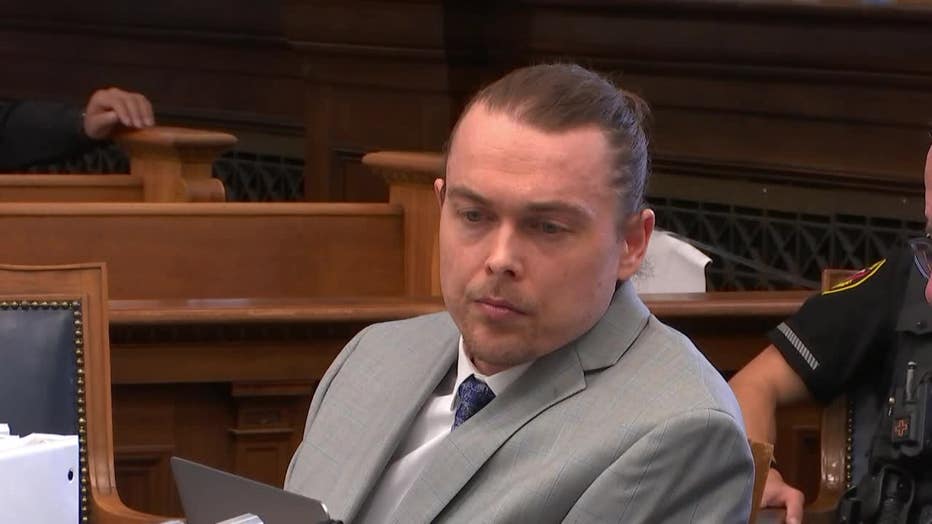
The turning point came not from a new witness, but from a different reading of the same blood.
Paul L. Kirk, a criminologist from the University of California, took the stand for the defense.
He testified that the bloodstain patterns on the bed and walls were inconsistent with the prosecution's theory.
Kirk testified that the killer would have been splattered with blood.
Sheppard was not.
The prosecution argued Sheppard had killed his wife in a rage over her confronting him about his affair.
The defense argued an intruder had committed the murder and that Sheppard was the victim of a rush to judgment.
The trial began in October 1954 in Cuyahoga County Common Pleas Court.
Judge Blythin allowed the press unusual access.
Reporters and photographers filled the courtroom.
The prosecution's story was a jealous husband, a staged scene, a man who cleaned himself before the police arrived.
Kirk's story was a killer who could not have walked away clean.
Which interpretation was correct — the record does not establish this.
It was testimony against testimony.
On December 21, 1954, the jury found Sheppard guilty of second-degree murder.
He was sentenced to life in prison.
The conviction was upheld on appeal in Ohio courts.
The claim was testimony, not proof.
The distinction would matter later.
AND THE STORY STILL ISN'T OVER
In 1964, Sheppard's new attorney, F. Lee Bailey, filed a habeas corpus petition in federal court.
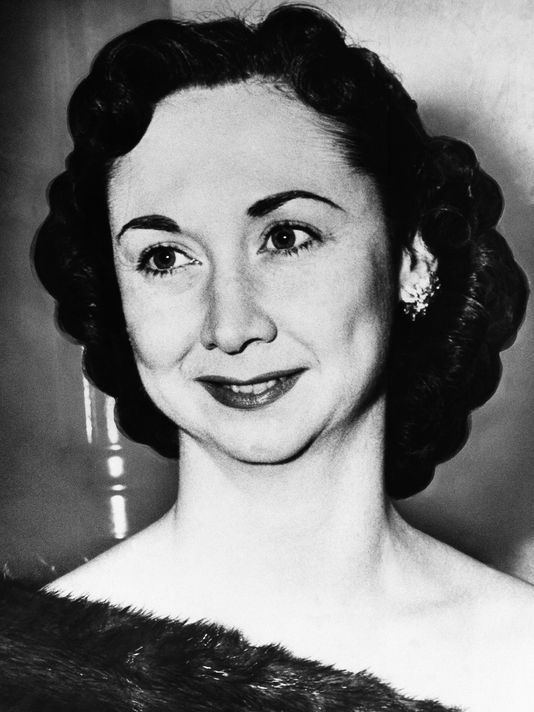
He argued the trial had been unfair because of the media circus and prejudicial publicity.
In 1966, a federal district court agreed.
The U.S. Court of Appeals for the Sixth Circuit affirmed, ordering Sheppard released unless retried.
The U.S. Supreme Court, in *Sheppard v. Maxwell* (1966), ruled that the trial judge had failed to control the media.
Sheppard had been denied a fair trial, the Court held.
The coroner's blood-spatter claim had been testimony, not proof — and the trial that heard it had been compromised.
Sheppard was retried in 1966.
On November 16, 1966, the jury acquitted him of all charges.
He was freed after more than ten years in prison.
Sheppard returned to medicine but struggled with addiction and personal difficulties.
He died on April 6, 1970, at age 46, of liver failure.
The case did not end there.
In the 1990s, the Sheppard family pursued a wrongful-death lawsuit against the state of Ohio.
They sought to have Sam Sheppard declared innocent.
In 2000, a jury found that the state had not proven Sheppard guilty.
But the court declined to declare him innocent, and the lawsuit was dismissed.
Whether Sam Sheppard was actually innocent — the record does not establish this.
The 2000 jury found the state had not proven guilt.
The court declined to declare innocence.
That would require evidence the record does not provide.
The blood-spatter claim was contradicted.
The conviction was overturned.
The acquittal was final.
The declaration of innocence never came.
The story still isn't over.
Advertisement
You may also like
The single blue fiber under a fingernail that unraveled a Green Beret's story
The call came in on February 17, 1970. Military police were sent to the off-post residence of Captain Jeffrey MacDonald, a Green Beret physician…

The 1976 Sacramento rapes that led to a 40-year hunt for a serial predator
It began with reports of a man who slipped through bedroom windows in the Sacramento area of California. The first rapes were reported in…

The Mississippi murder trial where a witness pointed at two men — and the jury still walked them free
The courtroom in Sumner, Mississippi, was quiet. Moses Wright stood and raised his arm. He pointed at Roy Bryant. He pointed at J.W. Milam.…

The fiber evidence that linked a photographer to two river murders — and the trial that hinged on it
The officers were on a bridge over the Chattahoochee River when they heard the splash. It was May 22, 1981, and they saw a…
The jailhouse confession that cracked the Manson case — and the witness who changed everything
Somewhere in the Los Angeles County jail, a woman named Susan Atkins started talking. She was jailed on unrelated charges, a member of the…
Why the defense said Muhammad wasn't at the scene — and the jury still convicted
The Chevrolet Caprice was parked at a rest stop near Myersville, Maryland, when police arrested two men sleeping inside. In the trunk, officers found…