The deleted QuickBooks invoices that placed a business associate at the McStay murders

On the night the McStay family disappeared, someone logged into Joseph McStay’s QuickBooks accounting software.
The login deleted invoices and other records.
A forensic computer expert testified that the deletions were made using a login associated with Charles “Chase” Merritt, a business associate of Joseph McStay.
The deletions occurred while Joseph McStay was already missing.
Why delete financial records on the very night a family vanishes?
Why do it from a computer tied to a business partner?
Why do it at all, if there was nothing to hide?
The record does not say who physically typed those deletions.
It is not established whether the login was used with Merritt’s knowledge.
The defense argued the computer evidence was circumstantial.
The defense argued that Merritt could have been framed.
But the login was traced to Merritt’s computer.
The deletions happened after Joseph McStay was gone.
A machine does not log in by itself.
A login does not prove a hand on the keyboard.
That would require evidence the record does not provide.
The invoices were gone.
The family was gone.
Only the trace of the login remained.
THE DISAPPEARANCE
The family was gone.
Only the trace of the login remained.
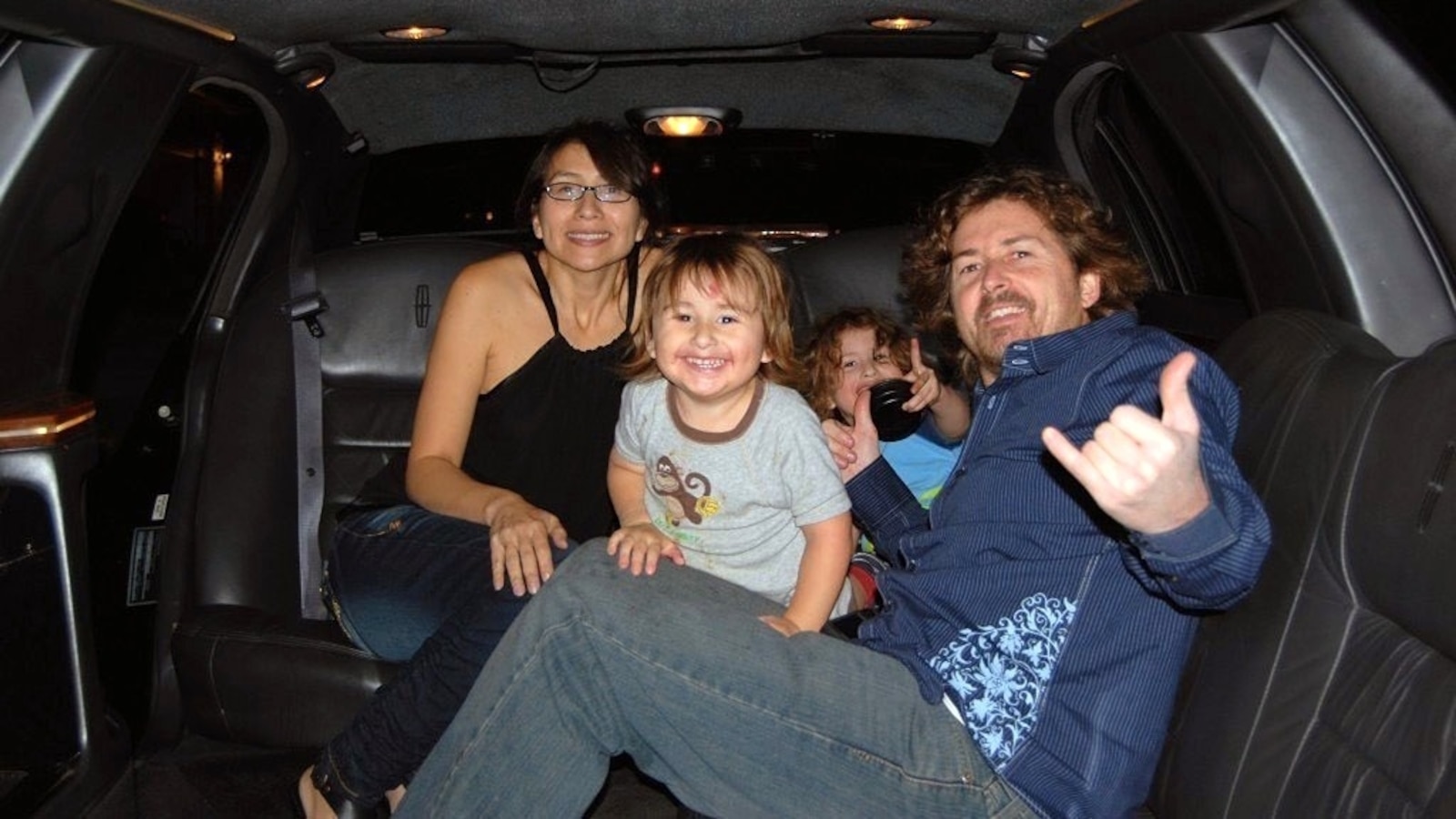
On February 4, 2010, Joseph McStay, his wife Summer McStay, and their two young sons, 4-year-old Gianni and 3-year-old Joseph Jr., were reported missing from their home in Fallbrook, California.
The family's dogs were found in the backyard.
Their vehicles were still at the house.
There were no signs of a struggle.
No forced entry.
No blood.
Just a house that looked as if the family had stepped out for a moment and never returned.
The case went cold quickly.
Then the family's SUV was found at a San Ysidro parking lot near the Mexican border.
Investigators initially suspected the family had crossed into Mexico voluntarily.
That theory was later abandoned.
Why would a family leave their dogs behind?
Why would they leave their vehicles?
Why would they vanish without a single call?
The case went cold.
For three years, the McStay family existed only as missing-person posters and unanswered questions.
Then, in November 2013, a motorcyclist discovered human remains in two shallow graves in the Mojave Desert near Victorville, California.
The remains were later identified as the McStay family.
Joseph and Summer had been beaten to death.

The children had also been killed.
The exact cause and time of death for each victim are not specified in the record.
What the record does show is the span of the loss: four people, buried in the desert, missing for years while investigators searched the wrong direction.
The shallow graves were not near the border.
They were not near Mexico.
They were in the Mojave, a place the family had no known reason to be.
The discovery did not solve the case.
It reopened it.
THE PHONE CALL NEAR THE GRAVES
The phone records were pulled first.
They showed that Merritt's phone had been used to make calls in the area near the gravesites on the night the family disappeared.
That was the same night the McStays vanished from their Fallbrook home.
The graves were in the Mojave Desert near Victorville.
They would not be found for more than three years.
Merritt claimed he had been elsewhere that evening.
The phone records placed him near the burial site instead.
The lead detective of the San Bernardino County Sheriff's Department treated the records as highly damaging.
They contradicted the accused’s own account of his movements.
Investigators also found that Merritt had been paid by McStay for work on the day of the disappearance.
The payment was documented.
The phone calls were not.
The exact content of those calls, and who was on the other end, are not in the record.
That has never been established.
What the record does show is a phone moving through a stretch of desert where a family would later be buried.
It is a location.
It is also an accusation.
The calls were made.
The calls remain silent.
Merritt said he was somewhere else.
The phone said he was not.
THE TWO STORIES
The trial began in January 2019.
The prosecution argued that Merritt killed the family over a financial dispute.
McStay had discovered that Merritt was stealing from their business, the prosecutor said.
The QuickBooks deletions were the anchor of that story.
A forensic computer expert testified that the deletions on McStay's computer were made using a login associated with Merritt.
The deletions happened while McStay was already missing.
The phone records placed Merritt near the burial site.
The defense told a different story.
Merritt was innocent, his attorney maintained, and the evidence was circumstantial.
The computer evidence could have been the result of framing, the defense argued.
A login can be used by someone else. A phone can be somewhere it is not.
That would require evidence.
The murder weapon was never recovered.
The victims were beaten with a blunt object, but the specific weapon was not identified.
Two narratives sat before the jury.
One was built on financial motive and digital trails.
The other on doubt and the possibility of being set up.
The jury deliberated for approximately two weeks.
In June 2019, they found Merritt guilty of all four counts of first-degree murder.
In August 2019, he was sentenced to life in prison without the possibility of parole.
The phone said one thing. The computer said another.
The jury believed the machines.
AND THE STORY STILL ISN'T OVER
Charles Merritt is currently serving his life sentence at a California state prison.
He has maintained his innocence and has filed appeals.
His appeals have been unsuccessful to date.
The specific status or next hearing date of those appeals is not in the record.
The murder weapon was never recovered.
The victims were beaten with a blunt object, but the specific weapon was not identified.
That is what the record does not establish: the weapon, and the full truth of what happened in the desert.
What the record does establish is the conviction.
The jury deliberated for approximately two weeks before finding him guilty of all four counts of first-degree murder in June 2019.
The phone records placed him near the burial site.
The QuickBooks deletions were traced to his computer.
The jury believed the machines.
The McStay family's deaths remain a significant case in San Bernardino County history.
The case has been the subject of documentaries and news coverage.
The families of the victims have spoken about their relief at the conviction.
The loss of the entire family unit has been described as devastating.
A father, a mother, two young sons.
The legal battle continues.
The appeals have been unsuccessful to date.
That is a fact.
What remains unproven is any theory of framing.
The defense argued the computer evidence was circumstantial and that Merritt could have been framed.
That argument did not persuade the jury.
The sentence was life in prison without the possibility of parole.
He is serving it now.
The case is over in one sense.
It is not over in another.
The weapon is still unknown.
The full story is still unknown.
The appeals continue.
Advertisement
You may also like
FBI says Laundrie's notebook admitted to Petito's killing — yet full contents never released
A notebook was found near Brian Laundrie’s remains in Myakkahatchee Creek Environmental Park, Florida, on October 20, 2021. A gun was found nearby, and…
The 1967 trial that put the Boston Strangler's confession in the witness box
He confessed in 1964. Albert DeSalvo was already in custody on other charges when he sat down with a prosecutor from the Massachusetts Attorney…
The torn pajama top near Colette MacDonald's body that investigators said was staged
February 17, 1970. Military police were called to the off-base home of Army Captain Jeffrey MacDonald at Fort Bragg, North Carolina. Inside, they found…

The snowbound night three rock stars flew into a storm — and the last song they ever played
The cornfield near Clear Lake, Iowa, did not give up its secret until morning. On February 3, 1959, a small Beechcraft Bonanza had left…
A 'kill note' found in Adnan Syed's car — the defense called it a lie. The jury heard it anyway.
A single piece of paper, folded and placed inside a gray Nissan, sat in a glovebox. In February 1999, police searching Adnan Syed's car…
The courtroom outburst that silenced Polly Klaas's killer trial
The jury had already said guilty on every count. Then Richard Allen Davis stood up in the penalty phase and turned toward the victim's…