A 'kill note' found in Adnan Syed's car — the defense called it a lie. The jury heard it anyway.
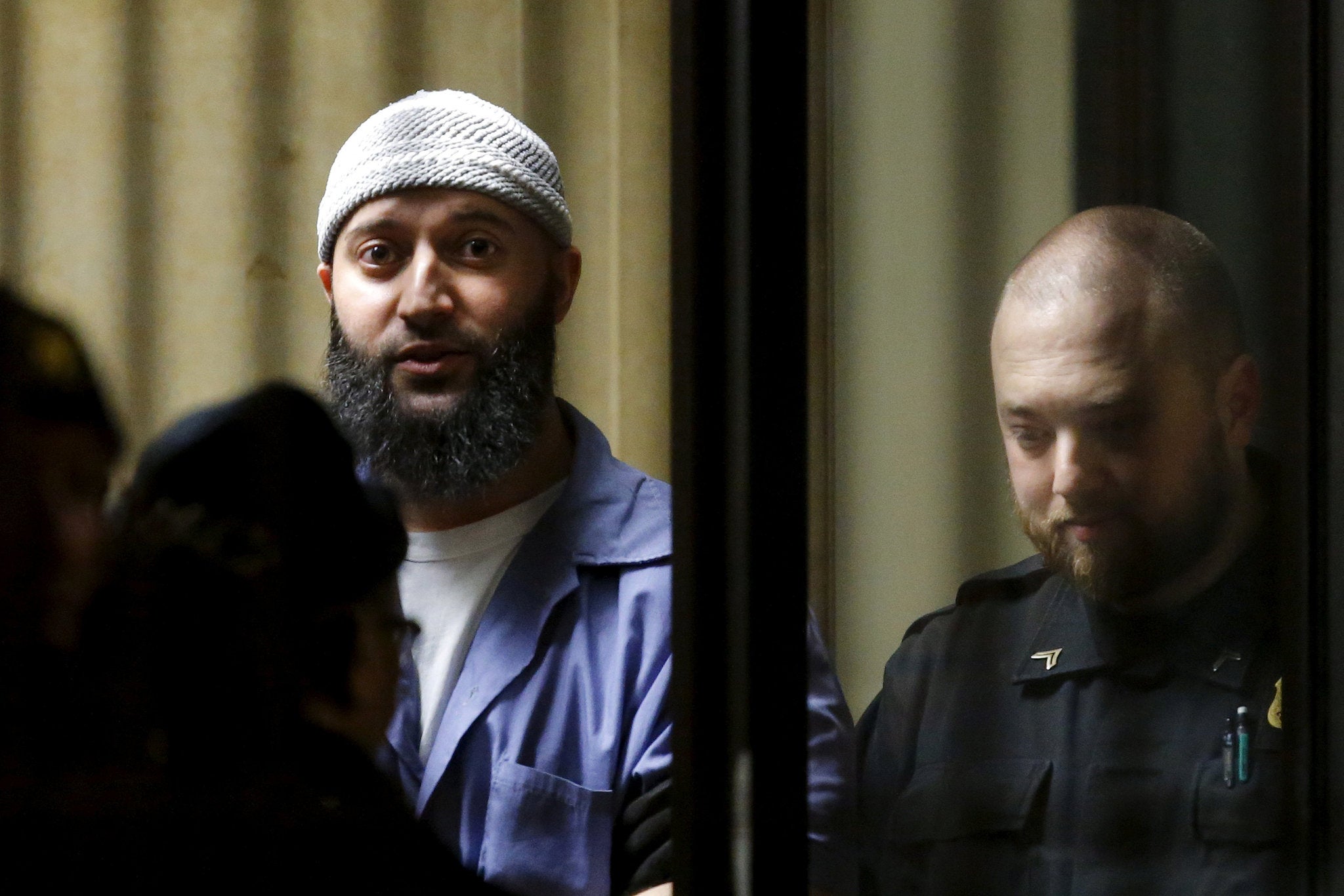
A single piece of paper, folded and placed inside a gray Nissan, sat in a glovebox.
In February 1999, police searching Adnan Syed's car found that note.
The prosecution would later call it a "kill note."
The defense, led by Cristina Gutierrez, called it a lie — a piece of fiction, not a confession.
The jury heard the note read aloud in court, despite the defense's objections.
What was on it?
Who wrote it?
Why did the judge let the jury hear it?
The exact text of the note is not established by the record.
Who wrote it is not established either.
Only that it was found in Syed's car, and that it became a flashpoint at trial.
Gutierrez argued the note was nothing more than a story — words on paper that meant nothing.
The prosecution argued the note was a statement of intent, a confession written before the act.
The jury sat and listened.
It was a single piece of paper, and it carried the weight of a life.
Not because the record proves what it said.
But because the jury heard it anyway.
The note's contents remain outside the record, a gap that no testimony filled.
It was found in the car.
It was read aloud.
It was disputed.
That is all the trial record establishes.
The paper itself did not speak; the voices around it did.
THE DISAPPEARANCE AND THE BODY
Hae Min Lee, 18, was last seen on January 13, 1999, after leaving Woodlawn High School.
She did not come home that night.
Her mother reported her missing the next day, according to accounts of the investigation.
The lead detective from the Baltimore County Police Department took charge of the search.
For weeks, there was no body and no clear answer.
Then, on February 9, 1999, a man referred to in court as Mr. S found her body in Leakin Park, Baltimore.
She had been strangled, the medical examiner would later testify.
The exact circumstances of her disappearance are not established in the record.
The time of death is not established in the record.
Mr. S found the body, and the defense raised the possibility that he could have been involved.
That possibility was not pursued in court.
Her gray Nissan was found abandoned in a residential neighborhood on February 28, 1999.
The car was central to the investigation.
The car was found nineteen days after the body.
The car was found the same day Adnan Syed was arrested.
It is a timeline of gaps.
She was last seen leaving school.
She was found in a park.
Her car turned up in a neighborhood.
What happened in between, the record does not say.
THE STATE'S CASE AND THE DEFENSE'S PUSH
The trial began in October 1999, in a Baltimore courtroom.
Adnan Syed, Lee's ex-boyfriend, was arrested on February 28, 1999, and charged with first-degree murder.
The state's key witness was a classmate, Jay Wilds, who said he helped Syed bury the body.
Wilds took the stand and told the jury he was there.
The defense argued his testimony was inconsistent, a story that shifted.
Cell phone records placed Syed near Leakin Park around the time of the murder.
The defense argued they were unreliable.
The records were phone company logs, not coordinates, they said — they showed which tower a call pinged, not where a person stood.
The medical examiner testified Lee died of strangulation.
The prosecution, led by Kevin Urick, argued a note found in Syed's car was a "kill note."
The defense called it a lie.
A piece of fiction, they said — not a confession, not a plan, just words the state chose to read as a threat.
The judge presided over the proceedings; the judge's name is not in the record.
The jury heard the note read aloud.
Not because the defense wanted it. Because the prosecution argued it mattered.
The note's contents remain unknown — the record does not establish what it said, who wrote it, or when.
The state built its case on Wilds, on the phone records, on the note.
The defense pushed back on all three.
Wilds was inconsistent. The records were unreliable. The note was a lie.
Three claims from the state. Three counterclaims from the defense.
The jury had to weigh them.
How they weighed them would decide everything.
THE VERDICT AND THE YEARS AFTER
The jury returned its verdict on February 25, 2000.
Guilty of first-degree murder.
The judge sentenced Syed to life in prison plus 30 years.
Gutierrez filed for a new trial.
The motion was denied.
Appeals were unsuccessful for years.
Not because the evidence was settled.
Because the courts kept finding the process sufficient.
Then, in 2014, Sarah Koenig's "Serial" podcast re-examined the case.
It raised questions about the cell phone records.

It raised questions about Wilds's testimony.
It did not resolve them.
In 2016, a Maryland appellate court ordered a new trial.
The state's highest court reinstated the conviction in 2019.
In 2022, a Baltimore judge vacated the conviction.
Prosecutors had cited unreliable cell data.
They had cited the failure to disclose evidence about another suspect.
The identity of that other suspect is not in the record.
The note's role in the vacatur is not specified either.
Syed was released in September 2022.
In 2023, the charges were formally dropped.
What remains is a conviction that shifted, then fell.
What remains is a case the record does not close.
The jury heard the note.
The defense called it a lie.
The years after the verdict never settled which was true.
AND THE STORY STILL ISN'T OVER
The “Serial” podcast kept the case in the spotlight years after the verdict.
Sarah Koenig, its creator, re-examined the evidence and raised questions.
The questions were about cell phone records. They were about Jay Wilds’s testimony.
The “kill note” — called a lie by the defense, heard by the jury — remained a symbol of what was contested.
It was a symbol of what the trial never settled.
The record does not establish what the note truly was.
It does not establish who wrote it.
It does not establish what it said.
The prosecution called it a confession. The defense called it a lie. The jury heard it either way.
The public debate continues, but the legal case has closed.
In 2022, a Baltimore judge vacated Syed’s conviction after prosecutors cited unreliable cell phone data.
In 2023, the charges were formally dropped.
Syed was freed.
The case remains a subject of public debate.
What happens next?
Is there a pending hearing?
Is there a motion in the file?
That would require evidence.
Any future legal steps are not in the record.
The record holds a verdict, an appeal, a vacated conviction, and dropped charges.
It holds a note that was read aloud in court.
It does not hold what the note was.
The story is not neatly closed.
The note, and the questions around it, linger.
Advertisement
You may also like
The 2007 deal that kept Epstein's federal case secret — and the phone records that broke it open
In 2005, a mother walked into a Palm Beach police station and told officers her 14-year-old stepdaughter had been sexually abused at a mansion.…
The $5,800 bundle of cash a boy found along a riverbank in 1980
The boy was eight years old, playing along the Columbia River near Vancouver, Washington, in 1980. He found a rotting bundle of cash half-buried…
Why did Susan Atkins confess to a cellmate — and what did Kasabian see?
Virginia Graham had a cellmate who talked. Susan Atkins was in jail in October 1969 on unrelated charges when she told Graham about the…
The palm print on a rifle that sealed a president's fate
Dealey Plaza, 12:30 p.m. Central Standard Time, November 22, 1963. President John F. Kennedy was fatally shot while riding in the motorcade. Within hours,…
The glove that did not fit: how one courtroom moment shook a murder case
He pulled on the glove. Not easily. Not smoothly. In the courtroom, O.J. Simpson struggled to put on a pair of leather gloves —…
Why the Amityville jury heard about a personality disorder — and rejected it
The neighbor who called police that morning reported a disturbance at 112 Ocean Avenue in Amityville, New York. It was November 13, 1974. Officers…