The glove that did not fit: how one courtroom moment shook a murder case
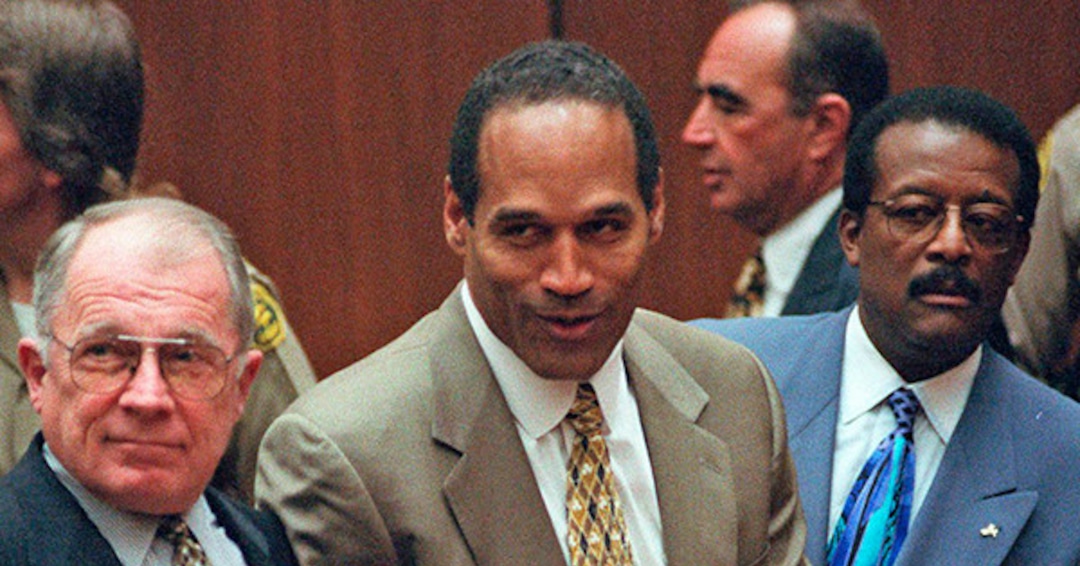
He pulled on the glove.
Not easily. Not smoothly.
In the courtroom, O.J. Simpson struggled to put on a pair of leather gloves — the same style found at the crime scene and on his estate grounds, according to the source.
He tugged at the fingers. He flexed his hand.
The prosecution argued the gloves had shrunk from blood saturation.
The defense used the moment to suggest the gloves did not fit Simpson.
That gesture became a pivotal visual in the trial.
It was a single moment, captured on camera, replayed across the country.
Did the gloves fit?
Did they not?
The record does not establish that the gloves definitively did or did not fit Simpson.
The source describes only the struggle and the competing arguments.
That is all it describes.
The prosecution said the leather had tightened, soaked in blood, dried smaller.
The defense said the gloves simply did not belong on Simpson's hands.
Two stories, one pair of gloves.
The knife used in the killings was never recovered.
That, too, is in the record.

So the courtroom became the place where evidence was weighed — a glove, a struggle, a jury watching.
Not because the moment was proof.
But because the moment was visible.
It is a question the record leaves open.
It is also a question that may have shifted everything.
That would require evidence.
THE BODIES ON BUNDY
She was on the ground below.
A neighbor walking her dog found them at approximately 12:10 a.m. on June 13, 1994.
Nicole Brown Simpson, 35, lay at the base of the stairs leading to her front door.
Ron Goldman, 25, was nearby.
He was a waiter at the Mezzaluna restaurant, and he had returned Nicole’s mother’s eyeglasses earlier that evening.
Both had been killed with a knife.
Goldman had defensive wounds.
The exact time of death is not specified in the source; only the discovery time is given.
The street was Bundy Drive, in the Brentwood neighborhood of Los Angeles.
A dog walker stumbled onto a double homicide.
The randomness of it is the horror of it.
One ordinary errand — returning eyeglasses — ended in a waiter’s death.
One ordinary walk — a dog, the dark, a path — ended in a discovery.
The record gives the scene, the victims, the weapon type.
The record does not give the hour the knife was used.
It gives the hour the neighbor saw what the night had left.
That would require evidence.
THE BLOOD TRAIL
They went to Rockingham to tell him.
Detectives Philip Vannatter and Tom Lange arrived at O.J. Simpson's estate after attempts to notify him of Nicole's death.
A white Ford Bronco sat outside, blood on the door and on the console.
Simpson was not home. He had flown to Chicago.
A bloodstained glove was found on the estate grounds.
A matching glove was found at the crime scene on Bundy Drive.
Blood drops were later identified on the driveway. In the Bronco. In Simpson's bedroom.
The prosecution built its case on DNA linking Simpson to the blood at both locations.
Criminalist Dennis Fung and his colleague Collin Yamauchi handled those samples for the prosecution.
The defense attacked how the evidence was handled.
They argued the blood samples had been contaminated during collection and storage.
:max_bytes(150000):strip_icc():focal(749x0:751x2)/PEOPLE_MAG_BROWN_SISTERS_nicole-tout-1067c705ba0c4ab7a7e648e3ffd95be0.jpg)
They argued Detective Mark Fuhrman had planted the glove.
Fuhrman's earlier recorded statements, in which he used racial slurs and boasted about fabricating evidence, damaged the prosecution's credibility.
Whether the blood was contaminated or planted is not established.
The source presents those as defense arguments.
The record shows the blood was found. It shows where it was found. It shows who collected it.
What the blood meant — that was the fight.
TWO STORIES, ONE PAIR OF GLOVES
Two stories formed around one pair of gloves.
The prosecution, led by Marcia Clark and Christopher Darden, built its case on DNA evidence, a history of domestic violence, and a timeline of Simpson’s movements that night.
The defense told a different story: Simpson was framed, and the evidence was mishandled.
Not because the science was wrong, the defense argued.
But because the people collecting it made mistakes.
The defense pointed to LAPD criminalists, including Dennis Fung, and the procedural errors in how samples were gathered and stored.
Detective Mark Fuhrman’s earlier recorded statements — racial slurs, boasts about fabricating evidence — damaged the prosecution’s credibility in a way no lab report could repair.
Whether Fuhrman actually planted the glove is not established.
The source presents that as a defense argument.
Then came the gloves themselves.
In court, Simpson struggled to put them on.
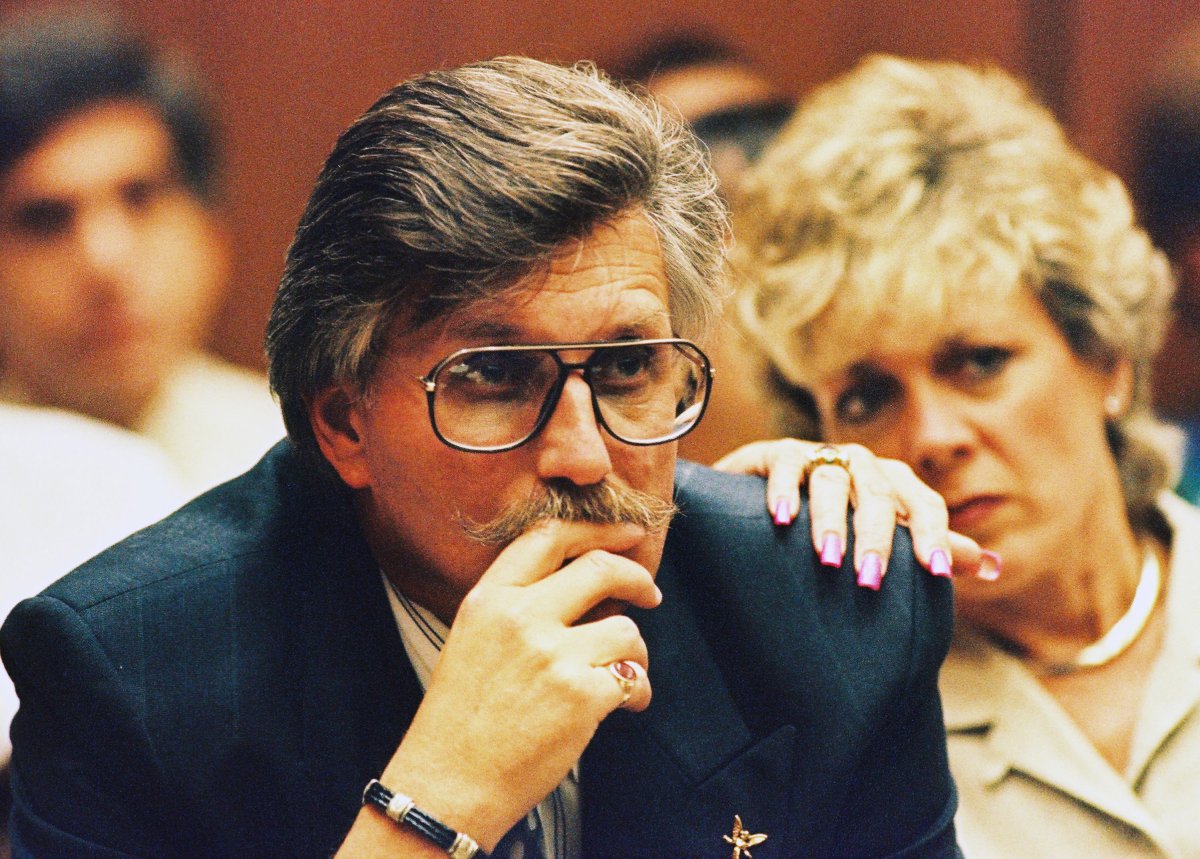
The prosecution said they had shrunk from blood saturation.
The defense said they did not fit.
Two plausible readings of the same leather.
Neither proven by the record.
It is a moment that looks like proof.
It is also a moment that proves nothing on its own.
The record shows the glove was found at the crime scene.
It shows a matching glove was found on the estate grounds.
It shows Simpson struggled with them in front of the jury.
What that struggle meant — that was the fight.
The prosecution saw shrinkage; the defense saw innocence.
The jury saw a man wrestling with evidence.
The camera saw what the courtroom saw.
One pair of gloves.
Two stories.
No verdict from the leather itself.
AND THE STORY STILL ISN'T OVER
The jury acquitted Simpson of both murder charges on October 3, 1995.
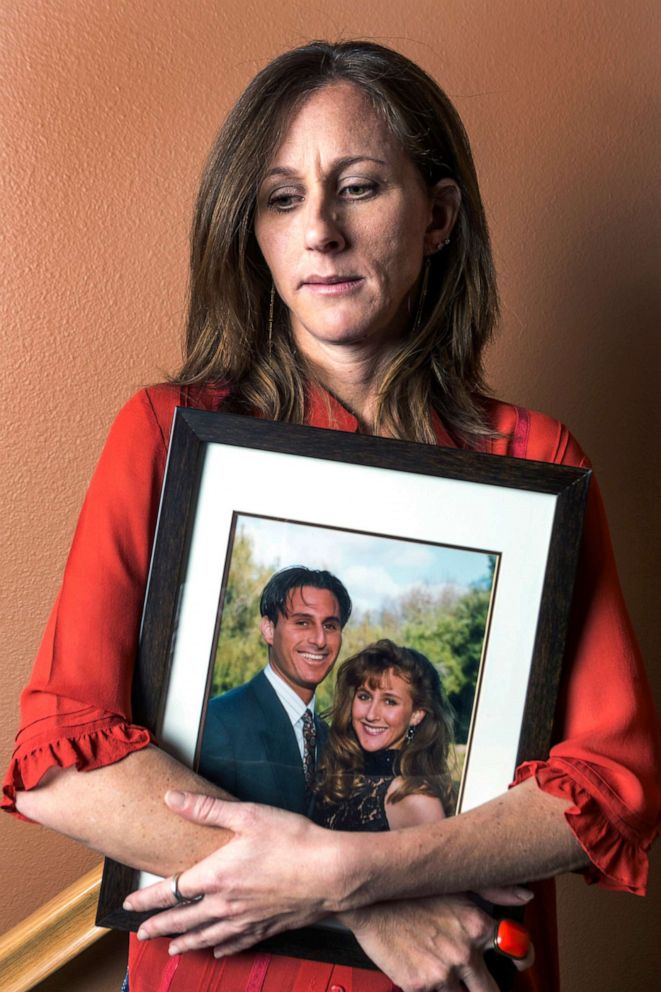
The verdict was read live on television, and an estimated 100 million people watched.
It was a criminal acquittal.
It was not a finding of innocence.
The criminal case was over, but the civil case was not.
In 1997, a civil jury in Santa Monica found Simpson liable for the wrongful deaths of Nicole Brown Simpson and Ronald Goldman.
That jury ordered him to pay $33.5 million in damages.
Liability is not the same as guilt beyond a reasonable doubt.
The two verdicts told two different stories about the same pair of gloves.
Simpson was later convicted in 2008 of armed robbery and kidnapping in Las Vegas.
He was sentenced to 9 to 33 years in prison.
He was released on parole in October 2017.
He died on April 10, 2024, at age 76, after a battle with cancer.
The Goldman family has continued to pursue the civil judgment.
They have made efforts to seize Simpson's assets.
The murders remain officially unsolved in one sense: no one else has been charged.
Whether anyone else was involved is not established.
The record does not answer that question.
The civil judgment established Simpson's liability.
The criminal record shows an acquittal.
The gloves were real.
The struggle to put them on was real.
The meaning of that moment remains a matter of interpretation.
That would require evidence.
Advertisement
You may also like
The blood on his pajama sleeve that contradicted Jeffrey MacDonald's intruder story
The pajama sleeve was examined under a microscope, and the blood on it held a pattern. The pattern was a transfer, a smear of…
The defense’s claim that McVeigh was a scapegoat — and the witness who testified he built the bomb
The blast at the Alfred P. Murrah Federal Building occurred at 9:02 a.m. on April 19, 1995. It killed 168 people and injured more…
One palm print from the Zodiac's Lake Berryessa attack that no lab could ever match
A palm print and a partial fingerprint were left at the Lake Berryessa scene on September 27, 1969. They are part of the official…
Eleven Branch Davidians on trial: the defense claim of self-defense against a government raid
The warrant was for Mount Carmel Center, a ranch near Waco, Texas, and for the arrest of David Koresh. It was February 28, 1993,…
The truck painter who picked up victims on Pacific Highway South — and the DNA that ended 20 years of silence
He painted trucks for a living, the same job for decades. He lived in Auburn, a Seattle suburb, and went to church. He was…
The fishing trip Scott Peterson said he took — and the evidence that says otherwise
He told investigators he spent the morning of December 24, 2002, fishing alone at the Berkeley Marina. That was the claim. It became the…