The truck painter who picked up victims on Pacific Highway South — and the DNA that ended 20 years of silence
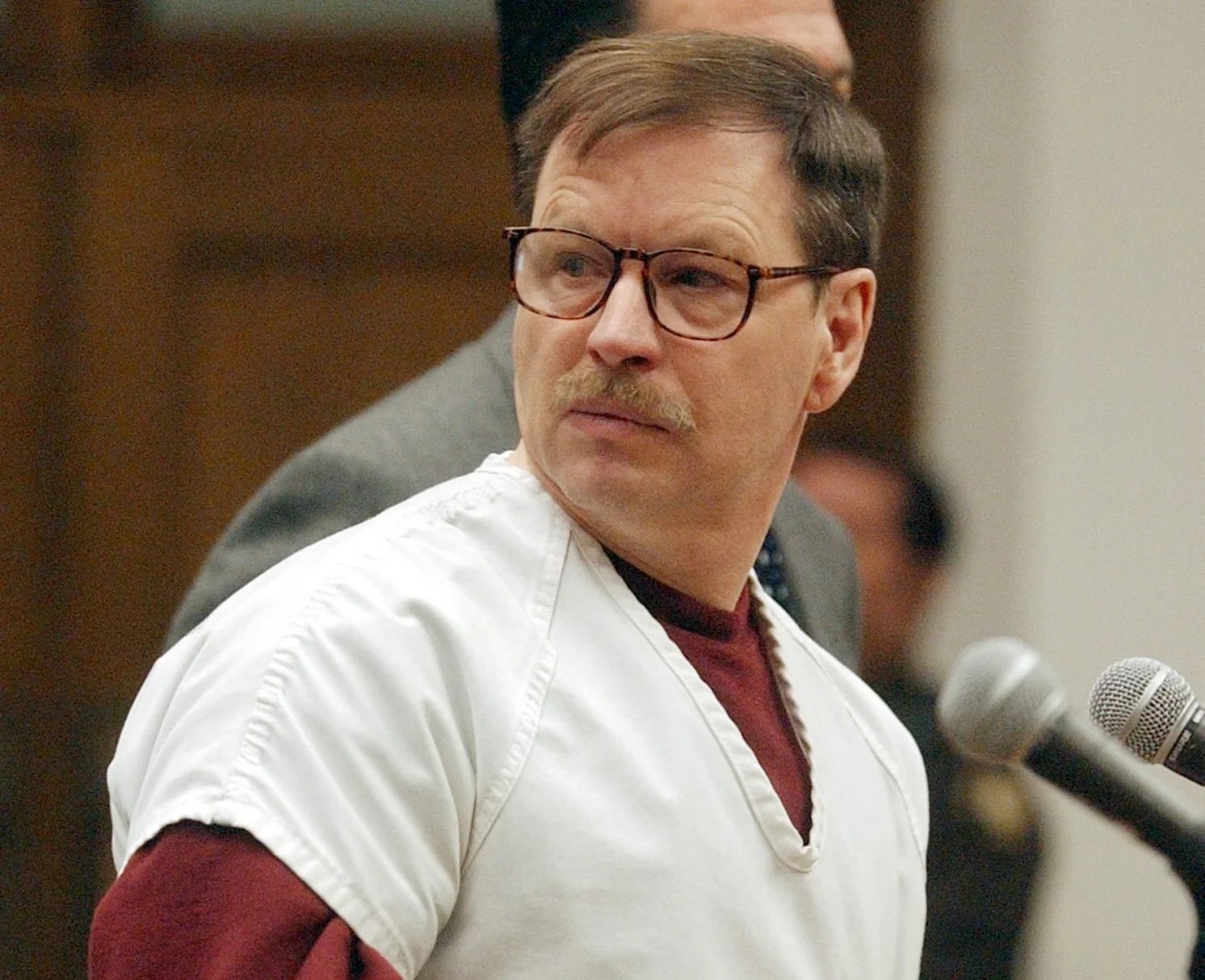
He painted trucks for a living, the same job for decades.
He lived in Auburn, a Seattle suburb, and went to church.
He was married more than once.
The truck was a pickup.
That is where the record meets the road: the pickup, and the corridor.
Between 1982 and 1998, women disappeared from the Pacific Highway South corridor in King County, Washington.
Most of them were sex workers, runaways, or vulnerable young women.
They were gone from that stretch of highway, and some were later found in the Green River, along its banks, in wooded areas, in gravel pits.
The man who painted trucks lived an outwardly ordinary life.
That is the documented record of his habits.
It is not established that he knew any of the victims personally before picking them up.
That remains a theory circulating online, not a fact the record supports.
What the record does show is the pickup, the corridor, and the disappearances.
How did no one see it?
How does a man attend church and work the same job for decades while women vanish from a highway he drove?
How does that life hold together?
The record does not answer that.
It only holds the facts side by side: the ordinary man, and the road where they disappeared.
THE CORRIDOR AND THE TASK FORCE
The first bodies surfaced in 1982, in the Green River.
They were found in the water, along its banks, and in the wooded areas and gravel pits that spread across the region south of Seattle.
Detectives formed a task force.
At its peak, that task force included dozens of investigators pulled from multiple agencies.
The case was marked by early missteps from the start.
A prime suspect, Melvin Foster, was investigated.
He was later cleared.
The exact number of task force investigators is not specified in the record.
What the record does show is scale: the task force interviewed thousands of people.
It compiled extensive files on potential suspects.
It held those files side by side, the way the record holds the ordinary man and the road.
The road was the Pacific Highway South corridor.
The victims were most of them sex workers, runaways, or vulnerable young women.
They disappeared from that corridor between 1982 and 1998.
Their bodies were found in the river, along its banks, in the woods, in the gravel pits.
Was the corridor the connection?
Was the river the connection?

Was the profile the connection?
That would require evidence.
The evidence came slowly, and it came from DNA.
But in 1982, there was no DNA match waiting.
There was a task force, dozens of investigators, thousands of interviews, and a cleared suspect.
There were files.
There was a road.
And the road kept taking them.
THE TRAFFIC STOP
The break came in 1987.
A traffic stop, and witness statements, placed Ridgway in the path of the investigation.
He was identified as a suspect.
There was insufficient evidence to charge him.
He was interviewed, and he was released.
The specific details of that traffic stop are not in the record.
The specific contents of those witness statements are not in the record.
What remains is the sequence: the stop, the statements, the interview, the release.
The lead detective for much of the investigation had worked the Ted Bundy case before this one.
He knew what a near-miss looked like.
He knew how a suspect could walk out of a room and keep walking for years.
Ridgway walked out.
The files on him went into the stack with the rest.
The task force had interviewed thousands of people.
They had compiled extensive files on potential suspects.
A prime suspect had been investigated and cleared.
The road stayed open.
The corridor stayed open.
What would have happened if the evidence had been stronger in 1987?
What would have happened if the DNA technology of 2001 had existed then?
What would have happened if the witness statements had been enough?
That would require evidence the record does not contain.
So the interview stands where it stands.
The release stands where it stands.
And the investigation went back to the river.
THE DNA MATCH
In 2001, advances in DNA technology allowed forensic scientists to match Ridgway's DNA to semen found on three victims.
The names of those three victims are not specified in the record.
That match was the link twenty years of investigation could not find.
It was the evidence that led to his arrest.
The relief was real. The horror was real. The break had finally come.
Then came the negotiations.
During plea negotiations, Ridgway agreed to lead investigators to burial sites in exchange for a sentence of life without parole rather than the death penalty.
Life instead of death. Bodies instead of silence.
His cooperation resulted in the recovery of remains of several additional victims.
Not all of them. Some of them.
The river gave back what it had held. The gravel pits gave back what they had held. The wooded areas gave back what they had held.
What the record establishes is the deal and its terms. What the record establishes is the recovery. What the record establishes is that he talked.
That would require his cooperation. That would require the plea. That would require the trade.
He traded the needle for a cell. The families traded the unknown for a grave.
The DNA did what the task force could not. The DNA did what the interviews could not. The DNA did what the traffic stop could not.
It held him.
AND THE STORY STILL ISN'T OVER
In 2003, Ridgway pleaded guilty to 48 counts of aggravated first-degree murder.
The judge sentenced him to 48 consecutive life sentences without the possibility of parole.
Not a single death sentence. But a deal.
The agreement required his full cooperation in locating remains. He led investigators to burial sites. The families traded the unknown for a grave.
Then, in 2011, the story moved again.
Ridgway was charged with an additional murder — that of Rebecca Marrero — after DNA evidence linked him to her death.
He pleaded guilty to that charge in 2011.
Forty-nine convictions now. Forty-nine.
But the number is not settled.
The total number of victims Ridgway may have been responsible for is not definitively established. He later said the true number was higher than 48. The record does not resolve that claim.
He is serving his life sentences at the Washington State Penitentiary in Walla Walla.
He has remained there since 2003. He has continued to cooperate with investigators in efforts to identify additional victims and locate remains.
Why would he keep talking?
Not because the sentences change. Not because parole exists. Not because the death penalty returns.
Because the case is not closed.
The King County Sheriff's Office maintains an active cold case unit. That unit continues to review unsolved cases potentially linked to Ridgway.
What remains in the river. What remains in the gravel pits. What remains in the files.
He knows where the graves are. He has said so. He has shown some.
How many more are there? How many names are still missing? How many families are still waiting?
That would require evidence. The evidence is still being gathered.
Advertisement
You may also like
The bloody glove found on O.J. Simpson's estate that didn't fit in court
The glove lay on the ground of the estate on Rockingham Avenue. It was a bloody glove, discovered by a detective who had come…
The dentist who was a person of interest in the Black Dahlia case, then quietly cleared
She thought it was a mannequin. A local resident, walking in Leimert Park on the morning of January 15, 1947, saw what looked like…
The Glock Keffe D says he handed over — and the white Cadillac that changed rap history
The white Cadillac moved down the Las Vegas Strip on the night of September 7, 1996. A black BMW 750iL rolled ahead of it,…
The 14-foot aluminum fishing boat Scott Peterson bought weeks before Laci vanished
A 14-foot aluminum fishing boat. That is what Scott Peterson bought weeks before Laci vanished, a documented purchase, not a rumor. On December 24,…
Why a Colorado jury heard a confession that changed everything about the Watts family case
The friend called police on the morning of August 13, 2018. Shanann Watts, 15 weeks pregnant, was missing with her daughters, Bella, 4, and…
The blood on his pajama sleeve that contradicted Jeffrey MacDonald's intruder story
The pajama sleeve was examined under a microscope, and the blood on it held a pattern. The pattern was a transfer, a smear of…