The torn pajama top near Colette MacDonald's body that investigators said was staged
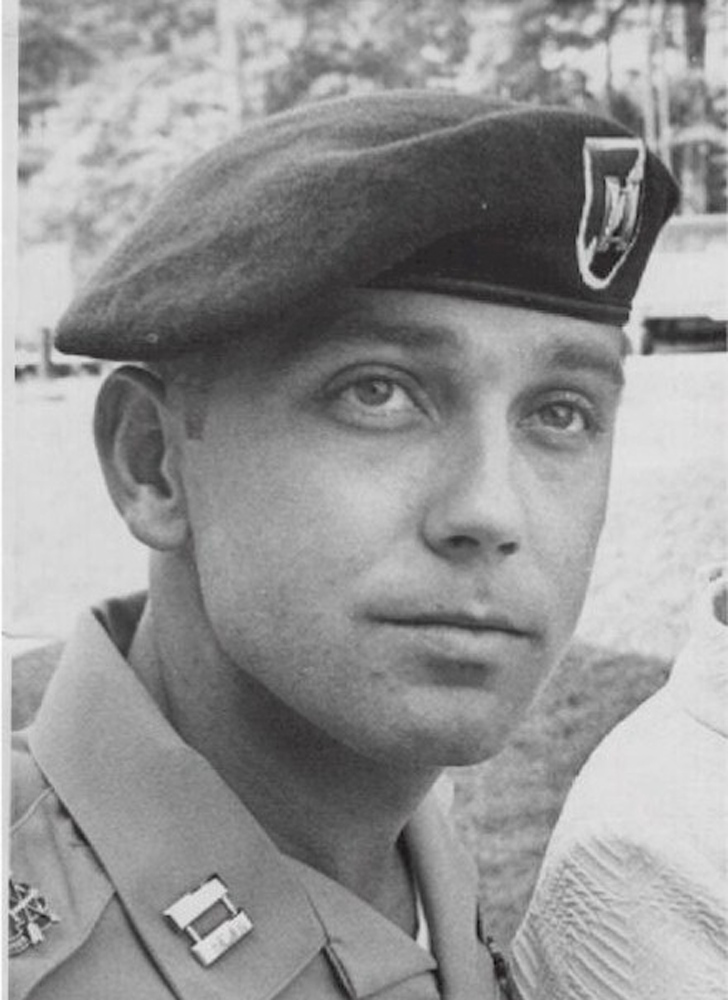
February 17, 1970.
Military police were called to the off-base home of Army Captain Jeffrey MacDonald at Fort Bragg, North Carolina.
Inside, they found Colette MacDonald, pregnant, and her two daughters, 5-year-old Kimberly and 2-year-old Kristen.
All three were dead from multiple stab wounds and blunt-force injuries.
Near Colette's body lay a torn pajama top.
A single object on the floor, among the blood and the broken quiet of the home.
MacDonald himself had superficial wounds.
He said four drug-crazed hippies had attacked the family.
That story he would maintain for years.
But the pajama top was not just a piece of clothing.
Investigators would later argue it was used by MacDonald to stage the scene.
Not because the tear itself proved anything.
Because of where it lay, and what the blood on it suggested.
The exact origin of the tear is not established in the record.
Who placed the pajama top is not established in the record.
What remains is the object itself, described in testimony and reports.
It sat near Colette's body while the investigation began.
It would be examined, photographed, argued over.
Why did that torn fabric matter so much?
Why did investigators return to it again and again?
Why did it carry more weight than MacDonald's account of intruders?
That would require evidence.
THE 1970 INVESTIGATION
CID agents led the initial military investigation.
Their crime-scene procedures were sloppy.
Evidence was mishandled.
The scene was not properly preserved.
The agents walked through a house where a pregnant woman and two children lay dead.
They collected what they could, and what they collected would not hold.
MacDonald told them four drug-crazed hippies had broken in.
He said he fought them, that he was stabbed, that he woke to find his family gone.
His story was inconsistent.
The details shifted.
The timeline did not hold.
But the Army dropped the charges in 1970.
Insufficient evidence, the Army said.
The case went quiet.
Then Colette's stepfather pushed.
He pressured officials.
He would not let the deaths sit in a file.
The case was reopened.
CID agents went back to the evidence they had mishandled.
The specific names of those agents are not in the record.
What is in the record is the state of their work.
It is a record of what was lost.
It is a record of what was moved.
It is a record of what was never properly examined.
The torn pajama top near Colette's body was among the items they had collected.
They argued it was staged.
They argued MacDonald placed it there.
That argument would take years to make stick.
That argument would require the blood evidence to be re-read.
But in 1970, the Army was done.
The reopening did not come from new evidence.
It came from a family that refused to stop asking.
THE REOPENED CASE AND THE PAJAMA TOP
It was the torn pajama top that reopened the case.
Not new witnesses. Not a confession. A piece of cloth near Colette MacDonald’s body, and the blood on it.
The exact details of the blood-type analysis are not in the record beyond the suggestion of mixed blood.
That suggestion was enough.
Investigators argued the pajama top had been used by MacDonald to stage the scene.
They said the tear was not from a struggle. They said it was placed.
Blood spatter told a different story than the one he told.
The positioning of the bodies contradicted his account of four intruders.
Forensic testimony described where the blood fell, how it pooled, where it did not.
It did not match a chaotic attack by strangers.
It matched something more controlled.
A 1979 federal grand jury indicted MacDonald.
The trial leaned on that forensic testimony.
The torn pajama top was a centerpiece.
Not because it proved the killing.
Because it proved the staging.
The blood-type analysis suggested MacDonald’s blood was mixed with his family’s.
That is a suggestion. That is not established.
What is established is what the investigators argued, and what the jury heard.
They heard about the tear.
They heard about the placement.
They heard about the blood that did not fit the story.
The record does not say exactly how the analysis was performed.
It says what it suggested.
It says what the prosecution did with it.
The pajama top sat near Colette’s body.
Investigators said it was staged.
That argument carried the case from 1970 to 1979.
It carried it into the courtroom.
THE TRIAL AND THE TWO STORIES
Prosecutors Brian Murtagh argued the murders were the result of a rage-fueled attack, not an intruder.
The torn pajama top was the hinge.
It lay near Colette MacDonald's body, and investigators said MacDonald tore it himself.
They said he used it to stage the scene, to make the killing look like the work of strangers.
The defense, led by attorneys Bernard Segal and Wade Smith, contended the physical evidence was inconclusive.
Not because they had a better story.
Because the blood, the fibers, the torn cloth — none of it, they said, proved who held the knife.
The prosecution answered with the pajama top's position.
The blood-type analysis.
The way the bodies lay.
Each detail pointed one way, they said, toward the man who called in the attack.
The defense's specific arguments beyond "inconclusive" are not in the record.
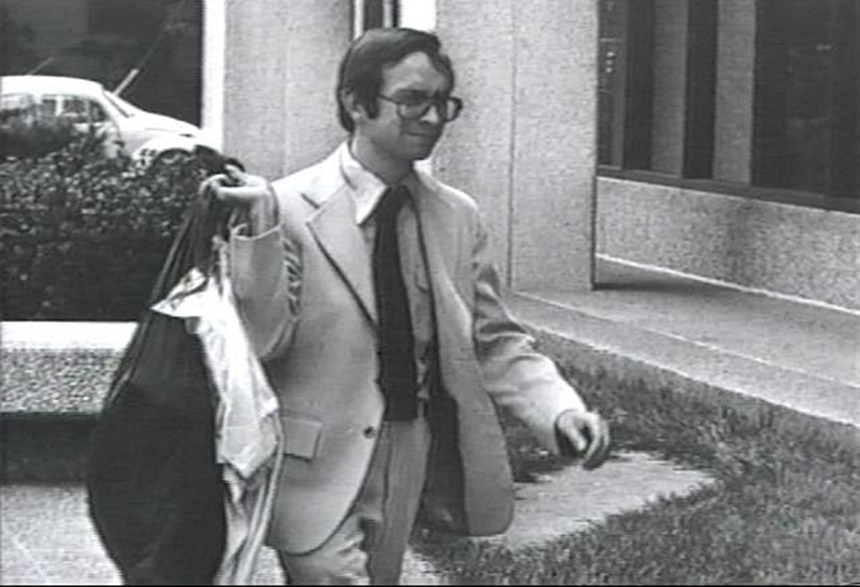
What remains is what the jury heard.
MacDonald was convicted of three counts of first-degree murder.
He was sentenced to three consecutive life terms.
The conviction was upheld on appeal.
A later appeal to the Fourth Circuit was rejected.
Two stories stood in that Raleigh courtroom.
One said four intruders came through the night.
The other said the evidence fit one man alone.
The jury chose the second.
The pajama top stayed the center.
It was torn.
It was placed.
It was staged, the prosecution said.
That version carried the verdict.
AND THE STORY STILL ISN'T OVER
The conviction was upheld on appeal.
The Fourth Circuit rejected a later appeal.
Decades of filings followed.
MacDonald has filed numerous appeals.
Each one unsuccessful.
He has claimed prosecutorial misconduct.
Federal courts denied those claims.
He remains incarcerated, serving three consecutive life sentences.
The case has become books.
It has become documentaries.
Some authors argue for his innocence.
Others argue against it.
The torn pajama top appears in most of them.
The blood-spatter testimony appears in all of them.
The record does not establish a next hearing date.
It does not establish a pending motion.
The appeals continue.
The denials continue.
MacDonald maintains his innocence.
That has not changed since February 1970.
The evidence that decided the case was examined in 1979.
It was argued over in 1979.
It was re-argued in every appeal since.
The pajama top was the piece investigators said was staged.
The prosecution said it was placed.
The defense said the physical evidence was inconclusive.
The jury heard both.
The jury chose one.
The case is closed in the courts.
It is not closed in the books.
It is not closed in the documentaries.
It is not closed for MacDonald.
He is still serving the sentences.
The story still is not over.
Advertisement
You may also like
The bloody shirt scrap mailed to a newspaper that proved a killer's boast
A scrap of shirt arrived at a newspaper, stiff with dried blood. It was mailed as proof. Proof that the writer was the killer.…
The 2007 deal that kept Epstein's federal case secret — and the phone records that broke it open
In 2005, a mother walked into a Palm Beach police station and told officers her 14-year-old stepdaughter had been sexually abused at a mansion.…
The $5,800 bundle of cash a boy found along a riverbank in 1980
The boy was eight years old, playing along the Columbia River near Vancouver, Washington, in 1980. He found a rotting bundle of cash half-buried…
Why did Susan Atkins confess to a cellmate — and what did Kasabian see?
Virginia Graham had a cellmate who talked. Susan Atkins was in jail in October 1969 on unrelated charges when she told Graham about the…
The palm print on a rifle that sealed a president's fate
Dealey Plaza, 12:30 p.m. Central Standard Time, November 22, 1963. President John F. Kennedy was fatally shot while riding in the motorcade. Within hours,…
The glove that did not fit: how one courtroom moment shook a murder case
He pulled on the glove. Not easily. Not smoothly. In the courtroom, O.J. Simpson struggled to put on a pair of leather gloves —…