The family of Teri and Sarah Brandt still waits for answers after Florida murders
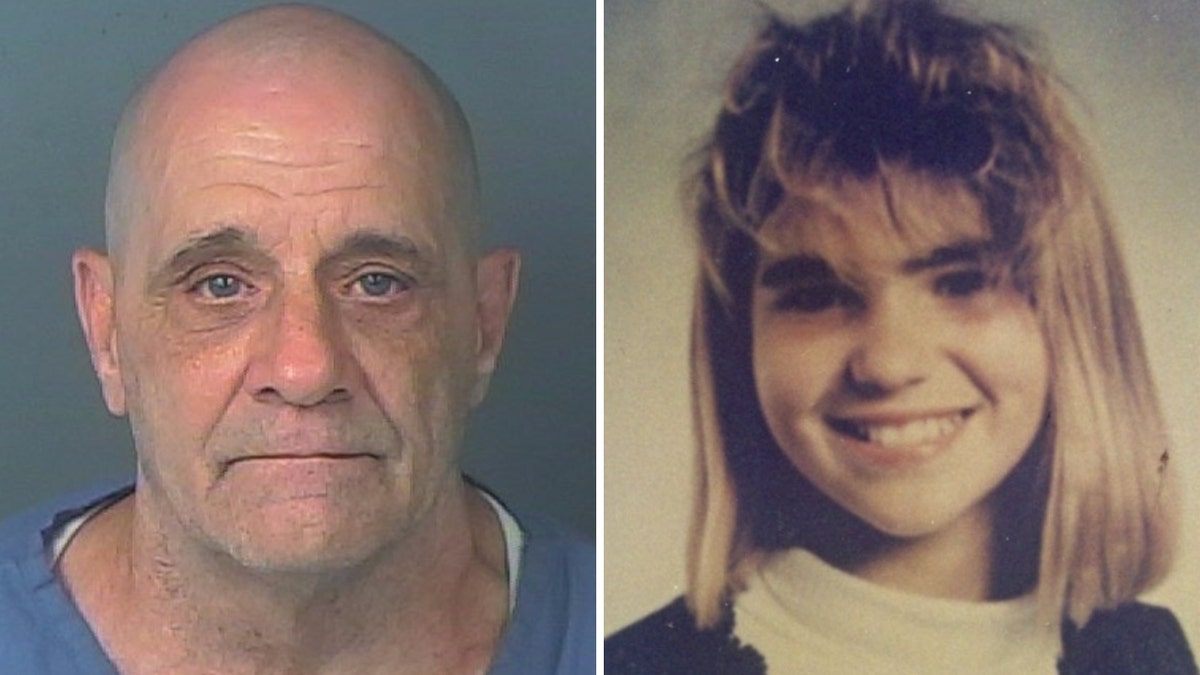
The house sat in Isleworth, an upscale community near Orlando, behind gates and manicured lawns.
On June 30, 2004, authorities found the bodies of Teri Paige Brandt and her 13-year-old daughter, Sarah Michelle Brandt, inside.
Teri had been shot and killed. Sarah had been strangled.
Charlie Brandt, the family’s patriarch, was found dead at the scene. He had hanged himself.
At first, the deaths were treated as a murder-suicide. Charlie Brandt had no known history of violence as an adult.
The neighbors knew him as a handyman. His wife worked as a nurse. Their daughter was a middle school student.
The home was ordinary. The family appeared ordinary. The violence inside was not.
Within days, detectives connected Charlie Brandt to another death. In 1971, in New Mexico, he had confessed to killing his own sister-in-law.
He was 14 years old then. He was committed to a mental institution. He was released after a few years. He was never charged.
The exact sequence of events inside the home on June 30, 2004, is not detailed in the record.
What remains is the scene itself: a wife shot, a daughter strangled, a husband hanged. And a question that the record does not answer.
Who was this man? What did the family know? What did they see before the end?
That would require evidence. The record does not provide it.
THE CONFESSION IN NEW MEXICO
Thirty-three years before the house on Isleworth, there was another scene.
In 1971, in New Mexico, Charlie Brandt was 14 years old.
He confessed to killing his 14-year-old sister-in-law, the record states.
The exact details of that confession are not in the record.
Neither are the circumstances of her death.
That is what the documents say: a confession, an age, a family relation.
He was committed to a mental institution.
He was released after a few years.
Because of his age, and because of the mental health commitment, he was never charged.
No trial.
No verdict.
No record of what he said, beyond the confession itself.
For three decades, that is where the story sat.
Then came June 2004.
Detectives in Orange County found the confession.
It became the breakthrough.
They re-examined Brandt's past.
They interviewed his own family, including his parents.
His troubled history in New Mexico began to surface.
The confession did not prevent the later deaths.
It only explained them, after the fact.
That is the weight of an unprosecuted confession.
It follows a man for decades.
It is documented, and it is incomplete.
What he said, exactly, and what happened to his sister-in-law, the record does not establish.
What remains is the timeline: 1971, a confession; 2004, a family dead.
The gap between them is where the questions live.
THE SECRET DOUBLE LIFE
Charlie Brandt was 47, a former surgical technician and an aspiring actor.
He had moved his family from Hawaii to Florida.
On paper, the family looked ordinary.
He worked as a handyman. His wife worked as a registered nurse.
The neighbours saw a man who fixed things around the house.
The record shows a different trail.
Investigators linked Brandt to the 1972 disappearance and murder of a young woman in Key West, Florida.
They linked him, too, to the unsolved 1996 murder of a woman in Hawaii, where the family had lived for years.
The FBI helped build a profile of Brandt as a serial killer who had operated undetected for decades.
That profile is a theory built on connections.
The identity of the Key West victim is not named in the record.
The identity of the Hawaii victim is not named in the record.
The links to Brandt in both older cases are described as circumstantial.
Not because the evidence was thin in every particular. Because the record does not establish more.
What the public saw was a handyman with a toolbox.
What the investigators saw was a man whose past kept surfacing, case by case.
He had confessed once, as a teenager, to a killing in New Mexico.
He was never charged.
The older cases were never prosecuted either.
Brandt was dead by the time the links were drawn.
The gap between the public face and the private trail is what the record leaves open.
It is a gap that no profile, however detailed, closes.
THE SUICIDE NOTE AND THE CLOSED CASE
The suicide note contained cryptic references.
What they meant is not explained in the record.
It is a note that closes a case without answering its questions.
The Orange County Medical Examiner's Office ruled the deaths homicides — hers, the daughter's — and his own death a suicide.
Because the perpetrator was deceased, no charges were ever filed.
No trial.
No conviction.
Only a dead suspect and a closed file.
The 2004 killings were conclusively tied to him through the crime scene and the note.
No other suspects were ever named.
The older cases — the 1971 murder of his sister-in-law in New Mexico, the Hawaii case, the Key West case — were never prosecuted.
Brandt's death closed them.
The passage of time closed them.
The case is considered closed, with Brandt identified as the perpetrator of the 2004 murders and strongly suspected in several others.
Strongly suspected is not the same as proven.
That distinction matters to the family left behind.
The record does not establish what the cryptic references meant.
It does establish that a mother and a daughter were killed in their home.
It does establish that the man who did it left a note and then hanged himself.
It does not establish why.
The family has spoken publicly about the loss.
They described a devoted mother and a bright, athletic girl.
They described the ongoing pain of losing a daughter and a granddaughter in such a violent manner.
The home was eventually sold.
The case has been featured in documentaries and podcasts.
The story stays in public view.
The questions stay unanswered.
A closed case is not the same as a completed one.
It is final.
It is also incomplete.
AND THE STORY STILL ISN'T OVER
The family spoke publicly, and the words were not about evidence.
They described a devoted mother.
They described a bright, athletic girl.
They described the ongoing pain of losing a daughter and a granddaughter in such a violent manner.
The house on Isleworth was eventually sold.
The investigation was led by the Orange County Sheriff's Office, with detectives working alongside the Isleworth community's private security.
That work is documented.
That work is finished.
The case has been featured in true-crime documentaries and podcasts, including segments on major networks.
It has been retold.
It has been watched.
It has been questioned.
But the retelling does not change the record.
Any new investigative steps are not in the record.
Any pending legal actions are not in the record.
The record holds what it holds: the 2004 deaths ruled homicides, the perpetrator deceased, no charges ever filed.
The family is left with the public telling.
They are left with the private absence.
A closed case is not the same as a completed one.
It is final.
It is also incomplete.
That would require evidence.
Advertisement
You may also like
The psychologist's mistress who heard a confession and changed a murder case
The tape recorder was running. Erik Menendez was in a therapy session with Dr. Jerome Oziel, his psychologist, when he confessed to the murders…
The cotton gin fan tied to Emmett Till's neck — and the evidence that didn't convict
The Tallahatchie River gave up its weight on August 31, 1955. Emmett Till's body surfaced with a cotton gin fan tied to his neck…
A Splash in the Chattahoochee — the Fiber Evidence That Tied Wayne Williams to Two Murders
The bridge over the Chattahoochee was quiet that night in May 1981. Police had staked it out after a tip, waiting on the dark…
The slumber party interrupted: Polly Klaas's last night before the intruder came
The party was a sleepover. Three girls, twelve years old, in the bedroom of a house in Petaluma, California. It was October 1, 1993.…
The .40-caliber pistol traced to New Jersey that linked Andrew Cunanan to Versace's killing
A .40-caliber pistol ended Gianni Versace’s life on the steps of his Miami Beach mansion. That same pistol had been stolen from a prior…
The modified Caprice trunk that hid a shooter from sight during the 2002 sniper attacks
The trunk of a white Chevrolet Caprice opened like a door to nothing. A shooter could lie flat inside, fire through a hole, and…