The glove that didn't fit — and the 1997 verdict O.J. Simpson still owed $33.5 million
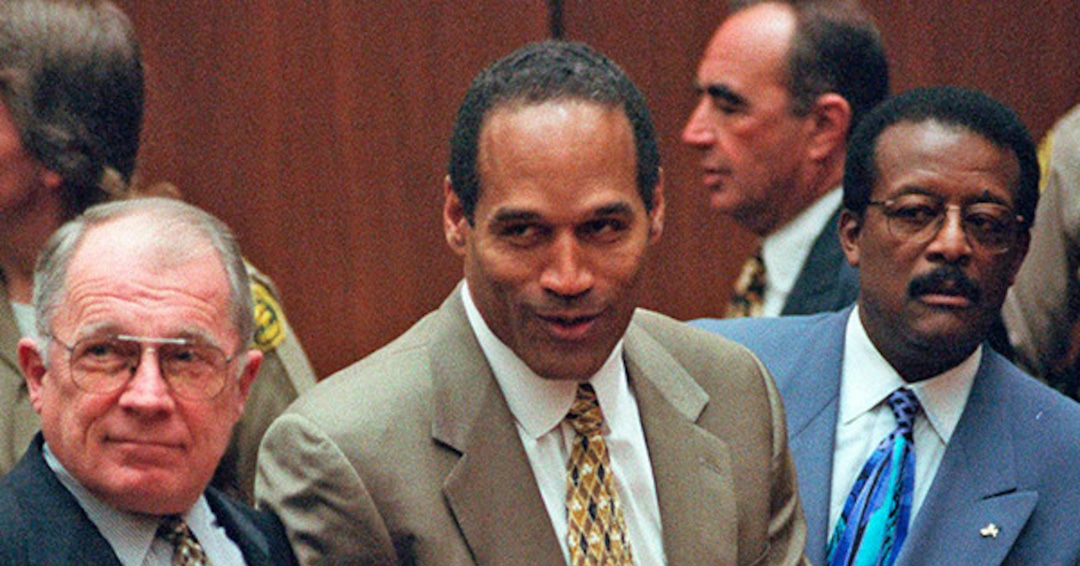
In court, O.J. Simpson tried on a bloody glove found at his estate. It appeared not to fit his hand — a moment the defense highlighted. The glove was part of the prosecution's evidence linking Simpson to the murders of Nicole Brown Simpson and Ronald Goldman. The glove's fit became a widely remembered moment. The trial record shows it was one piece of a larger case.
The prosecution's case relied heavily on DNA evidence, not just the glove. The defense argued the blood evidence was contaminated and mishandled. The defense argued that a lead detective had planted the glove. The defense argued that the detective was a racist who had used racial slurs, a claim he denied at the time. A recording later surfaced of him using the word repeatedly, which severely damaged the prosecution.
Whether the glove actually belonged to Simpson is not established by the record. The fit was disputed in court. The glove did not prove the case by itself. The DNA evidence did not prove the case by itself. What the glove proved was that a single piece of evidence could overshadow a mountain of DNA. That would require evidence.
THE NIGHT OF JUNE 12, 1994
A neighbor walking her dog found the bodies around midnight.
Nicole Brown Simpson and Ronald Goldman were discovered stabbed to death outside Nicole’s condominium on Bundy Drive in Brentwood, Los Angeles.
Goldman was a waiter at a nearby restaurant.
He had returned to the condominium to give Nicole’s mother back a pair of sunglasses she had left there.
Both had been killed with a knife.
Goldman had defensive wounds.
The exact time of the murders is not in the record.
The knife was never recovered.
Simpson was not at the scene when police arrived.
Police found a bloody glove at the scene.
They found a knit cap.
They found a trail of blood leading away from the scene.
Later that night, officers went to Simpson’s estate.
They found a second bloody glove there.
They found blood drops.
Simpson had flown to Chicago that night.
He returned and was questioned but not arrested.
The prosecution’s case would rely heavily on DNA evidence.
The defense would argue the blood evidence was contaminated and mishandled.
The defense would argue that a lead detective planted the glove.
The glove did not fit Simpson’s hand when he tried it on in court.
That moment became the one the public remembered.
The record shows it was one piece of a larger case.
THE BRONCO CHASE AND THE TRIAL
The Bronco chase ran live on television for hours on June 17, 1994.
Simpson fled in a white Ford Bronco driven by his friend Al Cowlings before surrendering.
He was charged with two counts of first-degree murder.
The trial began in January 1995 and lasted about nine months.
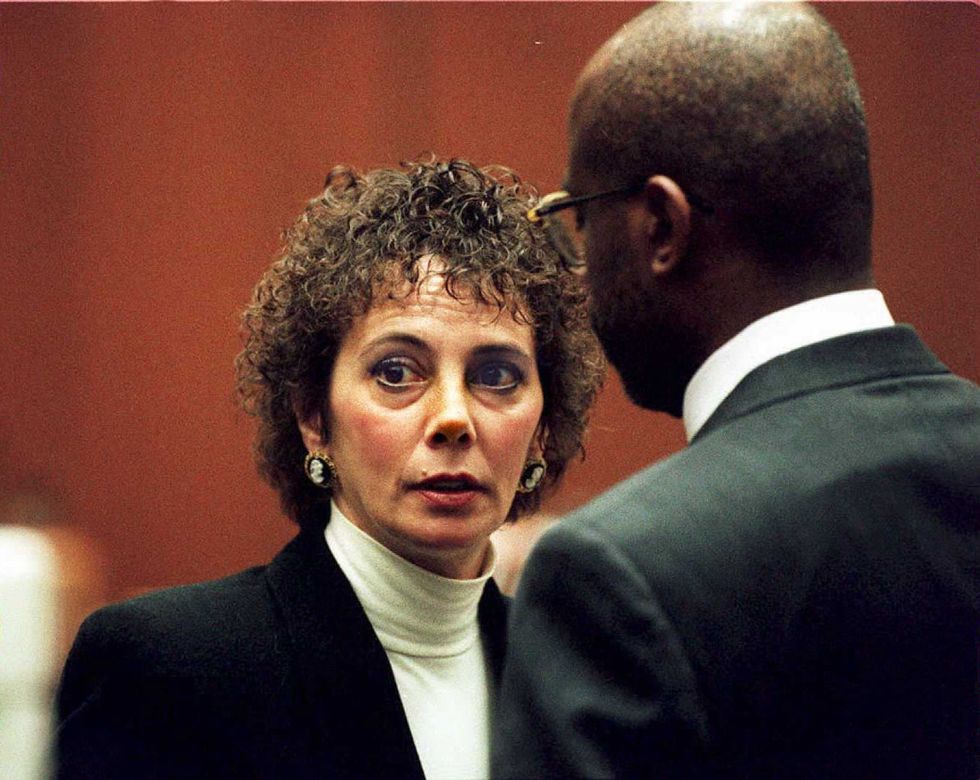
The prosecution was led by Deputy District Attorneys Marcia Clark and Christopher Darden.
The defense team included F. Lee Bailey, Alan Dershowitz, Robert Kardashian, and Barry Scheck.
A recording surfaced of a lead detective using a racial slur repeatedly.
The recording severely damaged the prosecution's case.
Its exact content and its full impact on the jury are not detailed in the record.
The glove did not fit Simpson’s hand when he tried it on in court.
The DNA evidence was contested as contaminated and mishandled.
The defense argued the glove had been planted.
Was the chase an admission of guilt?
Was it the act of a man who had nothing left?

Was it simply theater?
The record does not establish what the jury made of any of it.
On October 3, 1995, the jury acquitted Simpson of both murders.
The verdict was widely watched.
It was also controversial.
The acquittal was not a conviction.
It was not a finding of innocence either.
It was a verdict.
THE 1997 CIVIL VERDICT
In 1997, a civil jury in a wrongful death lawsuit brought by the Goldman and Brown families found Simpson liable for both deaths.
The jury ordered him to pay $33.5 million in damages.
Simpson was not convicted of any criminal charge in the murders.
The criminal acquittal and the civil verdict were two different answers to the same question.
The acquittal was a finding that the prosecution had not met its burden.
%2Fdmn3xkgw.JPG)
The civil verdict was a finding that the evidence met a lower one.
After the acquittal, Simpson moved to Florida.
There, his pension and other assets were largely protected from the civil judgment.
The civil judgment against him remains largely unpaid.
The Goldman family has stated they have not received the full civil judgment.
How much, if anything, Simpson paid toward that judgment is not specified in the record.
It is a debt that the record does not show was settled.
It is a debt that the family says was not paid.
AND THE STORY STILL ISN'T OVER
In 2007, Simpson was arrested in Las Vegas.
Prosecutors said he led a group of men in an armed robbery of sports memorabilia from a hotel room.
In 2008, he was convicted of armed robbery and kidnapping.
He was sentenced to 33 years in prison, with a minimum of nine years before parole eligibility.
He was granted parole in 2017.
He was released from Lovelock Correctional Center in Nevada on October 1, 2017.
Simpson has since lived in Las Vegas.
The civil judgment from 1997 still followed him.
The Goldman and Brown families have continued to speak publicly about the case.
They have said the debt was not paid.
Whether the civil judgment will ever be paid is not established.
No further legal steps are noted in the record.
Simpson died of cancer on April 10, 2024, at age 76.
The families were left with a verdict, a sentence served, and a debt.
It is a debt the record does not show was settled.
It is a debt the family says was not paid.
It is a story that ends not with closure, but with an unpaid balance.
The glove was a moment.
The acquittal was a verdict.
The $33.5 million was a judgment.
The question of what remains is the only part still open.
Advertisement
You may also like
The bloodstained boots that cracked a four-murder case — but only after a tip from a cellmate
A pair of bloodstained boots. They belonged to Richard Hickock, and they were found in the men’s possession. Alongside them was a radio stolen…
The Tylenol bottle that doctors first called a stroke — before cyanide changed everything
The first victim was 12 years old, taking Extra-Strength Tylenol for a cold in Elk Grove Village. The date was September 29, 1982. The…
The cotton gin fan tied to Emmett Till's neck — and the sheriff who said the body wasn't his
The river gave it back on August 31, 1955. A cotton gin fan was tied to the neck with barbed wire. The body was…
The bloody watch in the yard that didn't fit the intruder story
The watch was in the grass of the Sheppard yard, its face crusted with blood. It belonged to Sam Sheppard, the husband of the…
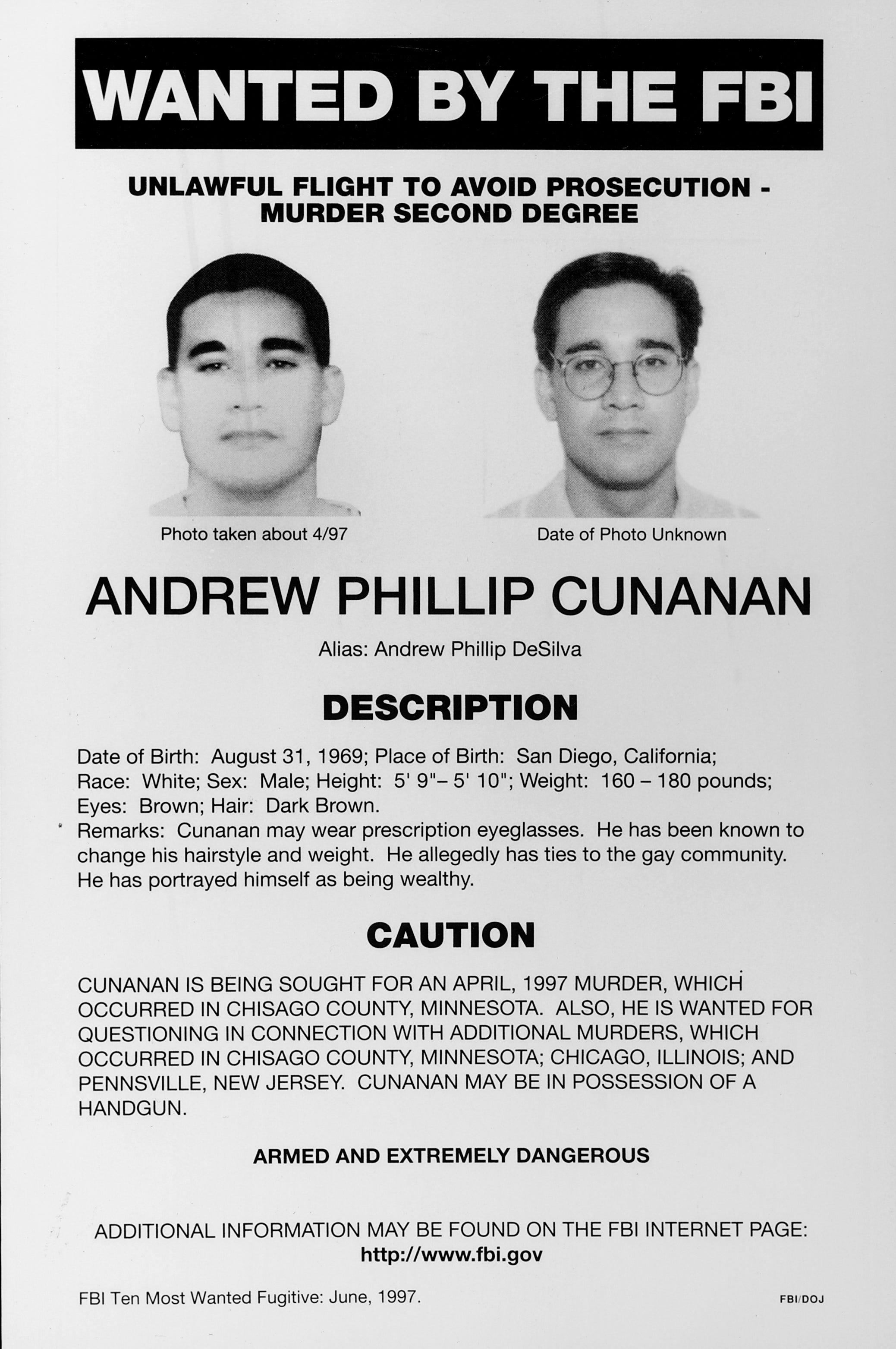
The wanted poster at a Miami hotel that no one looked at for a month
The wanted poster sat at the front desk of the Normandy Plaza hotel in Miami Beach for over a month. It showed Andrew Cunanan,…
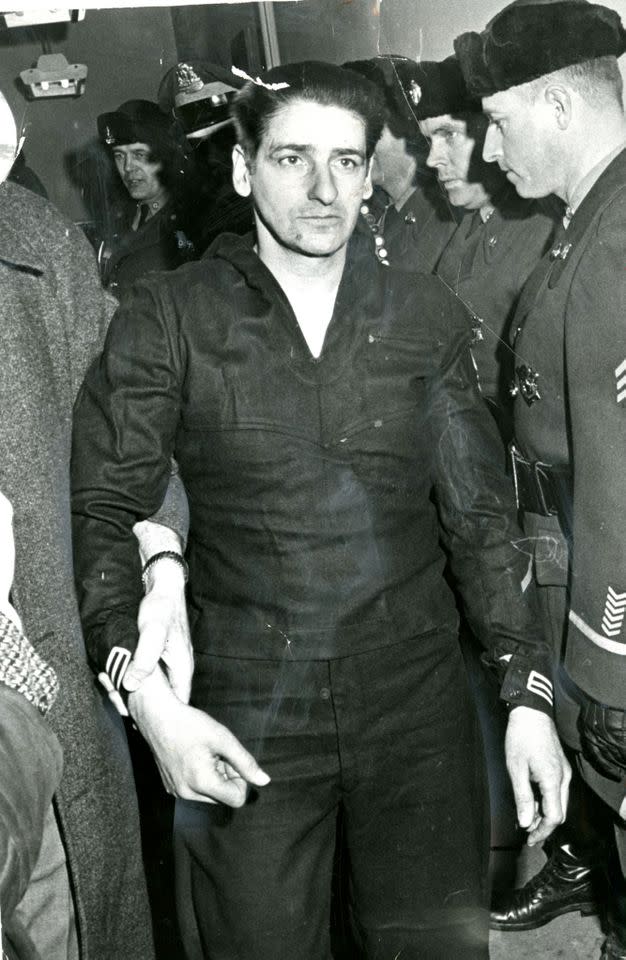
The confession that never reached a courtroom — and the DNA match that came 49 years too late
In 1965, Albert DeSalvo was already in custody for other crimes when he confessed to being the Boston Strangler. His attorney, F. Lee Bailey,…