The bloody watch in the yard that didn't fit the intruder story
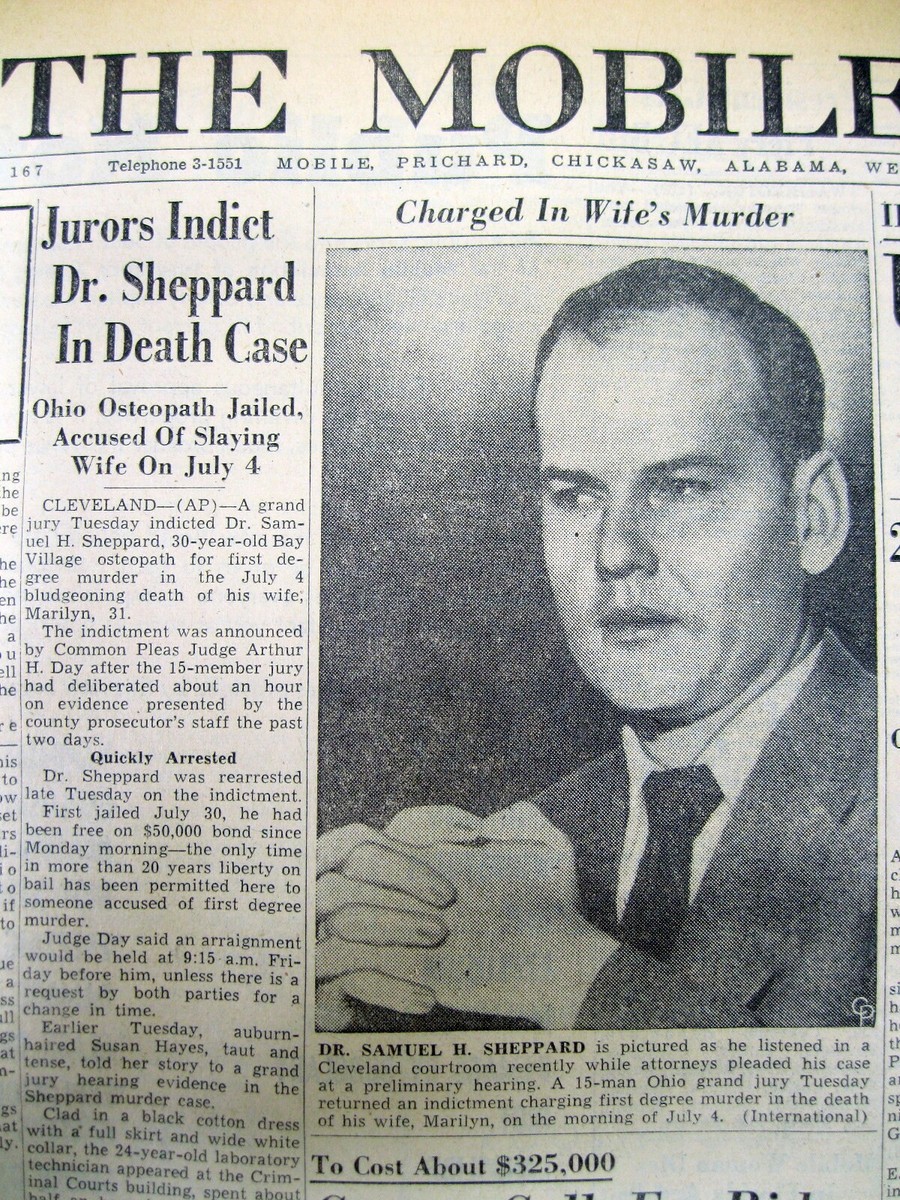
The watch was in the grass of the Sheppard yard, its face crusted with blood.
It belonged to Sam Sheppard, the husband of the woman found bludgeoned upstairs.
Bay Village police found it on July 4, 1954.
They found it after the crime scene had already been walked through by family and neighbors.
Evidence had been moved. Evidence had been contaminated. The record says so plainly.
Police claimed the watch was proof of Sam Sheppard's guilt.
The defense argued it had been planted, or dropped during a struggle with the intruder Sheppard said he fought.
Both claims are interpretations.
Neither is an established fact.
Whether the watch was planted, dropped during a struggle, or placed by the killer — the record does not establish any of it.
That is the pull of the object.
One small thing, found in the wrong place, that seems to tell a story.
The story it tells depends on who is holding it.
To police, it was a confession in metal and blood.
To the defense, it was a mistake, a piece of staging that did not fit.
To the record, it is a question that was never answered.
Sheppard had told police he was asleep on a downstairs couch.
He said his wife's cries woke him.
He said he fought a "bushy-haired" intruder who knocked him unconscious.
The watch lay in the yard.
It did not fit the intruder story, or it did, depending on who was asking.
The crime scene was not secured.
The bedroom had been walked through. The evidence had been touched.
And the watch sat in the grass, waiting for someone to decide what it meant.
No one ever did.
THE INTRUDER STORY
He told police he had been asleep on a downstairs couch.
He said his wife's cries woke him.
He said he fought with a "bushy-haired" intruder who knocked him unconscious.
That was the account Sam Sheppard gave on July 4, 1954.
Upstairs, his pregnant wife, Marilyn, was found bludgeoned to death in the bedroom of the couple's lakeside home.
The couple's 7-year-old son was home at the time.
The "bushy-haired man" was never verified.
Police did not pursue leads about a possible prowler.
The description was never investigated seriously, according to the investigation record.
Bay Village police, led by Chief Robert Schottke, treated Sam Sheppard as the primary suspect almost immediately.
Almost immediately, despite the intruder claim.
The claim was a story. The suspicion was a fact.
Whether an intruder actually entered the home is not established.
The "bushy-haired man" description was never verified.
So the weight sat on one man's word against the police's direction.
And the gaps in the intruder lead were left open.
No one chased the man in the yard.
No one chased the man in the story.
The bedroom had been walked through.
The evidence had been touched.
And the watch sat in the grass, waiting.
THE CORONER'S VERDICT
Dr. Samuel R. Gerber, the Cuyahoga County coroner, made his announcement before the evidence was settled.
The murder weapon, he said, was a blunt instrument.
The killer had not been an intruder.
He based this on his interpretation of blood spatter and the absence of forced entry.
It was an interpretation.
It was not a proven fact.
The weapon itself was never recovered.
Newspapers reported it was likely a flashlight or something similar, but that was not confirmed.
The identity of the murder weapon is not established.
The crime scene was not properly secured.
Family members and neighbors walked through the bedroom.
Evidence was moved.
Evidence was contaminated.
The coroner’s office leaked information.
Newspapers ran editorials demanding Sam Sheppard’s arrest.

The official narrative hardened before the evidence was properly gathered.
The prowler lead was not pursued.
The bushy-haired man description was never investigated seriously.
The investigation lacked forensic rigor.
The scene was not protected.
The conclusions came too fast.
These failures were not minor.
They became central to the U.S. Supreme Court’s decision to overturn the conviction.
The highest court in the land would later point to the carnival atmosphere, the media interference, the leaks.
The coroner had spoken with certainty.
Certainty, it turned out, was not the same as proof.
The watch sat in the grass, waiting.
The bedroom had been walked through.
The evidence had been touched.
And the coroner’s verdict had already been delivered.
THE TRIAL AND THE TWO STORIES
In August 1954, a grand jury indicted Sam Sheppard for first-degree murder.
The trial was a media circus before it began.
Jurors were not sequestered.
The press was given extensive access to the courtroom, the hallways, the witnesses.
The prosecution told one story: a jealous husband who killed his pregnant wife because of an affair.
A woman testified about her relationship with Sheppard at trial.
The defense told another story: an intruder came through the door, and the husband fought him.
The judge allowed the publicity to roll in.
Newspapers printed what the coroner leaked.
The defense argued the judge's handling of the case undermined their ability to present the intruder theory fairly.
The jury heard the prosecution's story louder.
In December 1954, Sheppard was convicted of second-degree murder.
He was sentenced to life in prison.
The Ohio appeals courts upheld it.
Then, in 1966, the U.S. Supreme Court looked at the record.
It ruled the trial had been unfair.
The court used the phrase "carnival atmosphere" to describe what happened in that courtroom.
Media interference, the court said, had poisoned the proceedings.
The conviction was overturned.
At the retrial in 1966, the defense brought in a forensic scientist to re-examine the blood evidence.
He testified that the blood patterns pointed to an intruder, not a husband.
The jury acquitted Sheppard.
Two stories, two juries, two verdicts.
Which narrative is true is not established.
The case remains officially unsolved.
The identity of the killer, if not Sheppard, has never been established.
The watch in the yard still sits between those two stories, its meaning a matter of interpretation, not fact.
AND THE STORY STILL ISN'T OVER
After his acquittal, Sam Sheppard returned to medicine.
He struggled with alcoholism and legal troubles.
He died in 1970 of liver failure at age 46.
His son, Samuel Reese Sheppard, spent decades trying to prove his father's innocence.
He tried to identify the real killer.
In 2000, a civil court in Ohio declared Sam Sheppard innocent of the murder.
No one else was ever charged.
The case remains officially unsolved.
The identity of the killer, if not Sheppard, has never been established.
The civil declaration is a legal finding.
It is not a factual proof.
Whether Sheppard was innocent or guilty is not established by the record.
The son's campaign is the last documented effort.
No active proceeding is in the record.
The case is closed but unresolved.
A man acquitted but broken.
A son still searching.
A case that never closed cleanly.
The watch in the yard still sits between the two stories.
Its meaning remains a matter of interpretation, not fact.
Advertisement
You may also like
A pajama top's ice-pick hole pattern that sealed a 1979 conviction — and the man still fighting it
The pajama top is folded into the evidence file, its fabric held together by the holes that mattered. Army Captain Jeffrey MacDonald's pajama top…
The phone records that placed Adnan Syed near Leakin Park—but may not have been his calls
The phone records placed Adnan Syed near Leakin Park at the time of the burial. The records were built on incoming calls. Incoming calls…
A floppy disk question that led police to a church computer — and a killer
In 2004, a man who had taunted police for decades under the name BTK asked a question in a letter. He wanted to know…
A parole check unearthed a kidnapper's confession — but only after a 2-month cold case
The night of October 1, 1993, began as a slumber party. Twelve-year-old Polly Klaas was in her mother's home in Petaluma, California, with two…
The parole violation that ended a career criminal's run — and a 12-year-old's slumber party
December 4, 1993. Richard Allen Davis was arrested for violating parole. The charge was unrelated to Polly Klaas. The specific nature of the parole…
The Moab 911 call that officers ignored — and the missed chance to save Gabby Petito
The 911 call came in on August 12, 2021, from a witness in Moab, Utah. The witness had seen a man slap a woman…