A pajama top's ice-pick hole pattern that sealed a 1979 conviction — and the man still fighting it
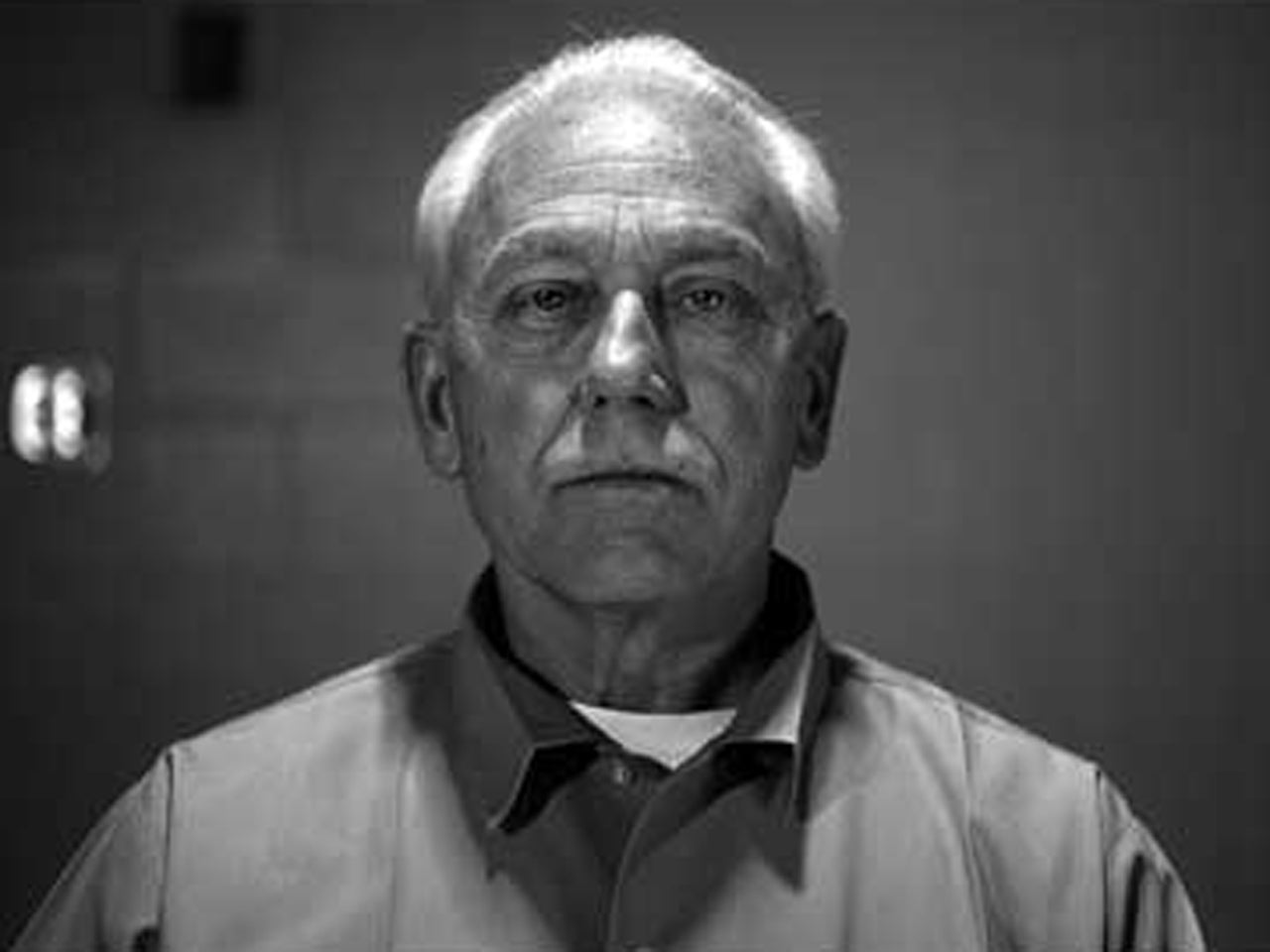
The pajama top is folded into the evidence file, its fabric held together by the holes that mattered.
Army Captain Jeffrey MacDonald's pajama top carried a pattern of puncture holes.
Forensic examiners testified that those holes matched the ice-pick wounds on his wife, Colette.
Not a guess. A match.
The pajama top became the hinge of the case against him.
But the ice pick itself was never recovered.
No blade. No handle. Only the holes in the fabric and the wounds on her body.
A wooden club and an ice pick were identified as the weapons believed used in the attack.
Believed used. Never found.
MacDonald reported that four intruders—three men and a woman—attacked his family in their off-base home at Fort Bragg, North Carolina, on February 17, 1970.
He said they chanted "acid is groovy" and killed his family while he fought them.
That story remains a claim.
The record does not establish that four intruders were ever there.
It establishes a pattern of holes on a pajama top.
It establishes wounds that matched.
It establishes that a man has spent decades in prison, maintaining his innocence, while the weapon that supposedly made those holes has never surfaced.
How does a piece of fabric seal a conviction?
How does a missing ice pick leave a question that will not close?
The case became a national sensation and has been debated for decades.
The holes line up.
The weapon does not.
That is where the story begins.
THE 911 CALL AND THE BLOOD
The 911 call came at 3:42 a.m.
Military police found the house on February 17, 1970, and they found the bodies.
MacDonald's pregnant wife was dead, and so were his two daughters, both killed by stab wounds and blunt-force injuries.
MacDonald himself had minor injuries.
He told the military police that four intruders—three men and a woman—had done it.
They chanted "acid is groovy," he said, and he fought them off while they killed his family.
The Army investigators initially accepted that story.
They did not accept it for long.
Bloodstain patterns told a different story.
The patterns suggested the victims were attacked while sleeping or lying down.
Not in the middle of a struggle.
Not while MacDonald fought four intruders.
The blood said the fight never happened the way he described.

The Army charged MacDonald in 1970.
The charges were dropped in 1971 after a hearing.
The exact nature of the struggle is not established.
The intruders' identities are unknown.
The ice pick was never found.
The wooden club was never found.
What remained was the pajama top, the holes, and the blood.
THE REOPENING AND THE 1979 TRIAL
The case was reopened after the victim's mother pushed for further investigation.
She had once supported him. She became his most relentless pursuer.
A grand jury indicted MacDonald in 1974.
The charges were dismissed for lack of a speedy trial. The government appealed.
In 1979, MacDonald was tried in federal court in Raleigh, North Carolina.
A decade had passed since the bodies were found. The pajama top was still the center of it.
The prosecution argued that MacDonald killed his family in a rage after his wife confronted him about his infidelity.
The defense maintained that intruders committed the murders.
Four intruders. Three men and a woman. The chant, "acid is groovy."
The jury heard about the holes. The blood. The club that was never found. The ice pick that was never found.
The jury convicted MacDonald of three counts of first-degree murder.
He was sentenced to three consecutive life terms.
Not because the ice pick surfaced. Not because an intruder confessed. Because the evidence pointed one way, and the jury followed it.
Why he would have done it, if he did it — that was the prosecution's argument, not a proven fact.
The record does not establish the motivation beyond that argument.
What the record establishes is the conviction. What the record establishes is the sentence.
The case that wouldn't die had reached a jury. The jury made it three life terms.
THE TWO STORIES
Two stories ran through that Raleigh courtroom, and both used the same pajama top.
The prosecution argued that MacDonald killed his family in a rage after his wife confronted him about his infidelity.
The defense argued that the four intruders did it, just as MacDonald had claimed from the first 911 call.
The pajama top sat at the center of both.
Its hole pattern matched the ice-pick wounds on his wife's body, the forensic experts testified.
That was a fact the record supports.
But the ice pick itself was never found.
Not in the house. Not in the yard. Not anywhere.
So the prosecution pointed at the holes and said the top was the proof.
The defense pointed at the missing weapon and said the gap was the doubt.

Bloodstain patterns told another part of the story.
The patterns suggested the victims were attacked while sleeping or lying down, according to the testimony.
That contradicted MacDonald's account of a struggle with intruders.
He said he fought them. The blood said the victims never got up.
MacDonald has maintained his innocence throughout, and his conviction was upheld on appeal.
Which story is true?
That is not established by the record.
The ice pick's absence leaves a gap, and both sides have spent decades trying to fill it with the same facts.
The jury chose the prosecution's version in 1979.
The appeals courts chose it again and again.
But the gap remains, and so does the question.
AND THE STORY STILL ISN'T OVER
Jeffrey MacDonald remains incarcerated, serving three consecutive life sentences.
He has been denied parole multiple times, most recently in recent years.
His appeals have been consistently rejected by federal courts.
He is now in his 80s, still pursuing legal avenues from prison.
No significant developments have changed his status.
No specific upcoming hearing or motion is in the record.
The next concrete step is not established.
The victim's mother died in 2007, a tireless advocate for justice until her death.
She pushed for the reopening that led to the 1979 trial.
She lived to see the conviction, the appeals, the denials.
The surviving relatives have largely stayed out of the public eye in recent years.
The case remains one of the most debated in American criminal history.
Some advocates argue for his innocence.
Others are convinced of his guilt.
The jury chose the prosecution's version in 1979.
The appeals courts chose it again and again.
MacDonald maintains his innocence throughout.
The ice pick was never recovered.
The pajama top's hole pattern matched the wounds.
The intruder story remains a claim, not a fact.
That would require evidence.
The evidence was weighed, and the verdict stood.
The decades passed.
The man still fights.
The question remains open.
Advertisement
You may also like

The 31-Day Gap That Made Detectives Ask Why a Mother Never Reported Her Child Missing
The 911 call came on July 15, 2008. Cindy Anthony was the one who made it. She told the operator that her two-year-old granddaughter,…
The 1975 missing-person report that led police to Gacy — and why they never searched his home
The report was filed in 1975, for a 16-year-old named John Butkovich. It led police to John Wayne Gacy's door. Gacy told them Butkovich…

The cellphone video that caught Alex Murdaugh's voice at the kennels — after he said he wasn't there
The 911 call came at 10:06 p.m. on June 7, 2021. Alex Murdaugh told the dispatcher he had just found his wife and son…
The $5,800 ransom found by a boy on a riverbank — and the FBI clue it left behind
The bills were rotting, half-buried in the sand of the Columbia River, near Vancouver, Washington. A young boy named Brian Ingram found them in…
The jailhouse confession that finally broke the Manson case wide open
In October 1969, a woman in jail on an unrelated charge began talking to her cellmate. Her name was Susan Atkins, and the cellmate…
The confession that shifted: DeFeo Jr. led police to a river — but who else walked through 112 Ocean Avenue first?
The first call came on November 13, 1974, from a house at 112 Ocean Avenue in Amityville, a village on Long Island. A 23-year-old…