The confession that shifted: DeFeo Jr. led police to a river — but who else walked through 112 Ocean Avenue first?
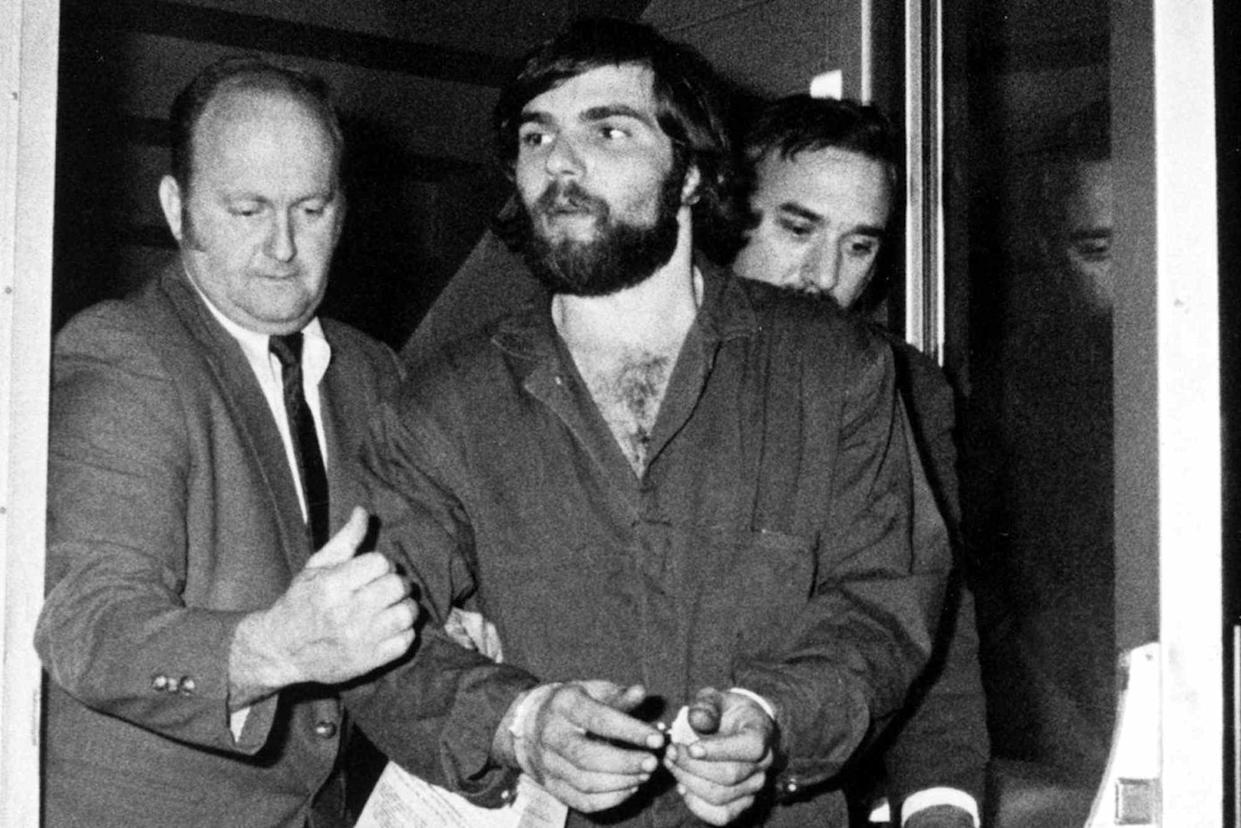
The first call came on November 13, 1974, from a house at 112 Ocean Avenue in Amityville, a village on Long Island.
A 23-year-old man told police he had come home from work to find his family dead.
Inside the large Dutch Colonial, officers found six bodies, all shot with a rifle.
The father, the mother, four children.
The sole survivor of the household was Ronald DeFeo Jr., the eldest son.
He said he had just arrived.
The weapon, a .35-caliber Marlin rifle, was not in the house.
It took DeFeo Jr. to find it.
He led police to a nearby river, where the rifle was recovered.
That was a turning point.
It was also a shift.
DeFeo Jr. had first told detectives a mob hitman named Louis Falini did the killings.
The story did not hold.
Under questioning, he confessed, though his account of the events moved.
He told detectives he had committed the murders.
Later, he said he heard voices, that he was in an altered state.
The confession came after inconsistencies.
The rifle came after the confession.
What happened inside 112 Ocean Avenue that night remains a question the record leaves open.
A theory circulating online suggests an outside gunman walked through the house first.
That theory remains a claim, not a fact established by the record.
The identity of any possible outside gunman is not established by the record.
The documented evidence points elsewhere: the confession, the recovered weapon, the man who led police to the river.
Why did the story shift?
Why did he lead them to the rifle?
Why did the account change once, and then again?
That would require evidence.
THE CALL AND THE SCENE
The call came from Ronald DeFeo Jr.
He said he had returned home from his job at a car dealership and found his family dead.
Officers arrived at 112 Ocean Avenue and found six bodies.
The father, the mother, and four children.
All face-down in their beds.
Each shot multiple times.
The killings were later determined to have occurred during the early morning hours of November 13.
The scene was not effectively secured.
Family members and others moved through the house before forensic examination was complete.
Evidence walked through the rooms in shoes that did not belong to the crime scene.
DeFeo Jr.'s initial claim of an outside gunman was not immediately dismissed.
That cost time.
Hours passed while police followed a story that would not hold.
The exact sequence of events inside the house that night is not fully established by the record.
What is established is the call, the bodies, and the delay.
What is established is that the rifle was not found at the scene, and that the son was not yet in custody.
He was taken into custody after the claim, after the walk-through, after the mistake.
The outside gunman was a story.
The story shifted.
That would require evidence.
THE SHIFTING CONFESSION
DeFeo Jr. first told police a mob hitman named Louis Falini had done it.
Detectives heard the story and began checking it.
The story did not hold.
Detectives Kissane and Rafferty took the confession that followed, according to the investigative record.
Under questioning, DeFeo Jr. admitted he had committed the murders.
Then his account shifted.
He said he had heard voices and acted in a state of altered consciousness, his lawyers would later argue.
The exact nature of his mental state at the time of the confession is not established by the record.
What is established is the turning point.
DeFeo Jr. led police to the river.
He showed them where he said he had thrown the rifle.
The .35-caliber Marlin was recovered from the water.
It was evidence that tied the confession to the scene.
But which confession?
The one where he named Falini?
The one where he admitted the killings?
The one where he heard voices?
That would require evidence.
Detectives had their doubts before the rifle was found.
They had inconsistencies in his first story.
They had a suspect who kept changing the telling.
The weapon did not settle the question of why he changed it.
It only placed the gun in his hands, according to his own direction.
The confession was taken, signed, and later used against him.
It was also the thing his defense would try to undo.
Two stories stood side by side by the time the case went to court.
Only one of them survived the jury.
THE TRIAL AND THE TWO STORIES
The trial opened in 1975.
The prosecution argued the murders were premeditated.
They were premeditated, the prosecution said, because DeFeo Jr. had planned them.
They were premeditated because he had acted alone.
The prosecution presented the confession.
The confession was the one DeFeo Jr. had given to detectives.
The confession was the one where he led police to the rifle.
The confession was the one where he said he had disposed of it in a river.
The rifle was recovered.
The rifle was in the courtroom.
The rifle was the evidence that tied the confession to the scene.
The defense answered with insanity.
The defense said DeFeo Jr. suffered from a personality disorder.
The defense said he had heard voices commanding him to kill.
The defense said he was not guilty by reason of insanity.

Two stories stood before the jury.
One story was a man who planned six killings and carried them out alone.
The other story was a man who heard voices and could not stop himself.
Both stories came from the same mouth.
The jury had to choose.
The jury rejected the insanity defense.
The jury chose the prosecution's story.
The jury chose the confession.
On December 4, 1975, DeFeo Jr. was convicted of six counts of second-degree murder.
He was sentenced to six consecutive terms of 25 years to life.
An appeal was filed.
The conviction was upheld.
The appeal did not change the verdict.
The truth of the insanity claim is not established by the record.
The jury rejected it.
That is what the record shows.
The legal system chose one story over the other.
The legal system made that choice in a courtroom.
The legal system made that choice with a verdict.
DeFeo Jr. was convicted.
He was convicted of six counts.
He was convicted as the sole shooter.
AND THE STORY STILL ISN'T OVER
Ronald DeFeo Jr. remains incarcerated.
He remains there under six consecutive terms of 25 years to life.
He has been denied parole multiple times.
He was denied parole most recently in 2021.
The house at 112 Ocean Avenue was later sold.
Its address was changed to 108 Ocean Avenue to deter curiosity seekers.
The number changed, but the story did not recede.
The DeFeo family's deaths became the basis for the 1977 book "The Amityville Horror" by Jay Anson.
That book claimed the house was haunted.
Subsequent films repeated the claim.
Those claims were later challenged.
They were challenged by William Weber, the defense attorney, who said the story was fabricated.
The truth of the paranormal claims is not established by the record.
The record shows a confession.
The record shows a recovered rifle.
The record shows a conviction upheld on appeal.
The record does not show a haunting.
It does not show an outside gunman.
It does not show a voice commanding murder beyond the defendant's own shifting account.
The case remains one of the most notorious in New York criminal history.
Notorious for the bodies found face-down in their beds.
Notorious for the confession that shifted.
Notorious because a legend grew over a crime scene that was not secured.
Family members walked through the house before forensic examination was complete.
An outside gunman was claimed first, costing time.
The rifle was found where the defendant said it would be.
The legal system chose one story over the other years ago.
The questions and the legend endure.
The legend endures at 108 Ocean Avenue.
The questions endure wherever the book is opened.
The defendant endures in a New York correctional facility.
That is what the record shows.
That is all the record shows.
Advertisement
You may also like

The prussic acid purchase that changed the Lizzie Borden case
August 3, 1892, the day before the murders. Lizzie Borden walked into a drugstore in Fall River, Massachusetts, and asked to buy prussic acid.…
The boat message that sealed Dzhokhar Tsarnaev's fate — but only after a carjacking that went wrong
On April 19, 2013, Dzhokhar Tsarnaev was found hiding in a boat in a backyard in Watertown, Massachusetts. The boat was ordinary. It sat…
The bullet that matched Richard Allen's pistol — and the confession he made to prison staff
The bullet sat in an evidence room for years before anyone matched it. An unspent round, found at the scene where two girls died.…
The tip-off that doomed the ATF raid before a single shot was fired at Waco
A local news reporter had been tipped off about the raid. He asked a postal worker about it. That question is the documented moment…
The undertaker who moved the bodies before police reached the Hall-Mills crime scene
They lay beneath a crabapple tree in a secluded lane called Lovers' Lane. He was shot in the head. She was shot in the…
The 31-Day Gap That Made Detectives Ask Why a Mother Never Reported Her Child Missing
The 911 call came on July 15, 2008. Cindy Anthony was the one who made it. She told the operator that her two-year-old granddaughter,…