The undertaker who moved the bodies before police reached the Hall-Mills crime scene
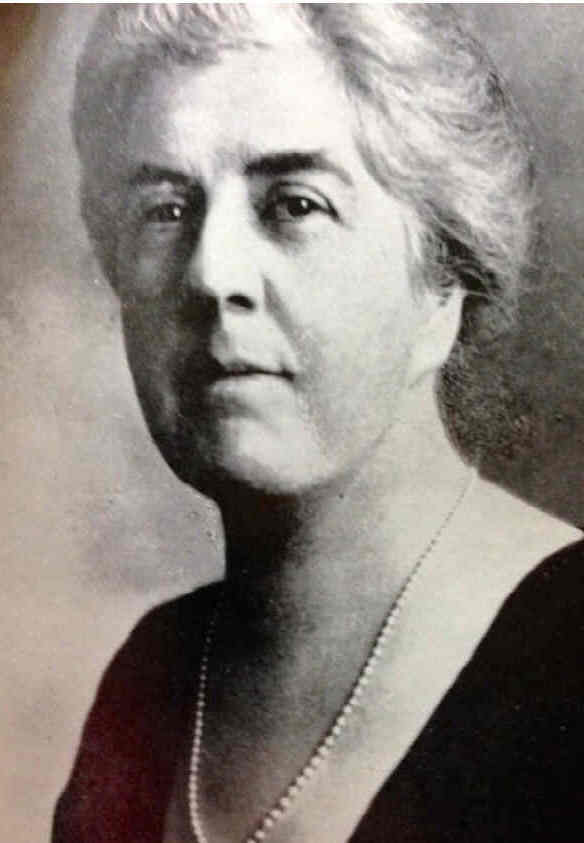
They lay beneath a crabapple tree in a secluded lane called Lovers' Lane.
He was shot in the head. She was shot in the face, her throat cut.
The killer had arranged them in a tableau, with love letters scattered around.
A local man walking through the area found them on the evening of September 14, 1922.
Then the undertaker arrived.
He was a local undertaker, and he was also a friend of the Stevens family.
He moved the bodies. He cleaned the scene.
All before police arrived.
The scene was not properly secured after the discovery.
The undertaker's actions destroyed crucial evidence.
What exactly was lost when the bodies were moved?
What was wiped away when the scene was cleaned?
Who asked for it?
That would require evidence.
Whether the undertaker acted on the Stevens family's orders is not established in the record.
It is a fact in the record that he moved them. It is a theory online that he was told to.
The record does not establish the second. It never has.
The couple had been having an affair. Hall was an Episcopal minister. She sang in his church choir.
They were found in Phillipsburg, New Jersey, in the town of New Brunswick.
The case became a national sensation.
The investigation was chaotic from the start.
THE DISCOVERY AND THE FIRST MISTAKE
On the evening of September 14, 1922, the bodies of Reverend Edward Wheeler Hall and Mrs. Eleanor Reinhardt Mills were discovered beneath a crabapple tree in a secluded lane known as "Lovers' Lane" near Phillipsburg, New Jersey, in the town of New Brunswick.
The discovery was made by a local man who was walking through the area.
Hall, an Episcopal minister, had been shot in the head.
Mills, a choir singer in his church, had been shot in the face and her throat was cut.
The couple, who had been having an affair, had been shot.
The killer had arranged the bodies in a tableau, with love letters scattered around them.
The exact time of death is not established in the record.
The precise sequence of events at the scene is not established in the record.
The initial investigation was chaotic.
The scene was not properly secured.
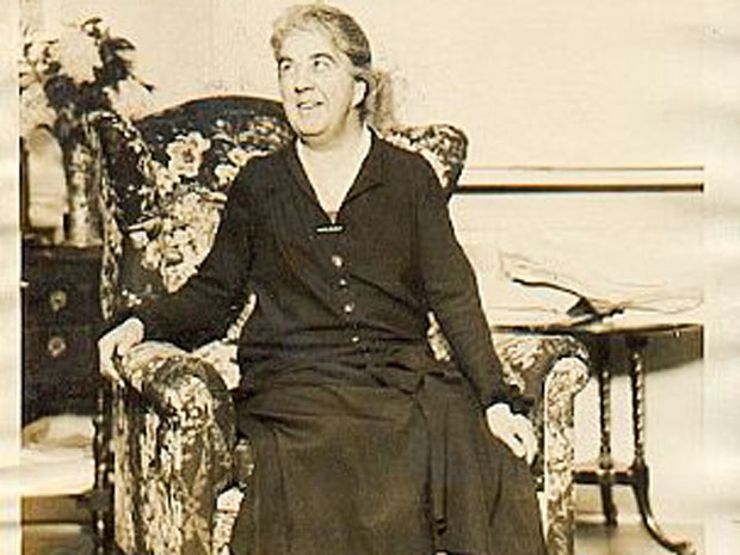
A local undertaker, who was also a friend of the Stevens family, moved the bodies and cleaned the scene before police arrived.
He destroyed crucial evidence.
The first coroner's inquest was held hastily.
The jury returned a verdict that Hall and Mills had been killed by persons unknown.
What was lost in those first hours?
What did the undertaker see that no one else would ever see?
What did he move that could have named a killer?
The record does not answer these questions.
The case went cold for several months.
A national sensation had begun with a scene that no longer existed.
THE PIG WOMAN'S TESTIMONY
A year passed, and the case sat cold in the Middlesex County files.
Then, in 1923, a new prosecutor, Alexander Simpson, reopened the investigation.
Simpson acted on a tip from a woman named Jane Gibson.
Gibson kept pigs, and the press called her the "Pig Woman."
She claimed she had watched the murders from a nearby cornfield.
She testified that she had seen four people at the scene, including Frances Hall and her brothers.
Her testimony was dramatic.
It was also highly unreliable.
Gibson was ill, dying of cancer, and she testified from a hospital bed.
The prosecution built its case on her word, and on a box of love letters found scattered at the scene.
The letters linked the victims; they did not link the accused.
The defense attacked Gibson's credibility.
The defense pointed out that the prosecution had no physical evidence tying any of the accused to the crime.
No weapon. No fingerprints. No witnesses who could corroborate her story.
Other witnesses contradicted Gibson's account.
Whether Gibson actually saw the murders is not established.
Her story was the case.
Without her, the prosecution had letters and a scene that no longer existed.
That would require evidence.
The trial would hinge on a dying woman's memory, and on what the record could not prove.
THE TRIAL AND THE ACQUITTAL

The trial began in November 1926 in Somerville, New Jersey.
Four defendants sat in the courtroom: Frances Hall, her two brothers, and her cousin.
All four were charged with first-degree murder.
The prosecution's case rested almost entirely on Jane Gibson.
She was dying of cancer.
She testified from a cot in the courtroom.
Her account placed four people at the scene beneath the crabapple tree.
The defense produced witnesses who contradicted her.
They pointed out inconsistencies in her story.
They pointed out that she had been ill, and that memory fails.
They pointed out that the scene itself had been cleaned before police arrived.
The jury deliberated for a short time.
Hours, not weeks.
They acquitted all four defendants.
The verdict landed without ceremony.
The accused returned to their lives.
No one else was ever charged with the murders.
The identity of the killer or killers is not established.
The case remains officially unsolved.
Not because the trial was thorough.
But because the record could not carry the weight the prosecution placed on it.
Gibson's testimony was the hinge.
Without her, the prosecution had letters and a scene that no longer existed.
That would require evidence.
The trial ended in an anticlimax.
Justice was not served.
It was simply concluded.
AND THE STORY STILL ISN'T OVER
The case remains officially unsolved.
The record closes with acquittals, not answers.
Frances Hall returned to her life after the verdict.
She died in 1942.
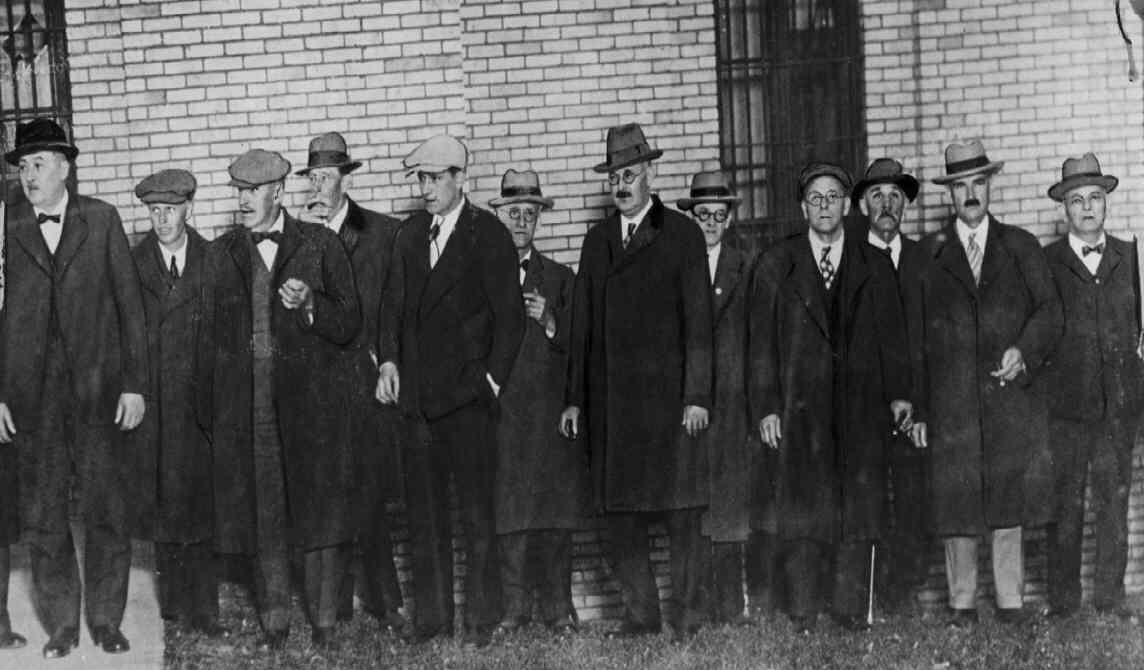
James Mills, the victim's husband, died in 1943.
He was cleared of suspicion, and then he was gone.
The case has been the subject of numerous books and documentaries.
No new evidence has ever emerged to identify the killer.
The weapon, a .32-caliber pistol, was never recovered.
It is not in a collection.
It is not in an evidence locker.
It is nowhere in the record.
The crabapple tree where the bodies were found was cut down in the 1950s.
The site is now a residential area.
People live there.
They walk where the bodies lay.
They do not know what the ground once held.
The story is frozen in time.
There is no next chapter in sight.
The accused went home.
The accused died.
The tree came down.
The pistol stayed lost.
The case is closed in practice.
It is not closed in fact.
Whether any new evidence will ever emerge is not established.
That would require a document, a confession, a weapon.
None has come.
The investigation was a series of mistakes.
The undertaker moved the bodies.
The scene was cleaned.
The evidence was destroyed.
The trial was a spectacle.
The verdict was an anticlimax.
Justice was not served.
It was simply concluded.
And the story still isn't over.
It just stops.
Advertisement
You may also like
The two-word confession that cracked the Hillside Strangler case
He was arrested in Bellingham, Washington, in January 1979, for the murders of two women there. Under interrogation, Kenneth Bianchi confessed to those killings.…
The note that bought a one-way ticket to nowhere: D.B. Cooper’s 1971 demand
The note was folded, passed hand to hand at 8,000 feet. November 24, 1971. A man calling himself Dan Cooper bought a one-way ticket…
The bloody glove found at O.J. Simpson's estate that didn't fit in court — and the 9-month trial it defined
The dog came first. A passerby on Bundy Drive saw it, alone, and followed. The dog led him to the bodies, discovered around midnight…
The glove that wouldn't fit and the 9-month trial that split America
The glove sat on the courtroom table, dark with dried blood, and Simpson took it in his hands. He struggled with it. He pulled,…
The blood word 'PIG' on Sharon Tate's door, and the Helter Skelter clue detectives couldn't crack
The front door at 10050 Cielo Drive held a word written in blood: "PIG." On the night of August 9, 1969, five people were…
The confession that changed: DeFeo's shifting story on the night his family was shot
The bar on Ocean Avenue opened early on a Wednesday morning, or perhaps it had never closed. A young man walked in and told…