The two-word confession that cracked the Hillside Strangler case
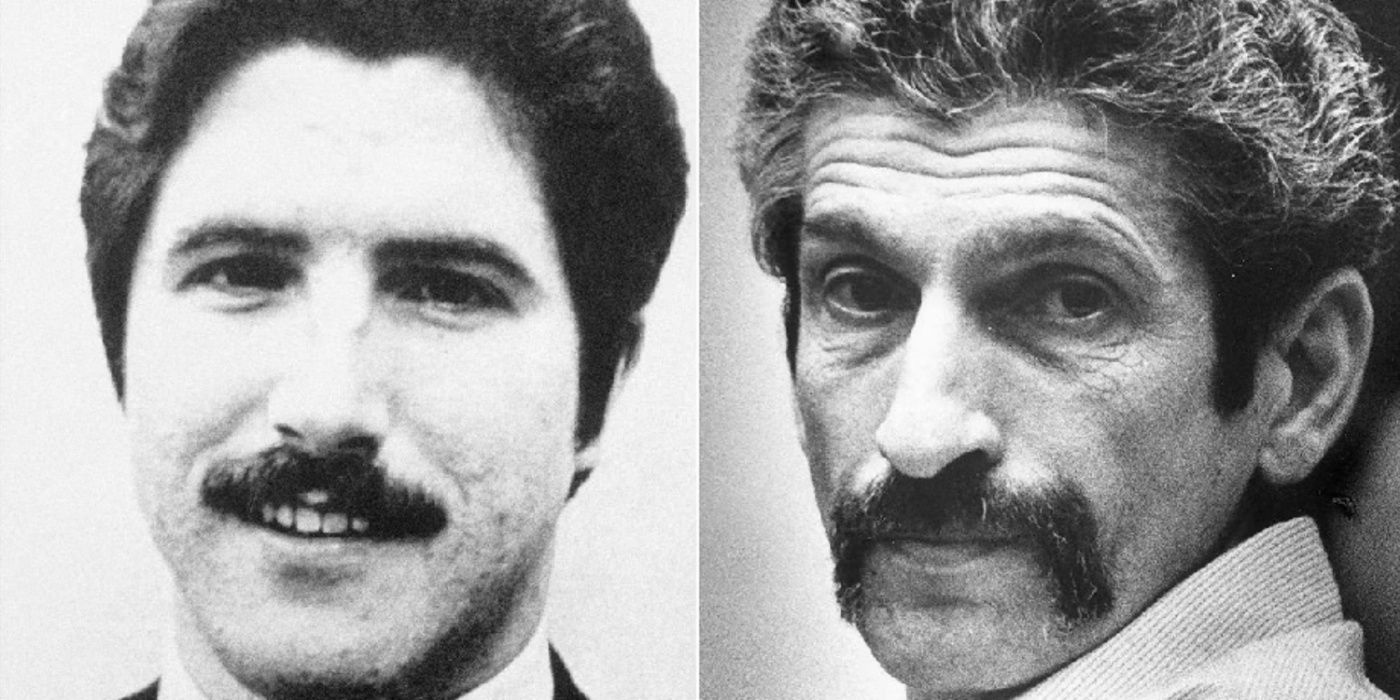
He was arrested in Bellingham, Washington, in January 1979, for the murders of two women there.
Under interrogation, Kenneth Bianchi confessed to those killings.
Then he kept talking.
He implicated himself and his cousin in the Hillside Strangler murders, the series of killings that had terrorized Los Angeles.
His confession included detailed information about the crimes — victim locations and methods.
Information that only the killer would know.
That confession led to the arrest of Angelo Buono Jr.
What were the two words?
The exact words are not specified in the source material.
The record does not establish them.
But the weight of the confession is documented: it named a cousin, and it changed everything.
The interrogation produced details that had not been publicly released.
Investigators could check his account against the scenes.
They could match his words to the evidence.
What he said held up.
That is what made it matter.
He was not just admitting to the Washington murders.
He was opening the door to ten more.
And the cousins were on the other side.
THE BODIES ON THE HILLSIDES
The first body was found in October 1977.
She was young, and she was dumped on a hillside in Los Angeles.
By February 1978, nine more young women and girls were gone.
They were 12 to 28 years old.
They were found on hillsides, in gullies, and along freeways across Los Angeles County.
Each one had been abducted, sexually assaulted, and murdered.
The killings terrorized the region.
The name that stuck was the Hillside Strangler case.
It stuck even though the source records no single strangler, and the perpetrators were two men, cousins.
At first, the investigation did not hold together.
Police treated the murders as separate cases.
They were separate bodies, separate scenes, separate files.
Then patterns emerged.
The victims were young. The method was similar. The dumping grounds were the same hills.
The exact dates of each murder are not detailed in the source.
The specific patterns that first linked the cases are not detailed either.
What the record does show is a city under siege and a police force catching up.
The murders ran from October 1977 to February 1978.

Ten young women and girls in five months.
That is one body every two weeks.
The dread was mounting before anyone had a name for it.
The frustration was mounting too.
There was a pattern on the hillsides, but no one had connected the dots yet.
That would require evidence.
THE CONFESSION AND THE COUSIN
The break came in January 1979, when Kenneth Bianchi was arrested in Bellingham, Washington, for the murders of two women, Diane Wilder and Karen Mandic.
Under interrogation, Bianchi confessed to the Washington murders.
Then he implicated himself and his cousin Angelo Buono Jr. in the Hillside Strangler killings.
He provided detailed information about the crimes — victim locations, methods — details only the killer would know.
The confession led to Buono’s arrest.
The case that had stalled for over a year turned on the words of one man.
But the words kept shifting.
Bianchi later claimed he had multiple personalities.
He said a personality named "Steve" committed the murders.
Psychiatrists rejected that defense.
The exact nature of the "Steve" personality claim, and the psychiatric evaluations that rejected it, are not detailed in the source.
What is documented is the confession itself.
What is documented is the detail he gave.
What is documented is the arrest that followed.
What is not documented is whether any of it was true before he said it.
The suspicion lingers: a man who could invent a personality might invent a confession.
That would require evidence.
The evidence came later — fibers and hairs from Buono’s home and car, matched to victims.
But at that moment, in January 1979, it was just a cousin’s words.
They were enough to move the case forward.
They were enough to end the stall.
THE EVIDENCE THAT HELD
The prosecution built its case on two pillars: Bianchi’s testimony and what the fibers said.
Bianchi took the stand against his cousin.
He described the crimes in detail, naming locations and methods that had never been released to the public.
The defense argued that Bianchi was a liar and a manipulator.
The defense argued that Bianchi acted alone.
The defense argued that Buono was simply not involved.
The prosecution answered with the physical record.
Fibers and hairs found on the victims matched Buono’s home and his car.
That link was presented to the jury as the silent corroboration — the proof that Bianchi’s words were not the whole story.
The specific fibers and hairs, and how they were matched to Buono’s home and car, are not described in detail in the source.
What remains documented is the claim itself, repeated across the trial record.
The trial stretched from 1981 to 1983.
It was one of the longest in California history.
Two stories competed for the jury’s belief: the prosecution’s web of confession and fibers, versus the defense’s picture of a lone killer.
Which one decided the case?
Was it Bianchi’s voice, detailed and damning?
Was it the fibers, silent but physical?
Or was it the sheer weight of both, pressed together until the defense could not separate them?
That question is not answered in the record.
The record shows a conviction on nine counts of first-degree murder.
It shows a sentence of life without parole.
It shows what the jury chose.
It does not show exactly how they chose it.
AND THE STORY STILL ISN'T OVER
The sentence was life in prison.
For Washington, Bianchi pleaded guilty to two counts of first-degree murder and received that sentence.
For California, he was convicted of five counts of first-degree murder and received the same: life in prison.
Buono’s trial ran from 1981 to 1983, one of the longest in California history.
He was convicted of nine counts of first-degree murder.
The judge sentenced him to life in prison without the possibility of parole.
Buono’s conviction was upheld on appeal.
Bianchi remains in prison in Washington, still serving his life sentence.
Buono died in prison in 2002 of a heart attack.
The case became books.
It became documentaries.
It became a reference point for how two cousins could terrorize a county.
The victims’ families have largely stayed private.
Some have spoken publicly over the years.
The current status of any ongoing appeals or parole hearings for Bianchi is not mentioned in the source.
That is not established.
What is established is the record: the pleas, the convictions, the sentences, the appeal.
It is a closed file.
It is also an open wound.
The evidence held.
The testimony held.
The silence of the families holds too.
The story still isn't over.
Not because the courts left it open.
But because the weight of ten lives does not end with a verdict.
Advertisement
You may also like
The 340-symbol cipher cracked in 2020 — and the message that still names no one
In December 2020, a team of codebreakers announced they had cracked the 340-symbol cipher. David Oranchak, a software developer, and Sam Blake, a mathematician…
The misread clue that derailed the Tate murder probe for months
Five people were found dead at 10050 Cielo Drive in Benedict Canyon on the morning of August 10, 1969. Among them was actress Sharon…
The work truck and the oilfield: how a Colorado husband's story collapsed in three days
The friend called it in on the morning of August 13, 2018, after Shanann Watts missed a doctor’s appointment. She was 34, and her…
The Gulf War veteran who rented a Ryder truck under a false name — then a trooper pulled him over
The Ryder truck was rented from an agency in Junction City, Kansas, under the name "Robert Kling." That name was not his. The rental…
Why Gary Ridgway's 48 life sentences still face a painful, unfinished chapter for victims' families
He sat in a King County courtroom in 2003 and said the words that ended the longest murder investigation in Washington state history. Gary…
The 2020 ruling that spared Scott Peterson from death row
She was twenty-seven and eight months pregnant, and she vanished from her home on Christmas Eve. Her husband reported her missing that evening. He…