The 31-Day Gap That Made Detectives Ask Why a Mother Never Reported Her Child Missing
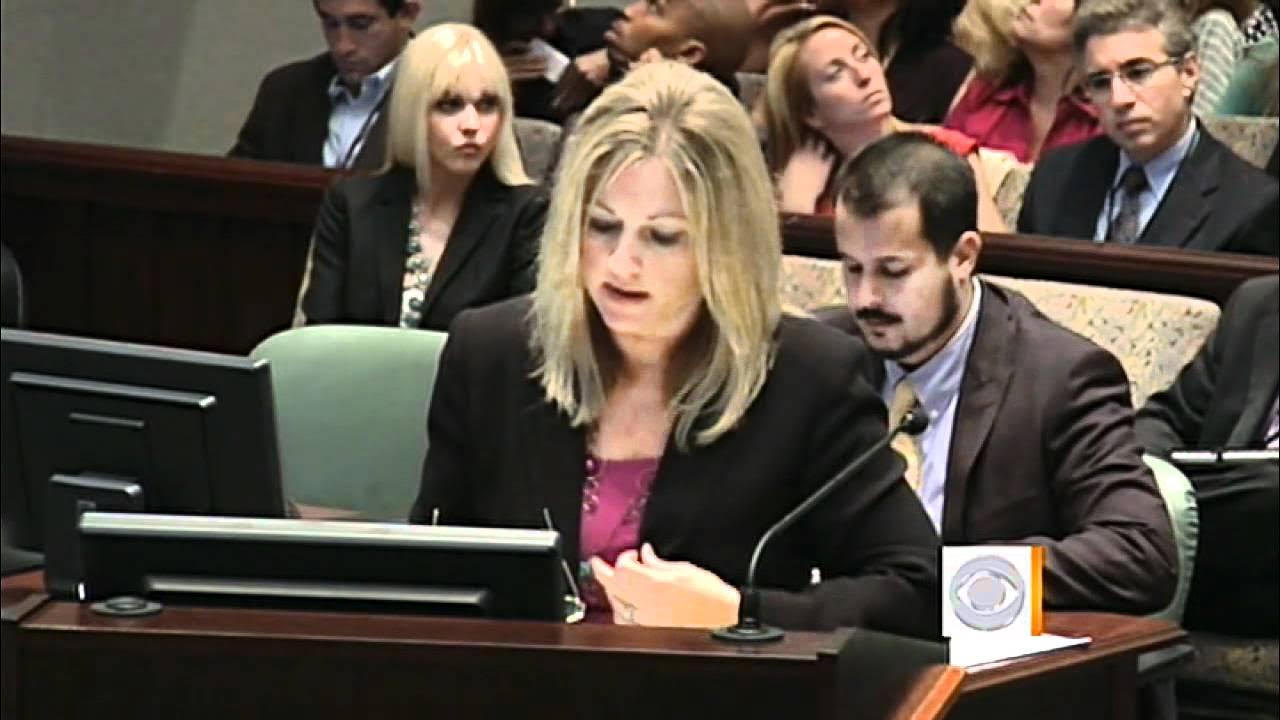
The 911 call came on July 15, 2008.
Cindy Anthony was the one who made it.
She told the operator that her two-year-old granddaughter, Caylee Anthony, was missing.
She also said her daughter, Casey Anthony, had not produced the child for over a month.
That is the 31-day gap.
It is the number that would become the case’s most scrutinized detail, and the source of the question that never went away.
How could a mother not report her own child missing for a month?
How could she wait that long?
How could she say nothing?
That would require evidence of what happened inside those 31 days.
The record does not establish it.
The source does not specify when Caylee was last seen or by whom.
What is established is what Casey Anthony told investigators afterward.
She said Caylee had been kidnapped by a nanny named Zenaida Fernandez-Gonzalez.
Detectives could not find any record of such a person.
The name was later determined not to exist.
The lead detective was Yuri Melich of the Orange County Sheriff’s Office.
He heard the story of the nanny.
He could not verify her.
He could not find her.
He could not find any trace that she had ever been there.
So the gap stood.
31 days between the alleged disappearance and the report.
31 days of silence.
31 days that a two-year-old was unaccounted for.
The call was made by the grandmother, not the mother.
The mother’s story was a fabrication.
What happened in that month remains a question the record leaves open.
THE NANNY WHO WASN'T THERE
Casey Anthony told detectives that she had left Caylee with a nanny named Zenaida Fernandez-Gonzalez.
The nanny, she said, had kidnapped the child.
Detectives searched for a record of Zenaida Fernandez-Gonzalez.
They found no record of such a person.
The name was later determined to be fabricated.
The nanny was not there.
Whether Casey Anthony ever actually left Caylee with anyone is not established; the source only records that the nanny was fabricated.
The story collapsed on that point.
The investigation then turned toward the mother.
It was a turn marked by significant missteps and delays, according to the source.
The initial 911 call had come from the grandmother, Cindy Anthony, not from the mother.
George Anthony initially reported finding evidence in the family’s backyard.

The lead detective was Yuri Melich of the Orange County Sheriff’s Office.
He had a story that did not hold.
He had a family with shifting accounts.
He had a month-long gap no one could explain.
The nanny was gone, and so was the child.
What remained was the mother’s word.
That would require evidence.
THE CAR TRUNK AND THE SEARCHES
George Anthony told investigators he smelled a strong odor of decomposition in the trunk of his daughter’s car.
The car had been impounded.
It was a white Pontiac Sunfire.
Forensic analysis later detected chloroform and decompositional byproducts in that trunk, according to the source.
The car became a silent witness.
It was evidence. It was also a problem.
Internet searches for chloroform were traced to the Anthony home computer, according to the source.
The prosecution’s case leaned on those searches.
It leaned on the odor.
It leaned on the trunk.
What the searches meant was never simple.
Who performed the forensic analysis is not in the record.
When the searches were conducted is not in the record either.
Those details were not established.
The case shifted here.
A missing child became a possible homicide.
Not because a body had been found. Because a car smelled like one.
George Anthony’s report was a turning point.
The investigation had already been marked by missteps and delays.
The nanny was gone, and so was the child.
Now the trunk held something the mother could not explain.
The prosecution argued the car told the story.
The defense would argue the family covered up an accident.
That would require evidence.
THE REMAINS AND THE TWO STORIES
On December 11, 2008, a utility worker found skeletal remains in a wooded area near the Anthony family home in Orlando, Florida.
The remains were identified as Caylee Anthony.
Casey Anthony was arrested and charged with first-degree murder, aggravated child abuse, aggravated manslaughter of a child, and four counts of providing false information to law enforcement.
The prosecution argued that Casey Anthony had murdered her daughter to free herself from parental responsibilities.
The defense argued that Caylee had accidentally drowned in the family’s swimming pool and that the Anthony family had covered up the death.
The drowning was an argument, not a finding.
The cause of death is not established in the record.
The remains did not say how the child died.
/jose-baez-1-c5cc5e9bf1ef40618009a54f4c07593e.jpg)
The prosecution pointed to the car trunk and the odor and the chloroform.
The defense pointed to the pool and the family and the cover-up.
Two stories, one set of bones.
The utility worker found the remains months after the first report.
The gap was not closed by the discovery.
It was widened.
AND THE STORY STILL ISN'T OVER
The trial began in May 2011 and lasted six weeks.
On July 5, 2011, the jury acquitted Casey Anthony of first-degree murder, aggravated child abuse, and aggravated manslaughter of a child.
She was convicted only of four counts of providing false information to law enforcement.
The judge sentenced her to four years in prison, with credit for time served.
She was released from jail on July 17, 2011.
She had already served more time than her sentence required.
The acquittal did not answer the question the 911 call had opened.
It did not close the gap.
It widened it.
Casey Anthony has maintained a low public profile since her release.
She has occasionally appeared in media interviews.
She has stated that she remains the subject of public scrutiny and threats.
No new evidence has emerged to change the outcome, according to the source.
What actually happened to Caylee Anthony is not established by the record.
The source does not provide a definitive answer.
Not because the jury failed.
But because the record does not contain one.
The prosecution argued murder to free herself from parental responsibilities.
The defense argued an accidental drowning and a family cover-up.
The jury heard both.
It convicted on the lies, not the killing.
The nanny was fabricated.
The 31-day gap was real.
The remains were found months after the first report.
The trunk held chloroform and decompositional byproducts.
The internet searches were traced to the home computer.
The verdict was not a finding of innocence.
It was a finding of insufficient proof.
She walked out of jail on July 17, 2011.
The story still isn't over.
It remains a case about what the record does not show.
A mother was acquitted.
A child was never accounted for.
That would require evidence.
Advertisement
You may also like
The cellphone video that placed Alex Murdaugh at the kennels — and broke his alibi
SLED forensic analysts pulled a cellphone video from Paul Murdaugh's phone. The footage placed Alex Murdaugh at the dog kennels near the time of…
The 1969 cipher that taunted Bay Area papers and left a killer unnamed
August 1969, and three Bay Area newspapers each received the same taunt. The San Francisco Chronicle. The San Francisco Examiner. The Vallejo Times-Herald. The…
The parole board that kept saying no to Leslie Van Houten for 53 years
The parole board's door opened and closed for 53 years. For 53 years, a California parole board said no to Leslie Van Houten. She…

The prussic acid purchase that changed the Lizzie Borden case
August 3, 1892, the day before the murders. Lizzie Borden walked into a drugstore in Fall River, Massachusetts, and asked to buy prussic acid.…
The boat message that sealed Dzhokhar Tsarnaev's fate — but only after a carjacking that went wrong
On April 19, 2013, Dzhokhar Tsarnaev was found hiding in a boat in a backyard in Watertown, Massachusetts. The boat was ordinary. It sat…
The bullet that matched Richard Allen's pistol — and the confession he made to prison staff
The bullet sat in an evidence room for years before anyone matched it. An unspent round, found at the scene where two girls died.…