The 1975 missing-person report that led police to Gacy — and why they never searched his home
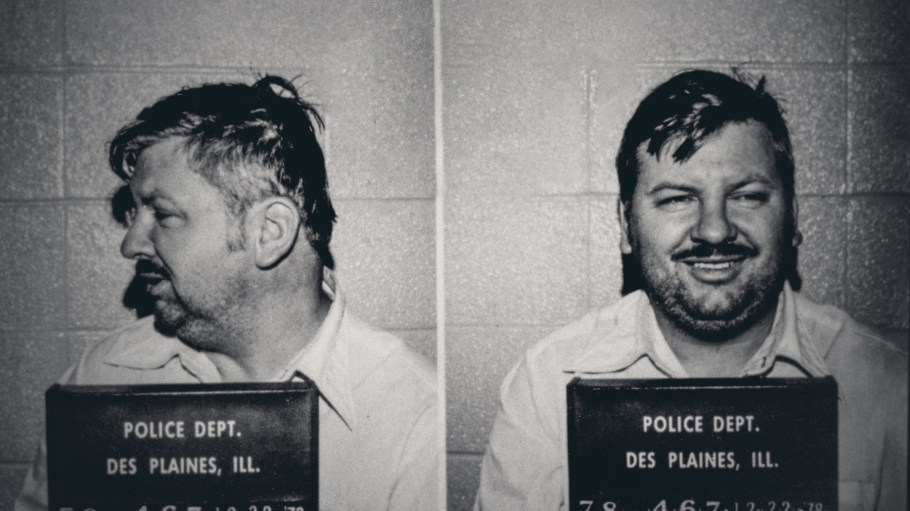
The report was filed in 1975, for a 16-year-old named John Butkovich.
It led police to John Wayne Gacy's door.
Gacy told them Butkovich had worked for him, then left without pay.
Police did not search Gacy's home.
What exactly police did during that 1975 visit is not in the record.
The door was opened.
It was closed.
Three years later, in December 1978, another teenager disappeared: 15-year-old Robert Piest, last seen speaking with Gacy about a construction job.
That disappearance broke the case.
The 1975 report came first.
It was a missed connection, a name in a file, a visit that ended without a warrant.
Not because the evidence was hidden. Because no one looked.
The record shows the visit happened.
The record does not show what was asked, what was seen, or what was ignored.
That would require evidence.
A boy was missing.
A contractor had an answer.
The crawl space waited.
THE CONTRACTOR AND THE CRAWL SPACE
Between 1972 and 1978, John Wayne Gacy was a building contractor and part-time clown performer in Norwood Park Township, Illinois.
He murdered at least 33 young men and boys.
The exact number of victims is not fully established.
The source says at least 33.
He lured victims to his home.
Often under the pretense of employment or a party.
Then he strangled or asphyxiated them.
Most victims were buried in the crawl space beneath his house.
Others were disposed of in the Des Plaines River.
The crawl space was under the floor of a house in a quiet suburb.
The river ran through the county.
A boy was missing.
A contractor had an answer.
The crawl space waited.
Gacy had been previously convicted of sodomy in Iowa in 1968.
That fact had not been flagged when he moved to Illinois.
It was a record that did not travel with him.
It was a warning that never arrived.
The police came to his door in 1975 over a missing 16-year-old.
The contractor said the boy had worked for him and left without pay.
They did not search the home.
They did not open the trapdoor.
They did not look under the house.
The crawl space waited.
It was a space of packed dirt and low beams.
It was a space where the evidence lay close to daily life.
The house sat on a residential street.
Neighbors passed it.
The contractor held parties there.
The clown performed there.
The bodies were beneath the floorboards.
The river held what the crawl space could not.
The scale was vast.
The proximity was ordinary.
That is the part that is hard to hold.
A house.
A crawl space.
A river.
At least 33 young men and boys.
THE 1978 TURNING POINT
December 1978.
A 15-year-old boy named Robert Piest had last been seen speaking with Gacy about a construction job.
His mother reported him missing.
She told police her son had gone to discuss a job with Gacy.
The lead detective obtained a warrant based on that report.
Police went to Gacy’s home.
They searched.
They noticed a strong odor in the crawl space.
They noticed a trapdoor.
The exact sequence of events during that search is not fully detailed in the record.
What is documented is what they found.
Human remains.
Gacy was arrested.
He later confessed to 33 murders.
Police recovered bodies from the crawl space.
Police recovered bodies from the river.
The case had broken.
The shift had come.
A missing-person report led them to the door this time.
A mother’s report was the warrant.
The odor and the trapdoor were the evidence.
The crawl space gave up what it held.
The river gave up what it held.
At least 33 young men and boys.
The search was over, but the digging had just begun.
THE MISSED CONNECTIONS
In 1978, a young man named Jeffrey Rignall reported being abducted, chloroformed, and sexually assaulted by a man matching Gacy's description.
Charges were not pursued.
Rignall could not identify Gacy in a lineup.
Why charges were dropped beyond that identification issue is not fully explained in the record.
That would require evidence.
What if the lineup had gone differently?
What if the 1975 report had gone further?
What if one thread had been pulled?
The 1975 report was one such thread.
A missing person report for 16-year-old John Butkovich led police to Gacy, who claimed Butkovich had worked for him and left without pay.
Police did not search Gacy's home.
It was a missed connection.
It was also a pattern.
Several young men had been last seen near Gacy's contracting business.
No one connected them.
The prosecution's case at trial was built on recovered remains, dental records, and Gacy's confession.
The defense argued Gacy suffered from a personality disorder but was not legally insane.
The remains spoke first.
The confession followed.
The threads stayed loose for years.
The river gave up what it held, but the earlier reports held nothing at all.
AND THE STORY STILL ISN'T OVER
The trial began in February 1980.
Gacy was charged with 33 counts of first-degree murder.
He pleaded not guilty by reason of insanity.
On March 12, 1980, the jury found him guilty of all 33 murders.
He was sentenced to death.
Gacy was executed by lethal injection on May 10, 1994, at Stateville Correctional Center in Illinois.
His home was demolished in 1979.
The confession is a document. The verdict is a fact. The demolition is a date on a calendar.
But the story still is not over.
Some victims remain unidentified.
A few have been identified through DNA analysis, the record says.
Which victims remain unidentified and how many are still unnamed is not specified in the record.
It is a gap. It is also a wound.
The case led to changes in missing persons reporting.
It led to interstate data sharing.
Several victims' families have continued to advocate for improved tracking of missing persons.
They push for a system that does not lose a 16-year-old's report in a contractor's file.
They push for a system that checks the crawl space.
The river gave up what it held.
The crawl space gave up what it held.
The record gives up only what it holds.
And what it holds is incomplete.
Advertisement
You may also like
The parole board that kept saying no to Leslie Van Houten for 53 years
The parole board's door opened and closed for 53 years. For 53 years, a California parole board said no to Leslie Van Houten. She…

The prussic acid purchase that changed the Lizzie Borden case
August 3, 1892, the day before the murders. Lizzie Borden walked into a drugstore in Fall River, Massachusetts, and asked to buy prussic acid.…
The boat message that sealed Dzhokhar Tsarnaev's fate — but only after a carjacking that went wrong
On April 19, 2013, Dzhokhar Tsarnaev was found hiding in a boat in a backyard in Watertown, Massachusetts. The boat was ordinary. It sat…
The bullet that matched Richard Allen's pistol — and the confession he made to prison staff
The bullet sat in an evidence room for years before anyone matched it. An unspent round, found at the scene where two girls died.…
The tip-off that doomed the ATF raid before a single shot was fired at Waco
A local news reporter had been tipped off about the raid. He asked a postal worker about it. That question is the documented moment…
The undertaker who moved the bodies before police reached the Hall-Mills crime scene
They lay beneath a crabapple tree in a secluded lane called Lovers' Lane. He was shot in the head. She was shot in the…