A floppy disk question that led police to a church computer — and a killer
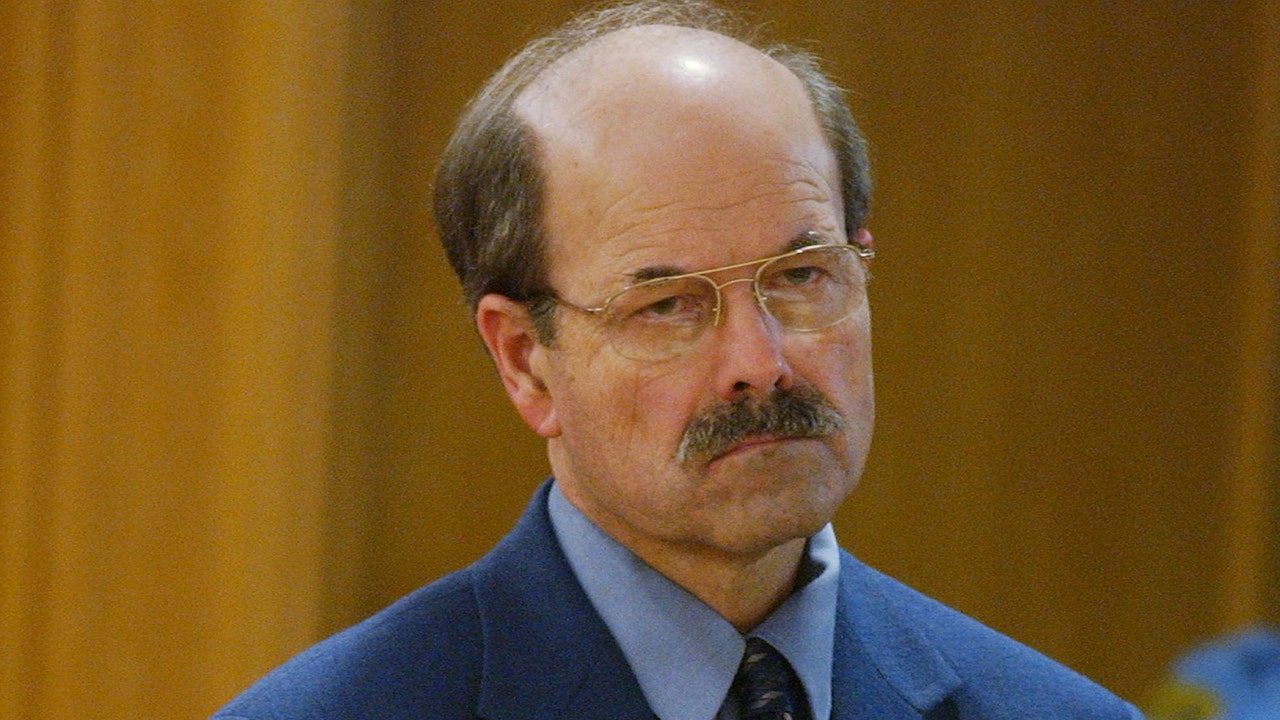
In 2004, a man who had taunted police for decades under the name BTK asked a question in a letter.
He wanted to know whether a floppy disk could be traced if he sent one.
Police said it could not be traced.
The disk arrived.
Forensic analysts recovered deleted files from it, and those files carried metadata pointing to a computer at Christ Lutheran Church in Park City.
The man who asked the question was Dennis Rader, a married father of two and the church's council president.
At this point in the story, he was not yet named publicly.
He was just a question, a disk, and a set of recovered files.
The question was a turning point.
It is also the place where the documented record and the viral story part ways.
Whether police intentionally misled the killer is not established by the source.
The record shows only what they said and what the disk revealed.
It does not show what they planned.
It does not show what they knew when they answered.
It shows a reply, a delivery, and a trail of metadata.
How could a simple question about a floppy disk unravel a decades-old case?
That would require evidence.
The evidence begins with the disk.
THE FIRST KILLINGS
The first known killings came on January 15, 1974.
Four members of the Otero family were bound and strangled in their own home in Wichita, Kansas.
Police focused early on the victims' acquaintances.
They also looked at a man seen near the home.
No arrest was made.
The case would sit open for three decades.
The killer gave himself a name in taunting letters to police and media: BTK, for Bind, Torture, Kill.
The first letter arrived at the Wichita Eagle in October 1974.
It claimed responsibility for the murders.
The newspaper held it for months.
Police did not release it publicly until 1977.
That delay cost investigators time.
It cost them public attention.
It cost them a name the city would not hear for years.
A task force formed in the late 1970s.
It was disbanded without results.

In 1984, a composite sketch was released, based on a witness who had seen a man near a victim's apartment.
It produced no solid lead.
The case went cold.
Between 1974 and 1991, the man later identified as Dennis Rader murdered ten people in and around Wichita.
Not because police were careless.
But because the evidence did not point anywhere they could follow.
The source material does not list the names of all four Otero family members.
It records only that they were a family of four.
What is documented is the weight of the silence that followed.
Frustration is not a fact.
But the record shows a decade of letters, a decade of bodies, and years when nothing moved.
THE COLD YEARS
A task force was formed in the late 1970s.
It was disbanded without results.
In 1984, a composite sketch was released.
It was based on a witness who had seen a man near the victim's apartment.
It produced no solid lead.
The case went cold for decades.
No arrests came, despite the taunting letters.
The killer's identity remained unknown.
The investigation was led by the Wichita Police Department and the Sedgwick County Sheriff's Office, with FBI assistance.
The lead detective in the later phase was Lt. Ken Landwehr of the Wichita Police Department.
How many letters arrived during those years?
How many were read, logged, and filed away?
How many promised more?
The exact number is not specified in the source.
What is documented is the silence between them.
The grind of a stalled file.
The passage of time, measured in nothing.
THE RESURFACING
In 2004, the Wichita Eagle published a story marking the 30th anniversary of the Otero murders.
The killer resumed contact, sending letters and packages to police and media.
In one 2004 letter, he asked whether a floppy disk could be traced if he sent it.
Police said it could not be traced.
That was the answer he wanted.
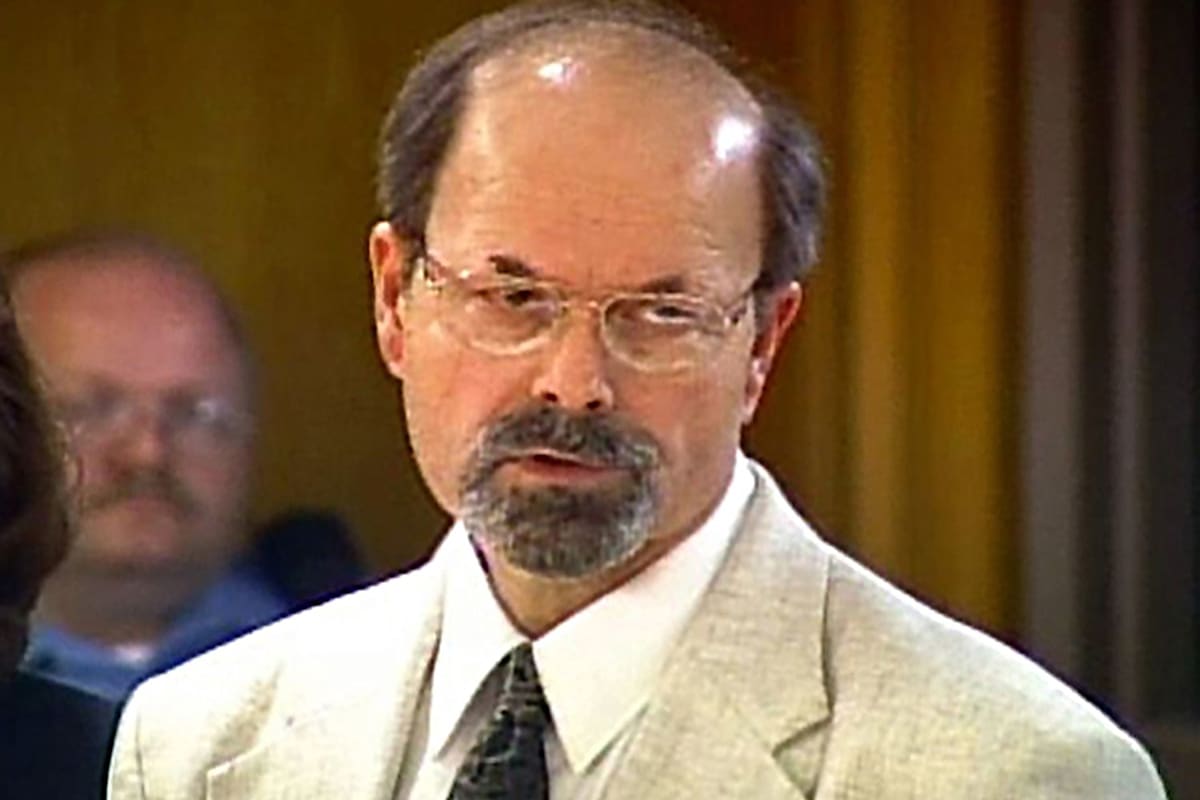
When Rader sent the disk, forensic analysts recovered deleted files.
The metadata pointed to a computer at Christ Lutheran Church in Park City.
Rader was a church council president there.
The exact content of those deleted files is not detailed in the source.
What is documented is the pointer: a machine, a place, a man.
Investigators obtained a DNA sample from a tissue submitted by Rader's daughter during a routine medical visit.
It matched DNA from a crime scene.
Rader was arrested on February 25, 2005.
He confessed to all ten murders.
A question about a floppy disk.
A disk sent because the answer was no.
A file recovered because the answer was yes.
One question undid decades of taunting letters.
One disk ended the anonymity.
AND THE STORY STILL ISN'T OVER
He pleaded guilty on June 27, 2005, to ten counts of first-degree murder.
The sentence came on August 18, 2005: ten consecutive life terms, with a minimum of 175 years before parole eligibility.
Not the death penalty. Kansas had not reinstated capital punishment for crimes committed before 1994.
Rader waived his right to appeal.
He is incarcerated at the El Dorado Correctional Facility in Kansas.
He has given interviews. He has cooperated with authors and filmmakers.
He has shown no remorse.
His wife, Paula Rader, divorced him after his arrest.
The victims' families have spoken publicly about the lasting impact.
A file recovered because the answer was yes.
One question undid decades of taunting letters.
One disk ended the anonymity.
The disk did not end the wounds.
The families carry what the metadata could not name.
Rader serves his terms in a cell, not in the ground below the Otero home.
Justice was done. The record says so.
The record does not mention any future legal proceedings or motions.
That would require evidence.
The case has been the subject of books, documentaries, and a television series.
The killer is named. The victims are named.
The silence after the verdict is not the same as closure.
Advertisement
You may also like
The undertaker who moved the bodies before police reached the Hall-Mills crime scene
They lay beneath a crabapple tree in a secluded lane called Lovers' Lane. He was shot in the head. She was shot in the…
The 31-Day Gap That Made Detectives Ask Why a Mother Never Reported Her Child Missing
The 911 call came on July 15, 2008. Cindy Anthony was the one who made it. She told the operator that her two-year-old granddaughter,…
The 1975 missing-person report that led police to Gacy — and why they never searched his home
The report was filed in 1975, for a 16-year-old named John Butkovich. It led police to John Wayne Gacy's door. Gacy told them Butkovich…
The cellphone video that caught Alex Murdaugh's voice at the kennels — after he said he wasn't there
The 911 call came at 10:06 p.m. on June 7, 2021. Alex Murdaugh told the dispatcher he had just found his wife and son…
The $5,800 ransom found by a boy on a riverbank — and the FBI clue it left behind
The bills were rotting, half-buried in the sand of the Columbia River, near Vancouver, Washington. A young boy named Brian Ingram found them in…
The jailhouse confession that finally broke the Manson case wide open
In October 1969, a woman in jail on an unrelated charge began talking to her cellmate. Her name was Susan Atkins, and the cellmate…