The phone records that placed Adnan Syed near Leakin Park—but may not have been his calls
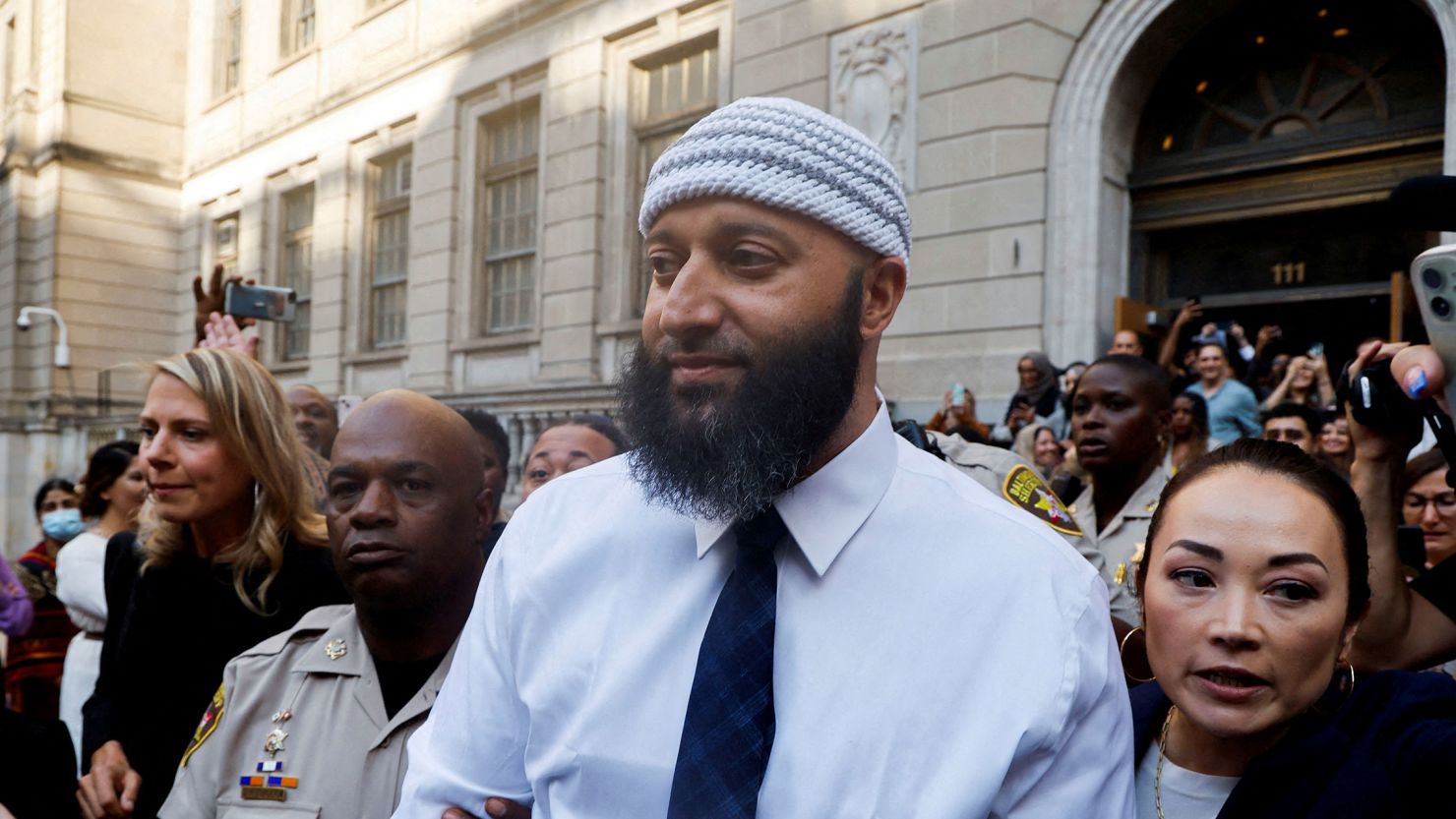
The phone records placed Adnan Syed near Leakin Park at the time of the burial.
The records were built on incoming calls.
Incoming calls that may not have been placed by him.
Whether Syed actually made or received those calls is not established.
The records were a pillar of the prosecution's case.
The reliability of those records was later questioned.
The case became a homicide investigation after Hae Min Lee's body was found in Leakin Park on February 9, 1999.
The cause of death was manual strangulation.
She was in a shallow grave.
The records placed him there.
The records placed him there at a specific time.
What time, exactly?
What tower, exactly?
What call, exactly?
That would require evidence.
The prosecution said the records showed his location.
The defense said the records showed nothing of the sort.
Incoming calls arrive without the subscriber's action.
A phone can receive a call when its owner is elsewhere.
A phone can receive a call when its owner is not holding it.

The records logged the calls.
The records did not log who made them.
The records did not log who answered them.
The records placed a phone near Leakin Park.
The records did not place a person there.
That distinction became the fault line of the case.
The body was found first.
The records came later.
The records were meant to close the distance between Syed and the grave.
They did not.
THE DISAPPEARANCE AND THE BODY
She was 18.
Hae Min Lee, a senior at Woodlawn High School, disappeared on January 13, 1999.
The investigation began as a missing person case.
She had failed to pick up her cousin from school.
That was the first mistake, or the first turning point: a routine absence that became a file, then a search.
The exact circumstances of her disappearance are not in the record.
No one has established what happened between the school day and the report.
Her body was found on February 9, 1999.
It was in Leakin Park, in Baltimore City, buried in a shallow grave.

The cause of death was manual strangulation.
No weapon was reported.
The missing person case became a homicide investigation that day.
The park was the place. The grave was the fact.
Adnan Syed, her ex-boyfriend, was arrested on February 28, 1999.
He was charged with her murder.
Charged, not convicted at that moment.
The arrest came nineteen days after the body was found.
It came forty-six days after she disappeared.
She had a brother. She had a mother. They were active in the case.
The records had not yet come. The records came later.
The distance between the school and the park was the question.
The investigation answered it with a timeline.
That timeline would be questioned for years.
THE WITNESS AND THE TIMELINE
Jay Wilds was a classmate of Adnan Syed.
He testified that Syed showed him the body and asked for help burying it.
That testimony placed Syed at the scene.
It also gave the prosecution a timeline: a sequence of calls, locations, and hours that led to Leakin Park.
The prosecution built its case on that timeline.
It relied heavily on Wilds' testimony.
It relied heavily on the cell phone records.
The records placed Syed near Leakin Park at the time of the burial.
But the records were based on incoming calls.
Incoming calls may not have been placed by Syed.
The defense argued Wilds was not credible.
The defense argued the cell phone evidence was unreliable.
Was Wilds telling the truth?
Were the calls actually his?
Was the timeline real?
That would require evidence.
The record does not establish that Wilds' testimony is fully credible.
It is disputed.
It has been disputed for years.
It is the line between what is viral and what is documented.
The prosecution called it a timeline.
The defense called it a story.
The jury believed the timeline.
The conviction followed.
The questions did not end there.
THE MISSED ALIBI AND THE APPEALS
Asia McClain was a classmate of Adnan Syed.
She said she saw him at the Woodlawn Public Library at the time of the murder.
She wrote to him. She offered an alibi.
The defense attorney, Cristina Gutierrez, did not investigate the claim.
The trial went ahead without it.
The jury heard Jay Wilds. The jury heard the cell phone records. The jury never heard from Asia McClain.
That failure became the hinge of the appeals.
In 2016, a post-conviction relief hearing was granted.
The ground was ineffective assistance of counsel. The failure to investigate the alibi was the mistake named.
In 2018, the conviction was overturned.
In 2019, it was reinstated.
The case went back and forth. The questions did not leave.
In 2022, a motion to vacate was granted on new evidence.
That evidence included unreliable cell phone data. It included the failure to disclose a potential alternative suspect.
The conviction was vacated. Syed was released.
Whether Asia McClain's alibi is true is not established in the record.
No court has verified her account. No investigation ever tested it.
What is documented is the failure to try.
It is a mistake with a name. It is a mistake with a date.

It is also the reason the case kept returning.
The alibi was never proven false. It was simply never pursued.
AND THE STORY STILL ISN'T OVER
The conviction was vacated, and Adnan Syed walked out of prison in September 2022.
The charges were formally dropped in 2023.
He has maintained his innocence the entire time.
Hae Min Lee's brother spoke publicly about the impact of the proceedings.
Her family expressed distress over the legal back-and-forth.
The case became a phenomenon before it became a reversal.
The podcast "Serial" brought national attention and raised questions about the investigation and trial.
It is a case about a buried body in Leakin Park.
It is also a case about phone records that may not have been his calls.
It is a case about an alibi that was never investigated.
The full truth of what happened on January 13, 1999, remains unknown.
That is not established by any record.
That would require evidence.
The story keeps returning because the record keeps shifting.
A conviction was overturned, then reinstated, then vacated again.
A family waits for an answer that has not come.
A man says he is innocent.
The cell towers do not speak.
The calls were incoming, and they were not his.
The case is closed in court.
It is not closed in the park.
Advertisement
You may also like
The undertaker who moved the bodies before police reached the Hall-Mills crime scene
They lay beneath a crabapple tree in a secluded lane called Lovers' Lane. He was shot in the head. She was shot in the…
The 31-Day Gap That Made Detectives Ask Why a Mother Never Reported Her Child Missing
The 911 call came on July 15, 2008. Cindy Anthony was the one who made it. She told the operator that her two-year-old granddaughter,…
The 1975 missing-person report that led police to Gacy — and why they never searched his home
The report was filed in 1975, for a 16-year-old named John Butkovich. It led police to John Wayne Gacy's door. Gacy told them Butkovich…
The cellphone video that caught Alex Murdaugh's voice at the kennels — after he said he wasn't there
The 911 call came at 10:06 p.m. on June 7, 2021. Alex Murdaugh told the dispatcher he had just found his wife and son…
The $5,800 ransom found by a boy on a riverbank — and the FBI clue it left behind
The bills were rotting, half-buried in the sand of the Columbia River, near Vancouver, Washington. A young boy named Brian Ingram found them in…
The jailhouse confession that finally broke the Manson case wide open
In October 1969, a woman in jail on an unrelated charge began talking to her cellmate. Her name was Susan Atkins, and the cellmate…