A parole check unearthed a kidnapper's confession — but only after a 2-month cold case
The night of October 1, 1993, began as a slumber party.
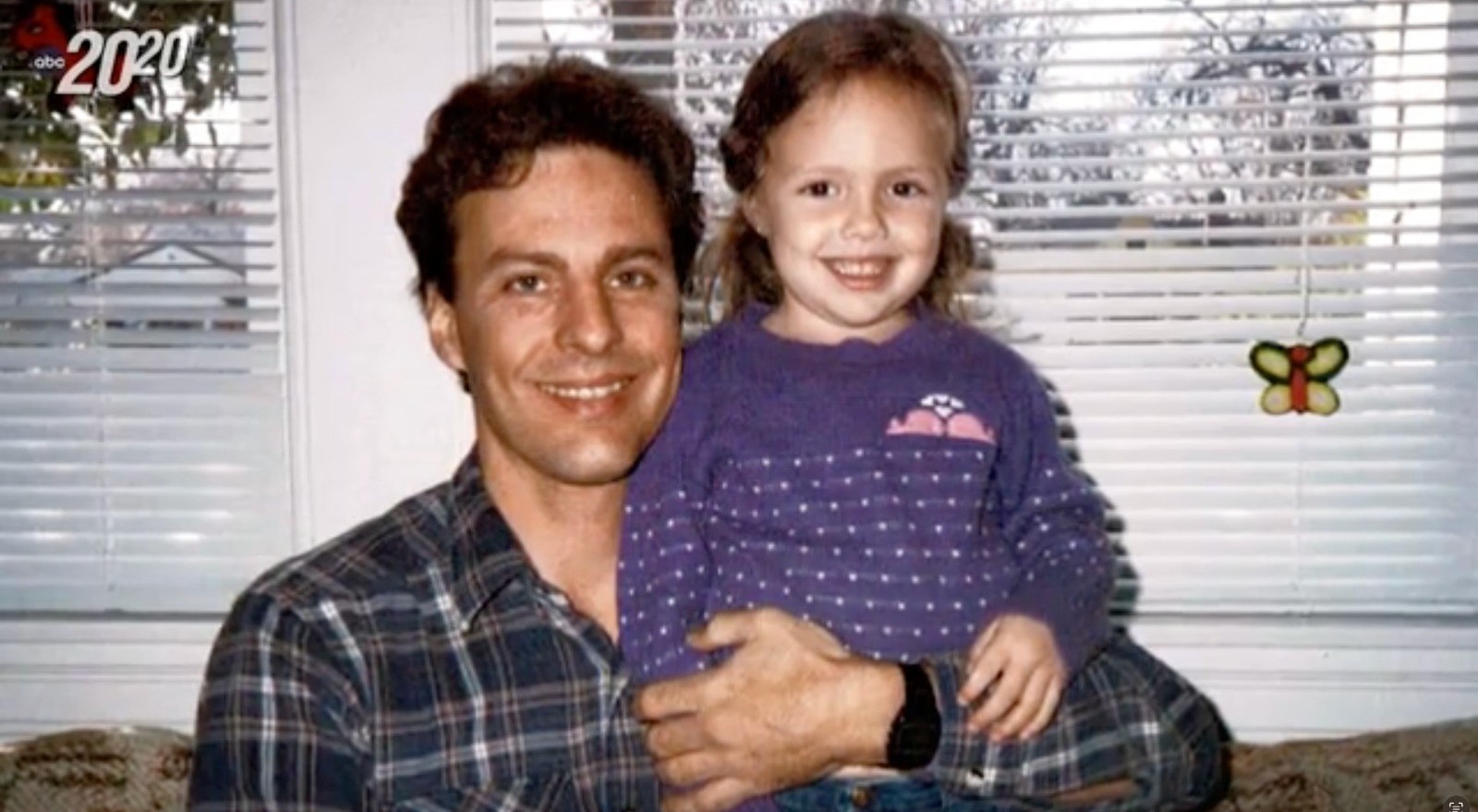
Twelve-year-old Polly Klaas was in her mother's home in Petaluma, California, with two friends.
An intruder entered the house.
He tied up the girls.
He took Polly at knifepoint.
Then the silence set in.
For two months, the case went cold.
No arrest.
No public break.
Thousands of volunteers searched.
The FBI profiled.
Police cleared a neighbor.
The trail led nowhere.
Then came a routine check.
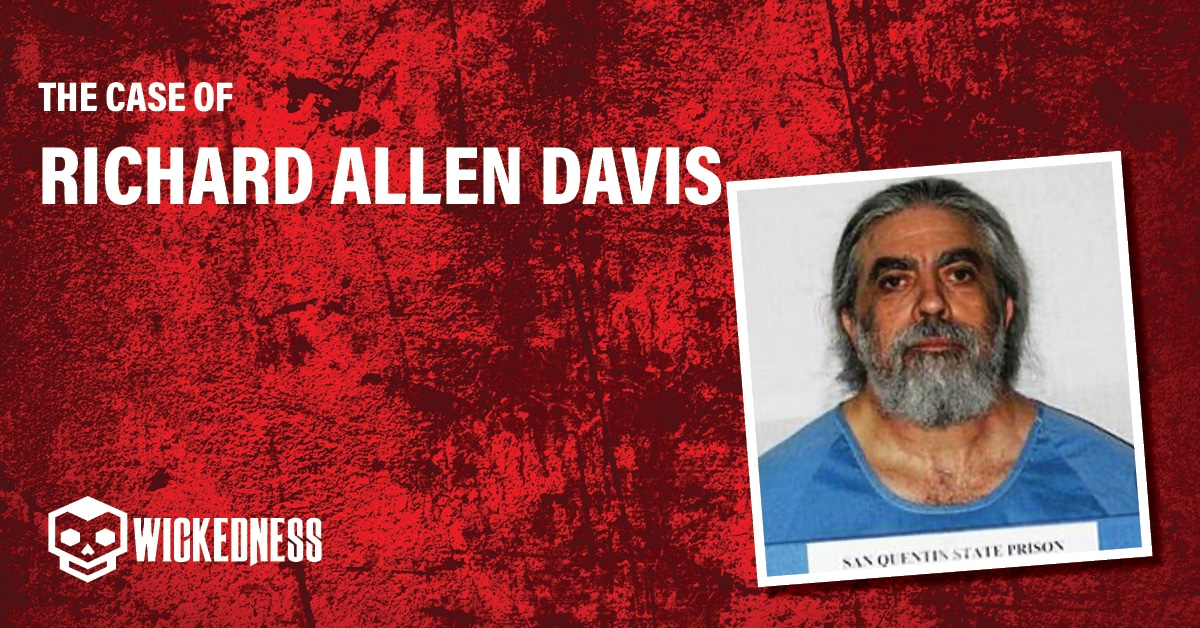
In late November 1993, Richard Allen Davis was arrested on an unrelated parole violation.
Not because of the investigation into Polly.
Because of a paperwork violation.
A jailhouse informant later reported that Davis had made incriminating statements.
That claim was not immediately acted upon.
The exact date of the parole check?
Not in the record.
The identity of the jailhouse informant?
Also not in the record.
What the record does show is a two-month gap.
A gap between a child taken at knifepoint and a man held on an unrelated charge.
The routine check broke the case.
Not the search.
Not the profile.
Not the thousands of volunteers.
A routine check.
TWO MONTHS OF DEAD ENDS
The search was enormous.
Local police, the FBI, and thousands of volunteers fanned out across Petaluma and beyond.
They searched fields, houses, and cars.
They followed tips.
They had nothing.
For two months, the case went cold.
No arrest.
No public break.
Early on, police focused on a neighbor.
The neighbor was cleared.
The FBI’s initial profile suggested the kidnapper was a local man.
That profile may have delayed focus on transients like Richard Allen Davis.
Davis had a long criminal record.
He was in the area.
The record does not name the neighbor.
The record does not specify the FBI’s profiling details.
Neither is established.
What is established is the cost.
A repeat offender with a history of violence was not connected to the case.
Not because the evidence wasn’t there.
But because the investigation was pointed elsewhere.
The profile said local.
The profile said stay close.
The profile said look at the neighborhood.
That would require evidence.
The evidence, when it finally came, pointed somewhere else entirely.
By then, two months had passed.
Two months of dead ends.
Two months of searching for the wrong man.
THE JAILHOUSE CLAIM
Richard Allen Davis was arrested on an unrelated parole violation in late November 1993.
He was in custody for a different matter entirely.
A jailhouse informant reported that Davis had made incriminating statements.
That report was a claim, not a confession.
The record does not name the informant.
The record does not say what Davis allegedly said.
The record does not say when the informant came forward or how the information reached investigators.
What the record shows is a gap.
The claim sat.
The case remained cold for weeks.
Not because the claim was dismissed. Because nothing was done with it.
A man was in jail, and the words he may have spoken stayed inside the jail.
What if the informant had spoken sooner?
What if the claim had been checked the day it was made?
What if a single phone call had changed the timeline?
That would require evidence of a phone call, and the evidence is not there.
The timing is not established.
The content of the statements is not established.
What is established is the arrest, the report, and the silence that followed.
Then DNA evidence later linked Davis to the crime scene.
The link came after the body was found, not before.
By the time the science connected him, Polly Klaas had been dead for weeks.
The claim in the cell had been sitting longer than that.
THE BODY AND THE CHARGE
Polly Klaas’s body was found on December 4, 1993, in a wooded area near Cloverdale, about 60 miles from her mother’s home.
She had been strangled.
The search that had consumed Petaluma for two months ended there, in the trees off a rural road.
The discovery was the turning point, the moment the cold case became a charge.
Richard Allen Davis was formally charged with first-degree murder, kidnapping, and burglary.
The record does not specify the exact date of that formal charge.
The record also does not specify what evidence was presented at the preliminary hearing.
That gap matters, because the jailhouse claim had come first, and the science had come later.
The body was found before the charge, and the charge came before the trial.
The trial began in 1996.
The grim relief of an answer, then the horror of what was found.
She was gone, and the man accused of taking her was in custody.
What connected him, and when, is not fully in the record.
The charge was real. The evidence behind it, at that moment, is not established.
Not because it was absent. But because the source does not say.
The case moved forward on what the prosecution would later present: DNA, inmate testimony, the accused man’s own statements.
But that was for the trial, not for the day the body was found.
On December 4, there was a girl in the woods and a suspect in a cell.
The answer had come. The accounting had not yet begun.
AND THE STORY STILL ISN'T OVER
The conviction came on June 18, 1996.
Davis was found guilty on all counts: first-degree murder, kidnapping, and burglary.
The jury then recommended the death penalty.
On September 26, 1996, the judge sentenced Davis to death.
That was the sentence.
It has not been carried out.
Davis remains on death row at San Quentin State Prison.
California has not executed anyone since 2006, the state's death penalty stalled by legal challenges.
The appeals have been ongoing.
They have been denied, repeatedly, according to recent reports.
The next concrete step in Davis's appeals is not in the record.
No hearing date appears in the source.
No pending motion is named.
The accounting, it turns out, is still not finished.
Polly's father, Marc Klaas, founded the KlaasKids Foundation.
Her mother, Eve Nichol, has spoken publicly about the case.
The case changed California law: "Three Strikes" legislation followed, and so did the wider use of DNA databases.
Those are the legacies written in statute.
The sentence itself remains unwritten in practice.
Davis sits in a cell, as he has for decades.
The family waits.
The state waits.
The law waits.
A death sentence is a final word, except when it is not.
It is a judgment.
It is also a postponement.
That would require a different kind of resolution, and the record does not provide one.
Advertisement
You may also like
The undertaker who moved the bodies before police reached the Hall-Mills crime scene
They lay beneath a crabapple tree in a secluded lane called Lovers' Lane. He was shot in the head. She was shot in the…
The 31-Day Gap That Made Detectives Ask Why a Mother Never Reported Her Child Missing
The 911 call came on July 15, 2008. Cindy Anthony was the one who made it. She told the operator that her two-year-old granddaughter,…
The 1975 missing-person report that led police to Gacy — and why they never searched his home
The report was filed in 1975, for a 16-year-old named John Butkovich. It led police to John Wayne Gacy's door. Gacy told them Butkovich…
The cellphone video that caught Alex Murdaugh's voice at the kennels — after he said he wasn't there
The 911 call came at 10:06 p.m. on June 7, 2021. Alex Murdaugh told the dispatcher he had just found his wife and son…
The $5,800 ransom found by a boy on a riverbank — and the FBI clue it left behind
The bills were rotting, half-buried in the sand of the Columbia River, near Vancouver, Washington. A young boy named Brian Ingram found them in…
The jailhouse confession that finally broke the Manson case wide open
In October 1969, a woman in jail on an unrelated charge began talking to her cellmate. Her name was Susan Atkins, and the cellmate…