How the Menendez brothers' confession to their psychologist turned a mob-style hit into a family tragedy
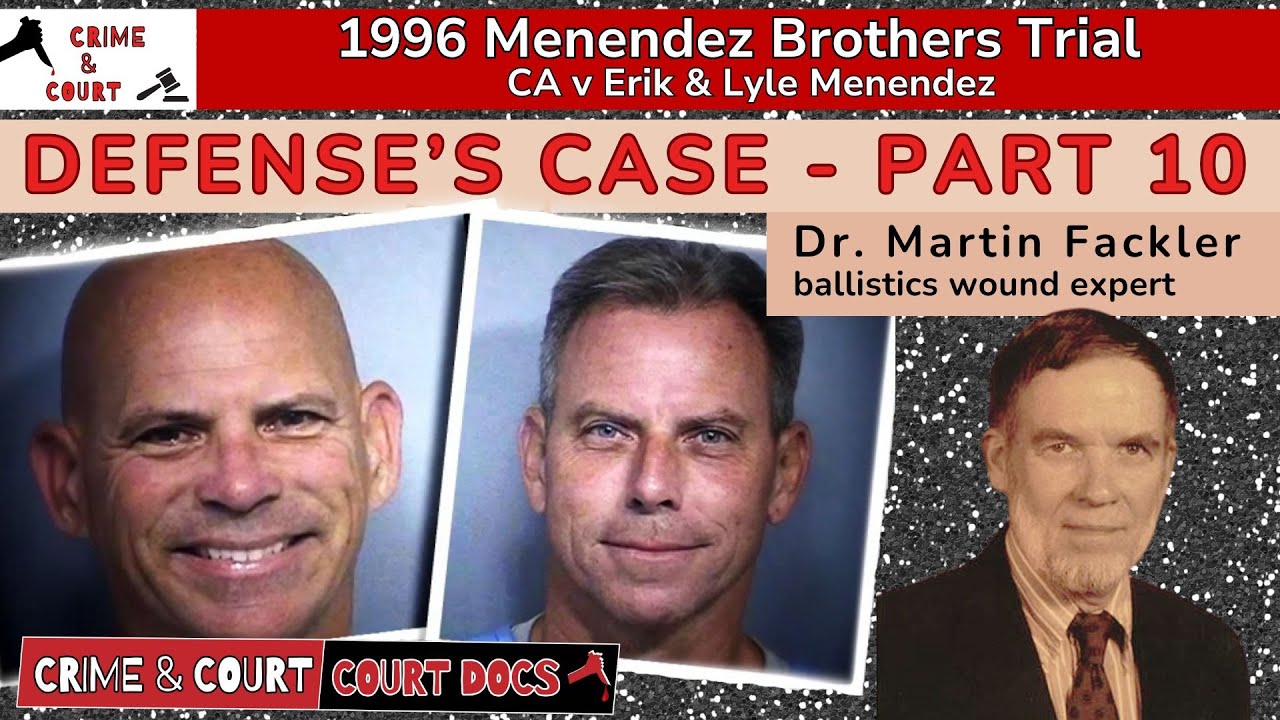
The television was on.
Jose and Kitty Menendez were in the den of their Beverly Hills mansion, watching it, when the shooting began on the night of August 20, 1989.
The shots came from two Mossberg 12-gauge shotguns, purchased by Lyle Menendez days before.
The parents were hit multiple times, at close range, in the room where they sat.
Lyle was 21. Erik was 18.
Their sons, the record states, were the ones who fired.
The brothers told police they had been out for the evening.
They said they returned home and found the bodies.
That story did not hold.
What happened in the den before the first shot is not in the record.
No witness saw it. No footage captured it. No surviving account describes it.
The scene itself was mundane: a couch, a screen, a married couple at home on a Sunday night.
Then the shotguns.
Investigators initially treated the killings as a mob-style hit, a professional execution that left two people dead in their own living room.
The theory made sense to the detectives who first arrived.
Who does this, and why?
That was the question the case posed from the start, before the brothers' story cracked, before the confession, before the trials.
The answer would take years, and it would split the public down the middle.
For now, the only facts were the guns, the bodies, and the two sons who said they had been out.
THE MOB-STYLE THEORY
For weeks, the murders looked like a professional job.
The Beverly Hills Police Department treated the killings as a mob-style hit, a theory that fit the scene: two shooters, close range, shotguns, no forced entry.
Investigators looked outward, toward Jose Menendez's entertainment industry connections, toward enemies, toward anyone who might have wanted the couple dead.
Not because the sons were beyond suspicion.
But because the sons seemed so obviously, so theatrically grief-stricken.
They wept at the memorial.
They told detectives they had been out for the evening, at a movie, and came home to find the bodies.
They said they found their mother alive, crawling, and that Lyle fired a final shot to end her suffering.
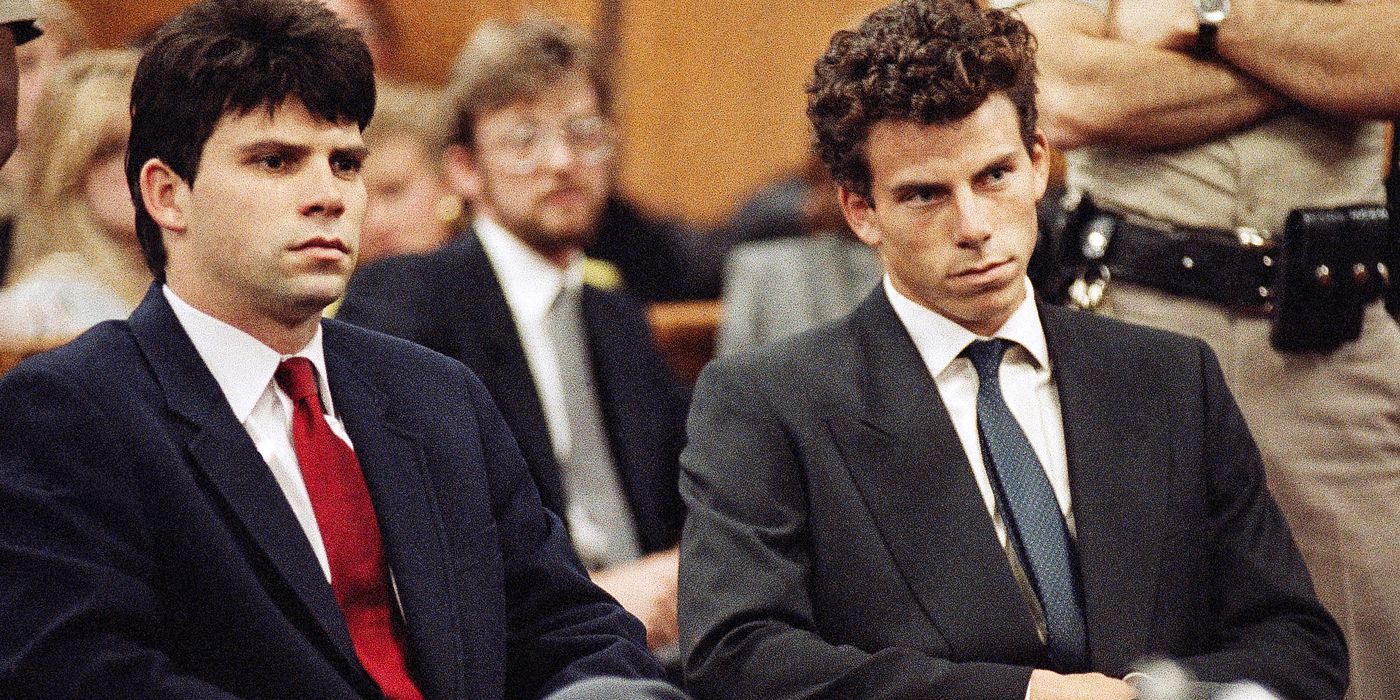
That detail, the record shows, was one of the first cracks.
Detectives grew suspicious of the brothers' behavior.
The specific inconsistencies in their story are not detailed in the source, but the suspicion was enough to keep the case from closing.
Then there was the money.
In the months after the murders, the brothers went on a documented spending spree.
Prosecution evidence would later include Rolex watches, a Porsche, and a restaurant purchase.
This was not the behavior of sons paralyzed by loss.
This was the behavior of heirs who had just come into a fortune.
The mob theory faded.
The questions turned inward, toward the house on Elm Drive, toward the two young men who said they had been out.
What made detectives look past the professional hit?
What made them look at the sons?
The record does not say exactly when the shift happened or which detail tipped them.
It only shows that the professional crime became a personal one, and that the brothers' story, once so clean, began to fray.
THE PSYCHOLOGIST'S OFFICE
The confession did not start with the police.
It started in a room with a couch, a notepad, and a psychologist named Dr. Jerome Oziel.
Erik Menendez told his psychologist what happened, according to the record.
Oziel did not keep the secret.
He told his girlfriend, Judalon Smyth.
Smyth was also his former patient.
She went to the police.
The brothers were arrested in March 1990.
The public did not hear it from a courtroom first.
They heard it as a spill, a secret moving from a confidential room into the open.
Oziel testified about the confessions.
Smyth testified too.
What exactly did Erik say?

What words did he use?
What did he describe?
The source does not quote the confession.
The exact content of Erik's confession to Oziel is not established in the record.
That is the weight of the moment: a secret left the room, but its precise shape remains unrecorded.
The public knew the confession existed.
They knew it broke the case.
They did not know what it contained.
The brothers' story, once so clean, was now a story told secondhand.
A psychologist repeated it.
A girlfriend repeated it.
The police acted on it.
The arrests made the case real, and the media made it loud.
What had been a mob-style theory became a family tragedy in the headlines.
The public asked the same question then that the record still leaves open.
What exactly did Erik say?
TWO STORIES, ONE JURY
The defense told the jury a story of years of physical, emotional, and sexual abuse by their father, abuse they said left the brothers in fear for their lives.
The prosecution told the jury a simpler story: greed.
They pointed to the brothers' access to their parents' substantial estate, to the Rolex watches, the Porsche, the spending spree that followed the murders.
The defense countered with testimony from family members and friends about the alleged abuse.
But no physical evidence of abuse was presented in court.
That remains the line in the record: the abuse claims were testified to, argued over, and believed by some, but they were never documented with physical proof.
The first trial began in July 1993.
It ended in January 1994 with hung juries on all counts.
The jurors were split along gender lines, a fact the media seized on immediately.
Court TV televised the proceedings, and the public watched two irreconcilable narratives compete for a verdict.
Was this a family tragedy born of terror?

Or was it a mob-style hit committed by two spoiled sons who wanted the inheritance?
The coverage was polarizing.
Some sympathized with the abuse claims.
Others saw the brothers as calculating killers who had manipulated a therapist and then a courtroom.
The retrial began in August 1995.
Judge Stanley Weisberg excluded much of the abuse testimony.
In March 1996, both brothers were convicted of first-degree murder.
They were sentenced to life in prison without the possibility of parole.
The prosecution had sought the death penalty.
The jury chose life.
Which story was true?
The record does not establish the abuse allegations.
It establishes only that the brothers confessed, that they were tried, and that they were convicted.
AND THE STORY STILL ISN'T OVER
They are still there.
Thirty-five years is a long time to hold a question.
Lyle Menendez is housed at the Richard J. Donovan Correctional Facility.
Erik Menendez is at Mule Creek State Prison.
Both are serving life sentences without parole.
The appeals have been denied, and denied again.
The convictions stand, and no new trial has been granted.
The case went quiet for a while.
It did not stay quiet.
Documentaries returned to the den, to the shotguns, to the confession.
Social media campaigns grew louder, citing the abuse evidence and changing societal attitudes.
The public sympathy is real. It is also viral.
It is a theory of the case that the record does not establish.
The record establishes a confession, a trial, and a conviction.
:max_bytes(150000):strip_icc():focal(749x0:751x2)/pamela-bozanich-menendez-trial-100724-3-4020c329cace46f0917d36d6ad7e7962.jpg)
It does not establish the abuse.
It does not establish a new legal motion, either; whether one is pending is not specified in the source.
So the question sits between the prison walls and the feeds.
Which story was true?
That was the question in 1993.
It was the question in 1996.
It is still the question now.
The brothers have been inside for over three decades.
They were 21 and 18 when they fired the shotguns.
They are now men in their fifties, still serving.
The prosecution wanted the death penalty; the jury chose life.
That choice was made once, and it has not been unmade.
Public sympathy may shift.
A legal outcome requires more than a hashtag.
It requires evidence.
It requires a court.
It requires a ruling that has not come.
So the story is not over, but it is also not moving.
It is a long pause.
A pause with a documentary soundtrack.
A pause with a petition attached.
A pause that has lasted longer than the brothers had lived when they were arrested.
The cameras left.
The courtroom emptied.
The prisons did not.
They remain there, both of them, serving out the sentence.
And the rest of us remain out here, still asking which story was true.
The record still does not say.
Advertisement
You may also like
He walked into a bar to report the six bodies — but the first account did not match
The bar was on a quiet stretch of Long Island, a place where a man could walk in and order a drink before noon…
The smell from Gacy's crawl space that made police dig again
The smell hit the officers before they reached the trapdoor. It was December 1978, and police were searching the home of a building contractor…
The Christmas Eve phone call that broke Laci Peterson's mother
December 24, 2002, was a Tuesday. Laci Peterson, 27 and eight months pregnant, was last seen at the family home in Modesto. That evening,…
The faulty gyroscope and a pilot not rated for instrument flight — the evidence in a 1959 crash that killed three stars
The gyroscope was found malfunctioning, and it was the one instrument that tells a pilot which way is up. The Civil Aeronautics Board’s investigation…
The unmatched glove that didn't fit — and the $33.5 million judgment the Goldman family still pursues
The courtroom was warm, and the cameras held on the leather. O.J. Simpson tugged at the pair of gloves the prosecution had asked him…
The 911 call that shattered a legal dynasty – and the lie that followed
The dogs were still barking when the first deputies arrived at Moselle. Paul Murdaugh, 22, and his mother, Maggie, 52, lay dead near the…