The plea deal that let Epstein walk — and the 2018 report that changed everything
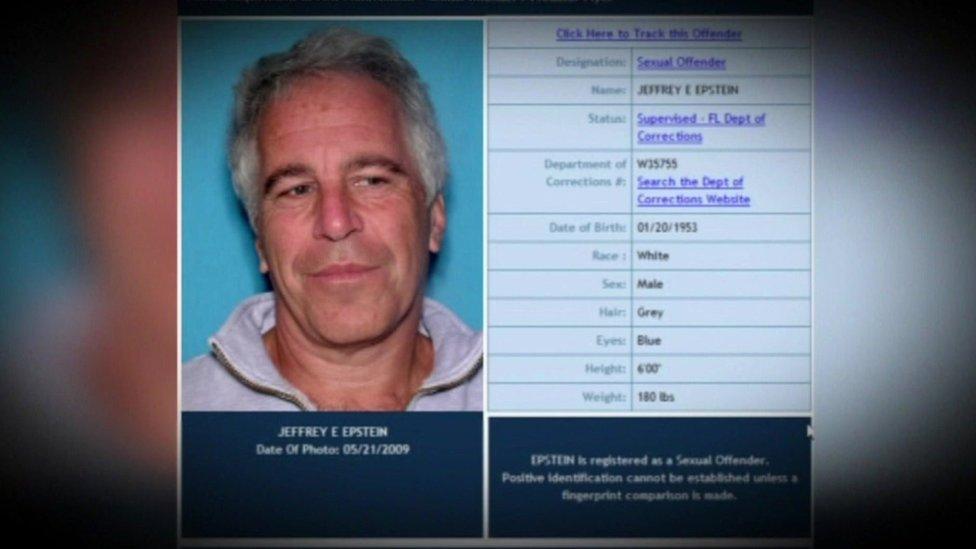
In 2018, the Miami Herald published a series by Julie K. Brown on Jeffrey Epstein’s 2008 plea deal.
The series documented what federal prosecutors under Alexander Acosta had negotiated in 2007: a non-prosecution agreement, later criticized as overly lenient.
That agreement let Epstein plead guilty to state charges of soliciting a minor for prostitution.
He served 13 months in county jail, with extensive work release.
The source says the series reignited public scrutiny and led to the federal charges.
The media reaction was intense.
Coverage of the plea deal ran wide; public outcry over the lenient 2008 sentence ran deeper.
Victims had argued they were not consulted in the deal, according to the source.
Online, a theory circulates that the plea deal was a secret bargain to protect powerful figures.
The source does not establish that claim.
It documents the deal itself and the criticism of its leniency.
No secret bargain beyond the documented agreement appears in the record.
What the record shows is a deal negotiated in 2007, a sentence served in 2008, and a series published a decade later.
What it does not show is a conspiracy.
That would require evidence.
Was the deal a bargain for protection?
Was it a failure of prosecution?
Was it a quiet settlement with a wealthy man?
The record answers none of these directly.
It answers with what Julie K. Brown found: the terms, the criticism, and the victims who said they were left out.
That is the documented story.
The theory is something else.
THE 2005 COMPLAINT AND THE FEDERAL CASE
The investigation began in 2005 when a Palm Beach police detective received a complaint from a mother that her 14-year-old stepdaughter had been recruited by Epstein's associates.
The FBI joined.
Federal agents identified over 30 underage victims.
The evidence included witness testimony, flight logs, and photographs.
Flight logs.
Photographs.
Testimony from girls who said they had been sexually abused at Epstein's Palm Beach mansion and elsewhere.
The scale was already there.
In 2007, federal prosecutors under Alexander Acosta negotiated a non-prosecution agreement with Epstein.
The source does not specify the terms of that agreement beyond its existence and later criticism.
What the record shows is the criticism.
The agreement was later criticized as overly lenient.
In 2007, Epstein was first arrested in Florida on state charges of soliciting a minor for prostitution.
In 2008, he pleaded guilty to state charges of soliciting a minor for prostitution and procuring a person under 18 for prostitution.
He served 13 months in county jail with extensive work release.
Thirteen months.
Over thirty victims identified by federal agents.
One guilty plea.
It is a gap that does not close on its own.
The victims said they were not consulted in the 2008 plea deal, according to the source.
They were left out of the negotiation.
The leniency was the story long before the theory arrived.
The documented record is the 2018 Miami Herald series.
That series reignited public scrutiny.
That scrutiny led to the federal charges.
The theory is something else.
THE 2018 SERIES AND THE PUBLIC OUTCRY
Julie K. Brown's 2018 series ran in the Miami Herald.
It laid out the 2008 plea deal in plain terms.
It listed the victims by their accounts.
It named the prosecutors who negotiated the deal.
The series reignited public scrutiny.
That scrutiny led to the federal charges.
The media reaction was intense.
Coverage of the plea deal spread across every outlet.
Public outcry followed the lenient 2008 sentence.
People asked how a man with over 30 identified victims served 13 months.
They asked why the federal case was dropped.
They asked who had been protected.
The answer, per the record, was the deal itself.
Victims argued they were not consulted in the 2008 plea deal.
They said they learned about it from the news, according to the source.
They said they were never given a chance to speak.
The Herald's investigation and the public reaction led to reforms.

The source says reforms followed, but it does not detail them.
The exact timeline of the public reaction is also not established.
What is established is the series.
What is established is the outcry.
What is established is that the charges came after.
The theory of a secret bargain to protect powerful figures is a theory.
The record does not establish that.
The record establishes a plea deal, a series, and a reaction.
THE 2019 CHARGES AND THE TWO READINGS
In 2019, federal prosecutors in New York charged Epstein with sex trafficking of minors and conspiracy.
He was arrested on July 6, 2019, and held without bail.
The 2019 federal investigation uncovered new evidence of sex trafficking.
Allegations that Epstein paid girls to recruit others.
The FBI searched his Manhattan townhouse and his Palm Beach estate.
The prosecution view is clear: the 2019 charges were the result of new evidence and the public pressure from the 2018 series.
The source says the series "led to the federal charges."
It is the official narrative. It is also the simplest one.
The defense view is equally straightforward.
Epstein pleaded not guilty.
His defense team included high-profile attorneys.
The judge denied bail, citing the risk of flight and danger to the community.
So there are two readings of the same arrest.
One: the series exposed a lenient deal, the outcry followed, and the evidence justified new charges.
Two: the charges came only after a decade of inaction, and only after the media made inaction untenable.
Not because the evidence was new. Because the pressure was new.
The record does not resolve which reading is true.
The source notes that no other individuals were criminally charged in connection with Epstein's crimes.
Despite widespread scrutiny of his connections to powerful figures.
That is where the record stops.
It does not establish any criminal liability of other individuals.
It states none were charged.
What remains is the tension.
A lenient deal in 2008. A federal case in 2019. A dead defendant before trial.
The questions linger. Why was the deal so lenient? Why did it take a newspaper series to move the system? Why did the charges name only one man?
That would require evidence.
The record has the plea deal, the series, and the reaction.
AND THE STORY STILL ISN'T OVER
On August 10, 2019, Epstein was found dead in his cell at the Metropolitan Correctional Center.
The New York City medical examiner ruled his death a suicide by hanging.
The federal charges died with him.
Prosecutors had named one man; the record ends with his death, not his trial.
The charges against Epstein were dismissed after his death, per the source.
Not because the evidence vanished.
Because the defendant did.
Ghislaine Maxwell was later tried and convicted in 2021 on five counts, including sex trafficking of a minor and conspiracy.
She was sentenced to 20 years in prison.
Epstein's estate faced civil lawsuits from victims, which were settled.
Settled, not resolved.
The money moved; the record of what happened did not.
The Miami Herald's investigation led to reforms, the source says.
Reforms in how such cases are handled.
What reforms, exactly?
The source does not say.
It says the case remains a subject of ongoing public and legal interest.
No pending hearing is named.
No motion is specified.
The record does not establish any next concrete legal step.
It is a case that ended without a verdict.
It is also a case that will not close.
The questions linger — the same ones, in the same order.
Why was the deal so lenient?
Why did it take a newspaper series to move the system?
Why did the charges name only one man?
That would require evidence.
The record has the plea deal, the series, and the reaction.
It has a suicide, a conviction, and a settlement.
It does not have an ending.
Advertisement
You may also like
The ransom note left on a windowsill that changed a nation's laws
The crib was empty. Anne Morrow Lindbergh discovered the 20-month-old missing around 10 p.m. on the evening of March 1, 1932. On the nursery…
The trapdoor beneath a contractor's home that hid 29 bodies — and the teenager who led police to it
December 11, 1978. A 15-year-old boy named Robert Piest told his mother he was going to meet a contractor about a job. He never…
The cellphone video that broke Alex Murdaugh's alibi — and the double murder trial that followed
The video is eight seconds of darkness, dogs barking, and a voice. Paul Murdaugh recorded it at the dog kennels on the family's Moselle…
The rifle that six sleeping DeFeos were shot with — and the son who confessed
The call came on November 13, 1974. A neighbor placed it to the Suffolk County Police Department. Officers arrived at 112 Ocean Avenue in…
The floppy disk trace that unmasked a church leader as BTK after 30 years
A floppy disk arrived at a Wichita newspaper in 2004, sent by someone claiming to be the BTK killer. It was a taunt, a…
The notebook found beside Brian Laundrie's remains that changed the Gabby Petito case
On October 20, 2021, Brian Laundrie's remains were found in the Carlton Reserve in Florida. A notebook lay nearby. Inside that notebook was a…