A priest's phone call that cracked the Beltway sniper case — the tip that changed everything
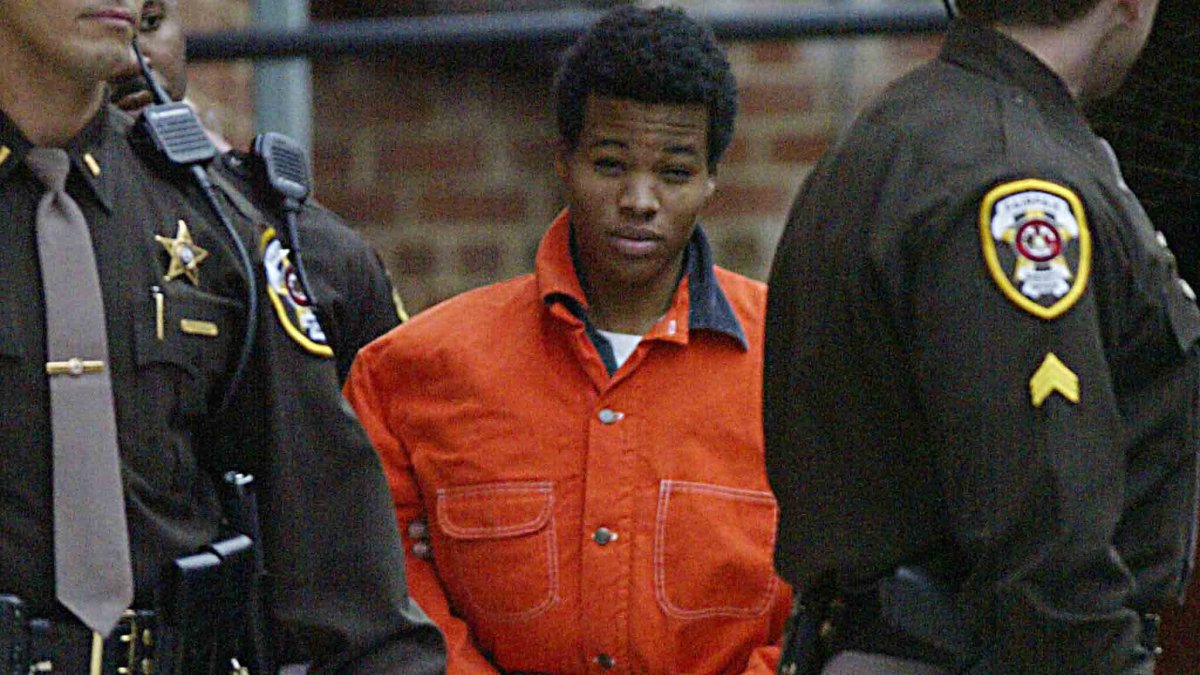
A caller reached a priest, and the words on that call are not in the record.
The record shows only what the call led to: a tip about a blue Chevrolet Caprice.
Between October 2 and October 24, 2002, a series of shootings in Maryland, Virginia, and Washington, D.C., killed ten people and wounded three.
Victims were shot while pumping gas.
Victims were shot while mowing a lawn.
Victims were shot while sitting on a bench.
Victims were shot while loading a minivan.
The attacks appeared random.
The media covered them around the clock.
The phrase "Beltway sniper" became a national watchword.
Schools closed.
Outdoor activities were canceled.
People avoided gas stations and open spaces.
The caller was later identified as Malvo.
That identification is in the record.
The exact content of the priest's phone call is not.
What did the caller say?
What did the priest hear?
What made the priest pass it along?
That would require evidence.
The record establishes a tip about a blue Chevrolet Caprice, and nothing more.
The call is the hinge.
It is the moment the case turned.
It is also the moment the public record goes quiet.
THE TERROR OF ORDINARY DAYS
October 2 to October 24, 2002.
Ten people killed, three wounded, across Maryland, Virginia, and Washington, D.C.
Victims were shot while pumping gas, mowing a lawn, sitting on a bench, loading a minivan.
Ordinary actions became the risk.
The attacks appeared random, and the media covered them around the clock.
The phrase "Beltway sniper" became a national watchword.
Schools were closed.
Outdoor activities were canceled.
Many people avoided gas stations and open spaces.
How many days did the schools stay shut?
Which specific activities were called off?
The record does not say.
The exact number of days and the precise cancellations are not established.
What is established is the fear.
It was a fear that turned the mundane into the mortal.
The lead investigator, the Montgomery County Police Chief, became a familiar face in daily press briefings.
He stood before cameras and reporters, day after day, giving updates and appeals.
His name was in every broadcast.
His presence was the public face of the hunt.
The coverage was constant.
The coverage was everywhere.
Television, radio, newspapers — the story never left the front page.
People watched the briefings at home.
People watched them at work.
People watched them in the gas stations they had once entered without a thought.
The attacks appeared random.
That randomness was the point.
No pattern, no target, no way to predict.
A man pumping gas.
A man mowing a lawn.
A man on a bench.
A family loading a minivan.
These were not extraordinary scenes.
They were the scenes of a Thursday.
And the region stopped doing them.
The fear was not abstract.
It was a fear of the next ordinary moment.
The record shows the closures and the cancellations.
The record shows the avoided spaces.
What the record does not show is the precise tally of days lost.
That detail remains outside the documented case.
The dread, however, is documented.
It is in the coverage.
It is in the briefings.
It is in the empty parking lots.
The ordinary had become the dangerous.
THE FALSE ARREST AND THE WAIT
The press conferences ran daily, and Chief Moose stood at the center of them, a familiar face for a frightened region.
The investigation was led by his department, with the FBI and ATF working alongside.
Forensic analysis of the rifle and shell casings was central to the case.
Ballistic evidence would later link the .223-caliber Bushmaster found in the car to several of the shootings.
But in those weeks, the public saw a stalled hunt.
Then came the widely criticized incident.
A man, James D. (Jim) D., was briefly detained.
He was cleared.
He was not charged.
The exact circumstances of that detention — why he was stopped or how he was exonerated — are not in the record.
What is in the record is the frustration.
The ordinary had become the dangerous.
Every gas pump was a risk.
Every open lot a sightline.
The media covered it around the clock, and the phrase "Beltway sniper" became a national watchword.
Schools were closed.
Outdoor activities were canceled.
People avoided the spaces where the victims had fallen.
And still the investigation waited for its break.
It came from a phone call.
A caller, later identified as Malvo, contacted a priest and made statements that led to a tip about a blue Chevrolet Caprice.
The car was found at a rest stop on Interstate 70 near Myersville, Maryland.
Both suspects were arrested on October 24, 2002.
The wait was over.
But the false arrest lingered as a mark on the process.
It was acknowledged later.
The man was cleared of any involvement.
That is the documented record.
The rest — the silence between the shots, the shape of the fear — is what the record cannot hold.
THE TIP AND THE CAPRICE
A caller reached a priest.
The caller, later identified as Malvo, made statements that led to a tip about a blue Chevrolet Caprice.
What exactly was said on that call is not in the record.
The priest's identity is not in the record either.
The record shows the tip. The record does not show the words.
A 1990 blue Chevrolet Caprice sedan was found at a rest stop on Interstate 70 near Myersville, Maryland.
Both suspects were arrested there on October 24, 2002.
Inside the car was a .223-caliber Bushmaster rifle.
Ballistic evidence linked that rifle to several of the shootings.
The puzzle piece clicked.
A region that had closed schools and canceled outdoor activities had a car, a rifle, and two men in custody.
The media had covered the attacks around the clock; now the coverage shifted to the rest stop.
The relief was tangible. The fear did not vanish overnight, but the random shape of it had a name.
What the caller told the priest remains outside the documented record.
That would require evidence.
The evidence that exists is the car, the rifle, the ballistics, the arrests.
It is a break. It is also a silence at the center of the break.
The exact wording of the tip is not established. The identity of the priest is not established.
What is established: a call was made, a tip was given, a Caprice was found.
AND THE STORY STILL ISN'T OVER
John Allen Muhammad was tried in Virginia, convicted of capital murder, and sentenced to death.
Lee Boyd Malvo was tried separately, convicted of murder, and sentenced to life in prison without the possibility of parole.
The trials were held in Virginia because the state had the death penalty and the legal framework for trying a juvenile as an adult.
Muhammad was executed by lethal injection on November 10, 2009.
Malvo remains in prison.
The case is closed.
Any future legal steps or pending motions are not in the record.
What remains is the weight of the ordinary days.
The families of the victims have spoken publicly about their losses.
The case remains a reference point for discussions of mass shootings and media coverage.
It is a closure.
It is also a set of questions that do not close.
The man briefly detained was later acknowledged as cleared of any involvement.
He was not charged.
The record says so plainly.
Was the exact wording of the tip ever necessary?
Was the silence at the center of the break ever filled?
Was the priest ever named?
The record does not say.
That would require evidence.
What is established: ten people were killed, three were wounded, two men were convicted.
What is established: the media covered the attacks around the clock, and "Beltway sniper" became a national watchword.
The shots stopped.
The fear took longer.
The Caprice was found.
The rifle was found.
The call was made.
The story still isn't over, not because the legal case continues, but because the echoes do.
The gas stations are ordinary again.
The lawns are mowed again.
The benches are sat on again.
But the questions sit there too, quietly, in the record and outside it.
Advertisement
You may also like
He walked into a bar to report the six bodies — but the first account did not match
The bar was on a quiet stretch of Long Island, a place where a man could walk in and order a drink before noon…
The smell from Gacy's crawl space that made police dig again
The smell hit the officers before they reached the trapdoor. It was December 1978, and police were searching the home of a building contractor…
The Christmas Eve phone call that broke Laci Peterson's mother
December 24, 2002, was a Tuesday. Laci Peterson, 27 and eight months pregnant, was last seen at the family home in Modesto. That evening,…
The faulty gyroscope and a pilot not rated for instrument flight — the evidence in a 1959 crash that killed three stars
The gyroscope was found malfunctioning, and it was the one instrument that tells a pilot which way is up. The Civil Aeronautics Board’s investigation…
The unmatched glove that didn't fit — and the $33.5 million judgment the Goldman family still pursues
The courtroom was warm, and the cameras held on the leather. O.J. Simpson tugged at the pair of gloves the prosecution had asked him…
The 911 call that shattered a legal dynasty – and the lie that followed
The dogs were still barking when the first deputies arrived at Moselle. Paul Murdaugh, 22, and his mother, Maggie, 52, lay dead near the…