The radio and boots that broke the Clutter case — but the shotgun never surfaced
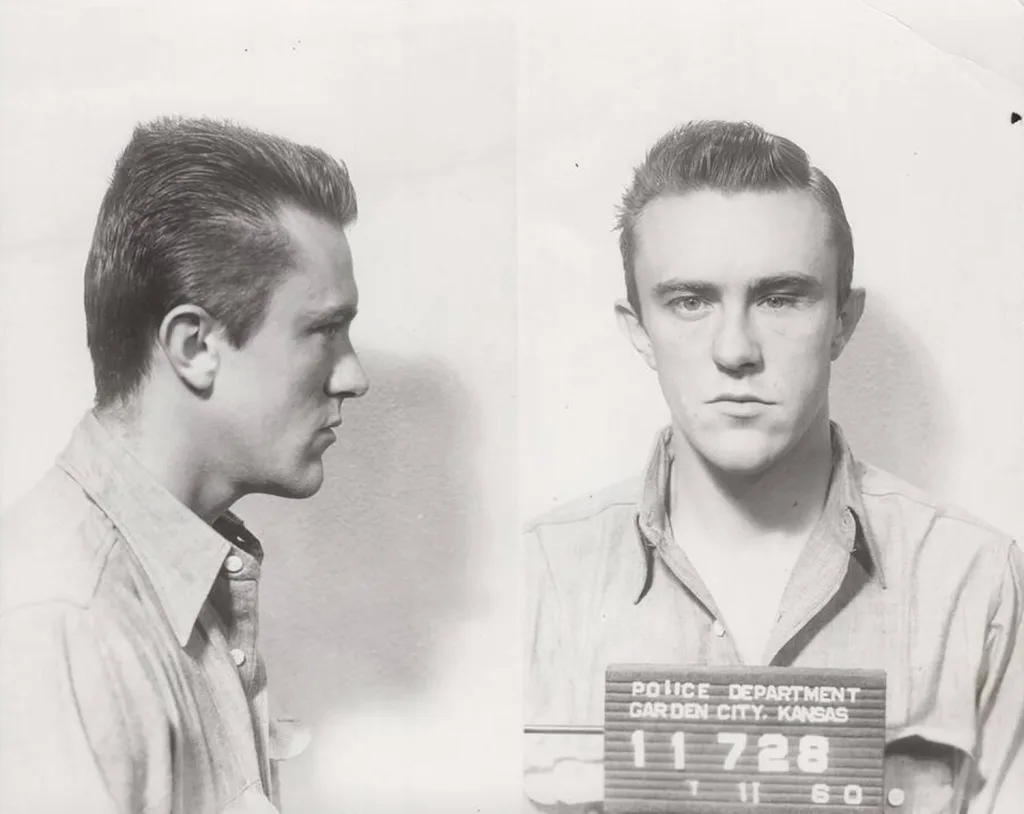
The radio sat on a table in a Las Vegas apartment, months after four people were bound and shot in a Kansas farmhouse.
It was traced back to the Clutter household near Holcomb, Kansas.
On the night of November 15, 1959, Herbert Clutter, his wife Bonnie, and their children Nancy and Kenyon were murdered in their home.
They had been bound and shot at close range with a shotgun.
Nothing of significant value was taken from the house.
A small amount of cash was missing.
A radio was missing.
Months later, in Las Vegas, two ex-convicts were found with that radio.
They also had binoculars traced to the same household.
The radio was a specific object.
It was the kind of thing that connects two strangers to a farmhouse they had no reason to enter.
The ex-convicts were Richard Hickock and Perry Smith.
Both later confessed, according to the record.
Each blamed the other for pulling the trigger.
That point is not established.
No physical evidence resolved it.
The murder weapon was a 12-gauge shotgun.
That shotgun was never recovered.
Not because it vanished into thin air.
Because no one ever found it.
The radio was found.
The boots Perry Smith wore that night were found, with bloodstains matching the victims' blood type.
The shotgun was not found.
That is where the record stops.
It is a fact.
It is also a question the case leaves open.
THE MORNING AFTER
The morning came with no one at church.
The Clutters had not shown up, and they had missed a planned gathering.
Neighbors and friends walked to the farmhouse to see why.
They found the bodies.
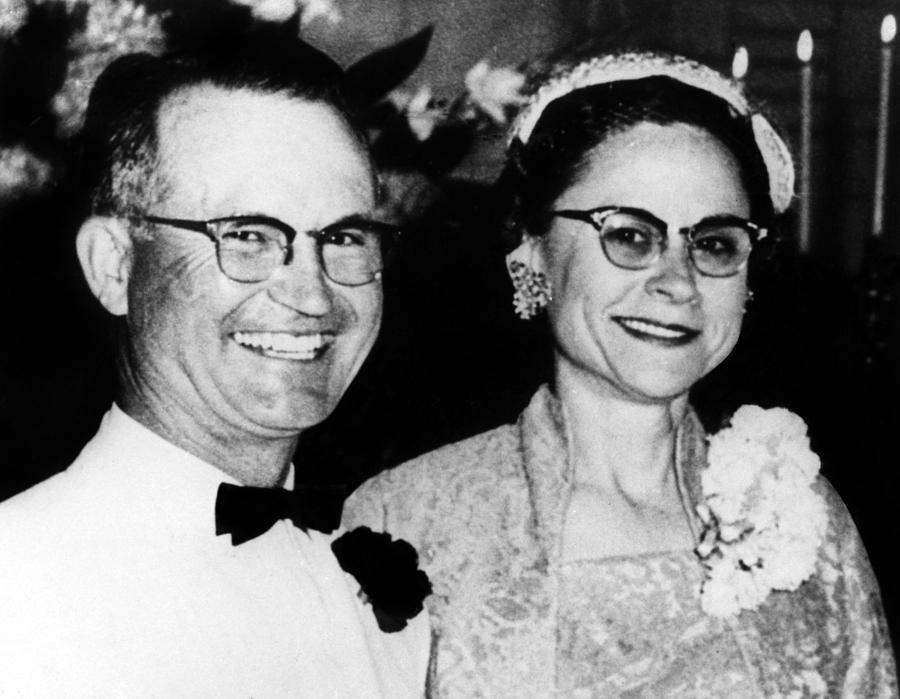
Four members of the family were dead inside, bound and shot at close range with a shotgun.
The eldest daughter, Eveanna, and her husband were among those who identified the bodies.
Drawers had been opened.
Papers were scattered across the floor.
The search looked methodical, deliberate, as if someone had been looking for something specific.
Nothing of significant value had been taken from the house.
A small amount of cash was missing.
A radio was missing.
That was it.
Investigators considered several local suspects.
All of them were later cleared.
The crime had no obvious motive.
The exact sequence of events inside the house that night is not in the record.
The case remained unsolved for several weeks.
It stayed that way through the end of November.
It stayed that way through most of December.
The disorientation was the point: a methodical search, but nothing of value taken.
A family bound and shot, but no clear reason why.
That would require evidence, and the evidence had not yet surfaced.
THE CELLMATE'S STORY
The breakthrough came from inside the Kansas State Penitentiary.
A former cellmate of one of the perpetrators told authorities that his old bunkmate had spoken of robbing Herbert Clutter.
The cellmate had once worked for Clutter, and he reported that the suspect had said the farmer kept a large sum of cash in a safe in his home.
The tip gave investigators what the crime scene had not: a name.
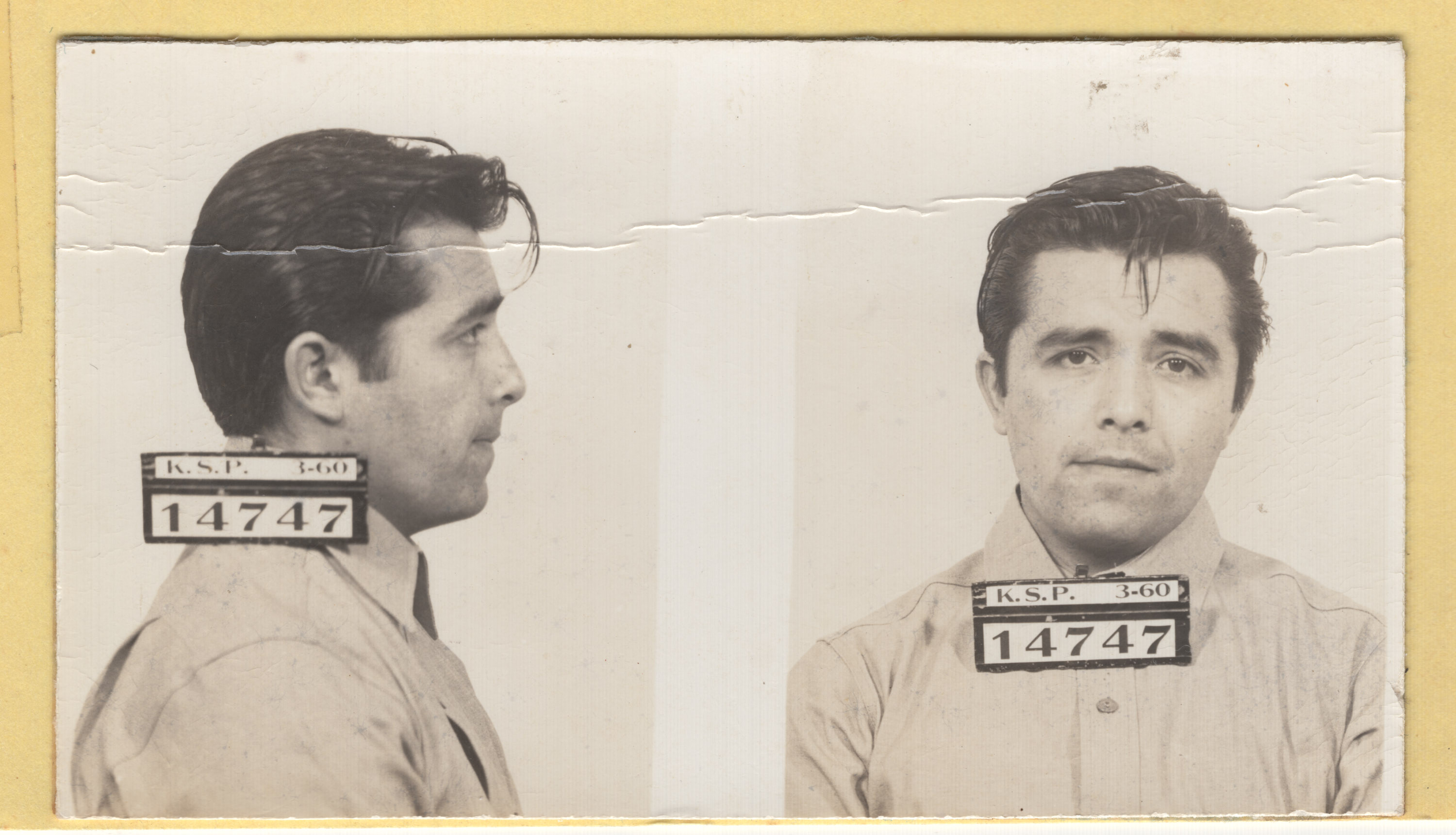
That name led to Richard Hickock.
It led to Perry Smith.
The two men were arrested in Las Vegas on December 30, 1959, after a tip from a former acquaintance of Smith's.
In their possession were items traced to the Clutter household, including a radio and binoculars.
The radio had been missing from the house.
The binoculars had been missing from the house.
The cellmate's name is not used here; the source names him, but the record does not require it.
What the record establishes is the chain: a jailhouse conversation, a former employer's reputation, a safe that may or may not have existed.
Not because the cellmate was certain. But because he was credible enough to move an investigation.
The relief of a break is a quiet thing.
It is a cellmate talking. It is a radio in a car in Las Vegas. It is two ex-convicts suddenly connected to a farmhouse in Holcomb.
That would require evidence, and now the evidence had a direction.
THE BOOTS AND THE BLAME
The confession was the case.
Both men confessed to the murders, though each blamed the other for pulling the trigger.
The prosecution's case rested on that confession, on the radio and binoculars traced from the Clutter house, and on the boots.
The boots Perry Smith wore on the night of the murders were found to have bloodstains matching the victims' blood type.
Matching the type.
Not the man.
The bloodstains on the boots match the victims' blood type but do not identify the shooter.
It is not established which man fired the shotgun.
The defense's position, implied by the mutual blame, was that the other man was the shooter.
Each man's story agreed on the crime.
They agreed on the house, on the bindings, on the shots fired at close range.
They disagreed on the trigger finger.
The physical evidence could not settle it.
The boots said blood was there.
They did not say whose hand held the gun.
The murder weapon, a shotgun, was never recovered.
No barrel to test, no stock to fingerprint, no shell to match.
The case had a confession, a direction, a radio, a pair of binoculars, and a pair of boots.
What it did not have was the gun.
What it did not have was a way to say which man fired it.
Was it Hickock?
Was it Smith?
Was the truth in the boots, or in the blame?
That would require evidence.
The evidence pointed to both men in the room.
:max_bytes(150000):strip_icc():focal(999x0:1001x2)/in-cold-blood-2-1-07b374b9528645cc94c1bea2652ff55f.jpg)
It pointed to the boots on the floor.
It did not point to the hand on the trigger.
AND THE STORY STILL ISN'T OVER
The trial began in March 1960, in Finney County, Kansas.
It lasted approximately six weeks.
The jury found both men guilty of four counts of first-degree murder.
The jury recommended the death penalty.
The judge sentenced both men to death.
The convictions went to the Kansas Supreme Court.
The court upheld the verdicts.
Further appeals to federal courts were unsuccessful.
On April 14, 1965, both men were executed by hanging at the Kansas State Penitentiary in Lansing.
That was the end of the legal case.
It was not the end of the story.
Truman Capote published *In Cold Blood* in 1966.
Capote claimed the book was based on extensive interviews with the killers and the community.
Its accuracy has been questioned over the years.
The record does not resolve those questions.
The record does not establish whether Capote embellished or invented certain details.
That is a dispute, not a fact.
The Clutter farmhouse was later sold.
It has changed hands several times.
The radio was traced.
The binoculars were traced.
The boots were traced.
The shotgun was never recovered.
Its location is not established.
The executions brought a kind of finality to the courtroom.
The missing weapon leaves a different kind of open question.
A conviction does not require a weapon.
A confession does not require a weapon.
A closed case does not require a weapon.
That would require evidence.
Advertisement
You may also like

The cell tower data that put Adnan Syed near Leakin Park — and the questions it left behind
On January 13, 1999, Hae Min Lee, an 18-year-old senior at Woodlawn High School, disappeared after leaving school. Her car was found on February…
One anonymous note sent police to a witness — is that note the key to Hae Min Lee's 1999 murder case?
The note was anonymous. It arrived after Hae Min Lee's body was found on February 9, 1999, in Leakin Park, partially buried. She had…
The last video Paul Murdaugh filmed minutes before the shots that killed him and his mother
He was 22, and he was filming his dogs. Paul Murdaugh held up his cell phone at the family's hunting estate in Colleton County,…
The pillowcase that tied a kidnapper to Polly Klaas — and the parole officer who spotted him
Two girls lay on the floor of the bedroom, their hands and feet bound. They had been tied up, but they had not been…
The pajama top that told the FBI a different story than Jeffrey MacDonald's
The pajama top was folded on an evidence table, and it told two stories at once. On the night of February 17, 1970, at…

The 10 p.m. check that found an open door and an empty bed
The key turned in the lock at approximately 10:00 p.m. on May 3, 2007. Kate McCann stepped into the holiday apartment in Praia da…