The ransom note on a windowsill that turned a nursery into a crime scene
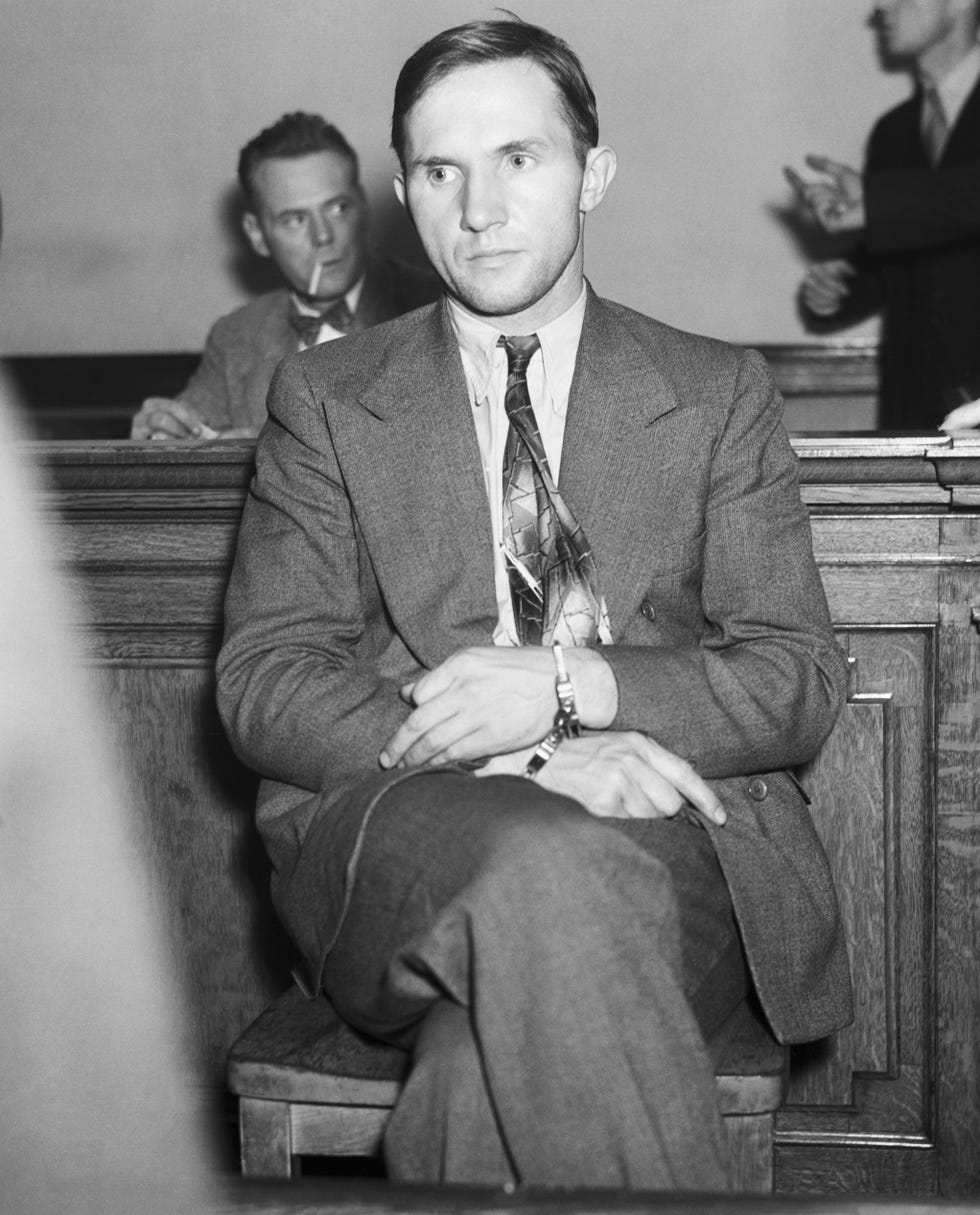
On the evening of March 1, 1932, a ransom note demanding $50,000 was left on the windowsill of the nursery in the Lindbergh home near Hopewell, New Jersey.
A ladder had been placed against the window of the nursery, where 20-month-old Charles Lindbergh Jr. slept.
The child's absence was discovered by the nurse, who reported it to the parents.
The note was there, and the ladder was there.
The crib was empty.
The nurse found the room still, the window open, the ladder leaning against the sill.
She called for the parents, and the house filled with noise.
The note demanded money, and the ladder suggested a way out.
The parents read the note, and the search began.
What exactly happened inside the nursery that night is not established by the record.
Who wrote the note?
Who placed the ladder?
Where did the child go?
That would require evidence.
The note and the ladder are the documented starting point of the case.
They are also the only things left behind.
The room held a crib, a window, and a piece of paper.
The night held the rest.
THE SEARCH AND THE RANSOM

The search began with the nursery, the ladder, and the note.
The investigation was initially hampered by confusion and public pressure.
Colonel H. Norman Schwarzkopf of the New Jersey State Police led the inquiry.
The FBI, under J. Edgar Hoover, became involved.
Every lead was chased. Every lead seemed to evaporate.
The ransom negotiations were handled by Dr. John F. Condon, a retired Bronx schoolteacher who volunteered as an intermediary.
He communicated with the kidnapper under the alias "Jafsie."
The ransom money, paid in gold certificates, was recorded by serial number.
The money was paid. The promise was broken.
On May 12, 1932, the child was found dead in a wooded area about four and a half miles from the home.
The cause of death was a blow to the head, likely from a fall or impact.
The weapon was not recovered.
Who collected the ransom is not established by the record beyond the intermediary's account.
That account placed a man in a cemetery, taking the cash.
That account placed a voice in the dark, promising the child was safe.
The child was not safe.
The case was marked by intense media coverage, sometimes called the "Trial of the Century."
Crowds gathered. Reporters followed every move.
It was a story the public could not turn away from.

Not because the child was famous. But because the child was a child.
The search had failed in the woods, so the search continued in print.
Every edition carried a new theory. Every theory carried a new hope.
The serial numbers sat in a ledger, waiting.
They waited for a gold certificate to surface.
THE GOLD CERTIFICATE
In September 1934, a gold certificate from the ransom was passed at a gas station in the Bronx.
The attendant wrote down the license plate number of the car.
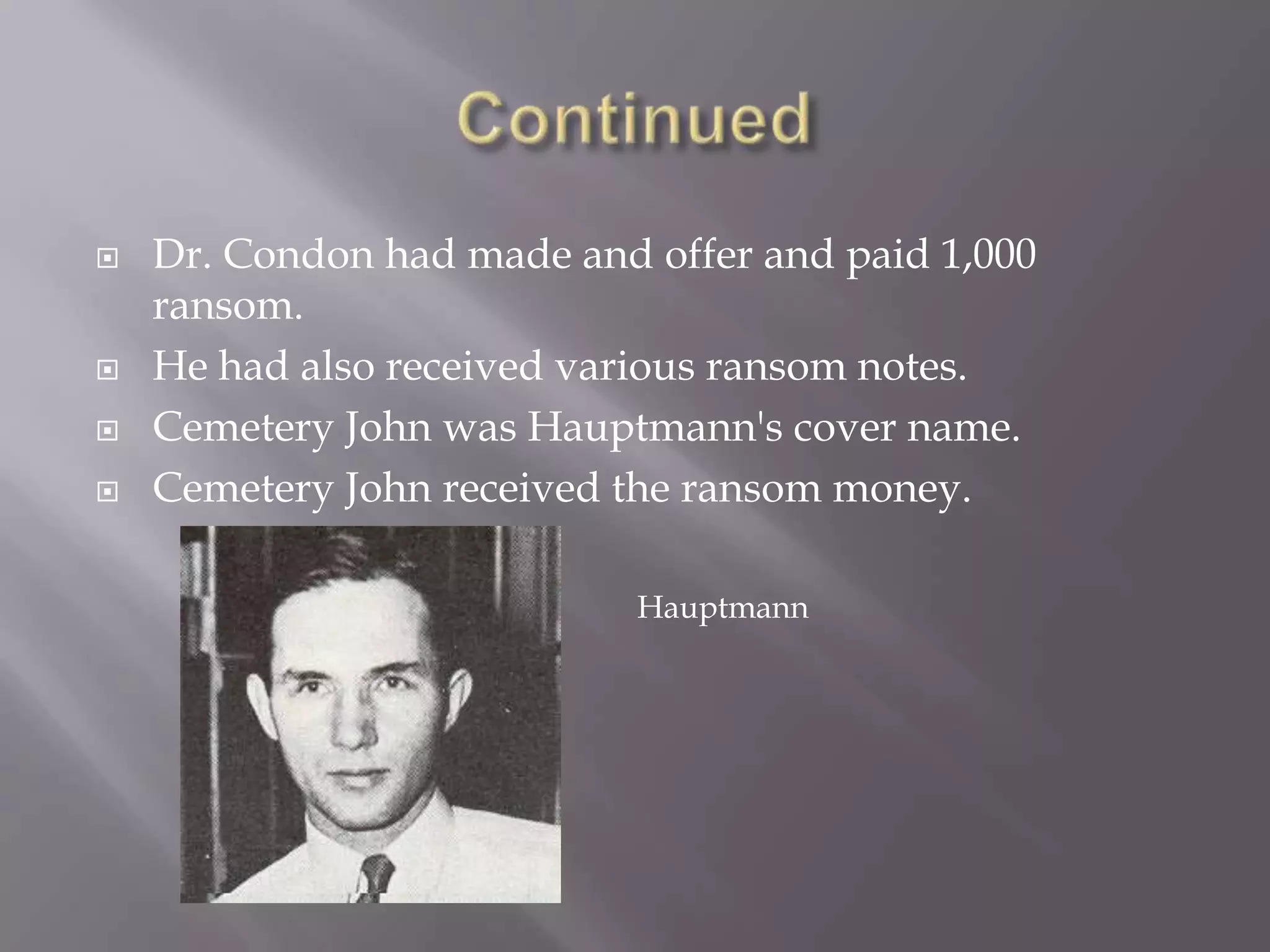
The license plate was traced to Bruno Richard Hauptmann, a German immigrant carpenter.
A search of his home found over $14,000 of the ransom money.
Hauptmann claimed the money belonged to a friend, Isidor Fisch, who had died, and that he had no involvement.
Whether the money found in Hauptmann's home was his or belonged to the deceased friend is not established by the record.
The investigation was led by Colonel H. Norman Schwarzkopf, superintendent of the New Jersey State Police.
The FBI was involved, then under J. Edgar Hoover.
The serial numbers had waited two and a half years.
Now they had a name.
The newspapers printed it on every front page.
The story was no longer a mystery.
It was a man, an address, a carpenter's trade.
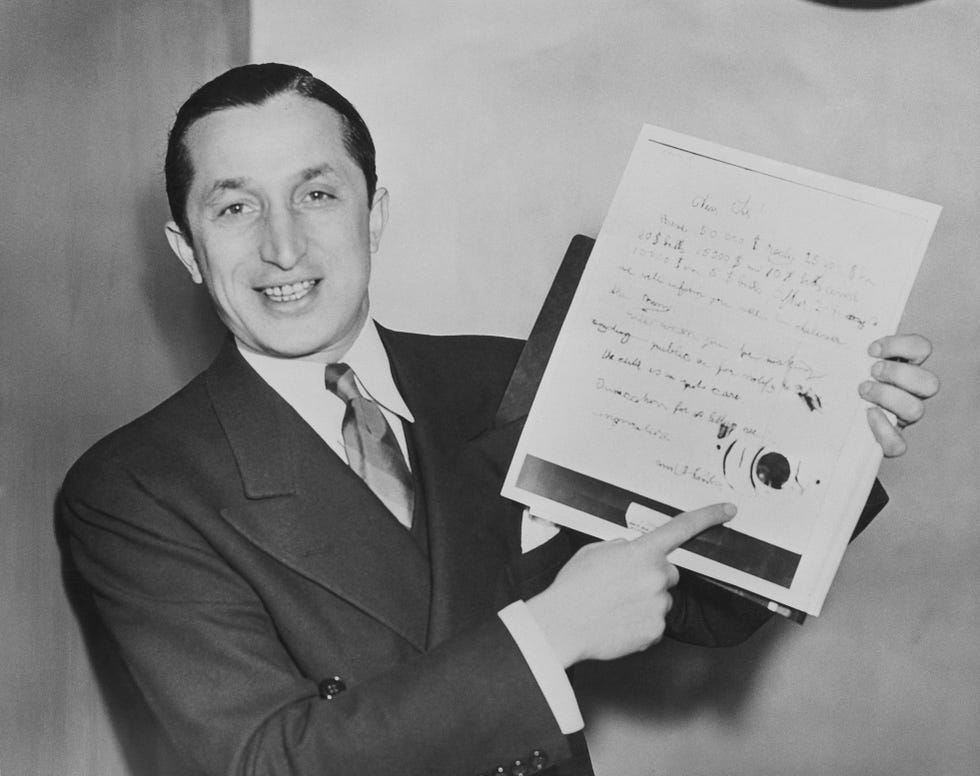
The public had followed every ransom note, every false lead, every séance and every theory.
Now they had a suspect.
The ledger closed.
The trial would open.
THE TRIAL AND THE TWO STORIES
The trial opened on January 2, 1935, in Flemington, New Jersey.
Crowds surrounded the courthouse, and the press called it the "Trial of the Century."
Hauptmann was charged with first-degree murder under New Jersey's felony-murder rule.
That rule allowed a murder conviction for a death occurring during a kidnapping.
The prosecution presented the ransom money, found in his home.
They presented handwriting analysis.
They presented forensic evidence linking the wood of the ladder to boards in Hauptmann's attic.
The defense argued the evidence was circumstantial.
They argued the ladder wood comparison was flawed.
The witnesses, they said, were unreliable.
Two versions of the same evidence sat before the jury.
One version said the ladder's wood came from Hauptmann's attic.
The other said the comparison was a mistake.
Which one holds up under scrutiny?

That would require evidence.
Whether the ladder wood actually matched is not established by the record.
The defense contested it.
The jury deliberated for about eleven hours.
On February 13, 1935, they returned a guilty verdict.
Hauptmann was sentenced to death.
Appeals failed.
Motions for clemency failed.
He was executed in the electric chair at the New Jersey State Prison on April 3, 1936.
The crowd outside the courthouse had cheered the verdict.
The press had printed every detail.
The case was closed in the eyes of the law.
It was not closed in the eyes of everyone.
AND THE STORY STILL ISN'T OVER
He was executed on April 3, 1936.
His wife, Anna Hauptmann, spent decades seeking posthumous exoneration.
She argued that the evidence was tainted.
She argued that her husband was innocent.
She never stopped asking.
Several books and documentaries have reexamined the case.
Some authors have suggested alternative suspects.
No court has overturned the conviction.
Whether Hauptmann was guilty or innocent is not established by the record.
It is a question the record leaves open.
The Lindbergh family later moved to Europe to escape the media attention.
The case changed the law.
It led to the federal "Lindbergh Law," making kidnapping across state lines a federal crime.
The Lindbergh home was later donated to the state of New Jersey.
It is now a museum.
Visitors walk through the rooms where the press once crowded.
They see the windowsill.
They see the nursery.
The press had printed every detail.
The case was closed in the eyes of the law.
It was not closed in the eyes of everyone.
A widow kept asking.
A century later, the question remains.
Not because the evidence was simple.
But because it was contested then, and it remains contested now.
That would require evidence.
Advertisement
You may also like
The pajama top fibers that tied a Green Beret doctor to a murder scene he blamed on hippies
The pajama top was never found. It was never recovered from the house, never turned up in the woods, never produced by anyone who…
The cell phone records that put Adnan Syed near Leakin Park — and the alibi witness never called
A classmate later came forward with a name and a date: Asia McClain said she had seen Adnan Syed in the school library around…

The repeat offender with a palm print on a bedpost after Polly Klaas vanished
She was twelve years old, asleep at a slumber party in her mother's home in Petaluma, California. The night was October 1, 1993. Two…

The confession to a psychologist that broke the Menendez brothers' alibi
The 911 call came in at 11:47 p.m. from the mansion on North Elm Drive, and Lyle Menendez was sobbing into the phone. "My…
The drifter who turned a Miami morning into a fashion icon's last walk
The man who walked up the steps of Casa Casuarina that morning had, for years, been inventing himself. Andrew Cunanan was 27 years old,…
The Army vet and the teen who met in Antigua — what made them a sniper team
He was forty-one, an Army veteran with firearms training from the Gulf War. She was seventeen, a teenager from Jamaica. They met in Antigua.…