The smiley-face letters that led police to a truck driver's confession
The note was left on the body, not in an envelope, not in a pocket.
It sat there in the open, a handwritten challenge for whoever found her.
The woman was found near a rest stop in Polk County, Oregon, in March 1995.
She had been strangled, and the note taunted the police who would arrive.
It claimed she was "the first."
That phrase did not read like a confession.
It read like a scoreboard.
It was signed with a smiley face, a small curve of ink that would later give the killer his nickname.
The note was not a confession.
It was a dare, and it set off a multi-state investigation before the year was out.
Online theories have circled the smiley face for decades.
Some have called it a signature, a brand, a hidden code.
The record does not establish any hidden message beyond the taunt.
The exact wording of the note is not in the record either.
What is documented is the arrogance.
A truck driver, far from home, leaving his mark on a stranger's body.
He wanted to be noticed.
He wanted to be followed.
That much, the note achieved.
MARCH 1995 — THE BODY IS FOUND
The body of a woman was found near a rest stop in Polk County, Oregon, in March 1995.
A handwritten note lay on her body.
It claimed she was "the first."
Investigators determined she had been strangled.
That much was clear; the rest was not.
The Polk County Sheriff's Office led the investigation.
Detectives from multiple jurisdictions were involved.
They worked the rest stop, the roadside, the note.
They worked the note hardest of all.
It was a message, not a confession.
It taunted.
It named her as a beginning.
The victim's identity was not yet established in the record.
Her name does not appear in the documented path of this case.
What is established: she was strangled, and the note said she was first.
What is not established: the exact circumstances of her death beyond that.
The investigation would run for years.
The note would be joined by letters.
But at this moment, in March 1995, there was only the body and the note.
The note said she was first.
That implied a second.
That implied a someone who planned to continue.
The detectives did not know his name.
They did not know he drove a truck.
They knew only what the note offered: a taunt, a claim, a beginning.
It was a grim start.
It was also a trail.
THE WRONG CONFESSIONS
The trail led first to two people.
A woman and a man, arrested and charged with the murder.
Both confessed.
The record reports their confessions plainly.
It does not specify how those confessions were obtained.
Authorities built a case on their words.
The woman and the man were convicted.
They were sent away for a crime the record says they did not commit.
The pressure on a high-profile case is heavy.
Detectives had a body, a taunting note, and a public watching.
Two people said they did it.
That was enough to move forward.
It was not enough to be true.
Their convictions stood for years.
Then the real killer spoke.
His confession came with details only the killer would know.
The record is clear on that point.
After his confession, the wrongful convictions were overturned.
The woman and the man were exonerated.
Both were released.
Their names are not in the record for this article.
The details of their interrogations are not specified either.
What remains is the fact: two innocent people were convicted.
Not because the evidence pointed to them.
But because someone confessed.
The case took a detour through a miscarriage of justice.
It corrected itself only when the actual perpetrator stepped forward.
That is the documented path.
It is also the frustrating one.
A false confession can undo a life.
It can also mislead an entire investigation.
The real killer stayed free while the wrong people paid.
THE SMILEY-FACE LETTERS
The letters began arriving after the arrests.
They came to news outlets. They came to law enforcement.
Each one was signed with a smiley face.
The letters taunted police. They implied the killer was still free.
They were a voice from outside the jail cell — a voice that said the wrong people were inside it.
The exact contents of the letters are not fully detailed in the record. The timeline of when each was sent is not fully detailed either.
What the record does establish is the destination of one letter: the killer's sister.
She received it. She read it. She played a role in his eventual identification.
The letter was not addressed to the police. It was addressed to family.
It was a confession, or close to one. It was also a thread.
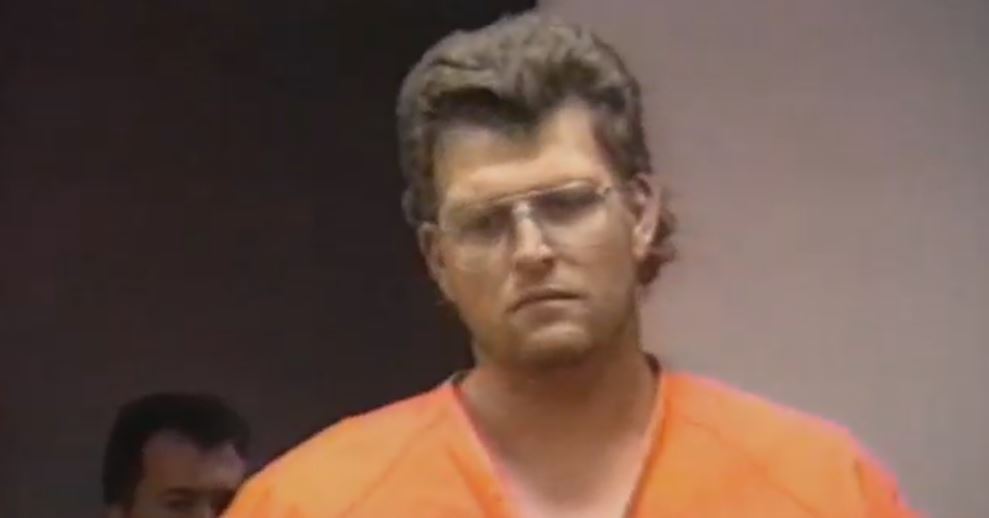
The letters, combined with the sister's letter, led investigators to identify Keith Hunter Jesperson.
A long-haul truck driver. A man who crossed state lines for a living.
The sister's letter did not solve the case alone. No single piece of paper does that.
But it gave the investigation a name when the taunts gave it a signature.
The smiley face was a nickname waiting to be earned. The sister's letter was the reason it was earned.
THE CONFESSION AND THE VERDICT
When the sister's letter reached the investigators, it carried a name with it.
Keith Hunter Jesperson was the name, and he was a long-haul truck driver.
He confessed to multiple murders, and the details he gave were not the kind a stranger could guess.
Only the killer would know the things he told them, the source material states.
Detectives tested his story against the evidence, and the evidence held.
DNA and physical evidence linked him to several victims across the states his route crossed.
In Oregon, he was charged with first-degree murder in the death of the woman found near the rest stop.
He pleaded guilty to that charge.
The sentence was life in prison without the possibility of parole.
Then the other states came forward, one after another.
He pleaded guilty to additional murders, and the sentences stacked like miles on a highway, consecutive life terms.
He cooperated with authorities in exchange for those life sentences.
That cooperation meant he was never given the death penalty.
It is a bargain the record states plainly.
The total number of his victims is not fully established.
The full scope of his crimes is not fully established either.
What is established is the confession, the evidence, and the guilty pleas.
What is established is that two other people were convicted for a murder he admitted to.
They were exonerated after his confession came to light.
The closure for the families is partial at best.
The justice for the wrongfully convicted is complete, but it arrived late.
Jesperson remains in an Oregon state prison, serving out the consecutive terms.
The smiley face that named him never confessed to anything.
He did.
AND THE STORY STILL ISN'T OVER
Jesperson remains in an Oregon state prison, serving consecutive life sentences without parole.
The two people convicted of the Oregon murder were released after their convictions were overturned.
Their wrongful convictions stood for years before his confession broke them apart.
Jesperson has given interviews since then.
He has cooperated with true-crime authors who wanted the story from the inside.
No further legal developments have occurred.
Not because the case is closed in every sense.
But because some things do not close.
The identities of all his victims are not fully established.
The full extent of his crimes is not fully established.
Families still seek closure, and some of them are still waiting.
What remains is the record: a sister's letter, a confession, a conviction.
The smiley-face letters still circulate as a symbol of his arrogance.
They were never the path to capture.
The record shows the letter to his sister was the key that broke the case.
That is what the documents support.
That is what the testimony and the confessions support.
What they do not support is the theory that the letters were a taunt from a killer who wanted to be caught.
That would require evidence.
The evidence points elsewhere — to a confession given, to details only the killer could know.
He gave those details.
He is still there, in the prison, serving out the consecutive terms.
The smiley face that named him never confessed to anything.
He did.
The story is not over because the waiting is not over.
Some names are known.
Some are not.
Advertisement
You may also like
The 911 call a mother made at 5:52 a.m. — the ransom note that followed
The 911 call came at 5:52 a.m. December 26, 1996, in Boulder, Colorado. Patsy Ramsey's voice on the line, reporting her 6-year-old daughter, JonBenét,…
The brother's call that ended a 17-year bombing spree
The manifesto arrived in 1995. It was 35,000 words, titled "Industrial Society and Its Future," and it was mailed to The New York Times…
The newspaper clipping and note in the Black Dahlia case that still defy explanation
A newspaper clipping and a note, reportedly carrying the killer's taunts, sat in the evidence file. They were key evidence, the investigation summary says.…
The 1969 letter that came with a victim's bloody shirt and a promise
The package arrived at the San Francisco Chronicle in 1969. Inside was a piece of a shirt. The shirt was bloody. It belonged to…
The tarot card left at a D.C. sniper scene that said 'Call me God'
The card was on the ground beside the body. October 19, 2002. Falls Church, Virginia. A victim shot while loading groceries. Police found a…
Afeni Shakur scattered her son's ashes at his childhood home — the case that still haunts Vegas
Afeni Shakur carried her son's ashes back to Marin City. She scattered them at his childhood home, a private act in a small California…