Two men in police uniforms, one Thompson submachine gun, and a garage wall that gave way to silence
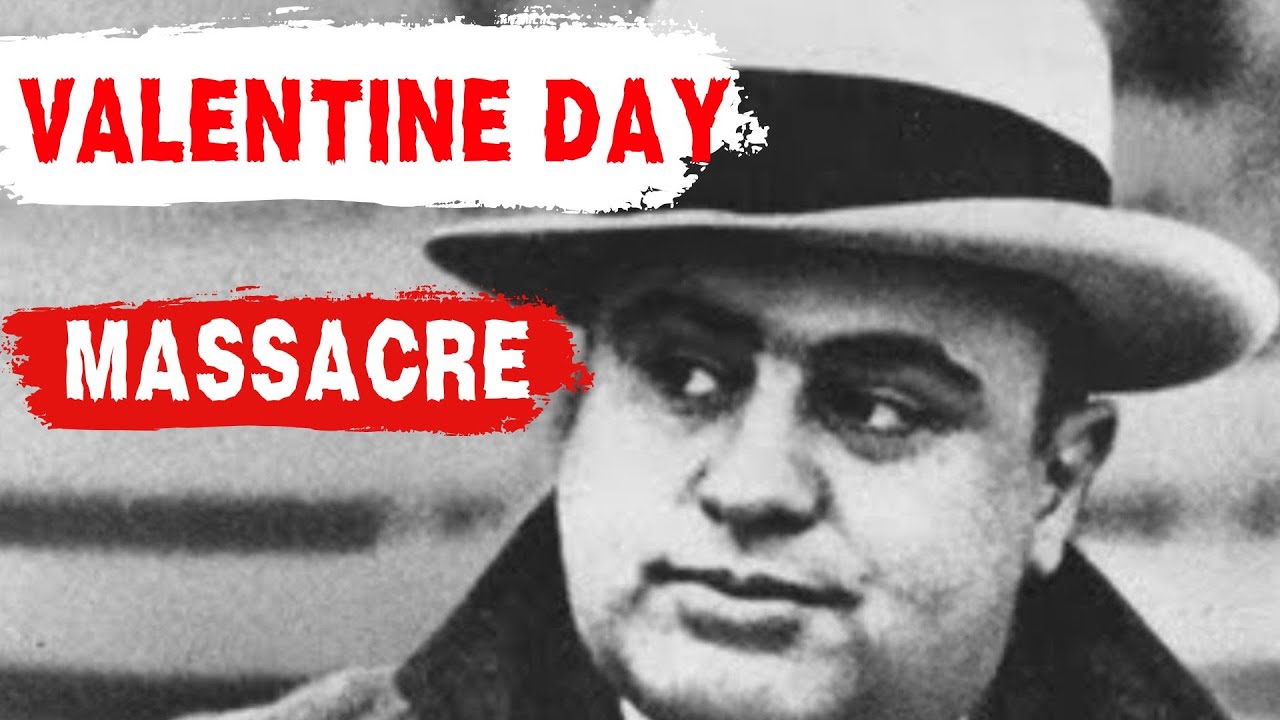
Seven men were dead against the garage wall by the time the echo of the guns stopped.
It was February 14, 1929, a little after 10:30 in the morning, inside the SMC Cartage Company garage at 2122 North Clark Street in Chicago.
They were members and associates of the North Side Gang, rivals of Al Capone's South Side organization.
Two men in police uniforms walked in first.
They lined the seven victims against the wall.
Then two more men, in civilian clothes, entered and opened fire with Thompson submachine guns and a shotgun.
The killers left in a vehicle made to resemble a police car.
A resident heard the gunfire and found the bodies shortly afterward.
The uniformed men looked like officers.
They acted with the authority of the law, and then the law was gone.
Who were those men in uniform?
Who gave the order?
Who fired the shots that killed seven men in broad daylight?
The identities of the shooters are not established by the record.
The massacre was widely attributed to Capone's organization.
Capone himself was in Florida that day.
He was never charged.
No one was ever charged.
The wall held the bodies, and then the wall held the silence.
10:30 A.M. — THE WITNESS'S SHOT
A resident heard the gunfire from a nearby building.
They found the bodies shortly afterward.
The Chicago Police Department responded to the scene.
Witnesses reported seeing uniformed officers entering the garage.
Uniformed officers, a police car, a routine raid.
That is what the witnesses said they saw.
The police arrested several suspects.
They questioned members of Capone's gang.
They released them all.
No one was charged.
Why did no one talk?
Why did no one name the men behind the wall?
Why did the witnesses see police officers and say nothing more?
That would require evidence, and the evidence was silence.
The exact sequence of events inside the garage is not fully documented.
What is documented is the fear.
Witnesses were killed.
Witnesses refused to testify.
The investigation was hampered by a wall of silence that matched the garage wall itself.
Every lead ran into a man who had seen nothing.
Every statement ended with a man who remembered less.
The police had uniforms, a car, a submachine gun.
They had witnesses who placed the killers at the scene.
They had no one willing to say it in court.
The case was never solved.
The silence held.
THE INTENDED TARGET
The intended target was George "Bugs" Moran, leader of the North Side Gang.
He was not present.
Moran was running late that morning, according to the record, and saw the police car outside the garage and walked away.
The men who died were his men.
The man widely believed to have ordered the massacre, Al Capone, was in Florida at the time.
He was never charged.
The federal government pursued a conspiracy case against Capone and others, according to the record.
The charges were dropped when Moran refused to cooperate.
A key suspect, Fred "Killer" Burke, was later linked to the massacre through ballistics evidence.
A Thompson submachine gun found in his possession was matched to shell casings at the scene.
That is what the record shows.
Burke was never extradited to Chicago for trial on the massacre charges.
He was convicted of murder in Michigan for a separate killing and died in prison in 1940.
He was never tried for the massacre.
The man who was supposed to die survived.

The man who ordered it was miles away.
Neither faced the charge.
The exact role of Capone and Burke in the massacre is not established by the record.
That would require evidence.
The silence held.
THE TWO STORIES
The prosecution narrative was a planned hit.
Capone's organization, prosecutors argued, sent the fake police to gain entry and to escape.
The uniforms gave the killers cover. The police car gave them a way out.
Moran was the target. He was late that morning, and he survived.
The defense narrative was simpler.
No direct evidence tied Capone to the crime. He was in Florida, and no witness placed him at the scene.
The federal government pursued a conspiracy case against Capone and others.
That case was dismissed in 1930 after witnesses refused to testify.
Moran himself refused to cooperate. The witnesses who might have spoken were dead.
What seems obvious to the public is not the same as what can be proven in court.
The identity of the shooters is not established by the record. The exact chain of command is not established by the record.
That would require evidence.
No one was ever tried for the St. Valentine's Day Massacre. No one was ever convicted.
The arrests happened. The suspects were released. The charges were dropped.
The silence held.
AND THE STORY STILL ISN'T OVER
The case remains officially unsolved.
Al Capone was never charged, though he was later convicted of federal income tax evasion in 1931 and served time at Alcatraz.
George "Bugs" Moran was killed in 1957 by a fellow gang member.
The garage was demolished in 1967, and the bricks from the wall were sold as souvenirs.
The case continues to be the subject of books, films, and documentaries, but no new charges have ever been filed.
It is a story that keeps being retold. It is also a story that keeps ending the same way.
No new evidence has emerged. No new charges have been filed. The record does not establish who fired the guns or who gave the order.
That would require evidence.
The wall is gone. The bricks were sold. The silence remains.
Advertisement
You may also like

The cell tower data that put Adnan Syed near Leakin Park — and the questions it left behind
On January 13, 1999, Hae Min Lee, an 18-year-old senior at Woodlawn High School, disappeared after leaving school. Her car was found on February…
One anonymous note sent police to a witness — is that note the key to Hae Min Lee's 1999 murder case?
The note was anonymous. It arrived after Hae Min Lee's body was found on February 9, 1999, in Leakin Park, partially buried. She had…
The last video Paul Murdaugh filmed minutes before the shots that killed him and his mother
He was 22, and he was filming his dogs. Paul Murdaugh held up his cell phone at the family's hunting estate in Colleton County,…
The pillowcase that tied a kidnapper to Polly Klaas — and the parole officer who spotted him
Two girls lay on the floor of the bedroom, their hands and feet bound. They had been tied up, but they had not been…
The pajama top that told the FBI a different story than Jeffrey MacDonald's
The pajama top was folded on an evidence table, and it told two stories at once. On the night of February 17, 1970, at…
The 10 p.m. check that found an open door and an empty bed
The key turned in the lock at approximately 10:00 p.m. on May 3, 2007. Kate McCann stepped into the holiday apartment in Praia da…