The voice that cracked the Smart abduction case open after nine months
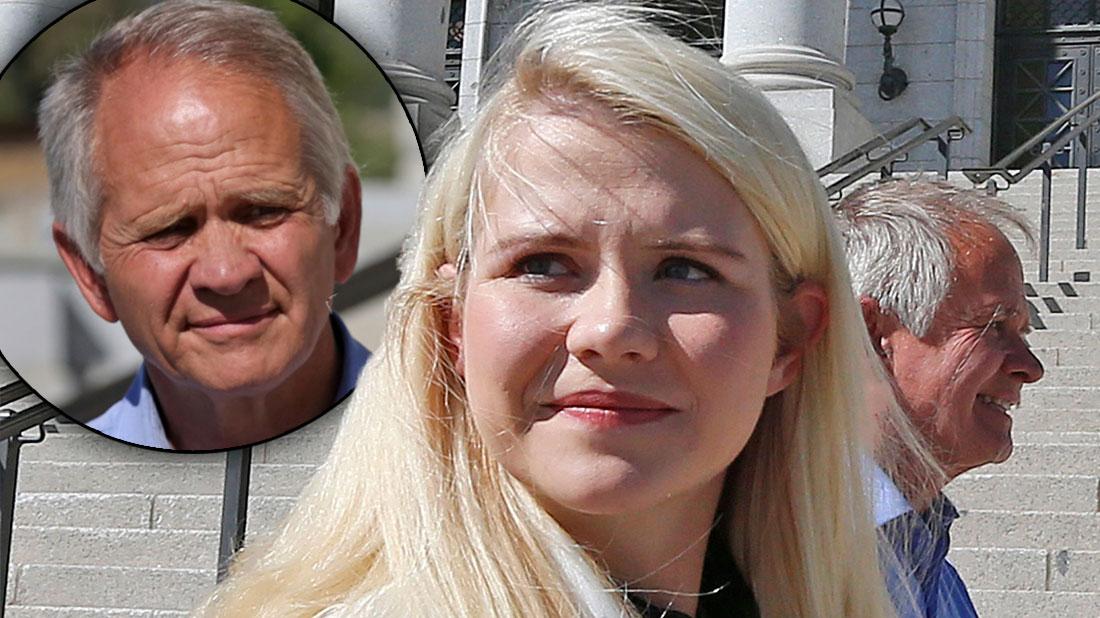
The knife was at Elizabeth Smart’s throat, and her younger sister, in the same bed, heard the voice.
The sister pretended to sleep.
It was June 5, 2002, inside the family home in Federal Heights, Salt Lake City.
The girl was fourteen.
Her sister later told their parents something specific.
The voice belonged to a man who had briefly worked at the home as a day laborer.
He had called himself “Emmanuel.”
That memory of a voice was the documented turning point.
Not a viral theory.
Not a lucky break.
A sister’s recollection, nine months before Elizabeth was found alive on a street in Sandy, Utah.
The exact words the sister heard are not in the record.
What remains is the match she made: the voice in the dark, and the man who once stood in the family’s house.
That led police to Brian David Mitchell and Wanda Barzee.
It is a fragile clue.
It could have been missed.
She could have said nothing.
She remembered.
THE NIGHT OF JUNE 5, 2002
She was fourteen, asleep in her own bed.
The knife came first, held to her throat.
Her younger sister lay in the same room, awake, threatened into silence.
She feigned sleep.
The abduction happened on foot.
No vehicle was part of the crime.
The house was not breached by force; the door was simply used.
The intruder walked out with Elizabeth Smart into the night.
The exact time of the abduction is not specified in the record.
The family slept through it.
In the morning, her parents went to wake the children for school.
Her bed was empty.
That is how the nine months began.
Not with a scream.
Not with a struggle that left marks.
With a bed made and a daughter gone.
The police were called.
The house became a crime scene.
The room where two sisters slept became the center of a national mystery.
Her parents would spend the next months on television, pleading.

The lead detective would chase a handyman named Richard Ricci.
Ricci was arrested on an unrelated parole violation.
He became a suspect.
He was cleared.
The record does not establish that he was ever more than a suspect.
Meanwhile, the room stayed empty.
The sister stayed quiet, carrying the memory of a voice.
The knife had been the weapon.
The voice would be the key.
NINE MONTHS OF SEARCHING
The case drew massive national media attention, with extensive searches and coverage.
For nine months, the Smart family lived in front of cameras.
The investigation initially focused on a family friend, Richard Ricci, a handyman with a criminal record.
Ricci was arrested on an unrelated parole violation and became a suspect.
He was cleared after alibi evidence.
He died of a brain hemorrhage in October 2002.
The lead went nowhere.
The searches went everywhere.
The months passed.
Then the turning point came from inside the house.
Mary Katherine Smart told her parents that the kidnapper's voice matched that of a man who had briefly worked at the family home as a day laborer, calling himself "Emmanuel."
The exact circumstances of how her memory was first shared are not detailed in the record.
What is documented is what followed.
That voice led police to Brian David Mitchell and his wife, Wanda Barzee.
They were located in Sandy, Utah.
On March 12, 2003, approximately nine months after her abduction, Elizabeth was found alive, walking on a street with her captors.
A sister's memory did what nine months of searching could not.
It was not a theory.
It was testimony.
THE TRIAL AND THE VERDICT
In November 2010, eight years after the abduction, Brian David Mitchell finally stood trial.
He had been charged in federal court with kidnapping and transporting a minor across state lines for illegal sexual activity.
For years before that, he was found incompetent to stand trial.
Those years were spent held and treated.
The trial began only after he was deemed competent.
Elizabeth Smart testified.
She testified in graphic detail about the abduction.
She testified about the sexual abuse she suffered.
Her testimony was the center of the prosecution's case.
:max_bytes(150000):strip_icc():focal(1035x462:1037x464)/brian-david-mitchell-elizabeth-smart-wanda-barzee-split-012226-1e29468ba8e24d329a7c2b1e029a1485.jpg)
The defense made legal arguments.
The specific legal arguments made by the defense are not detailed in the record.
On December 10, 2010, the jury convicted Mitchell on all counts.
He was sentenced to life in prison without parole.
Justice was delayed.
It was also delivered.
Wanda Barzee, his wife and co-defendant, pleaded guilty to federal charges of kidnapping and aiding in the abduction.
She was sentenced to 15 years in prison.
She was released in 2018 after serving her sentence, which included time credited for pre-trial confinement.
Mitchell remains in federal prison.
Elizabeth Smart left the courtroom.
She had given the testimony that helped convict the man who took her.
The sister's memory of a voice had started the chain.
The victim's testimony finished it.
AND THE STORY STILL ISN'T OVER
The sentence was life in prison without the possibility of parole.
Brian David Mitchell is serving that sentence at a federal prison.
Wanda Barzee was released from prison in September 2018.
She had pleaded guilty to kidnapping and aiding in the abduction.
The legal case is closed.
The record does not establish the current status of any appeals or post-conviction motions.
That would require evidence.
Elizabeth Smart has become an advocate for missing persons and child safety.
She speaks publicly about her ordeal.
She married Matthew Gilmour in 2012.
She has children.
The Elizabeth Smart Foundation works on abduction and abuse prevention.
The case has been the subject of books and documentaries.
Her memoir, "My Story," was published in 2013.
The sister's memory of a voice started the chain.
The victim's testimony finished it.
The impact continues.
It continues through advocacy.
It continues through memory.
It continues through prevention.
The girl found walking on a street in Sandy, Utah, is now the woman who speaks for others.
The man who took her is in prison.
The woman who helped him is free.
The courtrooms are quiet.
The story is not.
Advertisement
You may also like
The cell phone video that put Alex Murdaugh at the kennels — and shattered his alibi
On June 7, 2021, Paul Murdaugh and his mother, Maggie, were found shot to death at the family's hunting estate, Moselle, near Islandton, South…
FBI says Laundrie's notebook admitted to Petito's killing — yet full contents never released
A notebook was found near Brian Laundrie’s remains in Myakkahatchee Creek Environmental Park, Florida, on October 20, 2021. A gun was found nearby, and…
The 1967 trial that put the Boston Strangler's confession in the witness box
He confessed in 1964. Albert DeSalvo was already in custody on other charges when he sat down with a prosecutor from the Massachusetts Attorney…
The torn pajama top near Colette MacDonald's body that investigators said was staged
February 17, 1970. Military police were called to the off-base home of Army Captain Jeffrey MacDonald at Fort Bragg, North Carolina. Inside, they found…
The snowbound night three rock stars flew into a storm — and the last song they ever played
The cornfield near Clear Lake, Iowa, did not give up its secret until morning. On February 3, 1959, a small Beechcraft Bonanza had left…
A 'kill note' found in Adnan Syed's car — the defense called it a lie. The jury heard it anyway.
A single piece of paper, folded and placed inside a gray Nissan, sat in a glovebox. In February 1999, police searching Adnan Syed's car…