When the Clutter family didn't show at church, neighbors found four bodies bound and shot
The church pews stayed empty.
So did the seat beside a friend who was waiting for Nancy Clutter.
On the morning of November 16, 1959, neighbors and friends came to the Clutter farm after the family failed to appear at church and a planned outing.
They found four bodies.
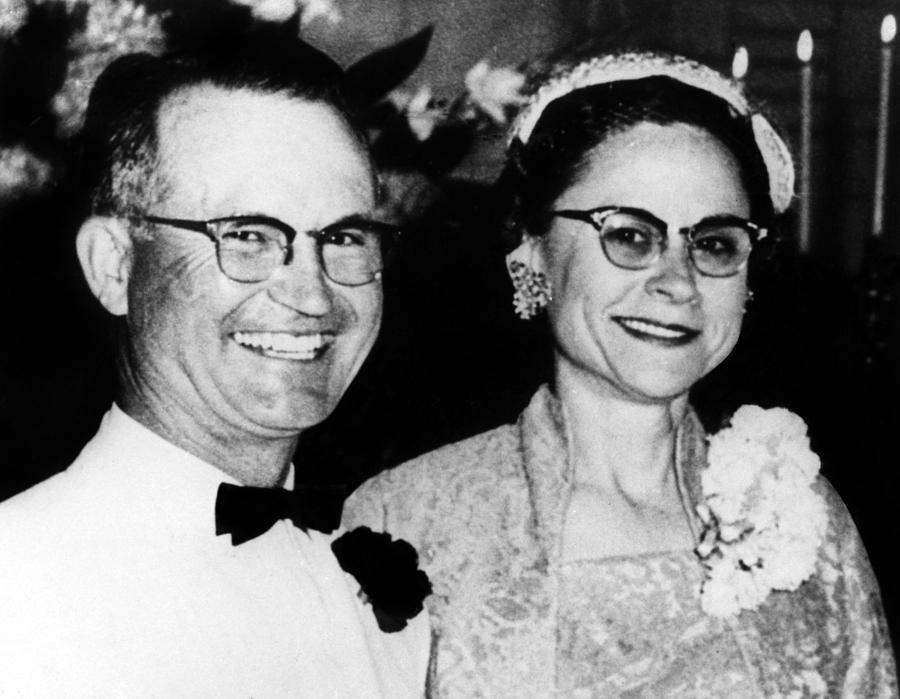
Herbert Clutter, Bonnie Clutter, and their two teenage children, Nancy and Kenyon, were bound and shot at close range with a shotgun.
The rooms were quiet.
The morning light crossed the floor in the same way it always had.
The Clutters were a respected, prosperous family with no apparent enemies.
The discovery was shocking for that reason.
Who does this to people like that?
Who does this to anyone?
Who walks into a farmhouse and leaves four bodies tied on the floor?
That would require evidence.
A theory circulating online suggests a hidden safe was the motive.
The record does not establish that a safe existed.
The record shows the perpetrators found no safe.
They left with only a small amount of money.
The bodies were found in different parts of the house.
Herbert was in the basement.
Bonnie was in her bedroom.
Nancy and Kenyon were in their rooms.
Each one bound.
Each one shot.
The neighbors stood in the yard.
They waited for answers that would not come for weeks.
The Clutters were the kind of family everyone in Holcomb knew.
Herbert was a wealthy farmer.
Bonnie suffered from chronic illness.
Nancy was sixteen.
Kenyon was fifteen.
They were ordinary people on an ordinary Saturday night.
Then the Sunday bells rang, and they were not there.
THE NIGHT OF NOVEMBER 15
On the night of November 15, 1959, four members of the Clutter family were murdered at their farmhouse in Holcomb, Kansas.
The victims were Herbert Clutter, his wife Bonnie, and their two teenage children, Nancy, sixteen, and Kenyon, fifteen.
The two older daughters, Eveanna and Beverly, were married and living away from home at the time.
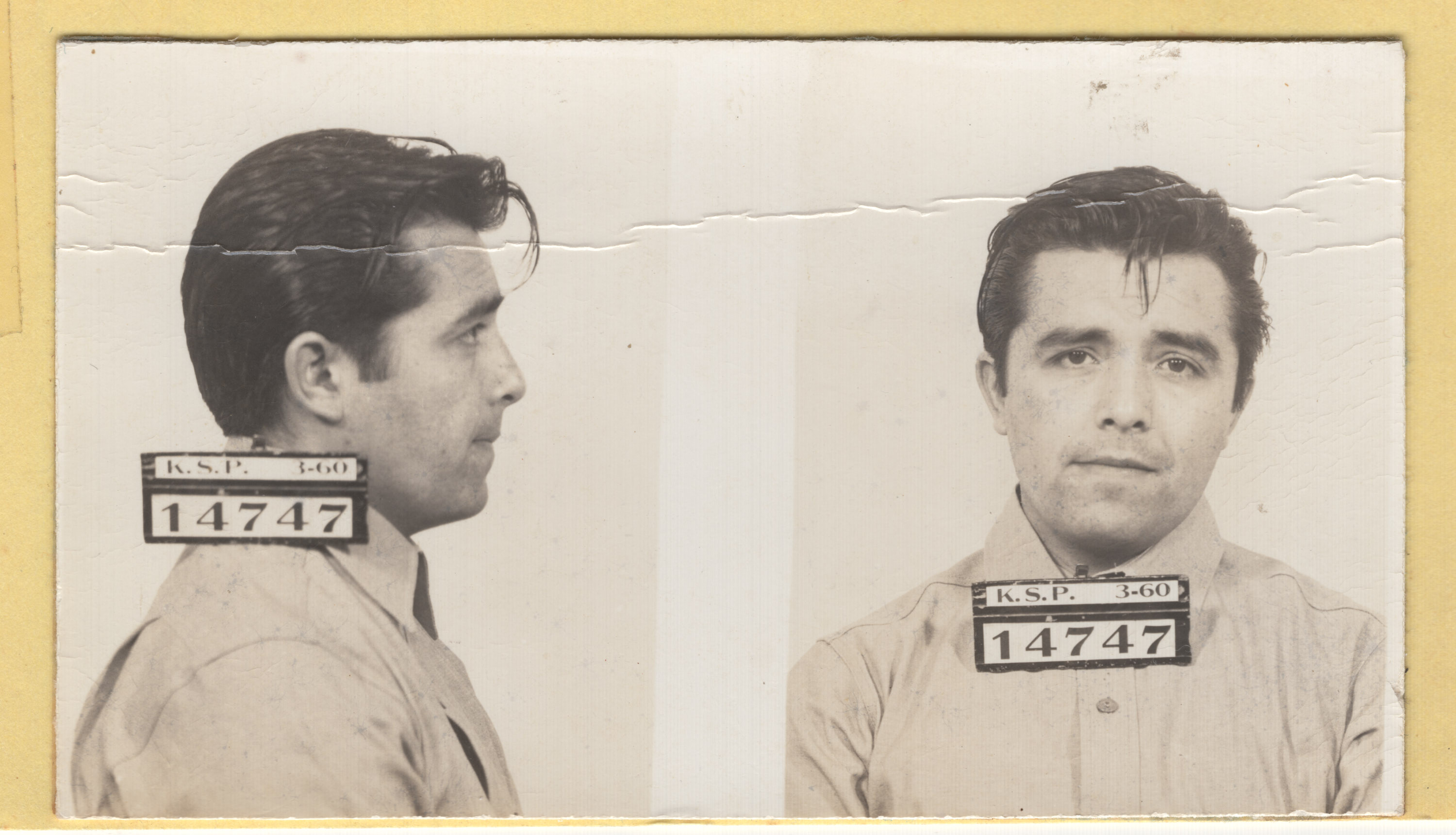
The perpetrators were Richard Hickock and Perry Smith, two ex-convicts who had been told by a fellow inmate that the Clutter family kept a safe containing large sums of cash.
They drove from Kansas to the farm.
They found no safe.
They left with only a small amount of money.
The exact sequence of events is not fully established; the two men later gave slightly different accounts.
Hickock said one thing.
Smith said another.
The record holds both versions, and it does not resolve them.
What is known is that the family was bound.
What is known is that they were shot at close range with a shotgun.
What is known is that the night ended with four bodies in a farmhouse that had seemed, hours earlier, like any other ordinary home.
The men drove a 1949 Chevrolet sedan.
They had come for a fortune.
They found a few dollars.
That discrepancy—the gap between the promised safe and the empty house—would become a question the case never fully answered.
THE BREAKTHROUGH
For weeks, the case produced nothing.
No motive, no witnesses, no weapon.
The Clutters had no enemies, the papers noted, and the house showed no sign of a struggle over money.
It was a crime that seemed to explain itself only by its own impossibility.
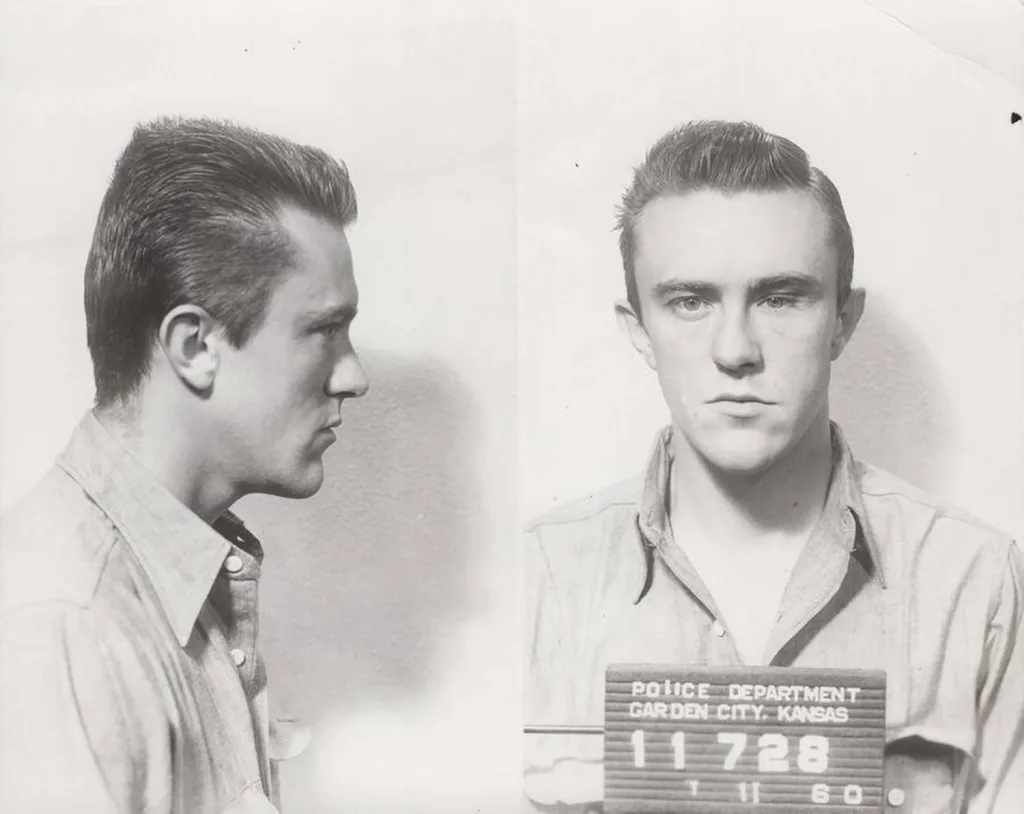
Then a former cellmate of Richard Hickock walked into a prison office and started talking.
He told authorities that Hickock had described a plan to rob the Clutter farm.
The plan, he said, was based on information he himself had provided—information from the time he had worked for Herbert Clutter and knew the layout of the farm.
He knew where the rooms were.
He knew how the family lived.
He knew, or thought he knew, about a safe.
That discrepancy—the promised fortune, the empty house—was now on a detective’s desk.
On December 30, 1959, Hickock and Perry Smith were arrested in Las Vegas.
The arrest came after a tip from a former acquaintance.
The record does not specify who that tipster was.
Both men confessed.
The confessions were detailed and consistent, though the two gave slightly different versions of the sequence of events.
Investigators also had a shotgun found in their possession.
They had boots that matched footprints at the crime scene.
The randomness of it unsettled people.
These were not men who knew the Clutters.
These were men who had been told a story about a safe, and who drove across the state to find it.
They found a few dollars.
They left four bodies.
The gap between the promise and the payout was the only explanation that ever made sense, and it was also the one that made the crime feel like a lottery no one had entered.
THE TRIAL AND THE MEDIA STORM
Hickock and Smith were charged with four counts of first-degree murder.
Their trial began in March 1960 in Finney County, Kansas.
The prosecutor sought the death penalty.
The defense argued that the men were not responsible due to mental illness, but the jury rejected this and convicted both men on all counts.
They were sentenced to death.
The courtroom was packed.
Reporters filled the benches, and the public lined up outside the courthouse doors before dawn.
It was a spectacle.
Not because the law required it.
But because the nation was watching.
Truman Capote sat in the gallery, taking notes.
His presence was itself a story.
The writer had come to Kansas to cover the case, and his notebook became part of the coverage.
The media shaped the narrative as it unfolded.
Every detail of the trial was reported, analyzed, and repeated.
The specific arguments made by the defense are not detailed in the record.

What remains is the outline: mental illness was claimed, the jury was not persuaded.
The conviction was unanimous.
The sentence was death.
The public followed every step.
They read the headlines, they argued over the verdict, they waited for the appeals.
The case was no longer just a crime.
It was a story being written in real time.
And Capote was writing the final version.
AND THE STORY STILL ISN'T OVER
On April 14, 1965, Richard Hickock and Perry Smith were executed by hanging at the Kansas State Penitentiary in Lansing.
The Clutter farmhouse was later demolished.
The case remains one of the most famous in American criminal history, largely because of Truman Capote's *In Cold Blood*, published in 1966.
It became a bestseller.
Capote's account was praised for its literary quality.
It also drew criticism over questions of factual accuracy and his methods.
The exact nature of those methods, and any specific inaccuracies, are not established in the record.
The surviving Clutter daughters, Eveanna and Beverly, lived private lives.
They did not seek public attention.
The case has been the subject of numerous documentaries, films, and books.
It continues to be studied as a landmark in both true crime and American journalism.
The executions settled the legal account.
They did not settle the story.
Capote had turned a Kansas murder into a national text, and the text outlived the men who died for the crime.
The media attention that followed the trial never fully receded.
It shifted instead, from the courtroom to the page.
The public, which had read the headlines in 1959, now read the book.
The question of what Capote changed, or invented, remains open.
That would require evidence the record does not provide.
What the record does show is simple.
Four people were killed.
Two men confessed and were executed.
The farmhouse is gone.
The story remains.
Advertisement
You may also like
The 911 call that shattered a legal dynasty – and the lie that followed
The dogs were still barking when the first deputies arrived at Moselle. Paul Murdaugh, 22, and his mother, Maggie, 52, lay dead near the…
Why the hashtag that followed Gabby Petito’s van trip split the public
A white Ford Transit van rolled through national parks in the summer of 2021, and a 22-year-old from Blue Point, New York, and her…
The Boston Strangler panic that made single women buy locks and fear their own apartments
She bought the lock on a Tuesday, the hardware store clerk remembered, because that was the day the papers printed the address. The address…
The 35,000-word manifesto that made a bomber's own brother call the FBI
The Washington Post published the 35,000-word manifesto in September 1995. It ran because the author had promised to stop his bombings if a major…
How the Menendez brothers' confession to their psychologist turned a mob-style hit into a family tragedy
The television was on. Jose and Kitty Menendez were in the den of their Beverly Hills mansion, watching it, when the shooting began on…
A priest's phone call that cracked the Beltway sniper case — the tip that changed everything
A caller reached a priest, and the words on that call are not in the record. The record shows only what the call led…