Why a therapist's tape recording changed the Menendez brothers' murder case
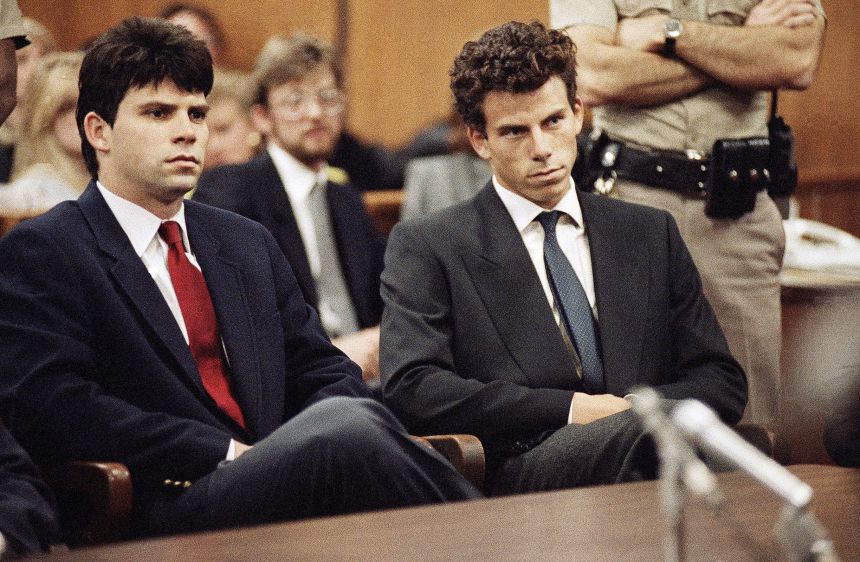
The 911 dispatcher logged the call at 11:47 p.m. on August 20, 1989.
Lyle Menendez told the operator his parents had been shot.
He said he and his brother Erik had just come home from a movie.
They found the bodies in the living room, he said.
The line was calm. Almost flat.
Police arrived at the Beverly Hills mansion and found José and Kitty Menendez dead from multiple shotgun wounds.
José was a wealthy entertainment executive at RCA Records.
The brothers said they had been out that evening.
They said they only discovered the bodies upon arriving home.
The exact time they returned is not in the record.
Only the 911 call is documented.
The case went unsolved for months.
The initial investigation looked at José’s business connections.
It considered the possibility of mob involvement.
The brothers’ behavior drew suspicion instead.
They spent lavishly on cars, watches, and a restaurant.
They bought things. They acted strangely.
Police kept watching.
Why did they wait to call?
What were they doing before that call?
Why did the calm voice not sound like a son who just found his parents shot?
That would require evidence the record does not provide.
For months, the case sat open.
THE SPENDING SPREE
For months, the case sat open.
The brothers did not sit with it.
They bought cars. They bought watches. They bought a restaurant.
The exact amount is not in the record. The specific purchases are not in the record.
But the categories are: cars, watches, a restaurant.
Investigators had treated the murders as possibly mob-related. José Menendez was an executive at RCA Records, a man with business connections.
:max_bytes(150000):strip_icc():focal(749x0:751x2)/pamela-bozanich-menendez-trial-100724-3-4020c329cace46f0917d36d6ad7e7962.jpg)
Then the brothers' spending drew attention. Their behavior contradicted their story.
In March 1990, Judalon Smyth contacted police.
She claimed Dr. Jerome Oziel had told her the brothers confessed during a therapy session.
Oziel was their therapist. Smyth was his mistress.
Police searched Oziel's office.
They found tape recordings of sessions.
On the tapes, the brothers discussed the murders.
That was the shift. Grief became suspicion.
A confession, if the tapes said what police believed, would change everything.
But the tapes were not the confession itself. The tapes were sessions in which the brothers discussed the murders.
What exactly they said on those tapes, the record does not fully establish here.
The brothers were arrested in March 1990.
The calm voice on the 911 call had a new context. The spending had a new context.
The case no longer sat open.
THE TAPE RECORDINGS
The therapist was Dr. Jerome Oziel.
He told his mistress, Judalon Smyth, that the brothers had confessed during a therapy session, according to the record.
Smyth went to police in March 1990.
Officers searched Oziel's office.
They found tape recordings.
The tapes captured the brothers discussing the murders, according to the investigation.
The exact contents of those tapes are not quoted in the source.
Only that the brothers discussed the murders.
The prosecution built its case on Oziel's testimony about those confessions.
It was central to their argument.
The prosecution argued the brothers killed their parents for the $14 million inheritance.
The defense argued something else entirely.
The defense argued the brothers had been sexually abused by their father for years.
They argued the brothers killed out of fear for their lives.
Two arguments.
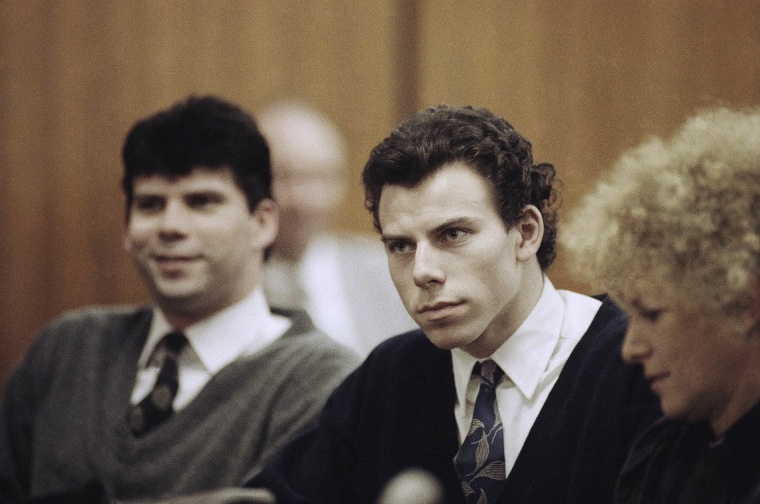
One set of tapes.
The tapes changed the case from unsolved to charged.
They gave the prosecution a confession, or at least a discussion of the crime.
They gave the defense a reason to fight over what was said and why.
The brothers were arrested in March 1990.
The tapes were the pivot.
Not because the tapes proved motive.
Because they proved the brothers had talked about the murders at all.
That would require evidence.
The tapes were that evidence.
THE TWO TRIALS
The first trial began in July 1993.
It ended in January 1994 with hung juries on all counts.
The juries were deadlocked.
Deadlocked on whether the killings were premeditated murder or manslaughter.
The specific reasons for that deadlock are not detailed in the record.
Only that they could not agree.
The prosecution retried the case in 1995.
The judge, Stanley Weisberg, ruled that much of the sexual abuse evidence was inadmissible.
That ruling severely limited the defense.
Not because the abuse claims were proven false.
But because the judge decided the evidence could not come before the jury.
The defense argued the brothers acted out of fear for their lives.
The jury in the second trial heard a narrower story.
In March 1996, Lyle and Erik Menendez were convicted of first-degree murder.
They were also convicted of conspiracy to commit murder.
They were sentenced to life in prison without the possibility of parole.
Not the death penalty.
The jury did not find special circumstances of lying in wait.
Two trials.

Two different juries.
Two different rules of evidence.
One outcome.
The brothers were not eligible for parole.
The verdict was conviction.
The sentence was life.
The record does not establish what the first juries would have decided had they heard the same evidence.
That would require evidence.
The second trial provided it.
AND THE STORY STILL ISN'T OVER
The brothers are serving life sentences without parole in separate California prisons.
Lyle Menendez is in one. Erik Menendez is in another.
The second trial convicted them in 1996. The judge, Stanley Weisberg, had ruled much of the sexual abuse evidence inadmissible.
The brothers have filed multiple appeals.
All of them have been denied.
The record does not establish any upcoming hearing or motion. The next concrete step is not specified.
That would require evidence.
But the story still isn't over.
Documentaries and social media have brought the case back. Calls for their release have grown louder in recent years.
The renewed interest is viral. The convictions are documented.
The extended family remains divided.
Some relatives advocate for their release. Joan Vander Molen, Kitty's sister, testified on their behalf at trial.
Other relatives maintain that the murders were premeditated.
Not because the evidence is settled. Because the family cannot agree on what it means.
The abuse claims remain legally contested. The motives remain legally contested.
What is documented: the 911 call. The therapist's tape. The convictions.
What is not established: that the abuse happened as described. That the killings were self-defense. That any motion is pending.
The public argues. The family argues.
The sentences remain unchanged.
Lyle and Erik Menendez stay where they are, in separate California prisons, serving life without parole.
The case is closed in law.
It is not closed in memory.
That would require a different kind of evidence.
Advertisement
You may also like
The trapdoor beneath a contractor's home that hid 29 bodies — and the teenager who led police to it
December 11, 1978. A 15-year-old boy named Robert Piest told his mother he was going to meet a contractor about a job. He never…
The cellphone video that broke Alex Murdaugh's alibi — and the double murder trial that followed
The video is eight seconds of darkness, dogs barking, and a voice. Paul Murdaugh recorded it at the dog kennels on the family's Moselle…
The rifle that six sleeping DeFeos were shot with — and the son who confessed
The call came on November 13, 1974. A neighbor placed it to the Suffolk County Police Department. Officers arrived at 112 Ocean Avenue in…
The floppy disk trace that unmasked a church leader as BTK after 30 years
A floppy disk arrived at a Wichita newspaper in 2004, sent by someone claiming to be the BTK killer. It was a taunt, a…
The notebook found beside Brian Laundrie's remains that changed the Gabby Petito case
On October 20, 2021, Brian Laundrie's remains were found in the Carlton Reserve in Florida. A notebook lay nearby. Inside that notebook was a…

The anonymous call that shifted the Hae Min Lee case toward Adnan Syed
She was 18. Hae Min Lee left Woodlawn High School on January 13, 1999, and never arrived at the daycare to pick up her…