The 1959 crash report that hinged on a cockpit gauge Buddy Holly's pilot never trained on
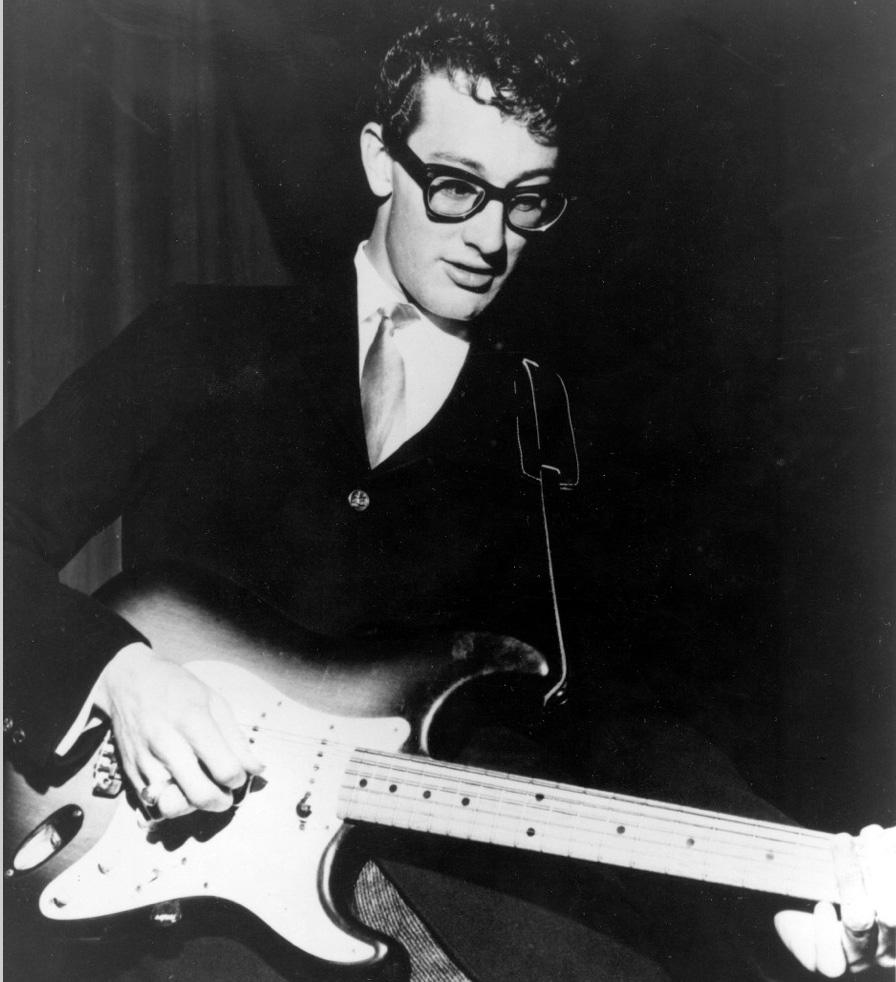
The Civil Aeronautics Board’s final report pointed to a single instrument.
It was the attitude indicator, a newer model installed in the plane.
The pilot had trained on an older version that worked differently.
According to the CAB investigation, he had not received adequate training on this specific type.
The plane was a 1947 Beechcraft Bonanza 35, tail number N3794N.
The board determined the pilot likely became disoriented in the clouds and lost control of the aircraft.
The wreckage showed the plane hit the ground nose-down at high speed.
The crash was ruled an accident caused by pilot error and poor weather.
No criminal charges were filed.
The case was closed as an aviation accident.
Was the gauge itself broken?
Did it spin, freeze, or lie?
Did a mechanical failure send the plane into the snow?
That would require evidence.
The record does not establish that the gauge malfunctioned.
It establishes a training gap.
One instrument, flown the wrong way, in clouds, at night.
The board’s finding rested on what the pilot was never taught.
Not on what the machine failed to do.
The difference mattered then.
It still matters now.
THE TOUR BUS
The night before the crash, Holly, Valens, and The Big Bopper played the Surf Ballroom in Clear Lake, Iowa.
It was a stop on the "Winter Dance Party" tour.
The bus was the problem.
The musicians decided to charter a plane because the tour bus was uncomfortable and cold.
That is the documented reason, and the record does not go much deeper than that.
The exact moment of the decision, who pushed for it, what was said — none of that is in the file.
What is known is the takeoff.
The pilot left Mason City Municipal Airport around 1:00 a.m. on February 3.
The weather was poor.
Snow.
Low visibility.
The plane was headed to Fargo, North Dakota.
It never arrived.
The next morning, the owner of the hangar where the plane was based flew over the route after the plane failed to land.
He found the wreckage in a snowy cornfield near Clear Lake.
The bus was cold, so they flew.
The plane was fast, so they took the risk.
The cornfield was snowy, so the wreckage waited until daylight.
THE INVESTIGATION
The Civil Aeronautics Board, the predecessor to the National Aeronautics and Space Administration's oversight of aviation safety, investigated the crash.
They examined the wreckage in the snowy cornfield near Clear Lake, Iowa.
They examined the pilot's logbook and his certifications.
They examined the plane itself, a 1947 Beechcraft Bonanza.
Each finding tightened the focus.
The investigation found the pilot was not properly certified to fly in instrument meteorological conditions.
That meant he was not qualified to fly solely by reference to the plane's instruments.
He was trained for visual flight, for seeing the horizon outside the window.
The weather that night offered no horizon.
The wreckage indicated the plane hit the ground in a nose-down attitude at high speed.
The bodies were recovered and identified by dental records and personal effects.
The investigation was completed within a few months, and the CAB released its final report later in 1959.
The report concluded the probable cause was the pilot's decision to take off in adverse weather conditions.
The report also cited his lack of experience in instrument flying.
It was a finding of pilot error, not mechanical failure.
The lead investigator for the CAB was not widely named in the press at the time.
That is a gap in the record, not a mystery to be solved.
The report did not blame the gauge.
It blamed the training gap between the gauge in the cockpit and the one the pilot had learned on.
THE TWO READINGS
The CAB's final report, released later in 1959, settled on a probable cause.
It was the pilot's decision to take off in adverse weather conditions.
It was also his lack of experience in instrument flying.
The report cited his failure to properly use the available weather information.
That was pilot error, the board said.
But the report went further, and this is where the record turns.
The investigation noted the pilot had not received adequate training on the specific type of attitude indicator installed in the plane.
It was a newer model, one that operated differently from the gauge he had trained on.
The gauge was not blamed. The training gap was.
The crash was ruled an accident, with no criminal intent or negligence beyond pilot error.
No charges were filed against anyone. There was no trial.
There was no perpetrator, no defendant, no verdict.
The case was closed as an aviation accident.
The CAB's findings have never been overturned or disputed in any formal proceeding.
Not because the record is complete. But because no one has ever formally challenged it.
So the two readings sit side by side: a pilot who chose to fly, and a system that sent him up with a gauge he had not learned to read.
Which one does the record truly support? The report names both.
It does not resolve the weight between them. That would require evidence beyond the report itself.
It is not established that the pilot was negligent beyond the CAB's finding of pilot error.
No criminal negligence was found. That is where the official record stops.
AND THE STORY STILL ISN'T OVER
The crash site near Clear Lake, Iowa, remains a memorial site.
A large pair of eyeglasses-shaped monument, known as the Buddy Holly Crash Site, marks the location.
The Surf Ballroom in Clear Lake still hosts an annual memorial concert on February 3.
The crash has been the subject of numerous books, documentaries, and the 1971 song "American Pie" by Don McLean, which popularized the phrase "the day the music died."
The families of the victims have largely remained private.
Buddy Holly's widow, María Elena Holly, has spoken publicly about her husband's legacy.
The Civil Aeronautics Board's findings have never been overturned or disputed in any formal proceeding.
The case is closed as an aviation accident.
There are no pending hearings or motions.
No legal actions are pending.
That is where the record stands, the same record that noted the training gap.
The gauge theory remains a theory.
The documented record shows a training gap, not a mechanical failure.
What remains is a monument, a concert, and a song.
What remains is a question the record does not answer.
What remains is the weight between a pilot's decision and a pilot's training.
That would require evidence beyond the report itself.
Advertisement
You may also like
The tarot card left at the first D.C. sniper shooting — and the trunk hole that cracked the case
The first shooting happened on October 2, 2002, outside a Michael's craft store in Aspen Hill, Maryland. Not in a parking lot. Not at…
The radio and boots that broke the Clutter case — but the shotgun never surfaced
The radio sat on a table in a Las Vegas apartment, months after four people were bound and shot in a Kansas farmhouse. It…
Two men in police uniforms, one Thompson submachine gun, and a garage wall that gave way to silence
Seven men were dead against the garage wall by the time the echo of the guns stopped. It was February 14, 1929, a little…
The typewriter in a Montana cabin that matched the Unabomber's 35,000-word manifesto
Agents found the typewriter inside a 10-by-14-foot cabin near Lincoln, Montana, in 1996. The machine matched the one used to produce a 35,000-word manifesto.…
The cotton gin fan that pulled a body from the Tallahatchie — and the DNA test that settled it
A cotton gin fan came up with the body on August 31, 1955. It was tied to the neck with barbed wire, and it…
The bullet that tied Sacco to the crime — and the expert who couldn't agree
The bullet came out of a guard's body on a stretcher, passed from hand to hand, and ended up in a courtroom as the…