The bullet that tied Sacco to the crime — and the expert who couldn't agree
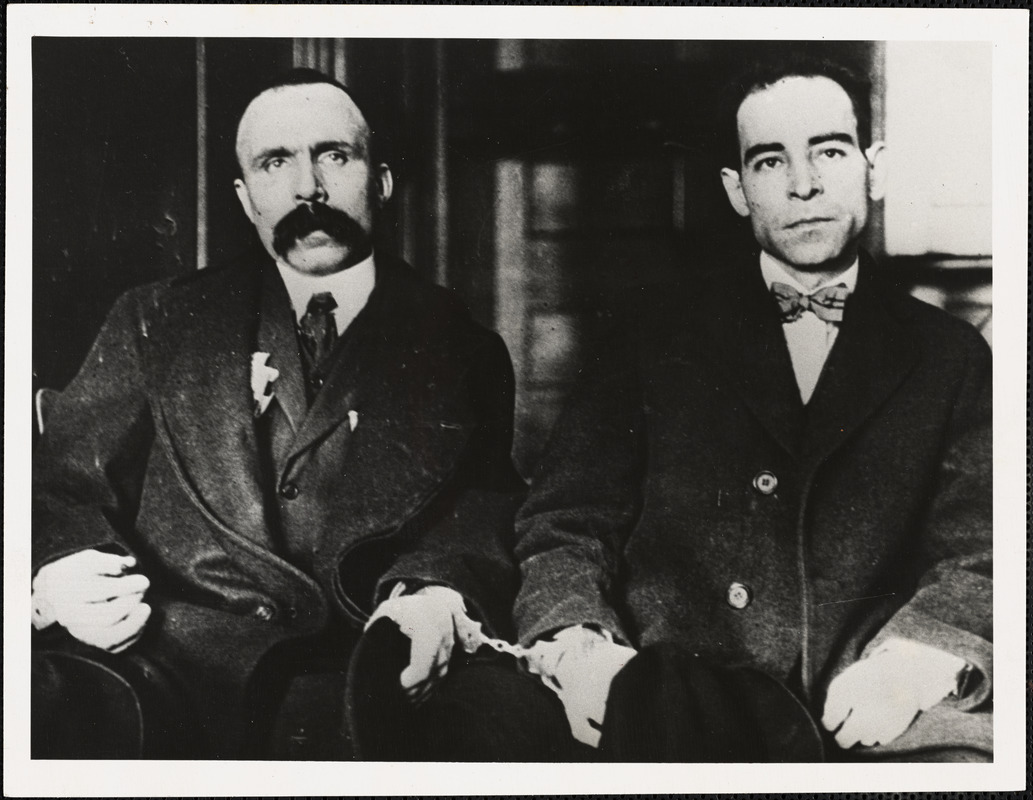
The bullet came out of a guard's body on a stretcher, passed from hand to hand, and ended up in a courtroom as the hinge of a murder case.
The prosecution's ballistics expert testified it was fired from Sacco's Colt .32 pistol.
The defense's own ballistics expert looked at the same metal and said no.
Two experts, one bullet, two answers.
The jury credited the prosecution.
Decades later, in the 1960s, a modern ballistics test suggested the bullet did come from Sacco's gun.
Yet the reliability of that test has been disputed.
What the record shows is a claim, not a proof.
The bullet's true origin is not definitively established.
Not because the tests were sloppy, necessarily.
Not because the experts were dishonest.
Not because the science was young.
But because each finding was contradicted, and no finding ended the argument.
The prosecution built its case on that single piece of metal.
The defense built its case on doubt about that metal.
One bullet decided a man's fate.
The weight of it is still there, in the records, in the disputed test, in the question that never got a settled answer.
What was fired from that Colt, and what wasn't?
That would require evidence that no longer speaks clearly.
The bullet remains what it was: a piece of evidence, examined, argued over, and never resolved.
THE ROBBERY AND THE ARREST
April 15, 1920, in South Braintree, Massachusetts.
A paymaster and a security guard were shot and killed in daylight.
The gunmen fled in a waiting Buick with about $15,776.
Witnesses heard the shots.
Witnesses saw the car speed away.
The crime was discovered immediately.
The investigation was led by local police and the district attorney's office.
The exact chain of evidence linking the men to the robbery is not detailed in the record.
On May 5, 1920, Sacco and Vanzetti were arrested on a streetcar.
They were carrying guns.
They were carrying anarchist literature.
They were not arrested for South Braintree.
They were held on suspicion of a separate attempted robbery in Bridgewater.
Vanzetti was tried and convicted for that in June 1920.
The South Braintree charges followed.
Two men, swept up in a matter of weeks.
The case was building against them.
The robbery was one crime.
The arrest was for another.
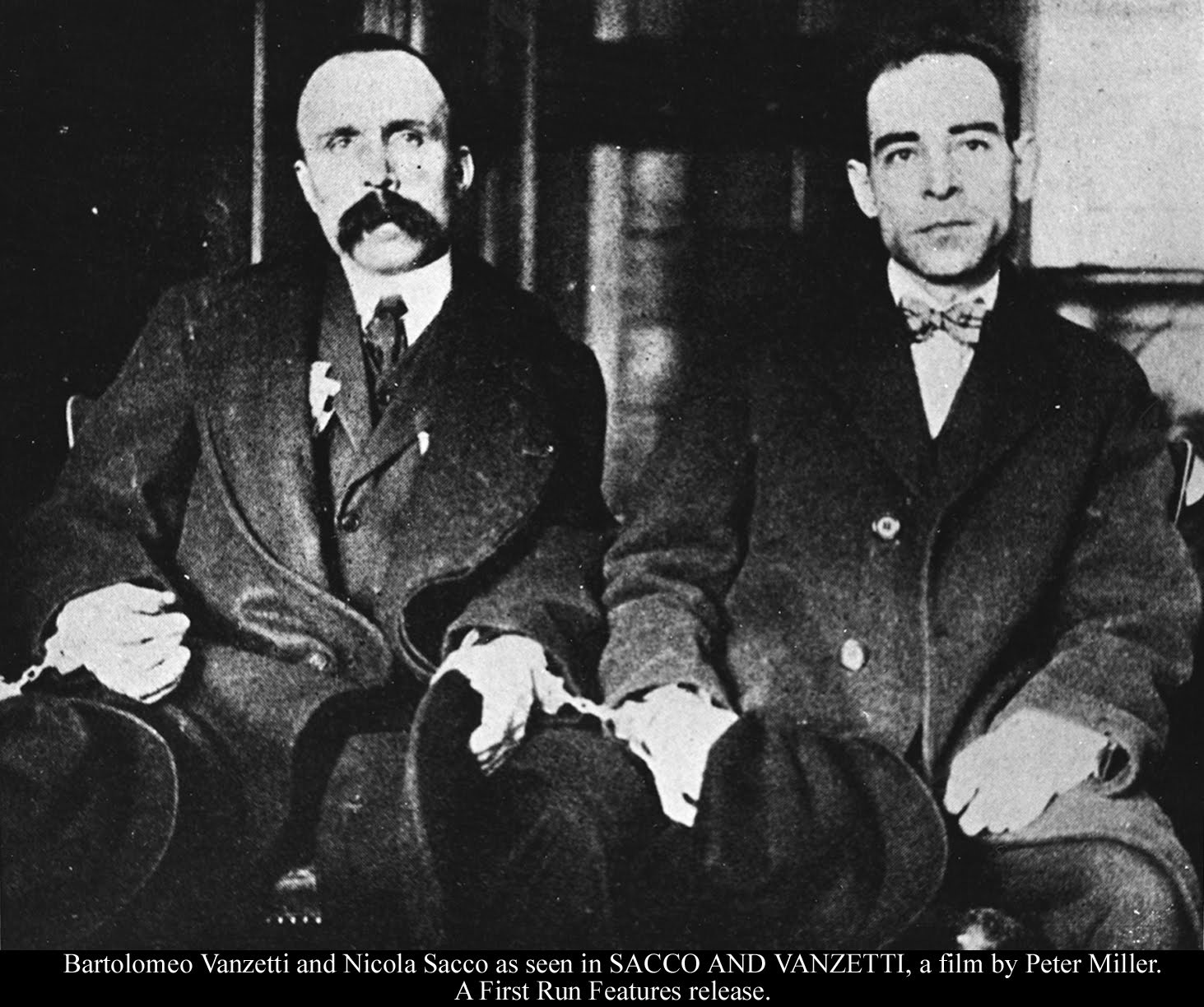
The record shows the arrest, the guns, and the literature.
What it does not show is a clear trail from the streetcar to the payroll.
That would require evidence.
That evidence does not speak clearly here.
THE TRIAL AND THE EXPERTS
The trial opened on May 31, 1921, in Dedham, Massachusetts.
The judge was the man who would later deny every motion for a new trial.
The courtroom had two experts staring at the same bullet.
The prosecution's ballistics expert testified the bullet from the guard's body was fired from Sacco's Colt pistol.
The defense's own expert looked at the same evidence and said no.
Two experts, one bullet, two truths.
The jury credited the prosecution.
The exact testimony of the experts is not quoted in the record.
What remains is the claim, not the proof.
The defense argued the men were elsewhere at the time of the crime.
They said the guns were carried for self-defense against the anti-anarchist raids.
The defendants' anarchist beliefs were put before the jury.
So was their evasion of the draft during the war.
These were used to paint them as dangerous radicals.
Not because of the payroll.
Because of who they were.
The trial ran through the summer.
On July 14, 1921, the jury found both men guilty of first-degree murder.
The sentence was death.
It is a verdict.
It is not a settled question.
THE TWO STORIES
The prosecution built its case on a single bullet.
That bullet, recovered from the guard's body, was said to have been fired from Sacco's Colt pistol.
The state's ballistics expert testified to that match.
The defense's own expert, called to the stand, disputed it.
The jury credited the prosecution.
Two stories stood in the courtroom, and they could not both be true.
The prosecution's story: the bullet, the eyewitnesses, the men in the car.
The eyewitnesses were inconsistent.
Some placed the gunmen at the scene; others could not be sure.
The bullet was the anchor, the one piece of physical evidence that tied Sacco to the crime.
The defense's story: the men were elsewhere that day.
They were at a different location, doing ordinary things, far from the payroll robbery.
The guns they carried were for self-defense.

Anarchists were being raided, arrested, deported; a man might reasonably want protection.
Then there was the other story, the one about who the defendants were.
They were Italian-born anarchists.
They had evaded the draft during the war.
The prosecution used those facts to paint them as dangerous radicals.
Not as men who robbed a payroll.
But as men capable of it.
The trial became something larger than the crime.
A Harvard law professor publicly criticized the proceedings, calling the case a miscarriage.
The verdict, he argued, was shaped by fear of radicals, not by the evidence.
Which story was true?
The one about the bullet?
The one about the alibi?
The one about the anarchists?
That would require evidence.
The record shows what was claimed, not what was proven.
The actual guilt or innocence of the men is not established.
AND THE STORY STILL ISN'T OVER
The defense filed numerous appeals after the guilty verdicts, arguing judicial bias and new evidence.
The trial judge denied every motion.
In 1927, the Massachusetts Supreme Judicial Court rejected the final appeal.
Governor Alvan T. Fuller then appointed an advisory committee to review the case.
The committee was composed of the president of Harvard, the president of MIT, and a judge.
It upheld the verdicts.
Sacco and Vanzetti were executed in the electric chair on August 23, 1927, at Charlestown State Prison.
Their deaths sparked worldwide protests and demonstrations.
The argument did not stop at the prison walls.
It did not stop in the decades that followed.
In 1977, Massachusetts Governor Michael Dukakis issued a proclamation.
It stated that Sacco and Vanzetti had been treated unjustly and that "any stigma and disgrace should be forever removed from their names."
It did not pardon them.
It did not declare them innocent.
That is not established.
The bullet remains the hinge of the case.
The expert testimony remains disputed.
The case remains a subject of historical debate, with no definitive consensus on their guilt or innocence.
Not because the evidence was lacking.
But because the evidence was argued, re-argued, and never settled.
The record shows what was claimed, not what was proven.
That would require evidence the record does not provide.
Advertisement
You may also like
The tarot card left at a D.C. sniper crime scene that said 'Call me God'
The card was on the ground at a crime scene in Montgomery County. A tarot card, face up, with a message written across it:…
The cell phone records that placed a suspect near Leakin Park — but one witness kept changing his story
January 13, 1999, was a school day. Hae Min Lee, an 18-year-old senior at Woodlawn High School in Baltimore County, Maryland, was last seen…
The parole agent who saw a sketch and stopped a car — then Polly Klaas's killer led police to her body
The parole agent saw the car first. A sketch, a tip, and a car on the road — that was the break. On November…
The cellmate tip that cracked the Clutter case after investigators ignored a footprint
The footprint was there on the night of November 15, 1959, inside the farmhouse near Holcomb, Kansas. Four members of the Clutter family were…
The cell tower records that placed Adnan Syed at Leakin Park — and the witness who changed his story
The phone call came on February 12, 1999. Baltimore County police picked up an anonymous tip that day, and the voice on the line…
The jailhouse informant's testimony that could not save Casey Anthony
She sat in the witness box and testified that Casey Anthony had made incriminating statements while in jail. Her name was Robyn Adams, a…