The 1964 robbery arrest that exposed a confession — and the witness count the Times got wrong
The number was thirty-eight.
For decades, that was the fact everyone knew: thirty-eight neighbors in Kew Gardens, Queens, heard Kitty Genovese being attacked and did nothing.
The claim came from a New York Times article about the murder in the early hours of March 13, 1964.
It was a story that shaped public reaction for years, a parable of urban apathy.
The article was written by a journalist, but his name is not in the record for this piece.
The attack itself happened in two phases over roughly half an hour.
It began near a parking lot.
It continued in a hallway of her building.
A neighbor shouted, and the first phase was interrupted.
Then the attacker returned.
The crime was not reported to police until after the second assault, when a neighbor called.
So the question becomes: were there really thirty-eight witnesses?
Did they really do nothing?
Did they really hear and see and turn away?
That would require evidence.
And the record does not establish the exact number of witnesses, or what they actually saw or heard.
Later reporting suggested the number was exaggerated.
Later reporting suggested the inaction was exaggerated, too.
What remains is a famous number that may not have been true.
It is a story about a murder.
It is also a story about a newspaper count.
And the count was wrong.
THE ARREST AND THE CONFESSION
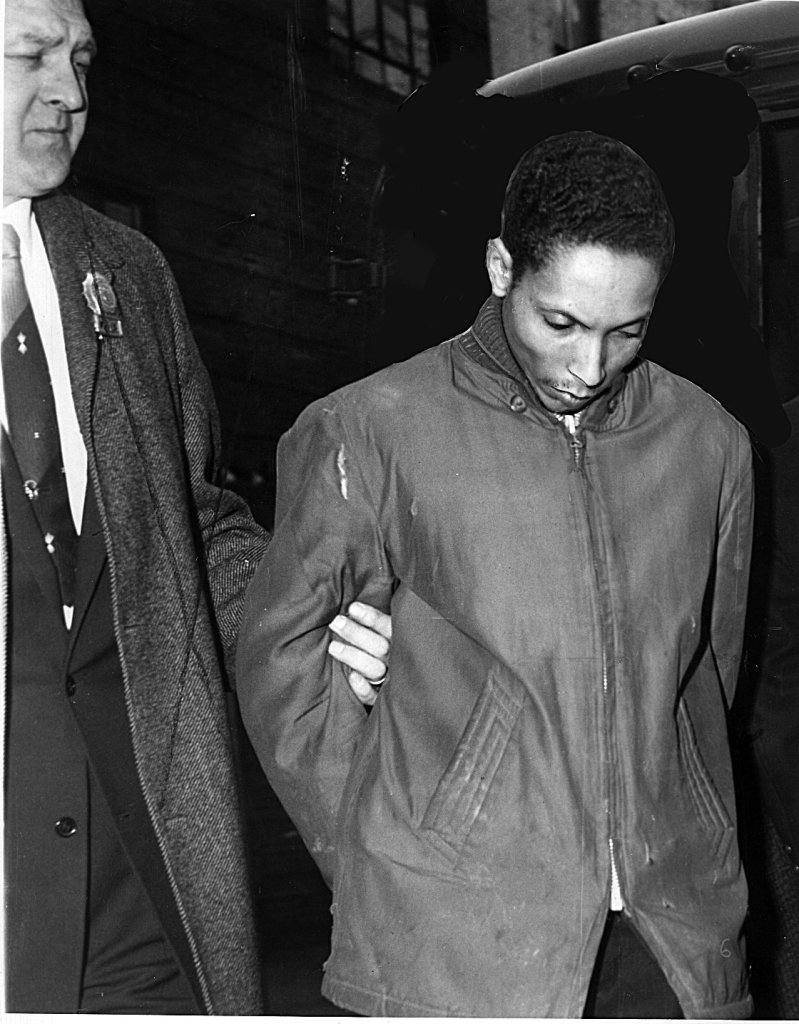
Two days after the murder, police arrested Winston Moseley.
He was 29 years old, a business-machine operator.
The arrest came on March 14, 1964, while he was driving a car.
The car matched a description from a separate burglary investigation.
A routine stop, and it cracked the case.
Moseley confessed to Genovese's murder.
He confessed to two other killings as well.
The confession was detailed.
It matched physical evidence, including bloodstains on his clothing.
The lead detective led the interrogation and obtained the confession.
His name is not in the record for this piece.
The exact circumstances of the confession beyond the record are not established.
That is not a gap in reporting.
It is a limit of the record itself.
Genovese's roommate, Mary Ann Zielonko, discovered the body.
She was a key witness.
She found her friend on the ground below.
The killing had happened in two phases.
The first phase was interrupted by a neighbor's shout.
The attacker returned.
The second assault ended in the hallway of her building.
The crime was not reported to police until after that second assault.
A neighbor called.
Genovese died on the way to the hospital.
Moseley was charged with first-degree murder.
A routine burglary stop had produced a confession to three killings.
The police had their man.
The public, however, would soon focus on something else entirely.
THE TRIAL AND THE VERDICT
The trial opened in June 1964.
Moseley pleaded not guilty by reason of insanity.
The prosecution presented his confession.
They presented the brutality of the crime itself.

The defense argued that Moseley was legally insane.
The specific arguments on either side, beyond that, are not established in the record.
The jury rejected the insanity defense.
They convicted Moseley of first-degree murder.
The judge sentenced him to death.
In 1967, New York temporarily abolished capital punishment.
The sentence was commuted to life imprisonment.
A conviction, then. A death sentence, then a life sentence.
The courtroom resolved the question of Moseley.
It did not resolve the question of the neighborhood.
That question had already been asked, in print, months before the trial began.
The public had been told that 38 people watched and did nothing.
The trial could not answer for those 38.
It could only answer for the man in the dock.
He was convicted.
He was sentenced.
The record closed on him, and the larger narrative kept running without him.
THE MEDIA STORY VS. THE RECORD
The New York Times reported that 38 neighbors witnessed the attack and did nothing.
The number was repeated for decades in classrooms, in textbooks, in conversations about urban apathy.
It became the reason the case was infamous at all — not the crime itself, but the crowd that supposedly watched it happen.
The record does not establish that number.
Later reporting suggested the count and the inaction were exaggerated, but the correction never travelled as far as the original claim.
What is documented is narrower: the attack came in two phases, and the crime was not reported to police until after the second assault, when a neighbor called.
That call came from one person.
The journalist who wrote the 38-witness article is not named in the record for this piece, which is its own kind of footnote.
The public reaction at the time was fury — at the city, at the neighbors, at the idea of people who heard a scream and closed their windows.
That fury was real.
The witness count that fuelled it was not established.
The exact number of witnesses, and the extent of their inaction, remains unproven in the documented record.
What remains is a story that ran ahead of the facts and never fully came back.
The conviction stood.
The narrative kept running without it.
AND THE STORY STILL ISN'T OVER
Moseley remained incarcerated for more than fifty years, denied parole again and again.
He died in prison on March 28, 2016, at age 81.
The case outlived him.
Its legacy is the "bystander effect," a term social psychologists coined in the aftermath.
It is a term built on the 38-witness claim.
It is a term that survived even as later investigations questioned the number and the inaction.
Kitty Genovese's brother, Vincent, and her mother, Rachel, spoke publicly in the years that followed.
Her family continued to advocate for awareness of the case.
The Kew Gardens site where she was killed became a memorial.
A plaque marks the spot.
People still visit.
That is what remains: a memorial, a term, a question.
Did 38 people really do nothing?
Did one neighbor call too late?
Does it matter if the number was wrong?
That would require evidence the record does not settle.
The conviction stood, and the narrative kept running without it.
The story is still not over because the story was never just about the crime.
It was about what the public believed it said about them.
That belief shaped how we talk about urban apathy and media responsibility.
What any future legal steps might have been is not in the record.
The case's legacy continues in public discourse, not in the courts.
She was on the ground below, and the reporting above her never fully came back down.
Advertisement
You may also like
The parking ticket that led police to Son of Sam's door
The ticket was for parking, issued near one of the attacks. It led officers to a car registered to David Berkowitz, a 24-year-old postal…
The 1999 drive home from Woodlawn High — and the ride request that still haunts the timeline
The ride request was made on a Wednesday. January 13, 1999, was the day Hae Min Lee, an 18-year-old senior at Woodlawn High School,…
The 911 call that started it, and the search that missed Caylee's remains for months
The 911 call came on July 15, 2008. Cindy Anthony told the dispatcher that her 22-year-old daughter, Casey Anthony, and her 2-year-old granddaughter, Caylee…
Why the FBI's tear gas assault on Waco preceded a fire that killed 76 — and who started it remains unknown
On April 19, 1993, FBI armored vehicles punched holes into the walls of the Mount Carmel Center compound near Waco, Texas, and inserted tear…
The desert graves that were found three years after a family vanished
The television was still on. Uneaten dinner sat on the table. The family dog was in the backyard. Both vehicles were still at the…
The false babysitter story that unraveled Casey Anthony's defense
She gave them a name. A babysitter named Zenaida Fernandez-Gonzalez, she told investigators, had taken her daughter. The name was repeated in news coverage.…