Why the FBI's tear gas assault on Waco preceded a fire that killed 76 — and who started it remains unknown
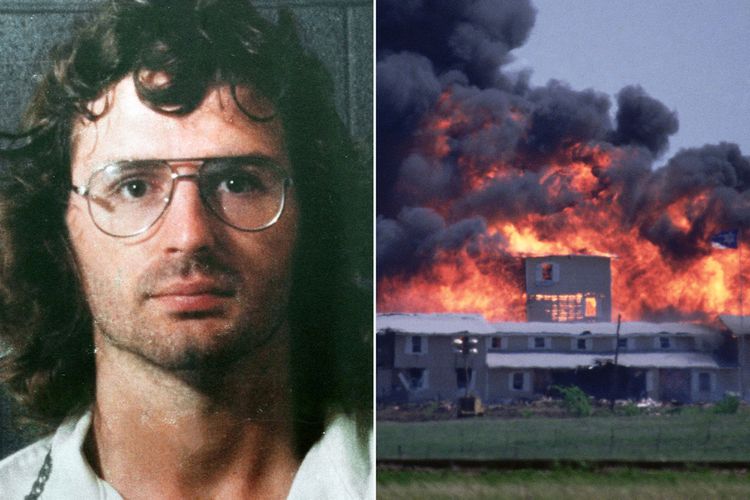
On April 19, 1993, FBI armored vehicles punched holes into the walls of the Mount Carmel Center compound near Waco, Texas, and inserted tear gas.
A fire broke out during the assault.
Seventy-six people died inside, including leader David Koresh and more than twenty children.
The FBI tactical operation records document the gas going in.
The official death toll documents who did not come out.
What the records do not document is who started the fire.
The FBI initially blamed the Davidians.
The 1999 independent review by former Senator John Danforth found that the FBI did not start the fire.
It also could not conclusively determine who did.
So the question sits where it has sat for decades.
Did the Davidians light it themselves, as the FBI's first public statements claimed?
Did an FBI action spark it accidentally?
Did someone inside the compound make a choice, or did something outside make a mistake?
That would require evidence the record does not provide.
The gas went in first.
Then the fire.
Then the deaths.
The order of those events is documented.
The cause of the middle one is not established.
THE RAID THAT BEGAN IT
February 28, 1993.
ATF agents attempted to execute a search and arrest warrant at the Mount Carmel Center, the home of the Branch Davidian sect led by David Koresh.
The warrant rested on suspicions of illegal weapons stockpiling: fully automatic firearms, grenades, and an undercover agent's purchases of firearm parts.
That is what the investigation evidence shows.
The element of surprise was lost.
A gun battle erupted.
Four ATF agents were killed.
Six Branch Davidians were killed.
The official casualty figures list those numbers.
How did a raid meant to be quick and controlled spiral into a deadly gunfight?
The specific tactical failures that led to the loss of surprise are not detailed in the record.
Not because they were hidden. Because the record does not establish them.
The ATF had planned a swift execution of the warrant.
What went wrong is a matter of inference, not documentation.
The raid failed.
That failure set the stage for a 51-day standoff between the Davidians and the FBI.
The timeline is clear: February 28 to April 19.
The raid was the beginning.
The standoff was the consequence.
The fire was the end.
The order of those events is documented.
The cause of the middle one is not established.
THE 51-DAY STANDOFF
The standoff lasted 51 days, from February 28 to April 19, 1993.
After the raid, the FBI took over the siege.
Negotiators tried to resolve the standoff peacefully, according to FBI negotiation records.
They spoke with Davidians inside the compound.
They arranged for lawyers, for media access, for Koresh's taped sermons to be released.
Tactical commanders pushed for something else.
They wanted a more aggressive approach, according to later investigations.
The tension was internal, documented, and unresolved.
Negotiators asked for time.
Tactical commanders asked for armored vehicles.
The internal decision-making process that led to the tear gas assault is not fully documented in the source.
What is documented is the date: April 19.
What is documented is the method: armored vehicles inserted tear gas into the compound, according to FBI operational records.
The gas went in first.
The fire came after.
The order of those events is documented.
The cause of the middle one is not established.
A 51-day standoff ended in a 45-minute assault.
Negotiation gave way to force.
It is a turning point.
It is also a question: why did the FBI choose tear gas on that morning, after 51 days of waiting?
The record shows the choice.
The record does not show the full reasoning behind it.
That would require evidence.
THE FIRE AND THE AFTERMATH
The armored vehicles pulled back as smoke rose from the compound.
On April 19, 1993, during the tear gas assault, a fire broke out inside Mount Carmel.
Seventy-six people died, including David Koresh and more than twenty children.
That is the official death toll.
The FBI's first public statements blamed the Davidians.
They said the fire was set from within.
Then the record shifted.
In 1999, former Senator John Danforth led an independent review.
The Danforth report found that the FBI did not start the fire.
It also could not conclusively determine who did.
The exact cause of the fire is not established by the record.
Who started it is not established by the record.
The Danforth report went further than the fire itself.
It was critical of the FBI's handling of the siege.
It was critical of the FBI's initial public statements.
Those statements, the report suggested, had outrun the evidence.
The aftermath moved to a courtroom.
In 1994, eleven surviving Branch Davidians stood trial in federal court.
The charges included murder and conspiracy to murder federal officers.
The jury acquitted all eleven of murder.
The jury acquitted all eleven of conspiracy to murder.
They convicted on lesser offenses: voluntary manslaughter and weapons violations.
Sentences ranged from probation to forty years.
The government's case was weakened by the lack of clear evidence of a conspiracy.
Questions about the ATF's conduct in the raid hung over the proceedings.
The trial records show the verdicts.
The trial records do not show the fire's origin.
That would require evidence.
AND THE STORY STILL ISN'T OVER
The trial records show the verdicts.
The trial records do not show the fire's origin.
That would require evidence.
The Branch Davidian property remains privately owned.
A small group of believers still maintains a presence there.
Not because the story ended. Because the story continues.
The surviving defendants have since been released from prison.
They served their sentences.
The 1999 Danforth report concluded that the FBI did not intentionally start the fire.
It also criticized the agency's handling of the siege and its aftermath.
The report found the FBI's initial public statements were a problem.
The FBI had blamed the Davidians.
That blame did not hold.
Who started the fire remains unknown.
That is not established.
Not by the trial. Not by the Danforth report.
The siege remains a subject of intense controversy.
The ATF's raid tactics.
The FBI's decision to use tear gas.
The cause of the fire.
All of it is still debated.
The questions are unresolved.
The search for answers continues.
The property is still there.
The believers are still there.
The record is not closed.
Advertisement
You may also like
The parking ticket that led police to Son of Sam's door
The ticket was for parking, issued near one of the attacks. It led officers to a car registered to David Berkowitz, a 24-year-old postal…
The 1999 drive home from Woodlawn High — and the ride request that still haunts the timeline
The ride request was made on a Wednesday. January 13, 1999, was the day Hae Min Lee, an 18-year-old senior at Woodlawn High School,…
The 911 call that started it, and the search that missed Caylee's remains for months
The 911 call came on July 15, 2008. Cindy Anthony told the dispatcher that her 22-year-old daughter, Casey Anthony, and her 2-year-old granddaughter, Caylee…
The desert graves that were found three years after a family vanished
The television was still on. Uneaten dinner sat on the table. The family dog was in the backyard. Both vehicles were still at the…
The false babysitter story that unraveled Casey Anthony's defense
She gave them a name. A babysitter named Zenaida Fernandez-Gonzalez, she told investigators, had taken her daughter. The name was repeated in news coverage.…
How a 14-year-old's open-casket funeral forced a nation to look at Emmett Till
She had the casket opened. Emmett Till's body came back to Chicago from the Tallahatchie River, where it was pulled from the water on…