How a 14-year-old's open-casket funeral forced a nation to look at Emmett Till
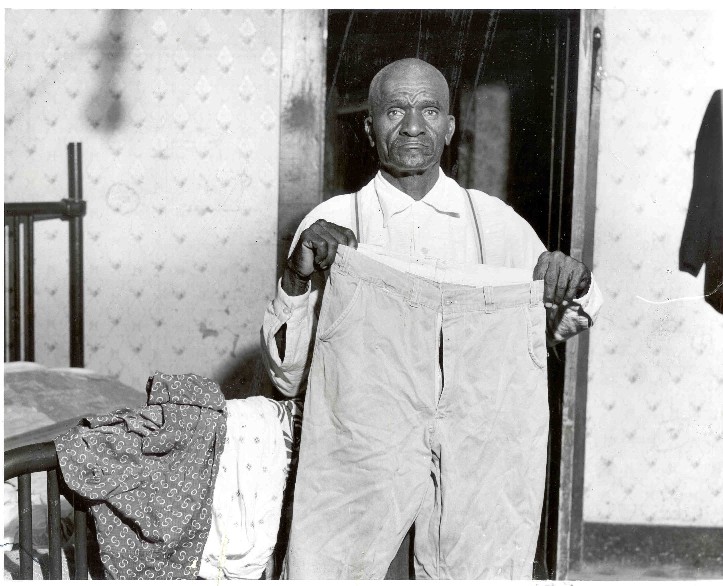
She had the casket opened.
Emmett Till's body came back to Chicago from the Tallahatchie River, where it was pulled from the water on August 31, 1955, weighted by a cotton gin fan tied to his neck with barbed wire.
He was 14 years old, a Black boy from Chicago visiting relatives in Mississippi.
His mother, Mamie Till-Mobley, insisted the world see what had been done to him.
She held the funeral open-casket in Chicago.
Jet magazine covered it.
The photographs ran across the country.
The image of his mutilated body in that open casket became a catalyst for the civil rights movement.
That is documented.
What is not documented is the moment that started it.
The record says Till allegedly whistled at or made a remark to Carolyn Bryant, the white storekeeper's wife, inside Bryant's Grocery and Meat Market on August 24, 1955.
Allegedly.
The exact nature of that interaction is not established.
No recording, no independent witness, no written account from the moment.
It remains a claim.
So the story splits in two.
There is what the photograph proves: a boy was killed, and his mother chose to show the damage.
There is what the photograph cannot prove: why, exactly, it happened.
Not because the question is unaskable.
Because the answer would require evidence the record does not hold.
She was on the ground below the open casket, and the nation looked down with her.
THE ABDUCTION
On August 24, 1955, Emmett Till walked into Bryant's Grocery and Meat Market in Money, Mississippi.
He was 14 years old, visiting from Chicago.
What happened inside the store rests on a claim: that he whistled at or made a remark to Carolyn Bryant, the white storekeeper's wife.
The record does not establish the exact sequence of events.
Four days later, on August 28, Roy Bryant and his half-brother J.W. Milam came to his great-uncle's home in the middle of the night.
They took Till from his bed.
His great-uncle, Moses Wright, was there.
Wright later testified at trial, pointing out the two men in open court.
Carolyn Bryant's accusation triggered the abduction.
She was not charged.
The body was found on August 31 in the Tallahatchie River.
It was weighted down by a cotton gin fan tied to his neck with barbed wire.
He had been beaten and shot in the head.
The exact circumstances of the abduction itself are not detailed in the source.
What is known is the sequence: the store, the accusation, the midnight visit, the river.
What is known is that a boy from Chicago went south for a summer visit and did not come home alive.
His body was recovered and sent back to Chicago.
His mother, Mamie Till-Mobley, insisted on an open casket.
She wanted the world to see.
The world was about to look.
THE TRIAL
The trial began on September 19, 1955, in Sumner, Mississippi.
The courtroom was packed, and the jury was all-white and all-male.
The prosecution presented its entire case in a single day.
Moses Wright stood and pointed at the two men who had taken his nephew.
He identified them in open court, a Black man testifying against white men in the segregated South.
The defense argued that the body was not Till's.
They claimed the prosecution had failed to prove the victim's identity.
That claim was contradicted by the FBI.
It was contradicted by Till's mother, who identified the body by a ring bearing his father's initials.
The jury deliberated for 67 minutes.
One juror reportedly said the deliberation would have been shorter if they had not stopped for a soft drink.
The exact identity of that juror is not in the record.
The verdict was not guilty for both defendants.
The acquittal was widely seen as a foregone conclusion in the segregated South.
Not because the evidence was weak.
But because the system was built to produce that answer.
The trial lasted five days.
The deliberation lasted just over an hour.
The verdict landed like a door slamming shut.
News of the acquittal travelled fast.
It did not travel as a surprise.
It travelled as a confirmation.
The world had looked at the open casket.
Now the world looked at the courtroom.
And what the world saw was a jury that had already made up its mind.
The courtroom emptied.
The defendants walked free.
The record shows the verdict.
The record shows the time.
The record does not show the juror's name.
It shows only the soft drink and the 67 minutes.
THE CONFESSION
The verdict was not guilty.
The men walked out of the Sumner courthouse free men.
Then they sold the story.
Protected from double jeopardy, Roy Bryant and J.W. Milam admitted to the murder in a paid interview with journalist William Bradford Huie.
Look magazine published the confession in January 1956.
A public admission, printed for the nation to read, that contradicted the trial verdict.
No further charges were pursued.
The confession did not bring a retrial.
It did not bring an arrest.
It brought a payment, the exact amount of which is not in the record.
The record shows the deal was paid.
The record does not show the price.
So the men who said they killed Emmett Till were paid for saying so.
The magazine bought the truth that the courtroom had refused.
The confession was a story sold like any other story.
It was a confession.
It was also a commodity.
The irony was bitter and plain: the men could admit to murder in print, and the law did nothing.
The confession became part of the public record.
The justice did not.
The record shows the acquittal.
The record shows the confession.
The record shows the gap between them, and the money that filled it.
AND THE STORY STILL ISN'T OVER
The case was reopened by the U.S. Department of Justice in 2004.
A grand jury declined to issue indictments.
It was reopened again in 2007.
A Mississippi grand jury again declined to indict anyone.
In 2007, Carolyn Bryant recanted parts of her testimony in a book by historian Timothy Tyson.
She was never charged.
The record does not establish what came of her recantation beyond that.
It only establishes that no charges followed.
In 2023, an unserved arrest warrant for Carolyn Bryant was discovered in a Mississippi courthouse.
No charges were pursued.
The outcome of that discovery is not established; the record shows only that the warrant went unserved.
Roy Bryant died in 1994.
J.W. Milam died in 1980.
Carolyn Bryant died in 2023.
No one has ever been convicted.
In 2022, the Emmett Till Antilynching Act was signed into federal law.
Lynching became a federal hate crime.
That law came 67 years after Till's body was pulled from the Tallahatchie River.
It came decades after the acquittal, the confession, the magazine pages.
It did not bring a conviction.
The case remains one of the most documented in American history.
The documentation does not equal accountability.
The record shows the acquittal.
The record shows the confession.
The record shows the gap between them, and the money that filled it.
What the record does not show is a verdict that matched the confession.
That would require evidence, or a court willing to hear it.
Neither came.
Advertisement
You may also like
The parking ticket that led police to Son of Sam's door
The ticket was for parking, issued near one of the attacks. It led officers to a car registered to David Berkowitz, a 24-year-old postal…
The 1999 drive home from Woodlawn High — and the ride request that still haunts the timeline
The ride request was made on a Wednesday. January 13, 1999, was the day Hae Min Lee, an 18-year-old senior at Woodlawn High School,…
The 911 call that started it, and the search that missed Caylee's remains for months
The 911 call came on July 15, 2008. Cindy Anthony told the dispatcher that her 22-year-old daughter, Casey Anthony, and her 2-year-old granddaughter, Caylee…
Why the FBI's tear gas assault on Waco preceded a fire that killed 76 — and who started it remains unknown
On April 19, 1993, FBI armored vehicles punched holes into the walls of the Mount Carmel Center compound near Waco, Texas, and inserted tear…
The desert graves that were found three years after a family vanished
The television was still on. Uneaten dinner sat on the table. The family dog was in the backyard. Both vehicles were still at the…
The false babysitter story that unraveled Casey Anthony's defense
She gave them a name. A babysitter named Zenaida Fernandez-Gonzalez, she told investigators, had taken her daughter. The name was repeated in news coverage.…