The 1965 confession that never went to trial — and the detail that unraveled it
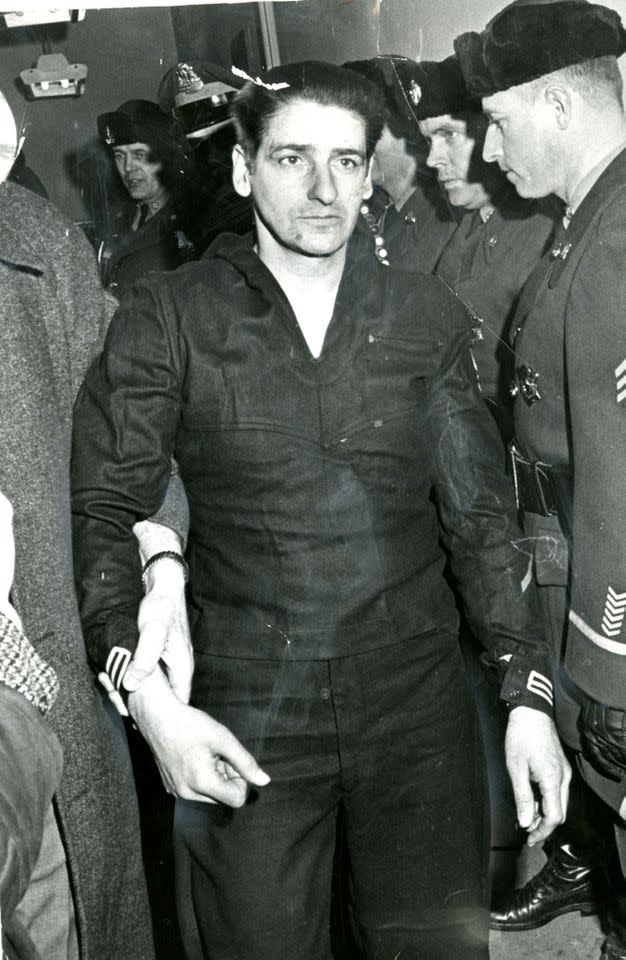
He was already in custody, held on charges of robbery and sexual assault, when he began to talk.
Albert DeSalvo confessed to thirteen stranglings in 1965, and the confession was arranged through his attorney, F. Lee Bailey.
He gave detailed accounts of the crimes.
He described the victims' apartments.
He described the methods used.
Some investigators doubted him, noting inconsistencies in his statements.
There was no physical evidence linking DeSalvo to the murder scenes.
No forensic testing was done at the time.
The confession was never tested in court.
No charges were ever filed against DeSalvo for the murders.
How could a man describe thirteen killings in such detail and never face a jury for any of them?
How could investigators hold a confession and still leave the cases officially unsolved?
How could the evidence that decided the case be nothing but a statement?
That would require evidence.
The truth of the confession itself was never legally established.
It remains a story told, not a case proven.
THE STRANGLINGS
Between June 1962 and January 1964, thirteen single women, aged 19 to 85, were strangled in Boston and nearby cities like Lynn and Lawrence.
Many were killed in their own apartments.
Often with their own stockings or nylon stockings.
The victims were discovered when they failed to show up for work.
Or when they were found by relatives, landlords, or neighbors.
The crimes terrorized the region.
It became one of the most extensive and publicized investigations in Massachusetts history.
Attorney General Edward Brooke established a special task force to centralize the investigation.
It had been marked by confusion and a lack of coordination among multiple jurisdictions.
What exactly did the task force inherit?
Thirteen deaths, spread across cities and towns.
No single agency holding all the files.
No forensic link connecting any of the scenes to a suspect.
That would require evidence.
The exact number of victims attributed to a single killer is not established.
The source lists thirteen.
The official status of each is not specified.
The fear was real, though.
Women locked their doors.
They checked their stockings.
They asked who had keys to their apartments.
The record does not say how many answered that question.
It says only that the killings continued.
That the task force was formed.
That the investigation was publicized.
That the region waited.
THE DEAL
In 1965, Albert DeSalvo was already in custody on charges of robbery and sexual assault.
His attorney, F. Lee Bailey, arranged for DeSalvo to speak with authorities about the murders.
DeSalvo confessed to all thirteen stranglings.
He offered detailed accounts of the crimes, including specifics about the victims' apartments and the methods used.
The detail was striking.
The proof was not.
There was no physical evidence linking DeSalvo to the murder scenes, and no forensic testing was done at the time.
The confession was the key evidence.
It was never tested in court.
Some investigators doubted the confession, noting inconsistencies in DeSalvo's statements.
What inconsistencies?
The record does not say.
Whether the confession was coerced or voluntary is also not established.
That would require evidence.
No charges were ever filed against DeSalvo for the murders.
The murder cases were never brought to trial.
The Commonwealth of Massachusetts never tested his account before a jury.
His confession was arranged.
It was detailed.
It was never examined.
The region had waited for answers since the stranglings began.
What it received was a statement.
What it did not receive was a trial.
THE CONVICTION
The confession was never tested in court.
The Commonwealth of Massachusetts never brought charges against DeSalvo for the stranglings.
Instead, he was tried and convicted in 1967 on charges of robbery, armed robbery, and sexual assault related to other crimes in the Cambridge, Massachusetts area.
He was sentenced to life in prison.
F. Lee Bailey represented him in these proceedings as well.
The murder cases remained officially unsolved, as no one was ever charged.
Not because the evidence pointed elsewhere.
Because there was no evidence to point anywhere.
The confession sat unexamined, unchallenged, untried.
DeSalvo was found murdered in his cell at Walpole State Prison on November 26, 1973.
He was 42 years old.
His death was ruled a homicide, and no one was ever charged.
The motive or method behind his murder is not established in the record.
What the record does establish is a pattern: a man who confessed to thirteen murders, convicted of other crimes, killed before any court could weigh the confession.
The families waited for a trial that never came.
The case went cold.
It would remain cold for decades, until a different kind of evidence emerged — not a confession, but a match.
AND THE STORY STILL ISN'T OVER
In 2013, authorities announced that DNA evidence had linked DeSalvo to the murder of Mary Sullivan.
The match came through a relative’s DNA, decades after the killing.
It was a posthumous match.
DeSalvo had been dead for forty years by then, found murdered in his prison cell in 1973.
The match was reported as confirming his involvement in at least that one killing.
Not the others.
The case was never tried.
No charges were ever filed, no verdict ever read, and the confession was never tested in a courtroom.
The other murders remain officially unsolved.
The families of the victims have continued to seek answers, and the record still does not give them a trial.
What does the DNA match prove?
It proves a link to one victim, according to the 2013 announcement.
Does it prove DeSalvo’s guilt in all thirteen murders?
That would require evidence the source does not provide.
That would require a trial that never happened.
The case has become the subject of numerous books, films, and documentaries.
It is a story told many times.
It is also a story with an open end.
The DNA link came too late for a trial, and the other eleven victims remain without an official resolution.
The record establishes one match.
It does not establish the rest.
Advertisement
You may also like
The cellmate confession that cracked the Manson murders
The cellmate was in jail on a charge of her own. Susan Atkins was there too, held on something unrelated to Cielo Drive. The…
The psychologist's mistress who heard a confession and changed a murder case
The tape recorder was running. Erik Menendez was in a therapy session with Dr. Jerome Oziel, his psychologist, when he confessed to the murders…
The cotton gin fan tied to Emmett Till's neck — and the evidence that didn't convict
The Tallahatchie River gave up its weight on August 31, 1955. Emmett Till's body surfaced with a cotton gin fan tied to his neck…
A Splash in the Chattahoochee — the Fiber Evidence That Tied Wayne Williams to Two Murders
The bridge over the Chattahoochee was quiet that night in May 1981. Police had staked it out after a tip, waiting on the dark…
The slumber party interrupted: Polly Klaas's last night before the intruder came
The party was a sleepover. Three girls, twelve years old, in the bedroom of a house in Petaluma, California. It was October 1, 1993.…
The .40-caliber pistol traced to New Jersey that linked Andrew Cunanan to Versace's killing
A .40-caliber pistol ended Gianni Versace’s life on the steps of his Miami Beach mansion. That same pistol had been stolen from a prior…