The 2002 Beltway sniper attacks: ten dead, three wounded, one truck driver's tip
🚨 THE TIP THAT BROKE THE CASE…
On October 24, 2002, a truck driver pulled over and told police he had seen a car matching a broadcast description.
That car was a blue Chevrolet Caprice.
The tip came after three weeks of random shootings that killed ten people and wounded three across the Washington, D.C., region.
Police had spent much of that time chasing a white van.
Composite sketches went out. Descriptions went out. The white van was everywhere in the reports.
It proved to be a false lead.
The truck driver's tip pointed at something else.
He had seen the Caprice at a rest stop on Interstate 70 in Maryland, near Myersville.
Police arrived and arrested two suspects together in that blue car.
The arrests ended a stretch of fear that had closed gas stations and emptied parking lots.
Victims had been shot while pumping gas, walking into stores, sitting on benches, mowing grass.
The truck driver's tip was the break.
What exactly did he say?
What made him look twice at a car in the dark?
The exact content of the tip is not in the record.
That part is gone.
What remains is the result: two men in custody, a rifle found in the trunk, a case that shifted from random terror to a closed car.
The white van had been a theory.
The blue Caprice was the fact.
The tip did not just break the case.
It broke the story the public had been told for weeks.
OCTOBER 2 — THE FIRST SHOT
October 2, 2002, was a Tuesday.
Someone shot and killed a man outside a grocery store in Wheaton, Maryland.
The source does not specify the identity of that first victim.
That is not established in the record.
What is established is what followed.
The shooting was the first in a series of random attacks.
Over the next three weeks, the Washington, D.C., metropolitan area was terrorized.
The attacks spanned Maryland, Virginia, and the District of Columbia.
Ten people were killed.
Three others were wounded.
Victims were shot while pumping gas.
Victims were shot while walking into stores.
Victims were shot while sitting on benches.
Victims were shot while mowing grass.
The first shot came without warning.
It came without a motive that police could see.
It came without a pattern.
The investigation began with a single call.
The call reported a man down outside a grocery store.
It was not yet a case about a sniper.
It was not yet a case about a blue Caprice.
It was a case about one man, dead on the pavement.
Then another shot.
Then another.
The randomness was the terror.
Anyone could be next.
That was the point, prosecutors would later say.
But on October 2, no one knew that yet.
They only knew the first shot had been fired.
The ordeal had begun.
THE RANDOM VICTIMS
They were shot while pumping gas.
Walking into stores.
Sitting on benches.
Mowing grass.
The dead and wounded included a woman loading packages into her car.
A man at a gas station.
A woman on a bench outside a post office.
A man mowing grass at a car dealership.
A bus driver.
A woman in a parking lot.
A man on a bench at a gas station in Maryland.
A 13-year-old boy was shot outside his middle school in Bowie, Maryland, and later died.
The exact number and order of these shootings are not itemized in the source.
That is not established.
What is established is the ordinary texture of the moments.
Gas pumps, storefronts, benches, lawns.
Everyday places.
Everyday errands.
An ordeal that began with one shot outside a grocery store in Wheaton, Maryland, on October 2.
Ten dead.
Three wounded.
And for three weeks, no one knew why.
THE WHITE VAN — A FALSE LEAD
The white van was everywhere.
Police released composite sketches of it.
They broadcast descriptions of it.
The van was white, they said. It was a box truck, they said. It was the shooter's vehicle.
It was not.
The source does not specify who provided the white van description.
The focus on the white van wasted time and resources early in the investigation.
It wasted days.
It wasted leads.
It sent officers searching parking lots and highways for a vehicle that was never there.
Why the van?
Why that shape, that colour, that idea?
The investigation initially struggled because the shootings seemed random and had no clear pattern.
A man outside a grocery store.
A woman loading packages into her car.
A man at a gas station.
A woman on a bench outside a post office.
A man mowing grass at a car dealership.
Each shooting was a single shot, a single victim, a single moment.
No demands.
No messages.
No pattern that connected the victims.
So police reached for what they had: a witness's glimpse, a shape in the dark, a white van.
It was a theory.
It was a wrong theory.
And while the manhunt chased the van, the shooter kept shooting.
Ten dead.
Three wounded.
And for three weeks, no one knew why.
The white van did not explain it.
The white van was never the answer.
That would come later, in a blue Chevrolet Caprice.
OCTOBER 19 — THE TURNING POINT
October 19, in Ashland, Virginia, a shooting occurred at a restaurant.
A witness reported seeing a white Chevrolet Caprice speeding away.
The source does not name the witness.
The source does not name the restaurant.
What the record shows is the car.
Police linked that Caprice to a shooting in Alabama.
They linked it to a previous crime in Tacoma, Washington.
The white van had pointed nowhere.
The blue Caprice pointed somewhere.
Not because the car was unusual.
Because it had a trail.
A shooting in Alabama.
A crime in Tacoma.
A car seen leaving a restaurant in Ashland.
The connections were not theories.
They were records.
What was examined, what was checked, what was matched.
The Caprice carried a history.
The investigation had been a fog of random deaths.
A man outside a grocery store.
A woman loading packages.
A man mowing grass.
Then a car with a paper trail.
The witness gave police a direction.
The direction led to Alabama.
It led to Tacoma.
It led to a rest stop on Interstate 70.
Was the witness certain of the car?
The record does not say.
Was the restaurant ever named?
It is not in the source.
What the record does establish is the link.
That link would hold.
That would require evidence, and the evidence would come.
The fog had a shape now.
OCTOBER 24 — THE ARREST
October 24.
A truck driver saw the car.
It matched the description police had broadcast, the blue Chevrolet Caprice.
The driver called it in.
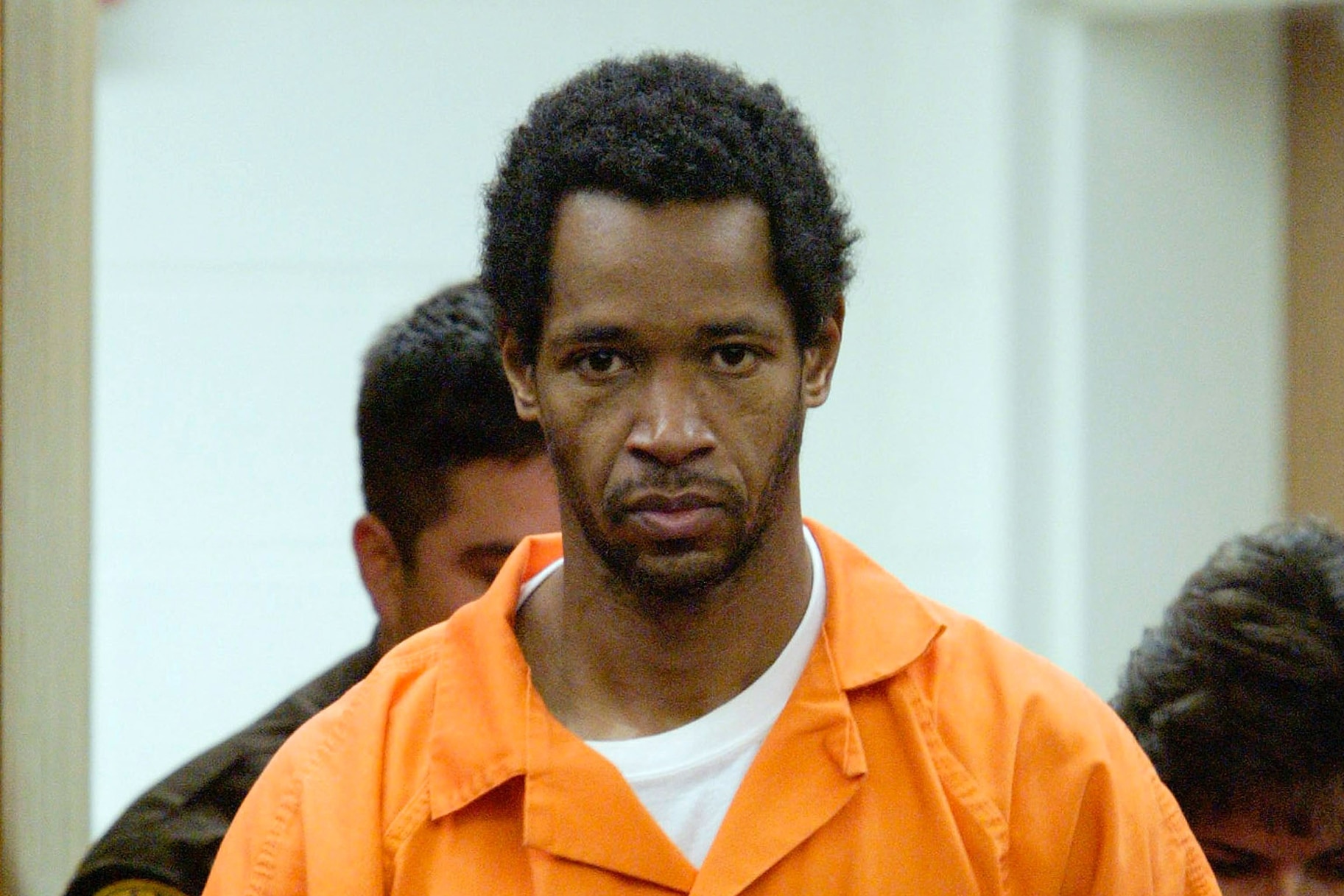
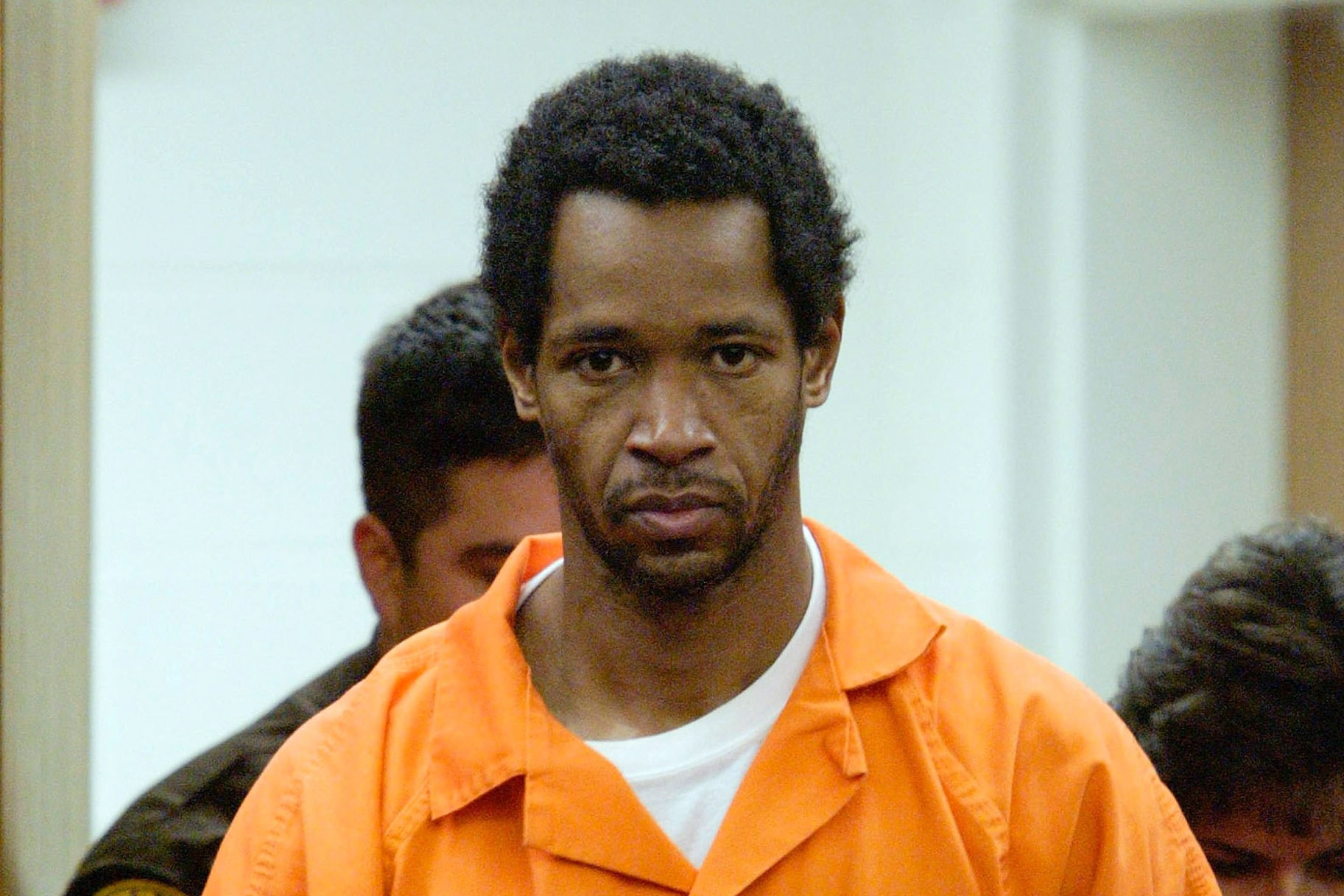
Police arrested John Allen Muhammad and Lee Boyd Malvo at a rest stop on Interstate 70 in Maryland, near Myersville.
They were arrested together, in the blue Chevrolet Caprice.
The three weeks of random shootings ended there.
Ten dead, three wounded, and then silence.
The exact circumstances of the arrest — whether there was a chase or a standoff — are not in the record.
That detail did not make it into the official accounts.
The relief did.
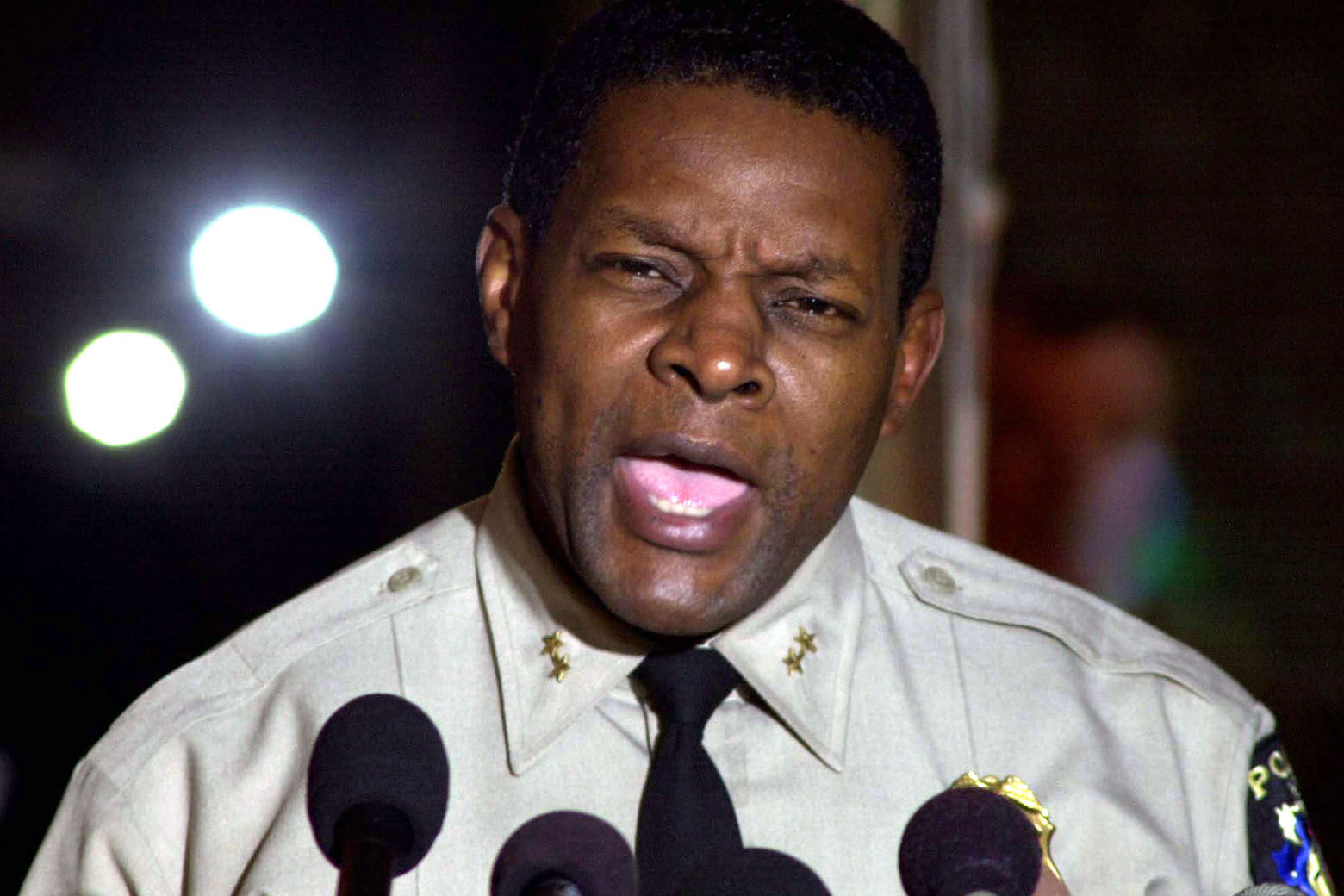
Montgomery County Police Chief Charles Moose had been the public face of the investigation, reading statements, asking for tips.
Now the faces were in custody.
The fog had a shape, and the shape was a car.
The tip from the truck driver was the line between the white van theory and the blue Caprice.
The white van was a false lead, wasted time and resources.
The blue Caprice was real.
It had been linked to a shooting in Alabama and a crime in Tacoma, Washington.
Now it was parked at a rest stop, and two men were inside it.
Officers would later find a Bushmaster .223-caliber rifle, a scope, and a tripod with a hole drilled in it.
The tripod allowed the shooter to fire from the trunk.
But that was still to come.
On October 24, the arrest was the end of the waiting.
The terror stopped.
The truck driver's tip had done what weeks of sketches and broadcasts could not.
It found the car.
It found the men.
It found the end.
THE EVIDENCE INSIDE THE CAPRICE
The officers opened the rear door of the blue Caprice.
Inside, they found a Bushmaster .223-caliber rifle. A scope was attached to it.
Beside the rifle lay a tripod. The tripod had a hole drilled into it.
That hole was the mechanism. It allowed the shooter to fire from the trunk of the car.
The trunk was the blind. The rifle was the tool. The tripod made the shot possible from a hidden position.
Ballistics evidence later linked that rifle to multiple shootings across the three-week span.
The rifle matched the bullets recovered from the victims. It matched the shootings in Maryland, Virginia, and the District.
But the rifle was not the only find.
Investigators also recovered a tarot card from one crime scene. The card carried a message: "Dear Policeman, I am God."
The record does not specify which crime scene yielded that card.
That message was arrogance on paper. It was a taunt left for the lead investigator, Chief Charles Moose.
The card became a widely reported piece of evidence. It did not identify the shooters.
It did not reveal their names. It did not explain the randomness.
It only stated a claim of power.
The setup was chilling in its precision. The message was chilling in its confidence.
The car held the means. The car held the men.
The evidence inside the Caprice connected the weapon to the deaths.
It connected the tripod to the method. It connected the card to the mind behind the shootings.
What it did not connect was the motive. That would require evidence the record does not provide.
THE TWO MEN
The two men in the blue Caprice were not who the public expected.
John Allen Muhammad was a U.S. Army veteran, 41 at the time.
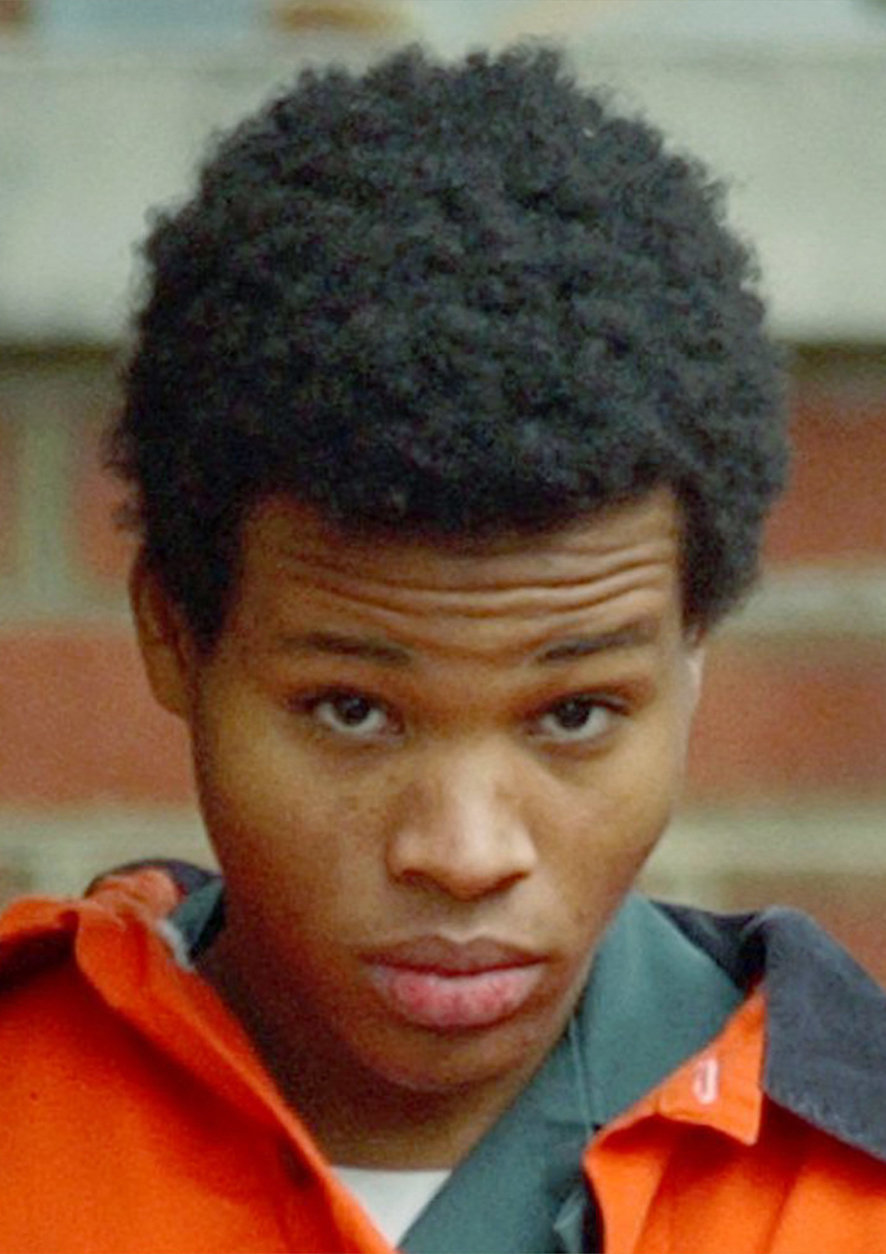
Lee Boyd Malvo was 17 at the time.
The record does not detail Muhammad’s military service.
The record does not detail Malvo’s background.
What the record does establish is the contrast.
One man with military training.
One boy, still a teenager.
They were arrested together, in the same car, at the same rest stop.
The lead investigator was Montgomery County Police Chief Charles Moose.
Moose became the public face of the investigation.
He read statements to the cameras.
He urged the shooter to call.
He stood between the public and the fear.
The fear had a face now, and it was not a single monster.

It was two men in an ordinary sedan.
It was a veteran and a minor.
It was a pair that did not match the scale of the crimes.
The scale was ten dead.
The scale was three wounded.
The scale was three weeks of random terror across two states and a district.
The ordinary appearance of the suspects made the record harder to read.
Not because the evidence was weak.
But because the evidence pointed to a plan, and the plan seemed to require more than two men.
That would require evidence the record does not provide.
Muhammad was 41.
Malvo was 17.
Moose was the voice.
The Caprice was the weapon’s platform.
The record holds the facts, and the facts hold the gap.
THE TRIALS — TWO VERDICTS
The trials came in Virginia, state by state, charge by charge.
Muhammad was tried first, in 2003, for the murder of a man at a gas station in Manassas.
He was convicted of capital murder and sentenced to death.
Malvo was tried separately, also in 2003, for the murder of a man at a gas station in Falls Church.
He was convicted of capital murder and sentenced to life in prison without parole.
The two men, tried apart, stood convicted apart.
Then came the federal case.
In 2004, a federal jury convicted both men of multiple counts of murder and conspiracy under federal law.
The federal sentences were secondary to the state convictions.
The source does not specify the exact charges in the federal trial.
That detail is not established.
The record holds the verdicts, not the full docket.
Muhammad was executed by lethal injection in Virginia on November 10, 2009.
He was dead, the sentence carried out.
Malvo’s case did not end at the sentencing.
His life sentence was challenged after the U.S. Supreme Court ruled mandatory life without parole for juveniles unconstitutional.
He was 17 at the time of the attacks.
In 2017, a Virginia judge resentenced him to life without parole.
The judge found his crimes warranted it.
The law shifted, and the sentence held.
Two trials, two verdicts, two paths.
One ended at the execution chamber.
The other remains in prison in Virginia, serving life without parole.
Justice was served, the record says.
It is also a record of appeals, rulings, and resentencing.
The weight of the verdicts is clear.
The complexity of the process is also clear.
AND THE STORY STILL ISN'T OVER
Muhammad is dead.
Executed by lethal injection in Virginia on November 10, 2009.
Malvo remains in prison in Virginia, serving life without parole.
He has filed multiple appeals since his 2003 conviction.
All of them unsuccessful.
In 2017, a Virginia judge resentenced him to life without parole, finding that his crimes warranted it.
The source does not specify any pending legal actions or hearing dates for Malvo.
That remains an open question.
The Chevrolet Caprice used in the attacks was destroyed after the trials.
The car that ended the hunt is gone.
The rifle that ended lives was evidence.
The case led to changes in how police handle multi-jurisdictional investigations.
It increased attention to the use of ballistic evidence.
Not because the system worked perfectly.
But because the record showed where it failed.
The white van was a false lead that wasted time and resources.
The blue Caprice was the truth, found by a truck driver's tip.
The verdicts are in.
The appeals are exhausted.
The sentences stand.
What remains is the advocacy.
The families of the victims have spoken publicly about their losses.
Some have advocated for victims' rights.
Their voices continue.
The case is closed.
The legacy is not.
Advertisement
You may also like
The DNA under her fingernails that cracked a 17-year cold case — but left one question open
🚨 THE NEIGHBOR'S CALL THAT OPENED A 17-YEAR WAIT… A neighbor in Bellaire, Texas, called police about a break-in at a home on June…
The 4-day gap between a 5-year-old's abduction and a suspect's arrest in her murder
🚨 THE 4-DAY GAP July 15, 2002, in Stanton, California: a man asks a five-year-old for help finding a lost dog. The friend runs…
The grandmother's 911 call that started it all — and the family story that never fit
🚨 THE 911 CALL THAT DIDN'T MATCH THE FAMILY'S STORY The 911 call came on July 15, 2008, from a grandmother named Cindy Anthony.…
The missing boy's ring found in a crawl space — 27 bodies later
🚨 THE RING IN THE CRAWL SPACE The ring was small, gold, and it belonged to a missing 15-year-old boy. Police found it on…
The 2005 Aruba nightclub exit that left three men with stories that never matched
🚨 THE EXIT THAT STARTED EVERYTHING The club was called Carlos'n Charlie's, a bar and nightclub in Oranjestad, Aruba. Natalee Holloway, 18, from Mountain…
The tarot card message that turned a random killing spree into a hunt for 'God'
🚨 THE TAROT CARD THAT READ 'CALL ME GOD' The card was a piece of evidence, found at a crime scene during the investigation…