The 4-day gap between a 5-year-old's abduction and a suspect's arrest in her murder
🚨 THE 4-DAY GAP
July 15, 2002, in Stanton, California: a man asks a five-year-old for help finding a lost dog.
The friend runs to get an adult.
When they return, Samantha Runnion is gone.
A witness reports seeing a man carrying a child into a car.
The description is detailed: a tan or gold car, a man with a specific look.
A composite sketch goes out.
The Amber Alert system activates.
The next day, July 16, her body is found in a rural area near the Cleveland National Forest in Riverside County.
About 50 miles from where she was taken.
She had been sexually assaulted and strangled.
Four days pass between the abduction and the arrest.
Four days of searching, of tips flooding in, of a family waiting.
On July 19, police trace the vehicle to Alejandro Avila, a 27-year-old who lived in the same apartment complex.
He is arrested.
What happened in those four days?
Where did he go?
What did he do?
The exact movements of the suspect during the four-day gap are not in the record.
That remains an open question, one the investigation never answered in its public timeline.
The arrest came fast, but the gap was longer than the search.
It was four days of not knowing, and the knowing did not undo it.
THE ABDUCTION — 5:00 P.M.
It was a Tuesday afternoon in July.
Five-year-old Samantha Runnion was playing outside with a friend in the courtyard of her family’s apartment complex in Stanton, California.
The exact time of the abduction is not specified in the source.
A man approached the two girls and asked for help finding a lost dog.
The friend ran to get an adult.
When they returned, Samantha was gone.
That is how quickly it happened.
A witness reported seeing a man carrying a child into a car.
The car was tan or gold, widely reported as a 1990s model.
The courtyard was empty by the time the adult arrived.
No one saw the man take her, not directly.
Not the friend, who had run for help.
Not the adult, who came back too late.
Only a witness who saw a man carrying a child into a car.
The description was thin.
The gap between the abduction and the arrest would be four days.
Four days of not knowing where she was.
Four days of not knowing if she was alive.
The knowing came first.
THE WITNESS'S DESCRIPTION
The friend gave police a detailed description of the man and his car.
A tan or gold vehicle, she said.
The specific details of that description are not in the record.
What remains is the shape of it: a man, a car, a color.
Investigators combined the witness's words with a composite sketch.
The sketch went out to the public.
The flood came back.
Tips poured in from across Orange County, each one a thread to pull.
None of them was the thread.
Not yet.
Then a motorist came forward.
The motorist reported seeing a car matching the description on the day of the abduction.
Same day.
Same kind of vehicle.
The community was on edge, and the phones would not stop ringing.
Every tip was logged.
Every tip was checked.
The description was hope in a form the investigators could use.
It was also a net that had not yet closed.
The car was out there somewhere.
The man was out there somewhere.
A description is not an address.
A sketch is not a name.
That would require evidence.
THE BODY IS FOUND — JULY 16
They found her on a hillside of scrub and dry grass.
The location was rural, near the Cleveland National Forest in Riverside County.
It was about 50 miles from the courtyard where she had been playing.
A search that began as a frantic hunt had become an investigation.
She had been sexually assaulted.
She had been strangled.
The exact time of death is not in the record.
The record says only that her body was found on July 16, 2002.
The day after she was taken.
The worst fear was confirmed in that dry grass.
The search for a missing girl was over.
The search for her killer had just begun.
A description is still not an address.
A sketch is still not a name.
The witness's account and the composite drawing remained the only threads.
Now, they pointed toward evidence of a different kind.
Forensic evidence.
The kind that would need to be traced, tested, and placed.
The kind that would take four more days to find.
THE AMBER ALERT
The Amber Alert system was activated after the abduction.
The activation was meant to do one thing: bring Samantha home.
It did not.
The specific details of the Amber Alert activation are not in the record.
What is known is that the alert went out, and the case drew national attention because of the speed of the investigation and the use of the system.
The speed was real. The system was used. The alert became part of the story.
Not because the alert failed in any way the record can prove. But because a tool built to save a child was activated for a child who was already gone.
Samantha's body was found on July 16, one day after she was taken.
The alert was still sounding. The search was still on. The outcome was already set.
That is the weight the system carried: a broadcast, a hope, a body found in the Cleveland National Forest.
The national attention came anyway.
It came because the investigation moved quickly. It came because the alert had been used. It came because a five-year-old was gone.
The record does not establish whether the alert generated any of the tips that led to the suspect.
That would require evidence.
What the record shows is the sequence: abduction, alert, body, trace, arrest.
Four days from the abduction to the arrest.
One day from the abduction to the body.
The alert sat in the middle, a signal sent into the air, unanswered.
THE TRACE — JULY 19
The trace began with a motorist's report of a car matching the description on the day of the abduction.

Police traced that vehicle to Alejandro Avila.
Avila lived in the same apartment complex as Samantha.
Detectives searched his car and his apartment.
They found forensic evidence linking him to the crime, including DNA and fibers.
The specific forensic evidence found is not detailed in the source.
That is what the record does not establish.
Avila was arrested on July 19, 2002.
Four days after the abduction.
One day after the body was found.
The same complex where Samantha played in the courtyard.
The same complex where a man asked for help finding a lost dog.
A registered sex offender from a 1995 conviction.
Living in the same complex, not on the radar of local authorities at the time.
That mistake is part of the record.
The arrest came fast.
The search was quick.
The evidence was presented.
What the evidence was, precisely, the source does not say.
It is a gap.
Not the only one in the case.
Four days from abduction to arrest.
A trace that ended where it began.
THE REGISTERED OFFENDER
He had a record.
In 1995, Alejandro Avila had been convicted of child molestation in Los Angeles County.
He had served time in prison for it.
By 2002, he was a registered sex offender.
He was registered.
He was also living in the same apartment complex as Samantha Runnion.
The complex where she played.
The complex where a man asked for help finding a lost dog.
Local authorities did not have him on their radar at the time of the abduction.
Not because he was unknown.
Because the system failed to connect the dots.
The details of that prior conviction and prison term are not in the record.
What is in the record is the fact of the conviction.
What is in the record is the fact of the registration.
What is in the record is the fact that he lived steps from the child he is accused of killing.
Four days it took to find him.
Four days after a witness gave a detailed description of the man and his tan or gold car.
Four days after a motorist reported seeing that car.
The trace led to the same complex.
It led to the registered offender who was already there.
It led to a man who should have been known.
He was not.
THE TRIAL — 2005
The trial began in 2005 in Orange County.
Alejandro Avila was charged with first-degree murder with special circumstances, kidnapping, and sexual assault of a child.
Prosecutors presented DNA evidence, fiber evidence, and testimony from the young witness.
The young witness was the friend who had seen the man take Samantha from the courtyard.
She described the man, his car, the moment he asked for help finding a lost dog.
The defense argued that the evidence was circumstantial and that Avila had been misidentified.
The specific arguments made by the defense are not detailed in the source.
That is not established.
What is established is the weight of the prosecution's case: the DNA, the fibers, the witness.
In April 2005, the jury found Avila guilty on all counts.
Guilty of first-degree murder.
Guilty of kidnapping.
Guilty of sexual assault of a child.
The verdict landed four days short of three years after Samantha was taken.
It landed after a trial that turned on what could be shown, not what could be assumed.
The defense had raised doubt — but not enough.
The witness had seen him.
The evidence had placed him there.
The jury believed the evidence.
The reader is left with a question: was the doubt real, or was it simply what the defense had to say?
That would require evidence.
THE SENTENCE
In May 2005, the same jury that had convicted him returned a recommendation.
They recommended the death penalty.
The judge formally sentenced Alejandro Avila to death in June 2005.
That is the sentence.
It is final, and it is also not final.
Avila appealed the conviction and sentence, as is automatic in California death penalty cases.
The appeal was pending at the time of reporting.
The record does not establish where that appeal stands now.
The jury believed the evidence.
The judge read the sentence.
The case moved from the courtroom to the appellate docket.
That is where it stays.
Not because the sentence was weak.
But because California law requires the review.
The sentence stands.
The appeal drags.
The reader is left with a question: did the conviction end the case?
Did the sentence close the story?
Did the finality hold?
That would require an updated record.
AND THE STORY STILL ISN'T OVER
Alejandro Avila remains on death row at San Quentin State Prison in California.
His appeals have continued for years, and as of the most recent reports, he has not been executed.
The current status of those appeals is not specified in the source.
California has not carried out an execution since 2006.
The death penalty remains under legal challenge in the state.
Erin Runnion, Samantha’s mother, became an advocate for child safety and victims’ rights.
She founded The Joyful Child Foundation in 2003, named in her daughter’s memory.
The foundation focuses on child abuse prevention and education.
She has spoken publicly about the case.
She has testified in support of legislation related to sex offender monitoring and child safety.
The apartment complex where the abduction occurred has since been demolished.
The courtyard is gone.
The building is gone.
What remains is the record: the description, the trace, the verdict, the sentence.
What remains is the appeal.
What remains is the mother’s work.
Did the sentence close the story?
Did the finality hold?
That would require an updated record.
The record, as it stands, ends on a waiting cell.
Advertisement
You may also like

The DNA under her fingernails that cracked a 17-year cold case — but left one question open
🚨 THE NEIGHBOR'S CALL THAT OPENED A 17-YEAR WAIT… A neighbor in Bellaire, Texas, called police about a break-in at a home on June…
The grandmother's 911 call that started it all — and the family story that never fit
🚨 THE 911 CALL THAT DIDN'T MATCH THE FAMILY'S STORY The 911 call came on July 15, 2008, from a grandmother named Cindy Anthony.…
The missing boy's ring found in a crawl space — 27 bodies later
🚨 THE RING IN THE CRAWL SPACE The ring was small, gold, and it belonged to a missing 15-year-old boy. Police found it on…
The 2005 Aruba nightclub exit that left three men with stories that never matched
🚨 THE EXIT THAT STARTED EVERYTHING The club was called Carlos'n Charlie's, a bar and nightclub in Oranjestad, Aruba. Natalee Holloway, 18, from Mountain…
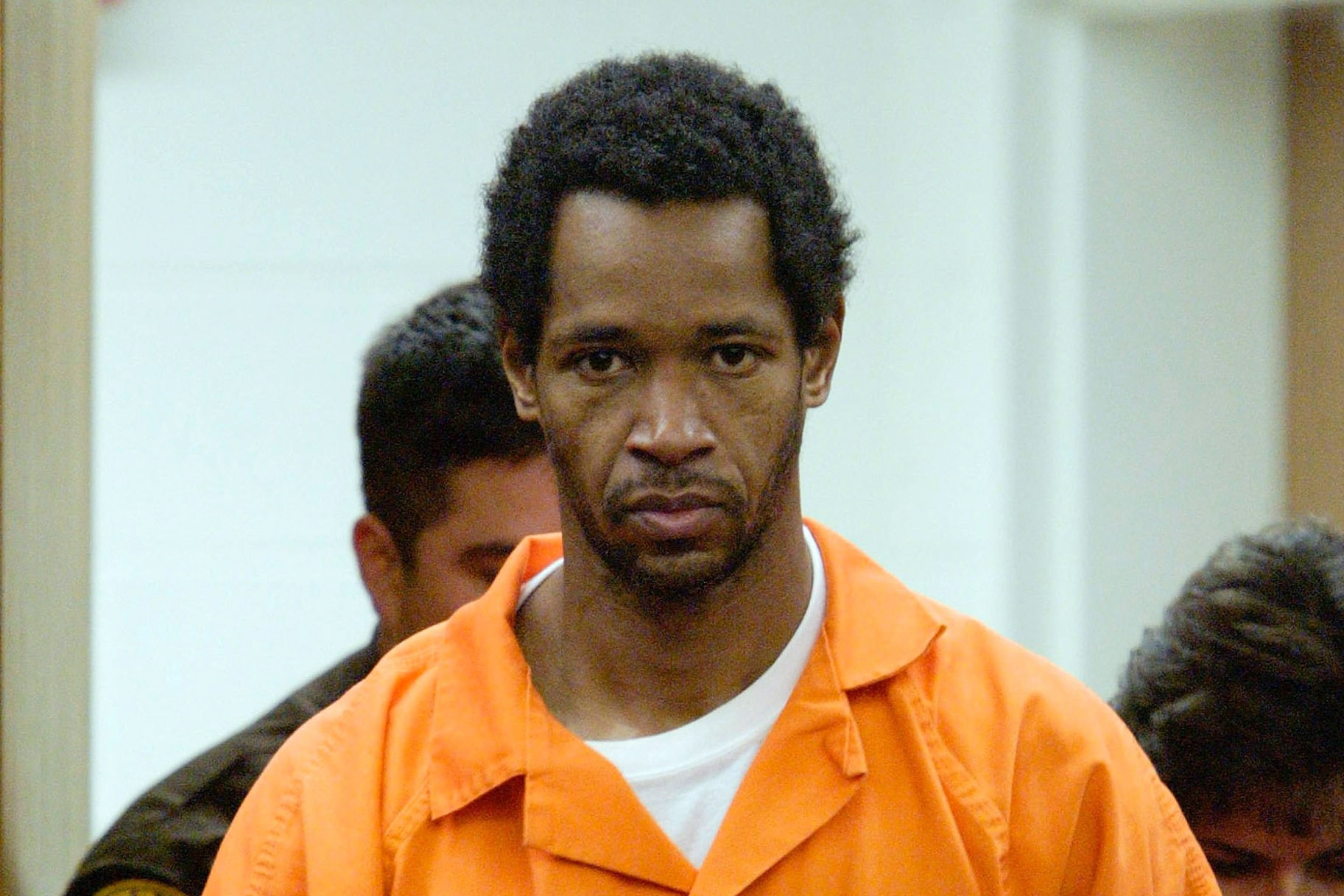
The tarot card message that turned a random killing spree into a hunt for 'God'
🚨 THE TAROT CARD THAT READ 'CALL ME GOD' The card was a piece of evidence, found at a crime scene during the investigation…
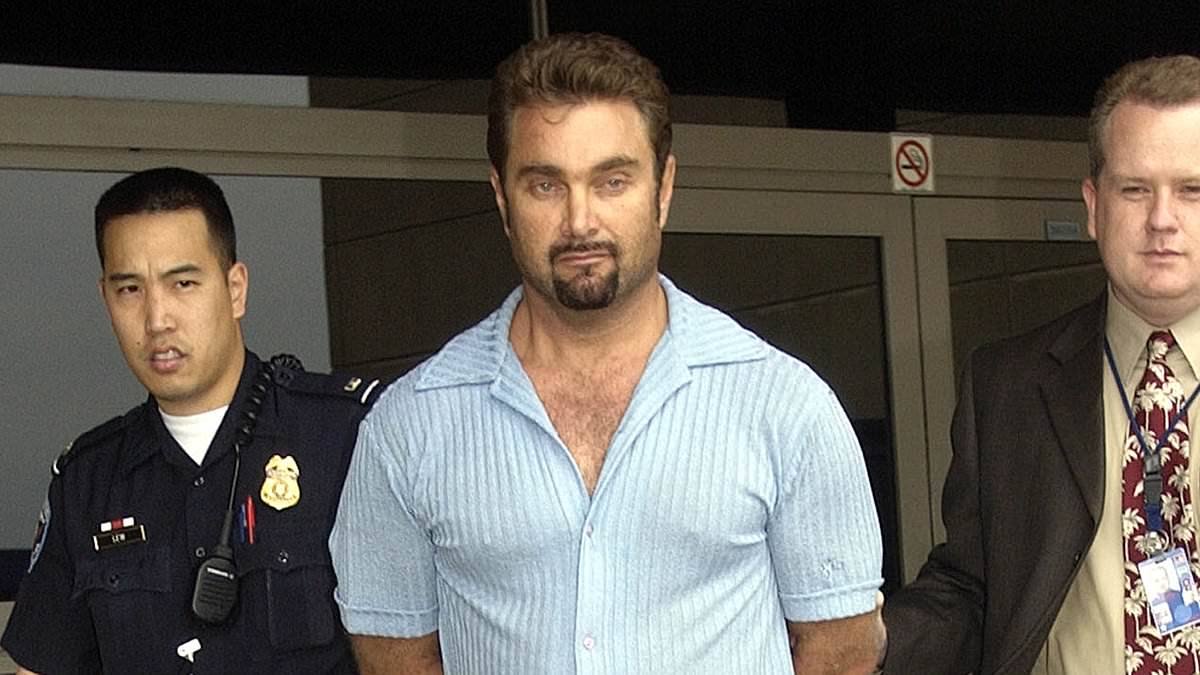
The videotapes found in Luster's home that prosecutors said showed a pattern
🚨 THE TAPES THAT SHOWED WHAT PROSECUTORS CALLED A PATTERN… In early 2002, Andrew Luster, a wealthy heir to the Max Factor cosmetics fortune,…