The 2005 Aruba nightclub exit that left three men with stories that never matched
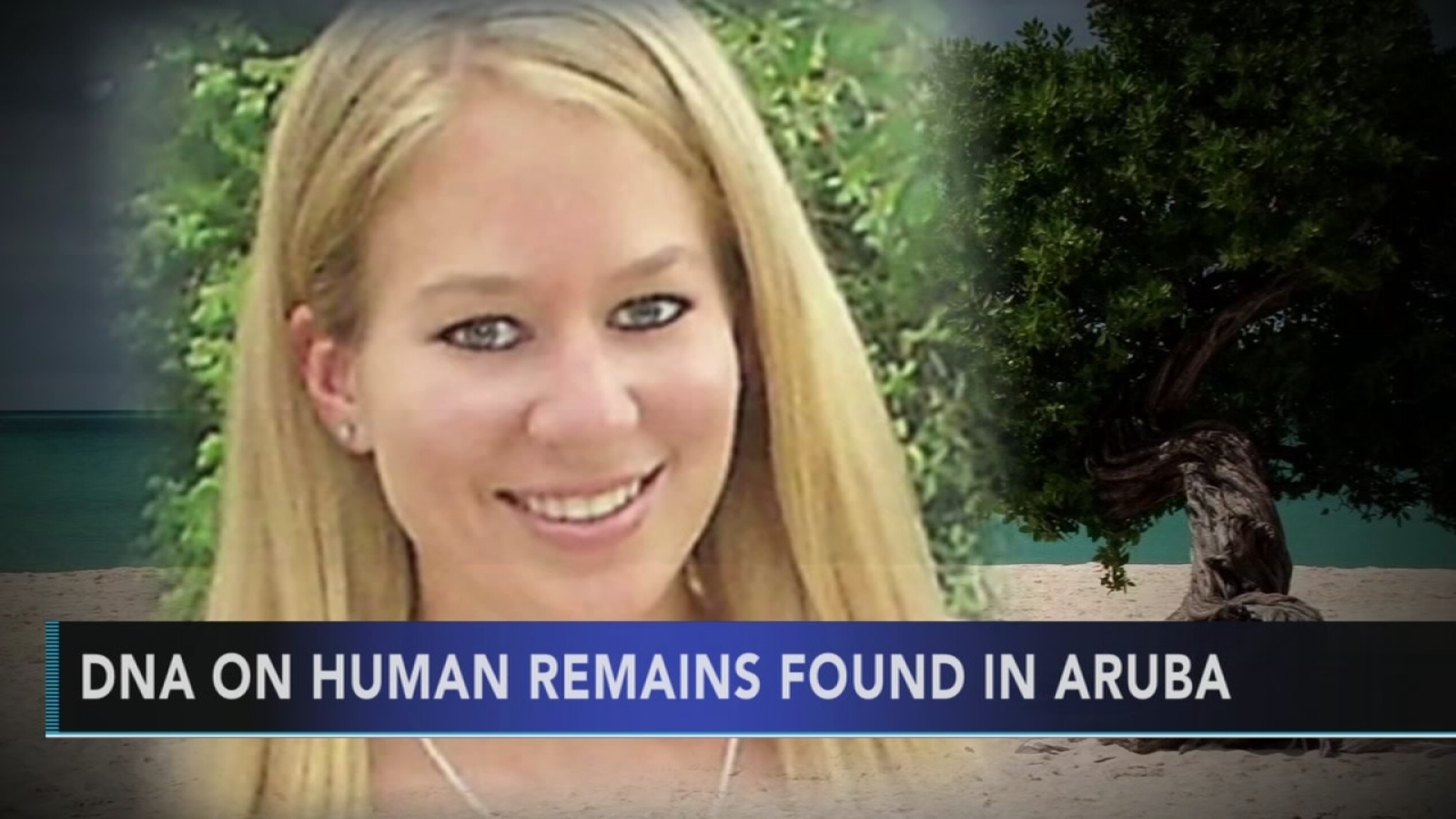
🚨 THE EXIT THAT STARTED EVERYTHING
The club was called Carlos'n Charlie's, a bar and nightclub in Oranjestad, Aruba.
Natalee Holloway, 18, from Mountain Brook, Alabama, was last seen leaving it on May 30, 2005.
She left with three men: Joran van der Sloot, a Dutch student, and two brothers from Suriname, Deepak and Satish Kalpoe.
What happened inside the club is not in the record.
Exactly how they left is not in the record.
Her friends reported her missing the next morning when she failed to return to the hotel.
The night out was ordinary. The exit was ordinary.
The stories that followed were not.
The three men's accounts of that night never matched.
The discrepancies became the center of the case.
One said this. Another said that.
They said they drove Holloway to a beach, then dropped her off near her hotel.
That was the first version. It would not be the last.
The moment of leaving is the only fixed point. Everything after it fractures.
MAY 30, 2005 — THE NIGHT OUT
May 30, 2005, was a Monday.
Natalee Holloway, 18, was in Aruba on a senior-class trip with friends from Mountain Brook, Alabama.
The group spent the evening at Carlos'n Charlie's, a bar and nightclub in Oranjestad.
She was last seen leaving the club with Joran van der Sloot, a Dutch student, and two brothers from Suriname, Deepak and Satish Kalpoe.
That is the last verified sighting in the record.
What happened after they left the club is not established.
No other confirmed sighting of Natalee appears in the investigation files.
Her friends reported her missing the next morning when she failed to return to the hotel.
A graduation trip, a night out, a hotel check-in that never came.
The gap between the club exit and the missing-person report is the whole case.
It is a span of hours.
It is also a void that no statement, no confession, and no search ever filled.
THE FIRST STATEMENTS
Aruban police detained van der Sloot and the Kalpoe brothers within days of the disappearance.
The three men were held for weeks.
They were questioned, released, re-detained, questioned again.
Each man gave a version of the night.
The versions did not match.
They said they drove Holloway to a beach.
They said they dropped her off near her hotel.
That was the story at first.
Then van der Sloot changed his story.
He said he left her alone on the beach.
He said he walked her back toward the hotel.
He said he never saw her again.
The Kalpoe brothers offered their own accounts.
Those accounts shifted too.
Every interview produced a new detail.
Every new detail produced a new contradiction.
The police had three men and no body.
They had a timeline that started at a nightclub exit.
They had an ending that no one could agree on.
Which version, if any, was true?
That is not established.
The record holds the statements.
The record holds the contradictions.
The record does not hold the answer.
Investigators searched the beach.

They searched the water.
They searched the island.
They found nothing that made the stories converge.
The men were released in September 2005.
Lack of evidence, the authorities said.
No one was charged.
The statements remained.
They remain.
SEPTEMBER 2005 — RELEASED
They were released in September 2005.
The three men walked out because of a lack of evidence.
That is what the record says: lack of evidence.
Why the evidence was insufficient is not detailed in the record.
That is not established.
No body was ever found.
No one was ever charged with a crime in connection with Natalee Holloway's disappearance in Aruba.
The case never went to trial.
The men were free.
The statements remained what they were: conflicting, shifting, unresolved.
For the men, it was release.
For Natalee's family, it was a door closing.
A door that would not reopen in Aruba.
The investigation did not end that day.
But the legal path did.
There would be no verdict, no finding, no answer from a courtroom.
The answer, if it existed, had to come from somewhere else.
It did not come from the beach.
It did not come from the ocean.
It came, years later, from a car with a hidden recorder.
But that was still ahead.
In September 2005, there was only the release.
And the absence.
The absence of a body.
The absence of charges.
The absence of a trial.
The record holds that absence.
It holds it plainly.
2008 — THE SECRET RECORDING
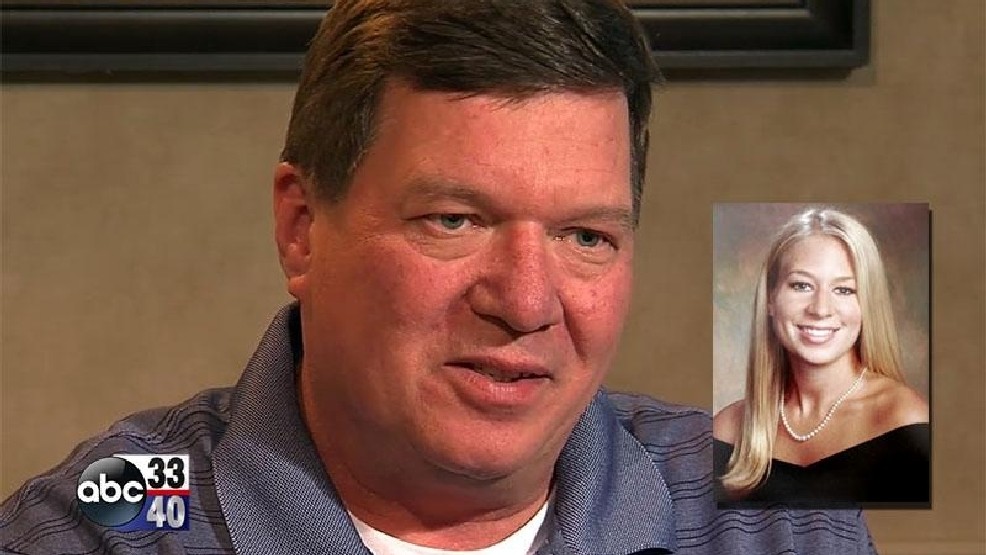
In 2008, Joran van der Sloot sat in a car with a Dutch journalist who was secretly recording him.
The recording captured van der Sloot allegedly describing how he and the Kalpoe brothers disposed of Natalee Holloway's body in the ocean.
He said the body went into the water.
He later said the recording was a lie.
The recording became a pivotal piece of the story.
It is also a contested piece.
Whether the recording was truthful is not established.
Van der Sloot called it a lie, and the record does not settle the difference.
The journalist's hidden microphone caught words, not proof.
No body was recovered from the ocean.
No physical evidence linked van der Sloot to Holloway's death.
The recording offered a story of disposal, but it did not offer a body.
It offered a voice, but it did not offer a verdict.
Was this a confession?
Was this a fabrication?
Was this a man performing for a hidden audience?
That would require evidence the record does not provide.
The recording circulated.
The story shifted again.
The absence of a trial still held.
2010 — PERU AND A NEW CONFESSION
2010.
Joran van der Sloot was arrested in Peru for the murder of a young woman, Stephany Flores Ramírez, in a Lima hotel room.
He was a suspect in one disappearance and then a convicted killer in another.
During that investigation, he told Peruvian authorities that he had sold Holloway into sexual slavery.
A claim of sale. A claim of slavery. A claim delivered to police who were holding him for a different death.
It was widely dismissed as false.
Not because he was a reliable man. Because the story itself did not hold.
It was a cruelty with a purpose — a false tale told to authorities who had him in a cell.
The record shows no evidence of a sale. The record shows no evidence of slavery. The record shows no body and no physical evidence linking van der Sloot to Holloway's death.
That was never produced.
The arrest in Peru had nothing to do with Aruba. The confession had everything to do with the moment he was in.
He was in a Lima hotel room with a dead woman. He told investigators about a different missing woman. He traded one story for another.
The sexual slavery claim was not established.
It was dismissed.
The recording from 2008 still circulated. His word had already shifted once, twice, more times than that. Now it shifted again, into something darker and unproven.
He said he sold her. He said he did not. He said she was on the beach. He said she was in the ocean.
None of it was tested in a courtroom. None of it matched the evidence, because there was no evidence to match.
The Peruvian case moved forward. The Aruban case stayed open in name only.
And the story of what happened to Natalee Holloway remained exactly where it had been — unresolved.
THE TWO STORIES
The prosecution in the extortion case argued that van der Sloot exploited the disappearance for money.
The defence argued that his statements about the body were lies, but not a crime against Holloway herself.
Both sides used the same man, the same disappearance, the same words.
The 2008 recording was seen by some as a confession.
It was seen by others as a fabrication.
The Dutch journalist heard one thing in the car.
Van der Sloot later said it was a lie.
In the Aruban investigation, the men's conflicting statements were central.
The brothers said they drove Holloway to a beach, then dropped her off near her hotel.
Van der Sloot later said he left her alone on the beach.
No charges were filed.
No one was ever charged with a crime in connection with her disappearance in Aruba.
Was the recording a confession?
Was it a fabrication?
Was van der Sloot a killer who talked too much, or a liar who could not stop?
That would require evidence.
The record offers none.
It offers a tangle of shifting stories.
It offers a secret recording with a disputed meaning.
It offers no body, no physical evidence, no trial.
The prosecution's van der Sloot is a man who sold a mother the location of her daughter's body for $250,000.
The defence's van der Sloot is a man whose lies were self-serving, but not murder.
The Aruban case stayed open in name only.
Which interpretation is true?
Not established.
THE VIRAL THEORY VS. THE RECORD
The theory that van der Sloot's 2023 statement is the truth has a shape.
It has a beginning, a middle, an end.
It has a head injury and an ocean.
That is a story.
The record is different.
The record shows a beach drop-off.
The record shows a woman left alone.
The record shows an ocean disposal.
Van der Sloot told each of these versions himself.
He told them at different times.
He told them to different listeners.
The 2008 recording is contested.
Van der Sloot called it a lie.
The 2023 statement was made during a U.S. court appearance.
It was not made under oath in a Holloway trial.
It was not made in a trial at all.
No one was ever charged in her disappearance in Aruba.
No physical evidence links van der Sloot to her death.
No body was ever found.
Which version is true?
That would require evidence.
The online theory says the 2023 version is the truth.
The record does not establish that.
The record establishes that a man changed his story.
That is what the record establishes.
THE 2023 STATEMENT — A NEW LOOK
Eighteen years after she was last seen at Carlos'n Charlie's, van der Sloot stood in a U.S. courtroom and said she died on an Aruba beach.
He said the cause was a head injury.
He said he and the Kalpoe brothers put her body in the ocean.
The statement came during his 2023 court appearance, tied to the extortion case.
It came after years of shifting stories: the beach drop-off, the version where he left her alone, the 2008 recording he later called a lie, the Peru claim of sexual slavery.
He was not charged in her death.
Aruban authorities said the statute of limitations had expired.
So the record holds a man who said she died on the sand, and then said the earlier version was a lie, and then said this version from a plea hearing.
The record does not establish that the 2023 statement is accurate.
It is a statement.
It is also the closest thing to a detailed account from the man who was there.
That does not make it true.
That would require evidence.
No body was found.
No physical evidence linked him to her death.
What remains is a timeline of a man changing his story, and one more version delivered eighteen years late.
She was on the ground below the story.
The story still has no body.
AND THE STORY STILL ISN'T OVER
She was not charged with her disappearance.
He was charged with extortion.
In 2023, van der Sloot was extradited to the United States. He pleaded guilty to extortion and wire fraud. He was sentenced to 20 years in federal prison, to run concurrently with his Peruvian sentence. He was returned to Peru to continue serving his sentence.
The body was never found.
That is the record. It is a record of a charge, not a charge in her death. Aruban authorities said the statute of limitations had expired. He was not charged in her death.
Beth Holloway has continued to advocate for missing persons. Dave Holloway has remained involved in efforts to find his daughter. The Kalpoe brothers were never charged in connection with the disappearance.
What remains is a timeline of a man changing his story, and one more version delivered eighteen years late.
She was on the ground below the story.
The story still has no body.
Not because the record is silent. Because the record is a tangle of shifting stories, a secret recording, and no body. The recording was a lie, he later said. The body, he said in 2023, was disposed of in the ocean. The body, he said in 2010, was sold.
What was examined? The beach. The ocean. The hotel. The car. What was found? Conflicting statements. A secret recording. A confession in Peru, widely dismissed as false. What remains? A body not found. A statute of limitations expired. A sentence being served.
Was it a head injury? Was it the ocean? Was it a sale? That would require evidence.
She was on the ground below the story.
The story still has no body.
Advertisement
You may also like
The DNA under her fingernails that cracked a 17-year cold case — but left one question open
🚨 THE NEIGHBOR'S CALL THAT OPENED A 17-YEAR WAIT… A neighbor in Bellaire, Texas, called police about a break-in at a home on June…

The 4-day gap between a 5-year-old's abduction and a suspect's arrest in her murder
🚨 THE 4-DAY GAP July 15, 2002, in Stanton, California: a man asks a five-year-old for help finding a lost dog. The friend runs…
The grandmother's 911 call that started it all — and the family story that never fit
🚨 THE 911 CALL THAT DIDN'T MATCH THE FAMILY'S STORY The 911 call came on July 15, 2008, from a grandmother named Cindy Anthony.…
The missing boy's ring found in a crawl space — 27 bodies later
🚨 THE RING IN THE CRAWL SPACE The ring was small, gold, and it belonged to a missing 15-year-old boy. Police found it on…
The tarot card message that turned a random killing spree into a hunt for 'God'
🚨 THE TAROT CARD THAT READ 'CALL ME GOD' The card was a piece of evidence, found at a crime scene during the investigation…
The videotapes found in Luster's home that prosecutors said showed a pattern
🚨 THE TAPES THAT SHOWED WHAT PROSECUTORS CALLED A PATTERN… In early 2002, Andrew Luster, a wealthy heir to the Max Factor cosmetics fortune,…