The missing boy's ring found in a crawl space — 27 bodies later
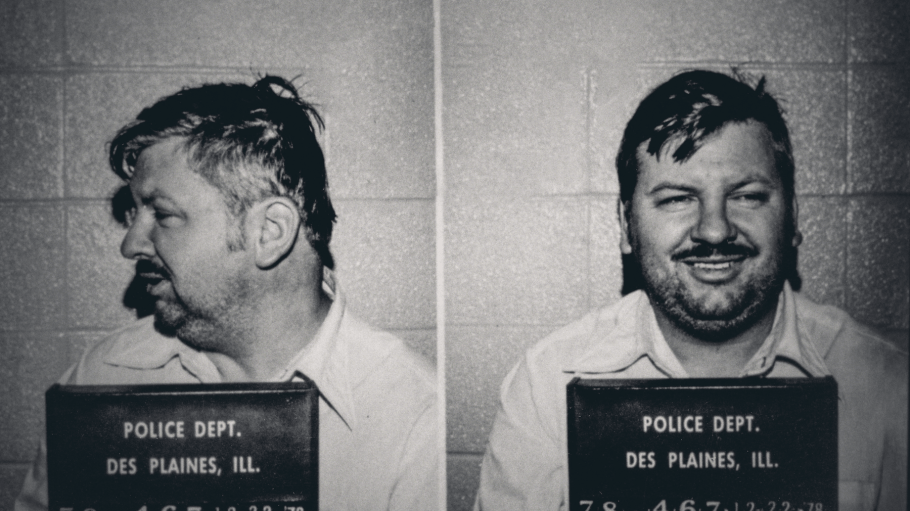
🚨 THE RING IN THE CRAWL SPACE
The ring was small, gold, and it belonged to a missing 15-year-old boy.
Police found it on December 13, 1978, during a search of John Wayne Gacy's home in Des Plaines, Illinois.
The boy had last been seen the previous evening, leaving for his part-time job at a pharmacy.
He never came home.
His mother reported him missing on December 11.
Police initially treated the case as a runaway.
Not because the evidence pointed that way. But because a teenager who misses curfew is easier to file than a teenager who vanishes.
The search of Gacy's home changed the file.
Officers found the ring among suspicious items.
They also found a receipt from the pharmacy where the boy worked.
The ring was a hinge.
A small object connecting a missing-person report to a building contractor who performed as a clown at children's parties.
The exact location of the ring within the house is not specified in the source.
It could have been on a table. It could have been in a drawer. It could have been anywhere.
That would require evidence.
What the record shows is this: on December 13, 1978, police searched the home and found the ring.
What the record also shows: the boy had gone to that house to discuss a job.
What the record does not show: how the ring got there.
The mother had pushed police to look. She pushed them toward Gacy.
The search warrant came after police learned the boy had gone to the contractor's home.
Inside, officers noticed a strong odor.
They found the ring.
They found the receipt.
They found something else, too, though they did not know it yet.
The crawl space beneath the house held more than suspicious items.
It held bodies.
Twenty-seven of them, recovered between December 13 and December 29.
But that came later.
On December 13, there was only the ring.
And a missing boy.
And a contractor who said he knew nothing.
DECEMBER 11 — THE DISAPPEARANCE
It was December 11, 1978, when the mother reported her 15-year-old son missing.
The boy had been last seen leaving for his part-time job at a pharmacy the previous evening.
He did not come home.
The exact time he left for work is not in the record.
The mother, widely identified as Elizabeth Piest, told police her son was not a runaway.
She pushed them to investigate.
Police initially treated it as a runaway case.
A 15-year-old boy missing one night, in Des Plaines, Illinois.
That is how it looked on paper.
Not because of anything they found. Because of what they did not look for.
The mother insisted.
She gave them the name of a local contracting company where her son had gone to discuss a job.
She gave them the name of the owner.
John Wayne Gacy.
But on December 11, that name meant nothing yet.
There was only the report.
A boy, a pharmacy, a mother who would not stop calling.
The record does not say how many times she called.
It says what she did: she pushed.
And the case stayed open.
THE MOTHER'S PERSISTENCE
She pushed until the missing persons file was not a file anymore.
Her persistence led police to the owner of a local contracting company.
The boy had done side work for that owner.
The record does not detail the nature of the side work.
That owner was John Wayne Gacy.
Police learned the boy had gone to Gacy’s home to discuss a job.
Not a suspicious place to go.
A job interview.
A contracting company.
A businessman in Des Plaines.
Gacy was a building contractor, 36 years old at the time of his arrest.
He was also a part-time clown performer known as “Pogo the Clown.”

A clown.
A contractor.
The man police were now questioning.
The lead was hers.
She had named the connection, pushed it, and the officers followed it.
It is a relief that a lead emerges.
It is also unease about who is being questioned.
DECEMBER 13 — THE SEARCH WARRANT
The warrant was signed on December 13, 1978.
Officers entered Gacy’s home with it, after learning the boy had gone there to discuss a job.
Inside, they noticed a strong odor.
The specific odor is not described in the record.
What is described is what they found: a ring belonging to the missing boy.
A receipt from the pharmacy where he worked.
The ring was on a table. The receipt was among papers. The smell hung in the air.
Gacy was taken in for questioning.
He was not arrested that day.
He was asked about the boy, and he answered.
The officers had a warrant, a ring, a receipt, and a question.
They did not yet have a body.
It is a relief that a lead emerges.
It is also dread, because the lead has a smell attached to it.
The boy had gone to that house for a job.
The ring says he was there.
The receipt says he was there.
The odor says something else was there too.
That would require evidence.
The evidence was on the table, in the papers, and in the air.
THE CONFESSION AND RELEASE
He said he had not done it.
Then he said he had.
According to the investigation and evidence, Gacy initially denied involvement but later confessed, saying he had killed people over several years.
The confession came during questioning, after the ring and the receipt were already in the hands of police.
It was a statement that matched the odor in the crawl space.
It was a statement that matched the bodies that would soon be pulled from the ground.
Then he was released.
A mistake in the case: Gacy was released from custody after his first confession attempt was deemed unreliable.
He walked out.
The man who said he had killed people over several years walked out of police custody.
Not because the confession was false.
Because it was deemed unreliable.
The reason the confession was deemed unreliable is not specified in the source.
That would require evidence.
The record does not establish why the statement was set aside.
He was later re-arrested.
The record does not establish what changed between the release and the re-arrest.
It is a gap in the timeline.
It is a gap that leaves a question hanging over the whole case.
How does a confessed killer walk free?
That would require details the source does not provide.
He was later re-arrested, and the excavation began.
The crawl space gave up its dead, 27 bodies between December 13 and December 29.
But for a moment, the man who confessed was not in custody.
For a moment, the confession meant nothing.
DECEMBER 13–29 — THE EXCAVATION
The crawl space gave up its dead, 27 bodies between December 13 and December 29.
The confession led to the excavation, according to the investigation and evidence.
Most of the bodies were found beneath the house.
Some were recovered along the house's foundation.
Some were pulled from a nearby river.
The exact number of bodies found in each location is not broken down in the source.
The work took sixteen days.
Workers dug through dirt, lime, and debris.
They found jewelry, clothing, and personal items belonging to victims.
They found tools and restraints.
Each item was logged, tagged, and tied to a name.

The first identified victim was the missing boy, Robert Piest.
He was one of 33 victims total, according to what happened.
The case became one of the largest serial murder investigations in U.S. history.
The scale of it dwarfed the original missing-person report.
A boy who left for a pharmacy job.
A mother who pushed police.
A ring in a crawl space.
Then 27 bodies.
The number changed what the investigation was.
It was no longer one disappearance.
It was a recovery operation.
It was an accounting.
The crawl space was measured in bodies, not square feet.
The house was demolished in 1979.
But in those sixteen days, the ground itself was the evidence.
The confession had led here.
The excavation confirmed it.
The dirt did not lie.
THE VICTIMS AND THE IDENTIFICATIONS
Thirty-three young men and boys, aged 14 to 21.
The first identified victim was the missing boy, whose name was widely reported as Robert Piest.
His name came back first.
Other victims were identified through dental records and personal effects, though some remained unidentified for years.
Forensic odontology was crucial in identifying victims.
Teeth do not decay the way flesh does.
Teeth hold their shape.
Teeth give a name back.
The record does not list the names of the other victims here.
That is not established in the source.
What is established is the count: 33.
What is established is the work: records, effects, the careful comparison of a jawbone to a chart.
Some families waited.
Some families waited years.
Some families waited decades, until DNA technology caught up with the dirt.
The first boy had a name; the others had to be earned back, one file at a time.
It is painstaking work.
It is grief, measured in molars and fillings.
The crawl space gave up bodies; the records gave up identities.
Not all at once.
Some remained nameless for years.
That is the slow part of the story, the part that happens after the excavation ends.
THE TWO STORIES AT TRIAL
The jury heard two versions of John Wayne Gacy.
The prosecution's version was a man who planned, who lured, who killed.
They presented the bodies from the crawl space, the confession, and the pattern of bringing young men to his home.
The defense's version was a man who was not responsible.
Gacy pleaded not guilty by reason of insanity, claiming he had dissociative identity disorder.
His lawyers argued he was legally insane at the time of the killings.
Two stories, one man, 33 counts of murder.
The trial began in February 1980 in Cook County, Illinois.
The specific evidence each side presented is not detailed in the source.
That detail is not established by the record.
What is established is the shape of the argument: sane planner or insane patient.
The jury had to decide which man sat in the courtroom.
It is a question of law, not of feeling.
The law asks whether he knew what he was doing was wrong.
The law asks whether he could control himself.
The law asks what the evidence shows.
That would require weighing the testimony.
The prosecution's case was built on what was found under the house.
The defense's case was built on what was inside Gacy's mind.
One was physical, dug from the earth.
The other was invisible, argued by experts.
Neither story could be fully told in that room.
The bodies were there. The confession was there. The pattern was there.
The insanity claim was there too.

They could not both be true.
The jury would have to choose.
THE VERDICT AND AFTERMATH
The trial began in February 1980 in Cook County, Illinois.
The courtroom held the families of 33 young men and boys.
Prosecutors presented the bodies, the confession, the pattern of luring.
The defense argued that Gacy was legally insane at the time of the killings.
The jury heard both stories.
On March 12, 1980, Gacy was found guilty of all 33 murders.
The verdict was unanimous.
He was sentenced to death.
The sentence did not bring anyone back.
The crawl space had already given up its dead.
The Illinois Supreme Court upheld the conviction on appeal in 1984.
The U.S. Supreme Court declined to review the case.
The appeals ended where the evidence had begun.
Not because the law was simple.
But because the record was enough.
The trial's duration is not specified in the source.
What is specified is the date of the verdict.
What is specified is the number of counts.
What is specified is the sentence.
The enormity sat with the jury.
It sat with the families.
It sat in the record of 33 names.
The verdict was justice.
It was also arithmetic.
Thirty-three counts, thirty-three guilty findings.
One man.
One sentence.
AND THE STORY STILL ISN'T OVER
He was executed by lethal injection on May 10, 1994, at Stateville Correctional Center in Illinois.
He was 52 years old.
His final words were widely reported as “Kiss my ass.”
The house where the bodies were found was demolished in 1979.
The property was later sold.
That should be the end of it.
It is not the end of it.
In 2011, authorities in Chicago exhumed one unidentified victim’s body.
The goal was DNA, a name, an end to a question.
The effort succeeded in 2017, when the victim was identified as a young man from Michigan.
The record does not give that victim’s name.
Not in the source. Not here.
Thirty-three victims were identified in total.
Some remained unidentified for years.
One remained unidentified until 2017.
Fourteen years after the execution. Thirty-nine years after the crawl space was opened.
The case is a reference point now.
It is a reference point in discussions of serial murder.
It is a reference point in discussions of police response to missing persons reports.
The mother pushed. The detective pushed. The excavation followed.
The ring was found. The bodies were counted. The verdict was read.
Thirty-three counts, thirty-three guilty findings.
One man.
One sentence.
And still, the story keeps producing names.
That is the legacy.
Not the confession. Not the trial.
The identifications that come after.
The young man from Michigan got his name back in 2017.
The source does not say what his name was.
That would require evidence the record does not provide.
What the record does provide is this: he was from Michigan, and he was one of the 33.
The house is gone.
The property was sold.
The bodies were recovered.
The man was executed.
The names keep arriving anyway.
Advertisement
You may also like

The DNA under her fingernails that cracked a 17-year cold case — but left one question open
🚨 THE NEIGHBOR'S CALL THAT OPENED A 17-YEAR WAIT… A neighbor in Bellaire, Texas, called police about a break-in at a home on June…

The 4-day gap between a 5-year-old's abduction and a suspect's arrest in her murder
🚨 THE 4-DAY GAP July 15, 2002, in Stanton, California: a man asks a five-year-old for help finding a lost dog. The friend runs…

The grandmother's 911 call that started it all — and the family story that never fit
🚨 THE 911 CALL THAT DIDN'T MATCH THE FAMILY'S STORY The 911 call came on July 15, 2008, from a grandmother named Cindy Anthony.…
The 2005 Aruba nightclub exit that left three men with stories that never matched
🚨 THE EXIT THAT STARTED EVERYTHING The club was called Carlos'n Charlie's, a bar and nightclub in Oranjestad, Aruba. Natalee Holloway, 18, from Mountain…

The tarot card message that turned a random killing spree into a hunt for 'God'
🚨 THE TAROT CARD THAT READ 'CALL ME GOD' The card was a piece of evidence, found at a crime scene during the investigation…

The videotapes found in Luster's home that prosecutors said showed a pattern
🚨 THE TAPES THAT SHOWED WHAT PROSECUTORS CALLED A PATTERN… In early 2002, Andrew Luster, a wealthy heir to the Max Factor cosmetics fortune,…