The 2012 text messages that placed Lizzi Marriott at a Dover apartment
🚨 THE TEXT MESSAGES THAT POINTED TO AN APARTMENT…
The body came first.
On October 9, 2012, a young woman was found along the banks of the Bellamy River in Dover, New Hampshire.
She was identified as Elizabeth "Lizzi" Marriott, a 19-year-old marine biology student at the University of New Hampshire.
She had been reported missing two days earlier, after she failed to show up for her shift at a local department store.
The cause of death was later determined to be strangulation.
Then came the digital trail.
Investigators recovered text messages and computer activity that placed Marriott at Seth Mazzaglia's apartment.
Mazzaglia was the 29-year-old Dover man later convicted of her murder.
The messages became a point of public fixation. A few lines of text, and a person is somewhere they should not be.
But the exact content of those messages is not specified in the source.
The exact timing of those messages is not specified in the source.
What the record shows is that the messages existed, that investigators pulled them from a phone or a computer, and that they helped build a case.
What the record does not show is what those messages said.
Not the words. Not the hour. Not who sent the last one.
That would require evidence the source does not provide.
So the messages remain what they were in 2012: a clue, recovered, entered into a story that ended with a body in a river.
She was a student who studied the sea. She ended up in the Bellamy.
The river was searched. The body was found, weighted down with a bag.
And somewhere in the digital record, a few texts pointed the way to an apartment on a night in October.
THE MISSING SHIFT
She was a student who studied the sea.
She was a 19-year-old marine biology student at the University of New Hampshire.
On October 7, 2012, she did not show up for her shift at a local department store.
The specific date and time of that missed shift are not established in the record.
What is established is this: she was reported missing.
Her family and friends reported her disappearance.
That report triggered a search.
The search began with the ordinary worry of people who had not heard from her.
It became something else when the days passed.
It became a missing-person investigation.
The university was notified.
The department store was notified.
Friends retraced her steps, or tried to.
Two days after she was reported missing, the search changed direction.
The river was searched.
The body was found, weighted down with a bag.
But before that discovery, there were only questions.
Where was she?
Who saw her last?
What did her phone say?
The phone would matter.
The texts would matter.
But on the day of the missed shift, none of that was known.
All that was known was that a young woman had not arrived at work.
And that her family and friends were asking why.
THE BELLAMY RIVER DISCOVERY
On October 9, 2012, the body of a young woman was found along the banks of the Bellamy River in Dover, New Hampshire.
The body was weighted down with a bag.
She was identified as Elizabeth "Lizzi" Marriott, the 19-year-old marine biology student who had missed her shift two days earlier.
The cause of death was later determined to be strangulation.
The case shifted from a missing-person investigation to a homicide.
Who found the body, and the exact time of discovery, are not in the source.
The search had begun when Marriott's family and friends reported her disappearance.
It ended at the river.
Not because the river gave up its secret easily.
But because the body was there, held down, found the same day it was dumped.
The bag did not keep it secret.
It kept it weighted.
Heavy enough to sink, not heavy enough to hide.
What was known that day was a location.
What was not known was who put her there, or why.
The riverbank became a crime scene.

The missing-person case became something else.
It is a discovery that ends one search.
It is also a discovery that begins another: the search for the person responsible.
THE APARTMENT AND THE TESTIMONY
She was nineteen, the same age as the victim.
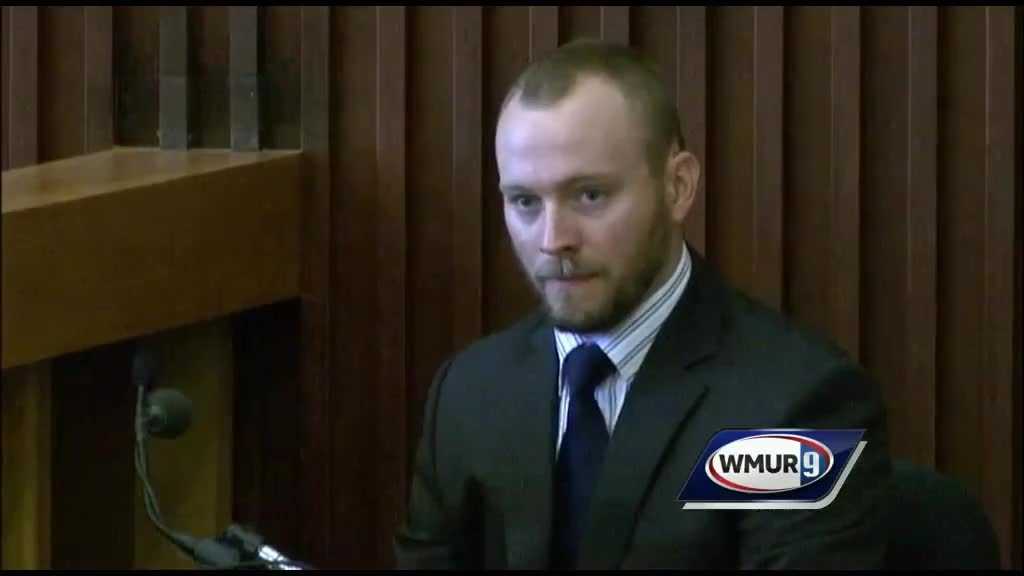
Kathryn "Kat" McDonough was Mazzaglia’s girlfriend, and she testified against him.
According to her account, on the night of October 9, 2012, she and Mazzaglia were at his Dover apartment when Marriott visited.
McDonough testified that Mazzaglia and Marriott engaged in sexual activity.
When Marriott declined to go further, Mazzaglia became angry, she said.
He strangled her, McDonough testified.
Then he forced her to help dispose of the body.
She was on the ground below.
Not because she chose to be.
But because he made her part of it.
McDonough said Mazzaglia directed the disposal, and the body was dumped in the Bellamy River, weighted down with a bag.
Her testimony carried the prosecution’s case.
It is the detailed account the jury heard.
It is also the only account of what happened inside that apartment.
The exact time of the visit is not established.
The sequence of events is not established.
Both rest solely on McDonough’s testimony.
No other witness saw what she described.
No recording captured the moment.
The record holds her words, and her words alone.
She was charged as an accomplice.
She reached a plea deal in exchange for her testimony.
She pleaded guilty to lesser charges of witness tampering and conspiracy.
Her cooperation was a key turning point.
Her account placed Marriott inside the apartment.
Her account placed Mazzaglia’s hands on the victim.
Her account placed the burden of disposal on herself.
What remains is the question the defence pressed: why believe her?
That would require evidence.
THE DIGITAL EVIDENCE
Investigators recovered digital evidence, including text messages and computer activity.
The messages were pulled from phones and accounts after Marriott was reported missing.
They placed her at Mazzaglia’s apartment on the night she vanished.
That placement was not a guess. It was data.
The prosecution called it a key part of the case.
The digital trail did what memory could not: it fixed a person to a place and a time.
McDonough’s testimony told the jury what happened inside the apartment.
The digital evidence told them Marriott was there at all.
The exact content of the text messages is not detailed in the source.
The type of computer activity is not detailed in the source.
What the record shows is that the messages existed and that they put Marriott in that Dover apartment.
What it does not show is what words were exchanged or what was searched or typed.
The phone records would have shown a sequence. The computer logs would have shown a session.
But the source does not say what was in them.
So the evidence stands as a fact of placement, not a transcript of intent.
It is precise. It is also partial.
The defence would later argue that digital evidence could be manipulated, that McDonough could have sent or deleted messages.
That argument required the jury to believe she had the foresight and access to do so.
The prosecution did not need to prove what the messages said. They needed to prove where Marriott was.
The phone records gave them that.
The computer activity gave them that.
She was on the ground below.
THE PLEA DEAL
She was charged as an accomplice.
The charge carried the weight of the same night, the same apartment, the same river.
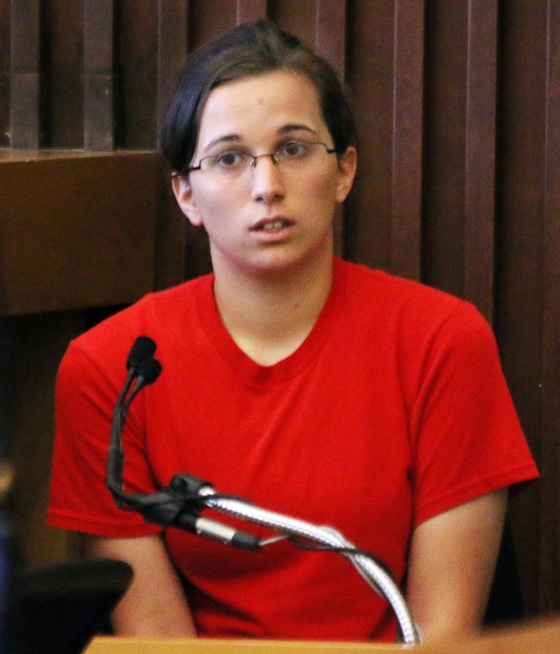
Kathryn McDonough reached a plea deal in exchange for her testimony.
She pleaded guilty to lesser charges of witness tampering and conspiracy.
The exact terms of the deal beyond those charges are not specified in the record.
What is specified is the trade: her account for her freedom.
Her cooperation was a key turning point in the investigation.
It was the moment the case against Mazzaglia gained a voice inside the apartment.
Not a forensic voice. Not a digital voice. A human one.
She had been there, she said, when Marriott declined to go further.
She had been there, she said, when Mazzaglia became angry.
She had been there, she said, when he forced her to help dispose of the body.
The prosecution now had a witness who could describe the strangulation itself.
The defence would later call her the killer.
The defence would later call her the manipulator.
But the deal stood, and so did her story.
Was it justice bought at a discount?
Was it a necessary bargain with a witness who had helped carry a body?
That would require weighing what she did against what she gave.
The record does not resolve that weight.
It only notes the plea, the charges, the testimony.
And the turning point.
McDonough was sentenced to 1½ to 3 years, with credit for time served.
She was released after serving her sentence.
Mazzaglia received life without parole.
One deal, two fates, one body in the river.
THE PROSECUTION'S CASE
The prosecution's case rested on one central claim: Mazzaglia strangled Marriott when a sexual encounter turned violent.
That claim came first from McDonough's testimony.
She sat on the witness stand and described the night in the Dover apartment, the sexual activity, the moment Marriott declined to go further, the anger, the strangling.
The state then built around her account.
Investigators had recovered text messages and computer activity that placed Marriott at Mazzaglia's apartment.
The physical and digital evidence did not stand alone, but it anchored McDonough's story in time and place.
The prosecution argued the messages were not just contact between two people.
They were a trail leading to the apartment door.
Was there more evidence beyond McDonough's testimony and the digital record?
That would require evidence.
The source does not detail anything further.
What the jury heard, according to the record, was McDonough's detailed account and the recovered digital evidence.
It was a narrative of a night that ended in the river.
It was also a narrative that depended heavily on the word of an accomplice who had taken a deal.
The defence would call her a liar and a killer.
The prosecution called her a witness.
The state's case carried weight because it was layered: testimony, texts, computer activity, a body found weighted down in the Bellamy River.
Each piece pointed to the same apartment.
Each piece pointed to Mazzaglia.
The jury weighed it for weeks.
In June 2014, they returned a verdict of guilty on the charge of second-degree murder.
The prosecution's evidence proved persuasive.
That is what the record shows.
THE DEFENCE'S COUNTER
The defense stood on a simple claim: Kathryn McDonough was the killer, not Seth Mazzaglia.
She had manipulated him, they argued.
Mazzaglia, they contended, only helped dispose of the body.
He was the panicked accomplice, not the murderer.
The jury heard that version of the night.
It was a story built on motive and influence, on a young woman who testified to save herself.
McDonough had a plea deal.
She had pleaded guilty to lesser charges in exchange for her account.
That gave her a reason to point at Mazzaglia, the defense said.
A reason to make her story fit the prosecution's needs.
So who was telling the truth?
Who strangled Lizzi Marriott in that Dover apartment?
Who decided to weight her body and drop it in the Bellamy River?
The record does not answer those questions cleanly.
The specific evidence the defense presented is not detailed in the source.
What is documented is the argument itself.
McDonough was the aggressor, the defense said.
Mazzaglia was the one she trapped.

He helped because she made him help.
It is a theory of the case.
It is also a counter-narrative to everything McDonough swore under oath.
The jury had two accounts of the same night.
They chose one.
They chose the prosecution's.
The verdict was guilty.
That is what the record shows.
That is not the same as certainty about every detail of what happened.
Blame, in this case, was never simple.
THE TRIAL AND VERDICT
The trial began in May 2014 in Strafford County Superior Court.
Mazzaglia stood charged with second-degree murder.
The prosecution argued he strangled Marriott during a sexual encounter that turned violent.
The defense contended McDonough was the aggressor, and that Mazzaglia only helped dispose of the body.
The trial lasted several weeks.
How many weeks exactly is not specified in the record.
That would require evidence.
The jury deliberated, then returned its verdict in June 2014.
Guilty of second-degree murder.
He was sentenced to life in prison without the possibility of parole.
McDonough, who had pleaded guilty to lesser charges, was sentenced to 1½ to 3 years, with credit for time served.
She was released after serving her sentence.
The courtroom had seen the testimony, the digital evidence, the river.
Now it saw the weight of a life sentence land.
It is closure.
It is also a sentence that does not end.
Mazzaglia remains incarcerated in a New Hampshire state prison.
The verdict was affirmed on appeal; the New Hampshire Supreme Court upheld it in 2016.
McDonough has been released and largely stayed out of the public eye.
Marriott’s family has continued to advocate for victims’ rights.
The case remains a reference point in discussions about domestic violence and accomplice testimony.
That is the record.
That is what the jury decided.
AND THE STORY STILL ISN'T OVER
The New Hampshire Supreme Court affirmed the verdict in 2016.
That was the end of the appeals.
Not because the case was simple.
But because the record held.
Mazzaglia remains incarcerated in a New Hampshire state prison, serving life without parole.
He is still there.
McDonough has been released and has largely stayed out of the public eye.
She served her sentence.
Elizabeth Marriott’s family has continued to advocate for victims’ rights.
In 2015, the New Hampshire legislature passed a law named in her memory.
It strengthened penalties for certain sexual assault offenses.
That was one year after the verdict.
That was one year after the trial ended.
The case remains a reference point in discussions about domestic violence.
It remains a reference point in discussions about accomplice testimony.
What happens next?
Are there pending motions?
Is there a future legal step?
That would require evidence.
The source does not provide it.
The source does not establish any further proceedings.
It is a closed case in the legal record.
It is an open case in the public memory.
Marriott was nineteen.
She studied marine biology.
She never came home from her shift.
Her name is on a law now.
Her story is in the record.
That is where the story stands.
That is where it remains.
Advertisement
You may also like
The DNA under her fingernails that cracked a 17-year cold case — but left one question open
🚨 THE NEIGHBOR'S CALL THAT OPENED A 17-YEAR WAIT… A neighbor in Bellaire, Texas, called police about a break-in at a home on June…
The 4-day gap between a 5-year-old's abduction and a suspect's arrest in her murder
🚨 THE 4-DAY GAP July 15, 2002, in Stanton, California: a man asks a five-year-old for help finding a lost dog. The friend runs…
The grandmother's 911 call that started it all — and the family story that never fit
🚨 THE 911 CALL THAT DIDN'T MATCH THE FAMILY'S STORY The 911 call came on July 15, 2008, from a grandmother named Cindy Anthony.…
The missing boy's ring found in a crawl space — 27 bodies later
🚨 THE RING IN THE CRAWL SPACE The ring was small, gold, and it belonged to a missing 15-year-old boy. Police found it on…
The 2005 Aruba nightclub exit that left three men with stories that never matched
🚨 THE EXIT THAT STARTED EVERYTHING The club was called Carlos'n Charlie's, a bar and nightclub in Oranjestad, Aruba. Natalee Holloway, 18, from Mountain…
The tarot card message that turned a random killing spree into a hunt for 'God'
🚨 THE TAROT CARD THAT READ 'CALL ME GOD' The card was a piece of evidence, found at a crime scene during the investigation…