The $5,800 in rotting cash found by a boy — and the hijacker who vanished with the rest
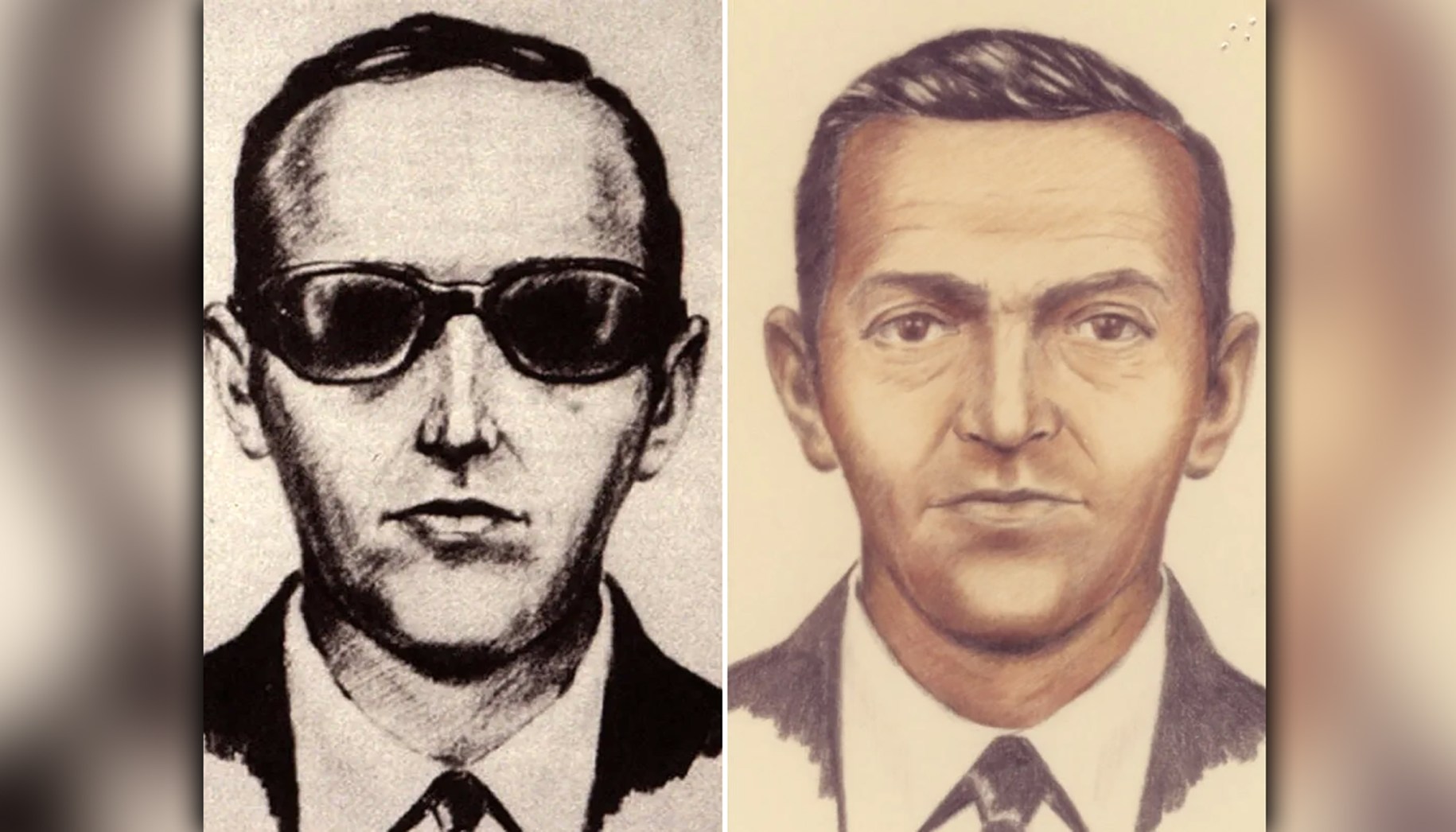
The money came apart in his hands.
Brian Ingram was eight years old in 1980, playing along the Columbia River near Vancouver, Washington, when he found a bundle of rotting cash half-buried in the sand.
The bills were $20s, crumbling, fused together by water and time.
His family called the FBI.
Agents checked the serial numbers against a list that had been distributed to banks nine years earlier — the ransom list from the November 1971 hijacking of Northwest Orient Flight 305.
The numbers matched.
The $5,800 was the only physical trace of the hijacker ever recovered, according to the FBI's investigation records.
It is not established how the bundle ended up in the river.
It is not established whether the man who jumped from the aft stairway that night survived the fall into the woods below.
What is documented is the split: the bundle was divided between Brian Ingram and the FBI, and Ingram later sold part of it at auction, per the case file.
The rest of the $200,000 — $194,200 in $20 bills, also recorded by serial number — has never surfaced.
No suspect was ever arrested, charged, or convicted.
The man who took the money was never named.
A boy held the only proof that the hijacker had been real, that the money had been real, that the jump had happened at all.
The rest of the story is what the river kept.
THE NOTE AND THE FLIGHT
The man bought his ticket under the name Dan Cooper.
One-way, Portland to Seattle, on the afternoon of November 24, 1971.
The press later misreported the name as D.B. Cooper, and the typo stuck.
Shortly after takeoff, he handed the flight attendant a note.
The note claimed he had a bomb.
He demanded $200,000 in cash, four parachutes, and a fuel truck waiting in Seattle.
The flight attendant was the first to alert the cockpit.
The plane landed in Seattle.
The money and the parachutes were delivered.
Cooper released the passengers and most of the crew.
Then he ordered the pilots toward Mexico City, at low altitude.
Somewhere over southwestern Washington, he opened the aft stairway.
He jumped into the night.
The plane landed safely in Reno, Nevada, with only the crew aboard.
The FBI recovered the hijack note from the seat.
They also found a clip-on tie he left behind.
It is not established whether the bomb in his briefcase was real.
No explosive device was ever found or proven to exist.
The crew described him as calm and polite.
A controlled hijacking, a clean exchange, a quiet exit.
Then a man fell into the dark over Washington state.
The plane came down without him.

The money came down without him, too.
He was never seen again.
THE TIE AND THE SUSPECTS
The tie was a clip-on, left behind on the seat.
It yielded microscopic particles of titanium and rare-earth elements.
That suggested work in aerospace or metallurgy, per the FBI’s evidence analysis.
No match was ever made.
The particles pointed to no specific person and no specific workplace; the record does not establish that they did.
The ransom was $200,000 in $20 bills.
Each bill’s serial number was recorded, and the FBI distributed the list to banks.
The lead FBI agent, Ralph Himmelsbach, interviewed hundreds of suspects.
One was Richard Floyd McCoy Jr., who had committed a similar hijacking in 1972.
McCoy was ruled out based on physical description and alibi.
Several persons of interest were investigated.
They were ruled out.
No suspect was ever publicly cleared with certainty.
No one was ever charged.
The case remains a federal crime of air piracy with a perpetrator whose identity is unknown.
Himmelsbach spent years on the manhunt.
He had a list of serial numbers and a tie’s particles.
He had a calm description from a flight attendant and a note on paper.
What he did not have was a name.
The FBI officially suspended active investigation in 2016, citing lack of new leads.
The case remains officially open but inactive.
A man jumped into the night with $200,000.
The record holds his alias, his note, his tie, and a rotting bundle of $5,800.
It does not hold his face.
THE TWO READINGS OF THE SAME FACTS
One reading: the hijacker was a calm, polite man who planned carefully.
The flight attendant who received the note described him as calm and polite.
She also expressed doubt that he survived the jump.
Another reading: the recovered $5,800 in the river suggests he may have dropped the money accidentally, possibly during the jump or later.
But the record does not establish how it got there.
It is not established whether the hijacker survived the jump.
It is not established whether the recovered cash was dropped intentionally or accidentally.
The lead FBI agent, Ralph Himmelsbach, spent years investigating and became the public face of the pursuit.
He retired and wrote a book about the case.
No prosecutor, defense attorney, or judge was ever involved in a formal proceeding.
There was no trial.
There was no arrest.
There was no charge.
There was no conviction.
The statute of limitations for the crime had expired by the time the case was closed.
The FBI noted that if Cooper were found, he could still face charges for other offenses.
Two readings of the same facts.
One makes him a professional.
The other makes him a man who lost his grip on $200,000 in the dark.
Both are readings.
Neither is proof.
AND THE STORY STILL ISN'T OVER
The FBI suspended active investigation in 2016, citing lack of new leads.
The case remains officially open. It is also inactive.
The only physical trace of Cooper ever recovered was the rotting bundle of $5,800 found by a boy along the Columbia River in 1980.
That money was split between Brian Ingram and the FBI.
Ingram later sold part of it at auction.
The serial numbers matched the ransom. That much is documented.
What is not established is that any new lead will emerge.
The next concrete step is not in the record.
The victim airline, Northwest Orient, merged with Delta Air Lines in 1986.
The crew members have since retired or died.
The flight attendant who received the note has spoken publicly about the event.
She described Cooper as polite and non-threatening, according to her public accounts.
She has expressed doubt that he survived the jump.
No new credible suspect has emerged from any of that testimony.
The case has become a cultural legend.
Books. Documentaries. Films.
A man with no name, a jump into the dark, a pile of cash that turned up in the mud.
That is the legend.
The record is thinner.
No one was ever arrested. No one was ever charged. No one was ever convicted.
The statute of limitations for air piracy had expired by the time the case was closed, though the FBI noted that other offenses could still apply.
The lead FBI agent retired and wrote a book.
The flight attendant gave her account, and then the telling passed to others.
The file sits open.
It is a file with a tie, a note, and $5,800 in recovered bills.
It is also a story with no name attached to its end.
Advertisement
You may also like
The police call that sent a bleeding boy back to Dahmer's apartment
Two Milwaukee police officers answered a call in May 1991 about a naked, bleeding boy. The boy was Konerak Sinthasomphone, 14 years old. They…
The 1988 letter cited in the Menendez brothers' 2018 habeas petition — and the question it still raises
A letter surfaces in 2018, cited in a habeas corpus petition filed by two brothers serving life without parole. The petition calls it new…
The 2019 memoir that placed Keffe D in the Cadillac — now a Nevada judge must decide
The white Cadillac appears in print before it appears in court. In 2019, Duane "Keffe D" Davis published a memoir describing himself inside that…
Two confessions, one shotgun — and the detail that never matched in the Clutter case
The night was November 15, 1959. Four members of the Clutter family were murdered in their farmhouse in Holcomb, Kansas. Herbert Clutter. His wife,…

The $1 million extortion letter that named the Tylenol killer — and the suspect who was never charged
The letter arrived at Johnson & Johnson in 1982, typed and demanding $1 million to "stop the killings." The killings were the Tylenol poisonings…
The Green Beret doctor who told police four intruders killed his family — then changed his story
The call came in the early hours of February 17, 1970. Military police arrived at the off-post apartment of Army Captain Jeffrey MacDonald at…