The 51-day standoff that ended in fire: what the live cameras didn't show
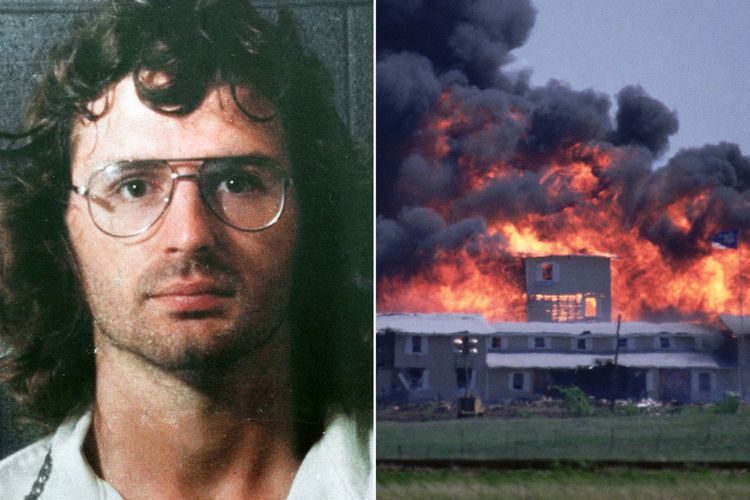
For 51 days in 1993, live broadcasts from Waco, Texas showed the Mount Carmel Center compound under siege.
Cameras were trained on the building where David Koresh and his followers were holed up.
The footage showed armored vehicles.
The footage showed tear gas.
The footage showed fire.
What the cameras could not show was what was happening inside the walls.
The source records that media coverage was intense, with live broadcasts of the siege and extensive commentary on the government's handling of the incident.
It was a story told in real time, minute by minute, from a safe distance.
Public reaction was sharply divided, the source notes.
Some blamed Koresh.
Others condemned the federal response.
The viewer saw everything and understood nothing.
What the live feed did not show: the decisions made inside the compound.
Not the negotiations.
Not the final moments before the fire.
What exactly happened inside the compound during the fire is not established by the source.
The broadcasts ended.
The questions did not.
FEBRUARY 28 — THE RAID
On February 28, 1993, ATF agents attempted to execute search and arrest warrants at the Mount Carmel Center ranch near Waco, Texas.
The compound belonged to the Branch Davidian sect, led by David Koresh.
The raid was meant to arrest Koresh on firearms charges and search the property for illegal weapons.
It did not go as planned.
A gun battle erupted.
Four ATF agents were killed.
Six Branch Davidians were killed.
The investigation had begun the year before, after a postal worker reported the group was receiving large quantities of firearms parts.
An undercover agent had infiltrated the group.
That agent reported that Koresh was aware of the impending raid.
The source does not establish whether that prior knowledge changed the outcome.
The source does not establish whether the raid was justified.
The cameras had been there, but the record — not the footage — establishes what followed.
The raid's failure set the stage for the 51-day siege.
The FBI assumed control.
The broadcasts continued.
The questions did not.
51 DAYS — THE SIEGE
The FBI assumed control.
The Hostage Rescue Team ringed the compound.
The cameras kept rolling.
FBI spokesman Bob Ricks became the public face of the siege, appearing in live broadcasts day after day.
He stood before the cameras and spoke.
What he said was the story.
Negotiators attempted to persuade the group to surrender.
The source records that they tried.
It does not record what they said.
The content of the negotiations between the FBI and the Branch Davidians is not in the record.
What Koresh said during those 51 days?
What his followers said?
What they asked for, what they refused?
That would require evidence.
The record does not contain it.
The siege lasted 51 days.
Cameras rolled the entire time.
The footage showed armored vehicles.
It showed tear gas.
It showed a compound that did not change.
It did not show the conversations.
It did not show the decisions.
Attorney General Janet Reno authorized the final tear gas plan.
She later defended the decision.
She said she believed children were being abused inside the compound.
That belief was hers.
The record establishes that she said it.
It does not establish what was happening inside.
The broadcasts continued.
The questions did not.
The standoff held.
The cameras held.
The compound held.
Fifty-one days is a long time to watch a building.
APRIL 19 — THE FIRE
On April 19, 1993, the FBI launched a tear gas assault on the compound.
The cameras were rolling.
The live feed showed armored vehicles pushing against the walls. It showed gas drifting through broken windows. It showed smoke, then flame, then the building collapsing into itself.
The fire was broadcast live.
The cameras did not show what caused it.
Seventy-six people inside died. More than twenty of them were children. David Koresh was among them.
The cause of the fire is not definitively established in the record. The independent review, commissioned by the Justice Department and led by a former senator, concluded the FBI did not intentionally start it. That same review criticized the use of certain tactics.
The origin remains unclear.
Federal investigators sifted through the rubble afterward. Much of the evidence was destroyed. What remained was charred, scattered, incomplete.
The public watched the smoke rise in real time. Some blamed Koresh. Some condemned the federal response. The reaction was sharply divided, the source records.
Later, the trial relied heavily on testimony from survivors. It also used forensic evidence regarding the deaths of the four ATF agents. The prosecution argued conspiracy. The defense argued self-defense.
The verdicts were mixed. The most serious charges failed. Five were convicted of voluntary manslaughter. Those convictions were later overturned on appeal in 2000 due to improper jury instructions, and the government chose not to retry them.
But on that morning, none of that was known.
The cameras held on the fire.
The compound burned on live television, and the question of how it started remained — as it still does — unanswered.
That would require evidence the fire did not leave behind.
AND THE STORY STILL ISN'T OVER
The fire went out, and the story moved to a courtroom in San Antonio.
In 1994, eleven surviving Branch Davidians stood trial on charges including conspiracy to murder federal officers and voluntary manslaughter.
The prosecution, led by U.S. Attorney Bill Johnston, argued the defendants had conspired with Koresh to resist the raid.
The defense argued the defendants acted in self-defense against an unjustified government assault.
Dick DeGuerin, the attorney who had represented Koresh, was part of that defense.
The cameras were gone now, but the public was still watching.
The jury acquitted all defendants on the most serious charges.
Five were convicted of voluntary manslaughter.
Their sentences ranged from five to forty years.
The names of the convicted: Livingston Fagan, Brad Branch, Kevin White, Renos Avraam, Grady Carrick.
The verdict split the public the same way the siege had.
Some saw justice; some saw scapegoats.
In 2000, the convictions were overturned on appeal due to improper jury instructions.
The government chose not to retry them.
The five were released.
The case was closed. The argument was not.
Survivors wrote books and spoke publicly.
The site of the compound became a memorial.
Some still call for further investigation into the government's actions.
Whether the government's actions were justified is not established.
The record records the debate, not the answer.
The cameras showed the fire.
They did not show the end.
Advertisement
You may also like
The cell tower records that placed Adnan Syed near Leakin Park — and the defense that tore them apart
The note was found in Hae Min Lee's car, and it read "I'm going to kill." Prosecutors argued Adnan Syed wrote it. The defense…
The 2002 fishing trip that Scott Peterson said explained everything — and the boat anchor that didn't match
December 24, 2002, and Scott Peterson reports his eight-months-pregnant wife Laci missing from their Modesto home. He says he spent that morning fishing at…
The 3:15 a.m. attack that 38 neighbors reportedly heard — but the timeline has a hole
She was almost home. Catherine "Kitty" Genovese, 28, had walked from her job at Ev's 11th Hour Bar to her apartment building at 82-70…
The white Cadillac witness said he was inside — 27 years later, one man faces trial
A white Cadillac pulled alongside a BMW sedan on the Las Vegas Strip. It was September 7, 1996, and gunfire erupted. The BMW carried…
The phone call that made a friend dial police — and the interview that followed
The missed appointment was a doctor’s appointment, and the phone went unanswered. On August 13, 2018, in Frederick, Colorado, a friend called police to…
The smiley-face confession that made a sister call the police
The note was found in March 1995, near a woman's body in Oregon. It was handwritten, a confession. It was signed with a smiley…