The 81 Minutes Two Fake Cops Spent Inside a Museum — and the Art That Vanished

The knock came at the side door of the Isabella Stewart Gardner Museum, just past 1:20 in the morning on March 18, 1990.
Two men stood outside, dressed as Boston police officers, complete with gold badges.
They told the night guard they were responding to a disturbance call.
A routine errand. Believable.
The guard on duty, Richard Abath, opened the door.
That single act is the hinge the whole story turns on.
Within minutes, the two visitors were not officers but thieves.
Security cameras and motion sensors — their wires cut, their eyes dark.
The two men overpowered the overnight guards, duct-taped them in the basement, and moved through the galleries for roughly 81 minutes.
Thirteen works of art vanished, including paintings by Vermeer, Rembrandt, Degas, and Manet.
Who were they?
The record does not say.
The FBI announced in 2013 that it had identified the two thieves, describing them as members of a criminal organization based in New England and the mid-Atlantic.
The agency has never released their names.
Their identities are not definitively established.
No one has ever been charged.
Abath was investigated but never charged, and he has maintained his innocence.
The case remains open.
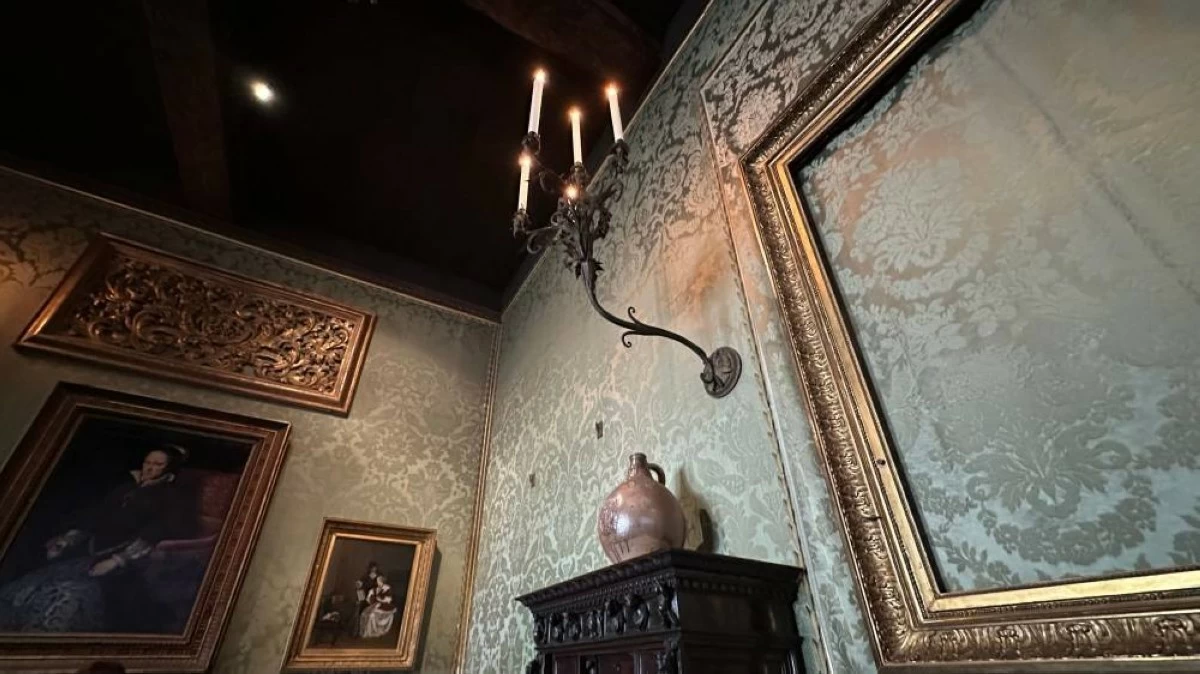
The empty frames still hang in the museum's galleries.
It is the largest property crime in American history.
It is also a door left open by a man who believed a uniform.
A chill of inevitability settles in: the mundane knock changed everything.
And the nagging question remains, unanswered for more than three decades.
Who were they?
That would require evidence the public has never seen.
THE 81 MINUTES
The door closed behind them at 1:24 a.m., according to the guards' later accounts.
Inside, the two men moved with the calm of men who had rehearsed.
They told the two overnight security guards they were responding to a disturbance call.
It was routine. It was believable.
Then they overpowered both guards, handcuffed them, and duct-taped them in the basement.
No weapon was reported as displayed or used.
The guards testified the intruders were white men in their late 20s to 30s, wearing police uniforms with gold badges.
The uniforms did the work.
Upstairs, the thieves disabled the museum's alarm system by cutting the wires to the security cameras and the motion sensors.
Then they walked the galleries for roughly 81 minutes.
They took thirteen works of art.
A Vermeer. A Rembrandt. A Degas. A Manet.
They also took a bronze eagle finial from a Napoleonic flag.
They left the frames behind.
The exact route taken through the museum is not in the record.
The guards' testimony is the only eyewitness account.

How do two men walk through a museum for over an hour and vanish with masterpieces?
How do they carry thirteen works of art out into the Boston night without a trace?
How do they never surface, not once, in more than three decades?
That would require evidence the public has never seen.
The guards were found hours later, still bound in the basement.
The art was gone.
The empty frames still hang in the galleries today.
THE INVESTIGATION'S SHADOWS
The FBI took over almost immediately.
The agency stated the thieves likely belonged to a Boston-area criminal crew with ties to the New England Mafia.
In 2013, the FBI announced it had identified the two thieves.
They were described as members of a criminal organization based in New England and the mid-Atlantic.
The FBI has never released their names.
That identification has not been independently confirmed.
Robert Gentile, a Connecticut mob associate, was publicly named by the FBI as a person of interest.
He was never charged.
He died in 2020.
FBI searches of Gentile's home found a list of the stolen paintings.
They found a note referencing the theft.
They found no art.
The lead investigator for many years was a special agent who publicly discussed the case.
He has since retired from the public eye.
The FBI has offered a $5 million reward for information leading to the recovery of the art.
The museum has added its own reward on top of that.
The investigation circles closer, then stops.
A name surfaces, then fades.
A search happens, and yields a list but not a painting.
A suspect dies, and the file stays open.
Why no charges?
Why no names?
Why no art?
That would require evidence, or an admission, or a trial.
There has been none of those.
The case remains open and active, the FBI says.
The empty frames still hang in the galleries today.
THE GUARD'S STORY
The door opened because of a single decision made in the dark.
Richard Abath, the night guard who admitted the thieves, was investigated but never charged.
He has maintained his innocence.
His decision to open the door — a single, ordinary act — became the hinge of the entire theft.
It was a routine knock.
It was a believable story about a disturbance call.
It was 1:24 in the morning, and the two men wore police uniforms with gold badges.
What would any of us have done?
What would we have weighed in that moment — the rulebook, the risk, the fear?
What would we have seen through the peephole before we turned the lock?
That would require evidence.
No evidence has been presented that Abath was complicit.
The guards survived; both described the intruders consistently.
Their testimony became the key evidence in the investigation.
Whether Abath knew the men or acted under duress is not established.
He has never been charged.
The empty frames still hang in the museum's galleries as a memorial to the loss.
The Vermeer is gone.
The Rembrandt is gone.
The Degas is gone.
Only the outlines remain, waiting for paintings that have not come back.
Abath has never been charged, and the record does not say what he knew.
The door stayed open for 81 minutes.
That is the fact.
Everything else is a question the case has not answered.
AND THE STORY STILL ISN'T OVER
There has been no trial.
No one has ever been charged with the Gardner theft.
The statute of limitations for the theft itself has expired.
The FBI states the thieves could still be prosecuted for related federal charges, such as interstate transportation of stolen property, which carries a longer limitations period.
The case remains open and active.
The FBI states it continues to pursue leads.
Robert Gentile died in 2020 without being charged.
Other suspects named by the FBI have died without being charged.
Richard Abath, the guard who opened the door, has maintained his innocence and has never been charged.
The stolen art remains missing.
The empty frames still hang in the museum's galleries as a memorial to the loss.
The museum has kept its reward offer open.
The FBI continues to solicit tips.
Is the next lead a phone call?
Is the next lead a search warrant?
Is the next lead a name already in the file?
That would require evidence.
The current status of any specific lead is not in the record.
The next concrete step is not specified in the source.
The case is considered one of the FBI's top unsolved art crimes.
It is a cold case that is not cold.
It is an open file with no defendant.
The art is still out there.
And so is the question.
Advertisement
You may also like
The severed head in the canal, the confessed killer who was never charged, and the file police closed twice
The drainage canal ran along the Florida Turnpike near Vero Beach, 120 miles from where the boy had vanished. The head was found on…
The trucker's anonymous letters that named his own victims
The letters arrived unsigned, except for a circle with two dots and a curve. A smiley face. They were sent to the Oregonian and…

The Green River Killer’s confession count is 71. Why are only 48 convictions official?
Gary Leon Ridgway was a truck painter from Auburn, Washington. In November 2001, DNA evidence linked him to several victims, and he was arrested.…
The doctor with a scalpel and a secret that haunted Eliot Ness
The first body was found on September 5, 1934, in Kingsbury Run, a ravine that cut through Cleveland. He was a man, and no…
The slow-motion Bronco chase that began after O.J. Simpson was charged with murder
The Bronco drifted down the freeway at 35 miles an hour, a white speck trailed by a line of police cars. Al Cowlings was…
The Zodiac cipher that took 51 years to crack — and still gave no name
In December 2020, a team of private codebreakers solved the Zodiac's "340 cipher" — a cryptogram mailed to the *San Francisco Chronicle* in 1969.…