The severed head in the canal, the confessed killer who was never charged, and the file police closed twice
The drainage canal ran along the Florida Turnpike near Vero Beach, 120 miles from where the boy had vanished.
The head was found on October 10, 1981.
Dental records confirmed the identity.
The victim was six-year-old Adam Walsh, missing since July 27, 1981, from a Sears store at the Hollywood Mall.
His body was never recovered.
The exact circumstances of the head's discovery are not in the record.
Forensic details beyond the dental identification are not in the record either.
For decades, the case remained unsolved.
A convicted serial killer confessed multiple times.
He was never charged.
A confession repeated for years.
A file closed twice.
No court ever established guilt.
How does a confession not lead to a charge?
How does a named perpetrator never face a proceeding?
How does a case close without a verdict?
That would require evidence.
The record shows the confession.
The record shows the naming.
The record does not show a trial.
The canal held one fact: a six-year-old was gone, and only part of him came back.
The rest was silence, and paperwork, and a question that outlasted both.
THE ABDUCTION
July 27, 1981.
Adam Walsh was watching television with other children at the Sears store in the Hollywood Mall.
His mother was shopping nearby.
Police initially treated the case as a missing child, not an abduction.
Witnesses reported seeing a boy matching Adam's description being escorted from the store by an older man.
That lead was not immediately pursued.
The identity of that older man was never established in the record.
The crime scene at the Sears store was not secured.
A store is a public place. A missing child is a family matter. Those were the working assumptions.
The record does not show who made that call, or when it was reconsidered.
Two and a half months passed.
On October 10, 1981, a severed head was found in a drainage canal along the Florida Turnpike, about 120 miles from the mall.
Dental records confirmed the identity.
The rest of Adam Walsh was never recovered.
A boy went into a store. A boy was seen leaving with a man. A boy's head surfaced in a canal.
The space between those facts is where the investigation should have moved quickly.
It did not.
The file was opened as a missing-child case. The scene was left open. The witness report sat.
That would require time, and time was spent elsewhere.
THE CONFESSIONS
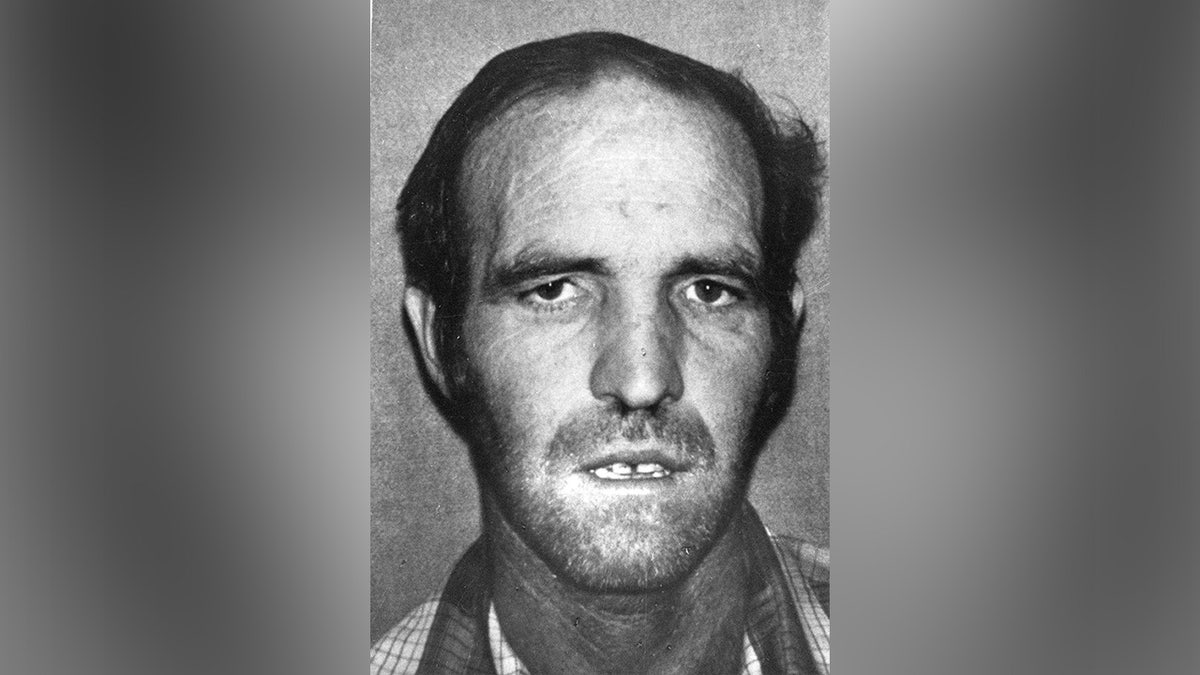
Ottis Toole was already in prison for other murders when he began to talk.
He confessed to killing Adam Walsh, and he confessed more than once.
The record does not detail the specific content of those confessions, nor why they were deemed inconsistent.
That is not established.
What the case record does show is that Toole, a convicted serial killer, was never charged with Adam's murder.
In 1996, authorities named Toole as the likely perpetrator.
That determination came largely from the work of the lead detective, who had re-examined the evidence.
The Hollywood Police Department officially closed the case that same year, declaring Toole had committed the murder.
Toole died in prison in 1996, while serving sentences for other murders.
He was never tried.
He was never convicted.
No court proceeding ever established his guilt.
A confession repeated for years was enough to close a file, but not enough to charge a man.
That is the unease at the centre of this case: a conclusion without a verdict.
The police declared it solved.
The law never did.
THE SECOND CLOSING
In 2008, the Hollywood Police Department formally closed the case again.
The department stated that Ottis Toole was the sole perpetrator.
The case was officially declared solved.
No court proceeding ever established Toole's guilt.
No one was ever tried or convicted for the murder of Adam Walsh.
The department acknowledged that mistakes in the original investigation had hindered the case.
The specific evidence that led to the 2008 declaration is not detailed in the record.
That is what "solved" meant here: a police conclusion, not a legal one.
The Walsh family has stated they consider the case closed.
They have expressed satisfaction with the police department's conclusion.
Toole died in prison in 1996 while serving sentences for other murders.
He was never charged with Adam's death.
He was never tried for it.
A confession repeated for years.
:max_bytes(150000):strip_icc():focal(999x0:1001x2)/john-walsh-kids-adam-4724f94175504a3bb0cc17dff22fced9.jpg)
A file closed twice.
A verdict never read.
What does "solved" mean without a conviction?
What does closure mean without a trial?
What does justice mean without a judgment?
That would require evidence — and a proceeding that never happened.
The law never established what the police declared.
The record holds a conclusion.
It does not hold a conviction.
AND THE STORY STILL ISN'T OVER
The case was officially closed in 2008, with the Hollywood Police Department declaring Ottis Toole the killer.
Toole died in prison in 1996 while serving sentences for other murders.
He was never charged with Adam Walsh's murder.
No court ever established his guilt.
The record holds a conclusion.
It does not hold a conviction.
John Walsh and Revé Walsh have continued to advocate for victims' rights.
John Walsh's work on "America's Most Wanted" and his advocacy led to the passage of the Adam Walsh Child Protection and Safety Act in 2006.
The act strengthened the national sex offender registry.
The family has remained active in public life.
John Walsh continues to host crime-related television programs.
The Walsh family has stated they consider the case closed.
They have expressed satisfaction with the police department's conclusion.
The case is closed.
That is what the record shows.
It is also what the record does not show: a conviction, a trial, a verdict.
Any pending legal actions or appeals are not in the record.
There is no appeal to follow.
There is no parole to track.
There is only a confession repeated for years, a file closed twice, and a law named for a child who never came home.
She was on the ground below — no, that is another case.
Adam Walsh's body was never recovered.
His head was found in a drainage canal.
His parents built a legacy from the loss.
The unfinished business of justice remains unfinished.
Not because the police stopped looking.
But because the law never finished the job.
Advertisement
You may also like
The radio and boots that broke the Clutter case — but the shotgun never surfaced
The radio sat on a table in a Las Vegas apartment, months after four people were bound and shot in a Kansas farmhouse. It…
Two men in police uniforms, one Thompson submachine gun, and a garage wall that gave way to silence
Seven men were dead against the garage wall by the time the echo of the guns stopped. It was February 14, 1929, a little…
The typewriter in a Montana cabin that matched the Unabomber's 35,000-word manifesto
Agents found the typewriter inside a 10-by-14-foot cabin near Lincoln, Montana, in 1996. The machine matched the one used to produce a 35,000-word manifesto.…
The cotton gin fan that pulled a body from the Tallahatchie — and the DNA test that settled it
A cotton gin fan came up with the body on August 31, 1955. It was tied to the neck with barbed wire, and it…
The bullet that tied Sacco to the crime — and the expert who couldn't agree
The bullet came out of a guard's body on a stretcher, passed from hand to hand, and ended up in a courtroom as the…
The missing surgical bag and a bloody footprint that Sam Sheppard's defense said pointed to an intruder
The footprint was one of them. The defense pointed to it as evidence of an intruder. A bloody footprint at the scene, they argued,…