The abandoned SUV that ended a two-day search for Jennifer Hudson's nephew
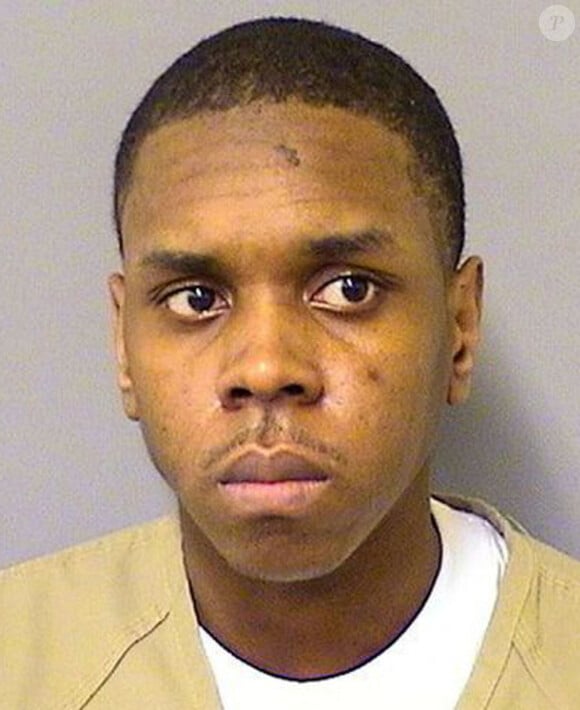
🚨 THE PHONE CALL THAT BROKE A FAMILY
The call came on a Friday.
October 24, 2008, and police in Chicago were sent to a home on the city’s South Side.
Inside, they found Darnell Donerson, 57, and her son Jason Hudson, 29, dead from gunshot wounds.
Donerson was the mother of singer and actress Jennifer Hudson.
Jason Hudson was her brother.
And somewhere in that house, or taken from it, was Julian King.
Jennifer Hudson’s seven-year-old nephew was missing.
The exact time of the 911 call is not in the record.
Not the minute, not the hour.
Just the day, and the bodies, and the boy who was not there.
Days earlier, Jennifer Hudson had won an Oscar for *Dreamgirls*.
She was a rising star, a name the city knew.
Now her mother was on a floor.
Now her brother was on a floor.
Now her nephew was nowhere.
The officers on scene did not find him.
They searched the rooms.
They searched the yard.
They found two dead and one gone.
Where is the boy?
That was the question the house left open.
The phone call ended a normal Friday.
It began something else.
OCTOBER 24 — THE FIRST RESPONSE
The exact time of the murders is not specified in the record.
Officers entered the home and found Darnell Donerson, 57, and her son Jason Hudson, 29, dead from gunshot wounds, according to the investigation.
Julian King, Jennifer Hudson’s seven-year-old nephew, was reported missing from the same home.
A child was gone.
Police focused on William Balfour almost immediately.
Balfour was the estranged husband of Jennifer Hudson’s sister, Julia Hudson.
He was known to have had a volatile relationship with Julia Hudson, with prior domestic violence incidents, the record shows.
On the day of the murders, Balfour was seen near the Hudson family home.
Not because of a confession.
Not because of a weapon found at the scene.
Not because of a witness placing him inside the house.
Because he was the estranged husband.
Because the violence was documented.
Because he was there.
The search for Julian began while the bodies were still being processed.
The house was a crime scene.
The city was a search grid.
The family was waiting.
THE ARREST AND THE PAROLE VIOLATION
The same day the house became a crime scene, police arrested William Balfour.
The arrest came on October 24, 2008, on an unrelated parole violation.
He was not arrested for the murders.
Not yet.
The specific nature of the parole violation is not in the record.
What is documented is that Balfour had a prior criminal record.
He had been released from prison earlier in 2008.
He was the estranged husband of Jennifer Hudson’s sister, Julia Hudson.
He was known to police.
He was known to the family.
The arrest happened within hours of the bodies being found.
Julian King was still missing.
Police focused on Balfour almost immediately, according to the investigation.
The parole violation gave them a reason to hold him.
It gave them time.
It gave them a person of interest.
Two days later, Julian’s body was found in the back seat of an abandoned SUV.
Balfour was later charged with the three murders.
Three counts of first-degree murder, home invasion, and aggravated kidnapping followed.
He pleaded not guilty.
The parole violation was the door.
The charges were the room.
The evidence would come later: the .45-caliber handgun, the ballistics match, the shifting statements.
But on October 24, the record shows only an arrest on a technicality.
A technicality that held a man while a city searched for a child.
That is what the record establishes.
The rest — motive, sequence, intent — would be argued in court years later.
TWO DAYS OF SEARCHING
The search for Julian King began the same hour the bodies were found.
It was not a quiet search. It was a national one.
Jennifer Hudson was already a household name, an Oscar winner from *Dreamgirls*, and her nephew's face was on every screen.
She stood before cameras and asked for his return.
She pleaded. She waited. She did what any family would do while the investigation moved underneath them.
The public watched a missing-child story unfold in real time, before the body was found, before the charges, before the trial.
For two days, from October 24 to October 26, the hope was that Julian was alive somewhere.
That hope was carried by media crews, by volunteers, by anyone who saw the amber alert or the news ticker.
The police worked the case in the background, but the focus stayed on the boy.
What the search actually looked like — the specific details of the efforts, the number of officers, the scope of the ground coverage — that is not in the record.
The record says there was a massive search. It says there was national media attention. It says Jennifer Hudson made public pleas.
It does not say what happened hour by hour, who searched where, or what was hoped against hope.
What is documented is the timeline: two days between the discovery of the bodies and the discovery of the SUV.
Two days of "bring him home."
Two days of a city holding its breath.
Then the SUV was found on the West Side, and the search ended.
OCTOBER 26 — THE ABANDONED SUV
The SUV sat abandoned on the city’s West Side, its doors closed against the October cold.
Julian’s body was found in the back seat.
He had been shot multiple times.
The discovery came on October 26, two days after his mother’s home had become a crime scene.
Two days of "bring him home."
Two days of a city holding its breath.
Then the SUV was found on the West Side, and the search ended.
The exact location of the SUV is not specified in the record.
What is documented is the vehicle itself, and what it held.
The search had drawn national media attention.
Jennifer Hudson had made public pleas for her nephew’s safe return.
She was then a rising star, an Oscar winner, and her voice carried across the country.
None of that brought Julian home.
The SUV did that, in the worst way possible.
It was the vehicle that ended the two-day search.
Not a tip, not a confession, not a break in the case.
An abandoned SUV on the West Side.
The body of a seven-year-old boy in the back seat.
He had been shot multiple times.
The search was over.
The questions were just beginning.
THE .45-CALIBER HANDGUN
The investigation recovered a .45-caliber handgun from a car Balfour had been using.
Ballistics matched the gun to shell casings found at the murder scene.
The same gun was matched to the bullet that killed Julian King.
Three scenes. One weapon.
The gun sat at the center of the prosecution’s case, the physical link between the house on the East Side and the abandoned SUV on the West Side.
Shell casings on the floor of Donerson’s home. A bullet in the back seat of the SUV. The same .45 connecting them.
Prosecutors presented the ballistics evidence at trial as the forensic thread that tied the killings together.
It was evidence. It was also a question.
How did the gun travel from one scene to the other?
That would require a timeline, and the record does not detail the exact chain of custody of the gun.
The weapon was recovered from a car Balfour had been using, but the record does not specify when it was found or who handled it first.
It is documented that the gun matched the casings. It is documented that it matched the bullet.
What is not documented is every step the gun took between the crime scenes and the evidence locker.
The defense argued the case was circumstantial, and the gun was central to that argument.
But the ballistics match was presented in court, and the jury heard it.
One gun. Two locations. Three dead.
The physical link was the prosecution’s story, and the gun was its anchor.
THE SHIFTING STATEMENTS
Balfour gave police more than one account of where he was.
He shifted. He adjusted. He revised.
Those shifting statements became a key piece of evidence.
The specific content of those statements is not in the record.
What is documented is that they changed.
Prosecutors told the jury the inconsistencies showed a man trying to hide something.
The defence argued that nervousness, not guilt, explained the variations.
Then a witness took the stand.
That witness testified that Balfour had admitted to the killings while in jail awaiting trial.
A jailhouse informant, the defence called him.
The prosecution called him corroboration.
The case rested on three pillars: the gun, the informant, and the statements.
The gun matched the shell casings.
The informant matched the confession.
The statements matched neither, and that was the point.
None of it was a confession on the record.
Balfour pleaded not guilty.
He maintained his innocence.
The jury had to weigh a man who said one thing, then another, then another.
Credibility is not a forensic test.
It is a question a jury answers in a room with no transcript.
What did he say? The record does not say.
What did he mean? That would require evidence.
What did the jury believe? They heard the gun, the informant, and the shifts.
They believed enough.
THE TRIAL — TWO STORIES
He wanted her back.
He could not have her.
That was the prosecution's story.
In a rage over his separation from Julia Hudson, the prosecutors argued, Balfour killed her mother and her brother.
Then he took her son.
He kidnapped and killed Julian to punish her, they said.
The motive was simple: if he could not have her, neither would she have them.
The defense told a different story.
Balfour was innocent, they argued.
The evidence was circumstantial.
The gun, the jailhouse informant, the shifting statements — none of it placed him at the scene with certainty, they claimed.
Police failed to pursue other leads, the defense said.
There was a man seen near the scene.
Who was he?
The identity of that man is not established in the record.
No one has ever named him.
No charge was ever brought against him.
Two stories, one jury.
The prosecution offered a motive that made sense of the horror.
The defense offered a doubt that never became a name.
The gun was physical.
The informant was a voice.
The statements were a pattern.
The jury weighed the rage against the unknown.
They heard the ballistics match.
They heard the informant's testimony.
They heard the shifts in Balfour's accounts.
They believed the prosecution's story.
They believed enough.
THE VERDICT AND SENTENCE
The trial began in April 2012.
On May 11, 2012, the jury found Balfour guilty on all counts.
They weighed the gun, the informant, the shifting statements.
They weighed the rage against the unknown.
They believed enough.
The verdict was read in a Chicago courtroom.
Judge Charles Burns imposed the sentence.
Balfour received three consecutive life sentences without the possibility of parole.
He received an additional 120 years for the kidnapping and home invasion charges.
The sentences ran one after another.
The life sentences were the weight.
The 120 years were the addition.
The jury’s deliberation time is not in the record.
It is not documented how long they took.
That would require evidence.
Balfour appealed the conviction.
An Illinois appellate court upheld it in 2015.
The Illinois Supreme Court declined to hear a further appeal.
The appeals ended there.
The conviction stood.
The sentence stood.
Balfour remains in prison.
He has maintained his innocence.
The justice was served.
The justice was heavy.
AND THE STORY STILL ISN'T OVER
He remains in a cell at the Menard Correctional Center.
He is serving three consecutive life sentences, plus 120 years.
He has maintained his innocence.
Not because the appeals worked. Because he has said so, and the record keeps his word.
Jennifer Hudson has spoken about the loss in her memoir and in interviews.
She has said she found closure through her faith and her family.
She has kept performing, kept recording, kept moving.
Julia Hudson has also spoken, about her mother, her brother, and her son.
She lost three people in one house on one day.
The family has established a foundation in Julian King’s memory.
The name is the point. The boy is the point.
No further legal developments have been reported.
Will there be any? That is not in the record.
The conviction was upheld in 2015. The state’s highest court declined to hear more.
That would require evidence. That would require a filing. That would require a court to act.
None of that is documented.
So the story holds still: a man in prison, a family in public, a foundation in a child’s name.
The justice was served.
The justice was heavy.
The story still isn’t over, because the man says it isn’t, and the family carries it forward.
Advertisement
You may also like
The DNA under her fingernails that cracked a 17-year cold case — but left one question open
🚨 THE NEIGHBOR'S CALL THAT OPENED A 17-YEAR WAIT… A neighbor in Bellaire, Texas, called police about a break-in at a home on June…
The 4-day gap between a 5-year-old's abduction and a suspect's arrest in her murder
🚨 THE 4-DAY GAP July 15, 2002, in Stanton, California: a man asks a five-year-old for help finding a lost dog. The friend runs…
The grandmother's 911 call that started it all — and the family story that never fit
🚨 THE 911 CALL THAT DIDN'T MATCH THE FAMILY'S STORY The 911 call came on July 15, 2008, from a grandmother named Cindy Anthony.…
The missing boy's ring found in a crawl space — 27 bodies later
🚨 THE RING IN THE CRAWL SPACE The ring was small, gold, and it belonged to a missing 15-year-old boy. Police found it on…
The 2005 Aruba nightclub exit that left three men with stories that never matched
🚨 THE EXIT THAT STARTED EVERYTHING The club was called Carlos'n Charlie's, a bar and nightclub in Oranjestad, Aruba. Natalee Holloway, 18, from Mountain…
The tarot card message that turned a random killing spree into a hunt for 'God'
🚨 THE TAROT CARD THAT READ 'CALL ME GOD' The card was a piece of evidence, found at a crime scene during the investigation…