The AC/DC cap left at a crime scene that didn't lead to Richard Ramirez
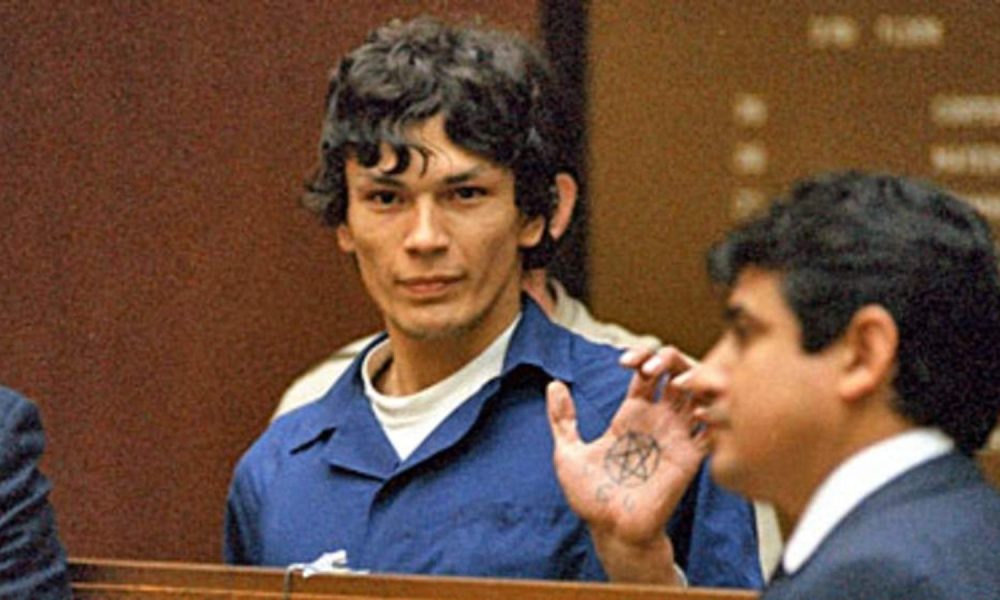
A black AC/DC baseball cap sat on the floor of a crime scene.
Investigators picked it up. They logged it. They traced it to a manufacturer.
The cap did not lead to Richard Ramirez.
Not because it was ordinary. Because the trail stopped at the factory door.
The cap is one of several forensic items—fingerprints, a palm print—that were later matched to Ramirez.
But the match came from the prints, not the cap.
The exact crime scene where the cap was found is not specified in the investigation summary.
The cap's direct connection to Ramirez is not established beyond being left at a scene.
Media retellings often give the cap a starring role. The record does not.
What did the cap promise? A thread to pull. A name to find. A face to put to the shadow.
That would require evidence.
The cap was a clue. It was also a dead end.
Fingerprints did what the cap could not. A stolen car did what the cap could not.
The cap sits in the file as a marker of proximity—someone wearing it was there, in that room, on that night.
Who put it there remains tied to other proofs.
The cap is often mentioned. It is not the breakthrough.
It is a piece of the scene. It is not the key to the man.
THE NIGHT STALKER'S SHADOW
It began in June 1984, according to the case summary.
A series of home-invasion attacks, rapes, and murders spread across Los Angeles and the San Francisco Bay Area.
The attacker entered homes at night.
He used unlocked doors. He used windows.
He shot or bludgeoned male victims first, then assaulted the female victims, the case summary states.
The media gave him a name: the Night Stalker.
Southern California was terrified.
The public stayed alert. The police stayed alert.
Every noise in the dark was a question.
Every locked door was a prayer.
Was this the work of one man?
The case summary says it was attributed to a single intruder.

But the specific number of attacks is not given.
The exact timeline of each attack is not detailed in the source.
It is a shadow.
It is a series of nights between June 1984 and August 1985.
It is the randomness that made it unbearable.
Not the same street. Not the same victim. Not the same method, every time.
The dread was the pattern.
A home was not a fortress.
A family was not safe.
The cap on the floor was just a cap, then.
The fingerprints were just marks on a surface.
The terror had no name yet.
Only a shadow.
Only the Night Stalker.
THE FORENSIC TRAIL
The terror had no name yet.
Only a shadow.
Only the Night Stalker.
Then the forensic trail began to form.
Fingerprints and a palm print left at several crime scenes were matched to Ramirez, who had a prior arrest record, according to the investigation summary.
The AC/DC cap was traced to a manufacturer.
It did not directly lead to Ramirez.
The manufacturer is not named in the record.
The exact number of crime scenes holding those fingerprints or the palm print is not specified either.
What is documented is the match itself.
What is documented is the delay before it mattered.
A significant mistake early in the investigation was the initial failure to connect some attacks due to jurisdictional boundaries between city and county police.
That boundary delayed a unified task force.
It cost time.
It cost clarity.

Detectives Gil Carrillo and Frank Salerno coordinated the multi-jurisdictional effort.
They linked the cases through ballistic evidence, modus operandi, and witness descriptions.
Ballistics matched one scene to another.
Modus operandi matched a pattern of entry.
Witness descriptions matched a face no one yet knew.
The puzzle was coming together.
But it came together slowly.
Not because the evidence was absent.
But because the pieces sat in different files, different desks, different jurisdictions.
The cap sat in one evidence bag.
The prints sat in another.
The task force did not yet exist.
That would require a decision, a meeting, a bridge across the boundary.
The detectives built that bridge.
Fingerprints did the rest.
The cap, for all its distinctiveness, was a dead end.
It remains a documented piece of evidence.
It remains a symbol of what did not happen.
The identification came from the prints and, later, from a stolen car.
Not from the cap.
The record does not establish that the cap ever pointed anywhere else.
THE TURNING POINT
The final attack came on August 24, 1985.
Residents chased the perpetrator from the scene, and he ran.
He left something behind: a stolen orange Toyota.
Police recovered the car, and inside it they found a fingerprint.
That fingerprint matched Richard Ramirez.
The match came from the print, not from the AC/DC cap, not from any other item.
The exact location of that final attack is not specified in the record.
His mugshot went out to the media.
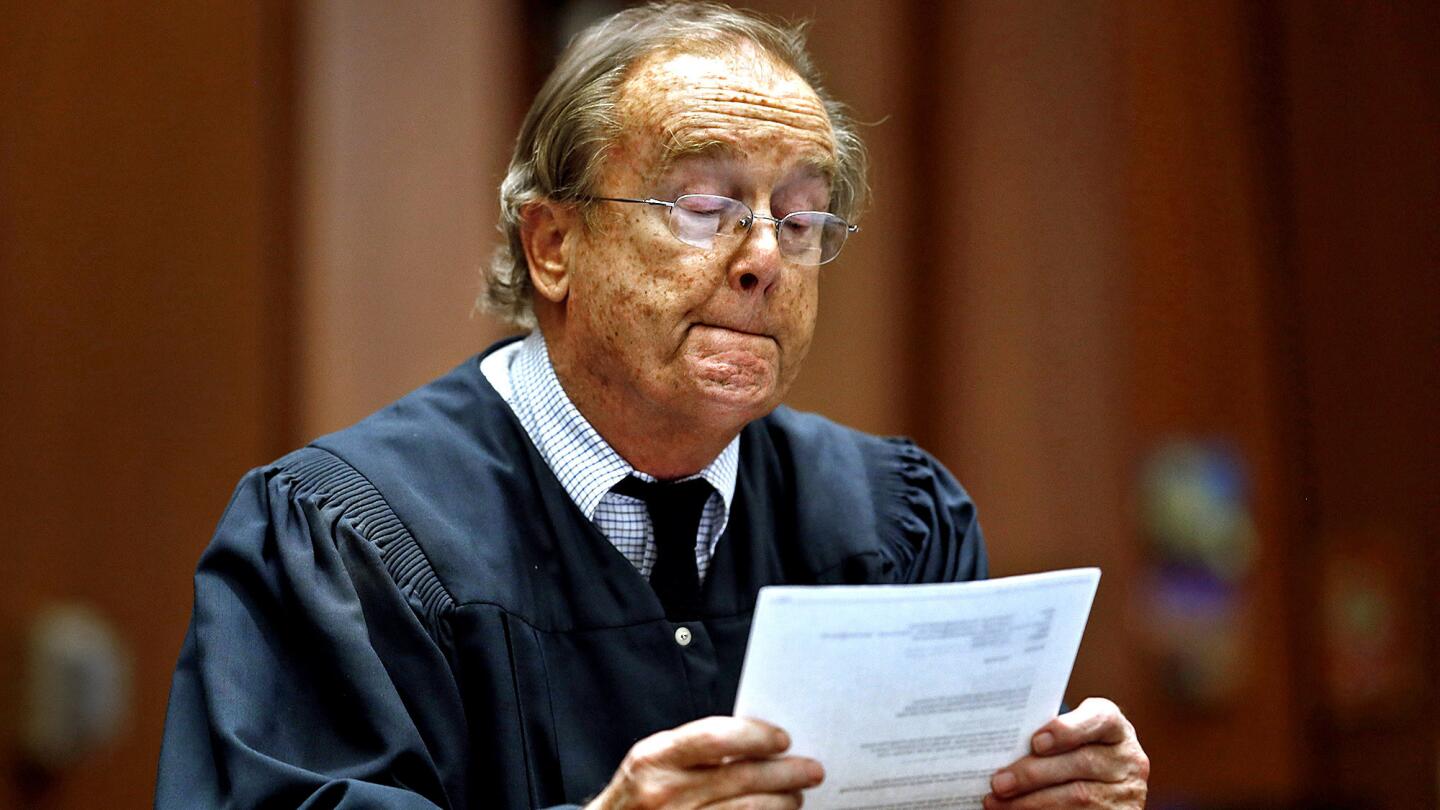
In East Los Angeles, citizens recognized the face.
They detained him until police arrived.
The name of the citizen who recognized him is not in the record.
Ramirez was arrested on August 31, 1985.
The chase, the car, the print, the crowd — that was the sequence.
Not the cap.
The record does not establish that the cap ever pointed anywhere else.
AND THE STORY STILL ISN'T OVER
The trial began in 1988, in Los Angeles County Superior Court.
The charges ran long: 13 counts of murder, 5 counts of attempted murder, 11 counts of sexual assault, 14 counts of burglary.
The jury heard the forensic trail — the fingerprints, the palm print, the stolen orange Toyota.
The defense argued the evidence was circumstantial.
The record does not establish the exact date the trial started.
It does not establish the outcome of any appeals.
On September 20, 1989, he was convicted on all counts.
On November 7, 1989, Judge Michael Tynan sentenced him to death.
He went to San Quentin’s death row.
He waited.
The years passed, and the appeals moved through the system.
Then, on June 7, 2013, he died of complications related to B-cell lymphoma.
He was still awaiting execution.
No execution was carried out.
The sentence stood, but the state never carried it out.
The victims’ families were left with the conviction, not the closure of an execution.
The case remains notorious, a name in the true-crime canon.
The cap, the car, the print — they were the path, but they were not the end.
Not because the evidence failed.
But because the process outlasted the man.
He was charged. He was convicted. He was sentenced.
He was never executed.
That is where the record stops.
Advertisement
You may also like
The severed head in the canal, the confessed killer who was never charged, and the file police closed twice
The drainage canal ran along the Florida Turnpike near Vero Beach, 120 miles from where the boy had vanished. The head was found on…
The trucker's anonymous letters that named his own victims
The letters arrived unsigned, except for a circle with two dots and a curve. A smiley face. They were sent to the Oregonian and…

The Green River Killer’s confession count is 71. Why are only 48 convictions official?
Gary Leon Ridgway was a truck painter from Auburn, Washington. In November 2001, DNA evidence linked him to several victims, and he was arrested.…
The doctor with a scalpel and a secret that haunted Eliot Ness
The first body was found on September 5, 1934, in Kingsbury Run, a ravine that cut through Cleveland. He was a man, and no…
The slow-motion Bronco chase that began after O.J. Simpson was charged with murder
The Bronco drifted down the freeway at 35 miles an hour, a white speck trailed by a line of police cars. Al Cowlings was…
The Zodiac cipher that took 51 years to crack — and still gave no name
In December 2020, a team of private codebreakers solved the Zodiac's "340 cipher" — a cryptogram mailed to the *San Francisco Chronicle* in 1969.…