The barn alibi that no one could verify — and the hatchet head in the cellar
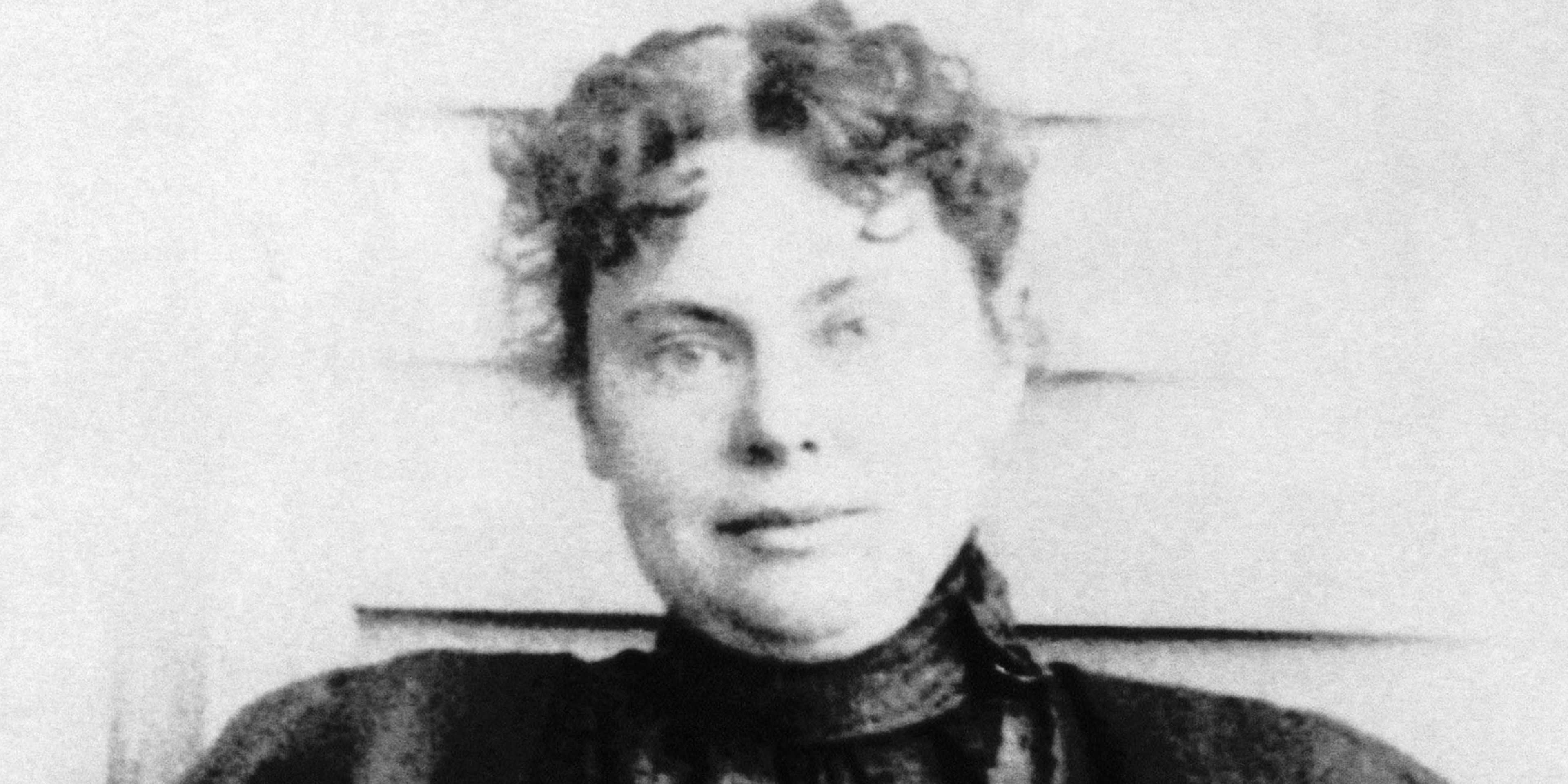
She told police she was in the barn.
That was on August 4, 1892, the morning her father was killed at 92 Second Street, Fall River.
She said she had been in the barn, in the loft, during the time the murder happened.
No witness placed her there.
No physical trace placed her there.
No evidence, no footprint, no dust disturbed in the loft, no memory from a neighbor — the record holds nothing that supports the claim.
In the cellar of the same house, investigators found a hatchet head.
They also found a broken handle.
The two pieces sat in the basement, near the coal, and neither was ever conclusively linked to the murders.
Not the blade, not the handle, not the fit between them.
The blood on the hatchet head was never matched to either victim, according to the investigation records.
So the case rests on a pair of contradictions.
A woman says she was in the barn, and the barn is empty.
A hatchet sits in the cellar, and the hatchet is silent.
Was she actually in the barn?
Was the cellar hatchet the weapon?
Was she in the barn and the hatchet still the weapon?
That would require evidence.
Neither fact has ever been established by the record.
Neither fact has ever been disproven, either.
For more than a century, these two details — the unverified alibi and the unconnected weapon — are the exact points people have argued over.
The barn door, and the cellar floor.
One story that cannot be confirmed.
One tool that cannot be connected.
And a case that never closes.
THE HOUSEHOLD
The house at 92 Second Street held five people in the summer of 1892.
Lizzie Andrew Borden, 32, unmarried, lived there with her father Andrew Jackson Borden, a wealthy banker, her stepmother Abby Durfee Borden, and her older sister Emma Lenora Borden.
Her mother, Sarah Anthony Morse Borden, had died in 1863.
Andrew remarried Abby, and Lizzie and Emma lived in the same house with their stepmother.
The household also included Bridget Sullivan, the Irish immigrant maid who testified at the inquest and trial.
Five people, one roof, no privacy.
Andrew was rich; the house was not.
He owned banks and mills, yet the family lived in a cramped, unpretentious home.
The sisters slept upstairs; the maid worked below.
On the night before the murders, Andrew's brother-in-law stayed at the house.
He was later cleared of suspicion.
The exact family dynamics are not established in the record.
The motive is not established in the record.
What the record shows is a structure: a wealthy father, two adult daughters, a stepmother, and a maid.
It is a small household.
It is also a tense one, if the testimony of those who spoke is any measure.
Lizzie gave contradictory statements about her movements that morning.
Bridget Sullivan described a morning of errands and doors.
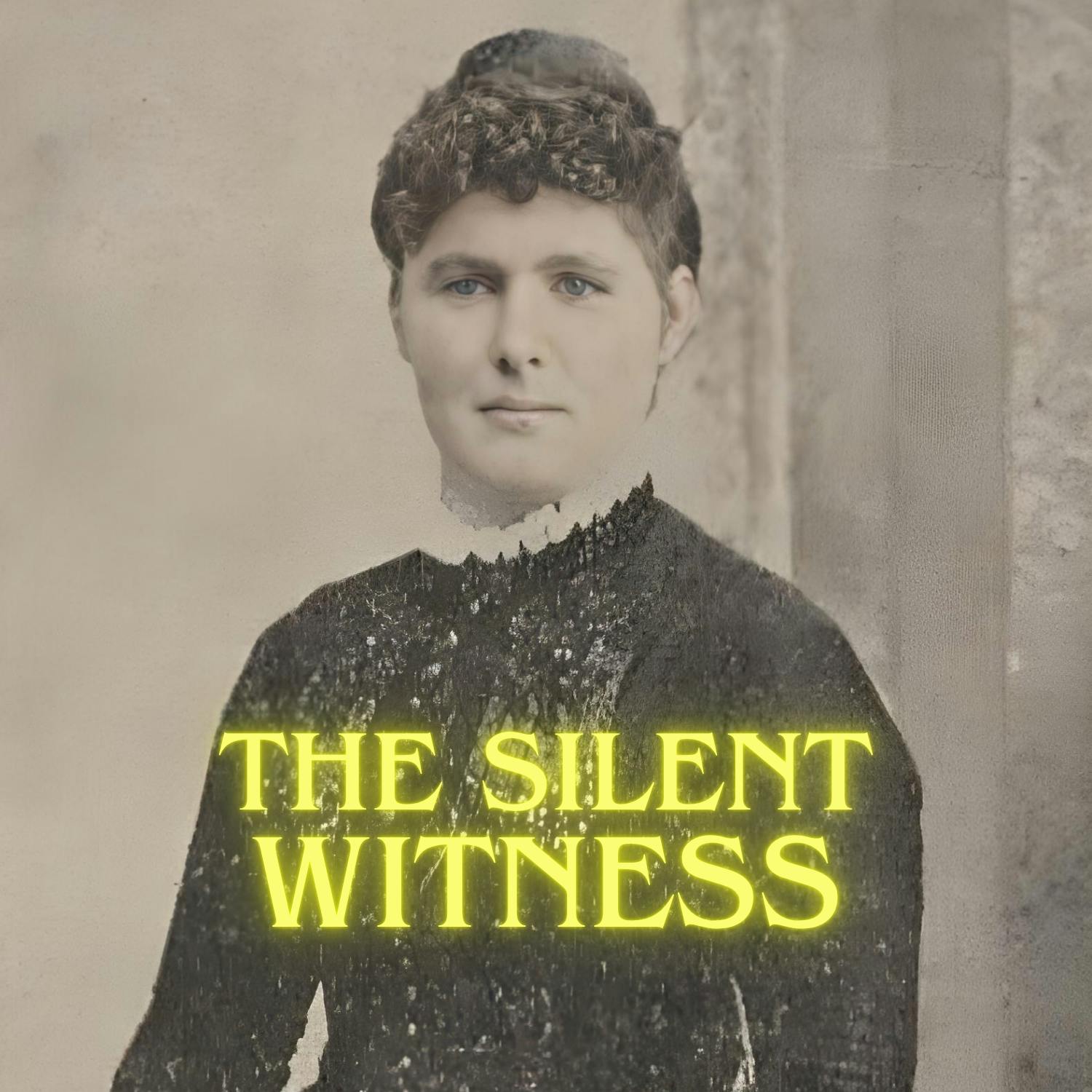
No one described a happy family.
That would require evidence the case never produced.
THE MORNING OF AUGUST 4
On the morning of August 4, 1892, Abby Borden was killed first.
The medical examiner testified that she died in an upstairs guest bedroom, likely between 9:00 and 10:00 a.m.
Andrew Borden returned home around 10:30 a.m.
He was killed shortly after, found on a couch in the first-floor sitting room, his face nearly split by a hatchet.
Bridget Sullivan and a neighbor, Dr. Bowen, discovered the bodies.
They found them after Lizzie reported finding her father's body.
Two murders inside roughly an hour.
The exact sequence of events inside the house is not established.
Lizzie's precise movements during that hour are not established either.
She told police she had been in the barn.
She claimed she went there to look for pieces of metal for a fishing line.
No one saw her enter the barn.
No one saw her leave.
The barn was hot that morning, the police noted.
Why would she stay there?
Why would she go at all?
That would require evidence the case never produced.
Bridget Sullivan testified she heard Lizzie laugh at the top of the stairs.
That was before the bodies were found.
It was after the murders, according to the timeline.
The maid also said Lizzie called down to her, telling her not to let anyone in.
Lizzie's statements shifted.
She said she was in the barn.
She said she was in the loft.
She said she ate pears.
She said she did not.
The contradictions were noted by police.
They were repeated at the inquest.
They became part of the prosecution's case.
But the barn door remained open in the record.
The hatchet head in the cellar remained unconnected.
The morning compressed into a single hour of violence.
The gap in Lizzie's account stayed a gap.
THE TWO STORIES
The prosecution built its case on what the record calls circumstantial evidence.
Lizzie Borden's statements shifted, the trial record shows.
She had tried to buy prussic acid the day before the murders, allegedly to clean a sealskin cape.
The hatchet head in the cellar sat beside a broken handle.
No eyewitness placed Lizzie at the scene.
No blood-stained clothing was found.
The defense answered with a portrait, not a proof.

Lizzie was a respectable, churchgoing woman, the defense argued.
Such a woman was incapable of such violence.
The real killer remained unknown, they said.
The inquest testimony was another wound in the prosecution's case.
Lizzie had given it without a lawyer, and the court later ruled it inadmissible.
The prussic acid attempt—was it premeditation or an innocent errand?
Was the cellar hatchet the weapon or just a household tool?
Those questions would require evidence.
The record does not establish either.
The hatchet was never conclusively linked to the murders.
The cape-cleaning story was never confirmed.
The prosecution had a suspect and a weapon and a motive-shaped gap.
The defense had a character reference and a mystery.
The jury would have to choose between the two stories.
Neither story, on its own, closed the case.
AND THE STORY STILL ISN'T OVER
The trial began on June 5, 1893, in New Bedford, Massachusetts.
The jury deliberated for just over an hour.
On June 20, 1893, they returned a verdict of not guilty.
Lizzie was acquitted of all charges.
She and Emma inherited their father's estate.
She changed her name to Lizbeth.
She remained in Fall River.
Much of the community ostracized her.
Emma left in 1905.
The sisters never reconciled.
Lizzie died on June 1, 1927, at the age of 66.
No one else was ever charged.
The case remains officially unsolved.
Who actually committed the murders is not established.
The record closes no door.
The Borden house at 92 Second Street is now a museum and bed-and-breakfast.
Guests sleep in the rooms where the bodies were found.
They ask the same questions the jury asked.
Was she in the barn?
Was the hatchet in the cellar hers?
Did a stranger slip through the house?
That would require evidence.
A century of theory has not produced it.
The acquittal was legal.
It was not proof.
The story ends with a verdict and a locked case file.
It is a museum now.
It is also a question that never closed.
Advertisement
You may also like
The severed head in the canal, the confessed killer who was never charged, and the file police closed twice
The drainage canal ran along the Florida Turnpike near Vero Beach, 120 miles from where the boy had vanished. The head was found on…

The trucker's anonymous letters that named his own victims
The letters arrived unsigned, except for a circle with two dots and a curve. A smiley face. They were sent to the Oregonian and…

The Green River Killer’s confession count is 71. Why are only 48 convictions official?
Gary Leon Ridgway was a truck painter from Auburn, Washington. In November 2001, DNA evidence linked him to several victims, and he was arrested.…
The doctor with a scalpel and a secret that haunted Eliot Ness
The first body was found on September 5, 1934, in Kingsbury Run, a ravine that cut through Cleveland. He was a man, and no…
The slow-motion Bronco chase that began after O.J. Simpson was charged with murder
The Bronco drifted down the freeway at 35 miles an hour, a white speck trailed by a line of police cars. Al Cowlings was…
The Zodiac cipher that took 51 years to crack — and still gave no name
In December 2020, a team of private codebreakers solved the Zodiac's "340 cipher" — a cryptogram mailed to the *San Francisco Chronicle* in 1969.…