The black suitcase pulled from an irrigation pond that ended a 10-day search
🚨 THE SUITCASE THAT SURFACED ON A DAIRY FARM…
The black suitcase came up from the irrigation pond on April 6, 2009.
It was pulled from the water on a dairy farm, about two miles from Sandra Cantu's home.
The suitcase was black, and it was closed.
Inside was the body of seven-year-old Sandra Cantu.
That is what the record establishes.
The ten-day search ended there, on that farm, in that pond.
The discovery drew national media attention to Tracy, California, a Central Valley city.
What else was inside the suitcase?
Was there anything else at all?
What happened in the hours before the suitcase entered the water?
The record does not describe the contents beyond the body.
No details of the crime scene inside the suitcase are in the record.
That would require evidence.
The pond was an irrigation pond, used by the dairy.
The farm was about two miles from the mobile home park where Sandra lived.
She had been missing since March 27, 2009.
The search had involved local police, FBI agents, and hundreds of volunteers.
They looked for a girl.
They found a suitcase.
It was a black suitcase, pulled from the water.
It ended a ten-day search.
It began a different question.
MARCH 27, 2009 — THE MISSING REPORT
It was March 27, 2009.
Sandra Cantu was reported missing from the Orchard Estates mobile home park in Tracy, California.
Her mother reported the disappearance after Sandra failed to return home from playing with friends.
The exact time Sandra was last seen is not in the record.
The names of the friends she was playing with are not in the record either.
Local police began searching immediately.
FBI agents joined the search.
Hundreds of volunteers joined the search.
They combed the streets, the ditches, the open fields around the mobile home park.
They knocked on doors.
They handed out flyers with Sandra's face on them.
The search was massive, and it was urgent.
A seven-year-old girl had vanished in broad daylight.
No one had seen her taken.
No one had seen her leave.
The community mobilized as if she were their own child, because in a place like Orchard Estates, she was.
The first hours were frantic.
They were also silent.
Sandra did not come home.
That was the only fact anyone had.
THE SEARCH — TEN DAYS OF HOPE
The search began with local police, FBI agents, and hundreds of volunteers.
They combed the fields around the Orchard Estates mobile home park.
They checked irrigation canals, drainage pipes, and abandoned buildings.
Days passed, and Sandra did not appear.
The case drew national media attention as the search stretched on without finding her.
Cameras arrived in Tracy, California.
Reporters stood outside the mobile home park, broadcasting updates to the country.
Among the searchers was Melissa Huckaby.
She was a neighbor, a Sunday school teacher, the granddaughter of the pastor at Grace Community Church.
Huckaby inserted herself into the search.
She appeared at vigils held for Sandra.
She spoke to media, expressing concern for the missing girl.
The specific details of those public statements are not quoted in the record.
What she said, exactly, is not established.
What is documented is her presence: at the vigils, in front of the cameras, among the volunteers.
The search continued for ten days.
Hundreds of people walked the flat Central Valley land, hoping for a different answer.
They found nothing.
Not a trace of the second-grader who had gone out to play and never come home.
The vigils were quiet gatherings, filled with grief and unanswered questions.
Huckaby stood with them, her face familiar to those who prayed for Sandra's return.
No one knew then what the record would later show.
That would require evidence.
THE SURVEILLANCE VIDEO
The neighbor’s surveillance camera caught a small figure walking near the mobile home park on the day Sandra Cantu vanished.
The footage showed Sandra, the record says, but it did not show an abductor.
No clear hand reached for her on that tape.
No car pulled alongside.
The video offered a glimpse, a last image of a child in motion, and then nothing that explained the ten days that followed.
Police studied the frames.
They studied the timing.
They studied the statements of the people who had been near the park that day.
Among those people was Melissa Huckaby, the Sunday school teacher who had stood at vigils and spoken to the media about her concern for Sandra.
Police later said they became suspicious of inconsistencies in Huckaby’s statements.
The record does not detail what those inconsistencies were.
It does not specify the exact time the video was recorded or the precise location of the camera that captured it.
Those details were never fully established.
The tape was a false lead in the sense that it pointed nowhere on its own.
It showed a child walking.
It showed a child who would not be found alive.
That is what the footage documented.
What happened between the walk and the pond remained, at that point in the investigation, a question the video could not answer.
The search went on.
The vigils continued.
Huckaby’s face remained familiar to those who prayed.
APRIL 6, 2009 — THE SUITCASE
The black suitcase came up from the irrigation pond on a dairy farm.
It was about two miles from Sandra Cantu’s home in the Orchard Estates mobile home park.
Inside was the body of the seven-year-old girl who had been missing for ten days.
The discovery ended the search that had drawn national media attention to Tracy, California.
Who pulled the suitcase from the pond, or how it was found, is not in the record.
The record states only that the suitcase was pulled from the pond on April 6, 2009.
The suitcase was black.
It was later traced to Melissa Huckaby, according to police.
Huckaby lived in the same mobile home park as Sandra.
She was a Sunday school teacher.
She was also the granddaughter of the pastor of Grace Community Church.
The object that ended the search became the central piece of evidence.
Store receipts showed Huckaby had purchased the suitcase at a local store, police said.
The suitcase itself linked her to the disposal of the body.
The ten days of vigils were over.
The prayers turned to something else.
THE ARREST — APRIL 10, 2009
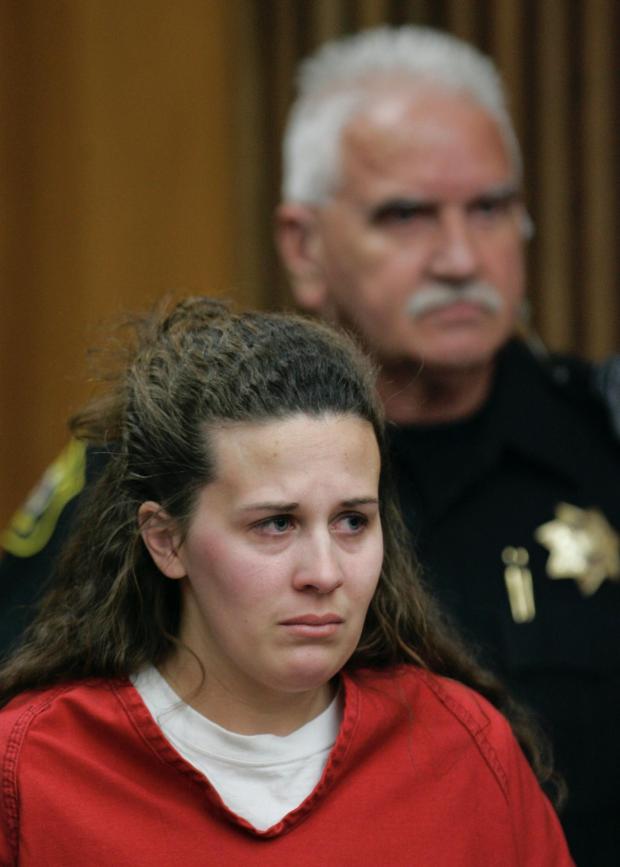
Four days after the suitcase surfaced, police arrested Melissa Huckaby.
The Sunday school teacher was taken into custody on April 10, 2009.
She lived in the same mobile home park as Sandra Cantu.
She had appeared at vigils, spoken to the media, expressed concern.
Police said they had become suspicious of inconsistencies in her statements.
The evidence they cited was physical, not circumstantial.
Investigators found traces of blood in Huckaby's apartment.
They found traces of blood in her car, a Chevrolet Cobalt.
A stun gun was recovered from her residence.
A search of her computer revealed searches related to murder and child abduction.
The specific search terms are not listed in the record.
That detail remains unestablished.
What is established is the pattern: the blood, the weapon, the searches.
The suitcase itself linked her to the disposal of the body.
The receipts showed she had purchased it at a local store.
She was the granddaughter of the pastor at Grace Community Church.
She taught Sunday school there.
She was a mother herself.
The woman who had prayed for Sandra's safe return now stood accused of her death.
Police arrested her four days after the body was found.
The ten-day search ended with a black suitcase.
The arrest ended something else.
It ended the assumption that strangers were the only danger.
THE EVIDENCE — RECEIPTS AND STATEMENTS
Store receipts showed Huckaby had purchased the suitcase at a local store.
The receipts placed the black suitcase in her hands before it surfaced in the pond.
She initially denied involvement.
She later gave a statement to police.
The details of that statement were not fully released to the public.
That remains the record: a statement exists, and its content is not established.
The case was built largely on physical evidence.
Traces of blood in her apartment.
Traces of blood in her car, a Chevrolet Cobalt.
A stun gun recovered from her residence.
A computer searched for topics related to murder and child abduction.
The physical trail linked Huckaby to the disposal of the body.
Her contradictory statements linked her to something else.
Not to the act itself.
To the appearance of it.
What happened inside the suitcase, in the hours before, the record does not fully say.
Prosecutors alleged she drugged Sandra with prescription medication.
They alleged sexual assault.
They alleged murder during a kidnapping.
Those were allegations.
The receipts were receipts.
The blood was blood.
The statement was a statement, partially withheld.
Each piece moved the certainty forward.
Each piece left a gap.
The suitcase was traced to Huckaby.
The pond was two miles from home.
The body was inside.
The full story was not.
THE CHARGES AND THE PLEA
She was charged with first-degree murder with special circumstances, including murder during a kidnapping.
She was also charged with lewd and lascivious acts on a child under 14.
She was charged with rape of a child under 14.
The prosecution alleged that Huckaby had drugged Sandra with prescription medication, sexually assaulted her, and then killed her.
That was the allegation.
That was the case the district attorney's office said it could prove.
Huckaby initially pleaded not guilty.
In March 2010, she changed her plea.
She pleaded guilty to all charges.
The deal avoided the death penalty.
The deal meant no trial.
The deal meant the jury never heard the evidence.
The specific details of the crime were not fully aired in court.
That is what the plea agreement left behind.
Not because the record is silent.
But because the record was never made.
The prosecution's narrative exists as allegation.
The admission exists as a guilty plea.
What happened inside the suitcase, inside the apartment, inside the car — that would require evidence.
That evidence was never tested before a jury.
The public was told what the prosecution alleged.
The public was told what Huckaby admitted.
The gap between those two things is where the unanswered questions sit.
It is a legal resolution.
It is not a full accounting.
THE SENTENCE — APRIL 2010
It was April 2010, more than a year after Sandra Cantu disappeared.
Melissa Huckaby stood before the judge and the sentence came down: life in prison without the possibility of parole.
The plea agreement meant there would be no trial.
There would be no jury, no cross-examination, no days of testimony in open court.
The charges were read, the guilty pleas entered, and the courtroom moved on.
Huckaby did not appeal her conviction or her sentence.
The record shows the legal machinery worked.
It shows a plea, a sentence, a closed file.
But what happened inside the suitcase, inside the apartment, inside the hours between March 27 and April 6 — that was never fully aired in court.
The prosecution alleged she drugged Sandra, sexually assaulted her, killed her.
Those are allegations from the charges.
What the record does not establish are the details of the crime itself.
The plea agreement traded a trial for a sentence.
It traded the public accounting for the certainty of life without parole.
Justice was served, the law would say.
The full truth was not.
She is serving her life sentence at the Central California Women’s Facility in Chowchilla.
The case is closed.
The questions are not.
AND THE STORY STILL ISN'T OVER
She is serving her life sentence at the Central California Women’s Facility in Chowchilla.
Parole has been denied, which is consistent with a sentence of life without parole.
Sandra Cantu’s family, including her mother, have remained in the Tracy area.
A memorial was established in her honor.
The case prompted discussions about community safety.
It prompted discussions about the trust placed in caregivers.
The mobile home park where the crime occurred has since changed.
The church where Huckaby taught severed ties with her.
No further legal developments have been reported.
Any future legal steps are not in the record.
The record holds what it holds: a plea, a sentence, a denial.
The plea agreement meant the specific details of the crime were not fully aired in court.
No appeal was filed.
No trial was held.
The community remembers a ten-day search that ended in an irrigation pond.
The questions linger.
Why a Sunday school teacher?
Why a mother from the same park?
Why the trust, and what does it mean now?
That would require testimony the record does not contain.
She was known to the victim and her family.
That is not a theory.
That is the documented fact of the case.
The suitcase was traced to her.
The blood was in her apartment and her car.
The stun gun was recovered from her residence.
The receipts showed the purchase.
She gave a statement, though its details were not fully released.
The case remains a reference point in discussions of child abductions by non-strangers.
Not by strangers.
By someone known.
The memorial stands.
The family remains.
The story, for the record, is closed.
The questions are not.
Advertisement
You may also like
The DNA under her fingernails that cracked a 17-year cold case — but left one question open
🚨 THE NEIGHBOR'S CALL THAT OPENED A 17-YEAR WAIT… A neighbor in Bellaire, Texas, called police about a break-in at a home on June…
The 4-day gap between a 5-year-old's abduction and a suspect's arrest in her murder
🚨 THE 4-DAY GAP July 15, 2002, in Stanton, California: a man asks a five-year-old for help finding a lost dog. The friend runs…
The grandmother's 911 call that started it all — and the family story that never fit
🚨 THE 911 CALL THAT DIDN'T MATCH THE FAMILY'S STORY The 911 call came on July 15, 2008, from a grandmother named Cindy Anthony.…
The missing boy's ring found in a crawl space — 27 bodies later
🚨 THE RING IN THE CRAWL SPACE The ring was small, gold, and it belonged to a missing 15-year-old boy. Police found it on…
The 2005 Aruba nightclub exit that left three men with stories that never matched
🚨 THE EXIT THAT STARTED EVERYTHING The club was called Carlos'n Charlie's, a bar and nightclub in Oranjestad, Aruba. Natalee Holloway, 18, from Mountain…
The tarot card message that turned a random killing spree into a hunt for 'God'
🚨 THE TAROT CARD THAT READ 'CALL ME GOD' The card was a piece of evidence, found at a crime scene during the investigation…